






Targeted Proteomics Assay Not Performing? Troubleshooting Peptide Selection, Matrix Effects, and Panel Design
Introduction
A targeted proteomics panel can be fully designed, yet the run still fails to produce usable quantitative data. Peptide targets may show weak signals, unstable ratios, missing peaks in study samples, or high variability across replicates. For biomarker validation, pathway tracking, or biopharmaceutical peptide monitoring, poor assay performance creates immediate delay even when discovery data suggested the proteins were detectable.
Weak targeted proteomics performance usually reflects panel design or matrix limits rather than instrument failure alone. Suboptimal proteotypic peptide choice, matrix suppression, inadequate LC separation, digestion inconsistency, or an oversized panel can all reduce quantitation quality before meaningful reporting begins. Re-running the same method without reviewing peptide selection or matrix behavior often reproduces the same poor result.
Teams troubleshooting a failed targeted assay or preparing a difficult matrix for panel quantitation can request feasibility review before resubmitting material. MtoZ Biolabs can Assess targeted proteomics assay readiness and recommend the most efficient recovery path.
Related Services
- Targeted Proteomics Service
- MRM/PRM Quantitative Proteomics Service
- Multi Reaction Monitoring MRM Service
- Parallel Reaction Monitoring (PRM) Service
- Absolute Quantitative Analysis (AQUA) Service
- Label-Free Quantitative Proteomics Service, MS Based
Common Signs of a Failed or Weak Targeted Assay
Researchers often seek help after observing one or more of the following patterns:
- target peptides are weak or absent in study samples but visible in standards
- replicate peak areas vary widely despite consistent sample prep
- only part of a multi-transition or multi-fragment pattern is detected
- calibration behavior is poor or compressed across the intended range
- retention time drift causes missed scheduled acquisition windows
- discovery data suggested detectability, but targeted quantitation remains unreliable in matrix
These outcomes are common with non-proteotypic peptide choice, strong suppression in plasma or tissue, panel sizes that exceed cycle capacity, and assay parameters copied from literature without local matrix testing.
Why Targeted Proteomics Assays Fail
Before resubmitting samples or expanding the panel, review the most frequent causes.
1. Suboptimal Peptide Selection
Weak ionization, missed modifications, or shared peptides across isoforms reduce assay performance.
2. Matrix Suppression
Salts, lipids, detergents, or formulation components can reduce ionization in complex backgrounds.
3. Inadequate LC Separation
Co-elution still affects targeted assays even when selective acquisition improves specificity.
4. Digestion Inconsistency
Variable proteolysis changes peptide yield across samples.
5. Oversized Panel Design
Too many targets reduce dwell time or cycle efficiency and lower sensitivity.
6. Wrong Platform for the Matrix
Stable MRM may suffice in some cases, while interference-limited targets may require PRM.
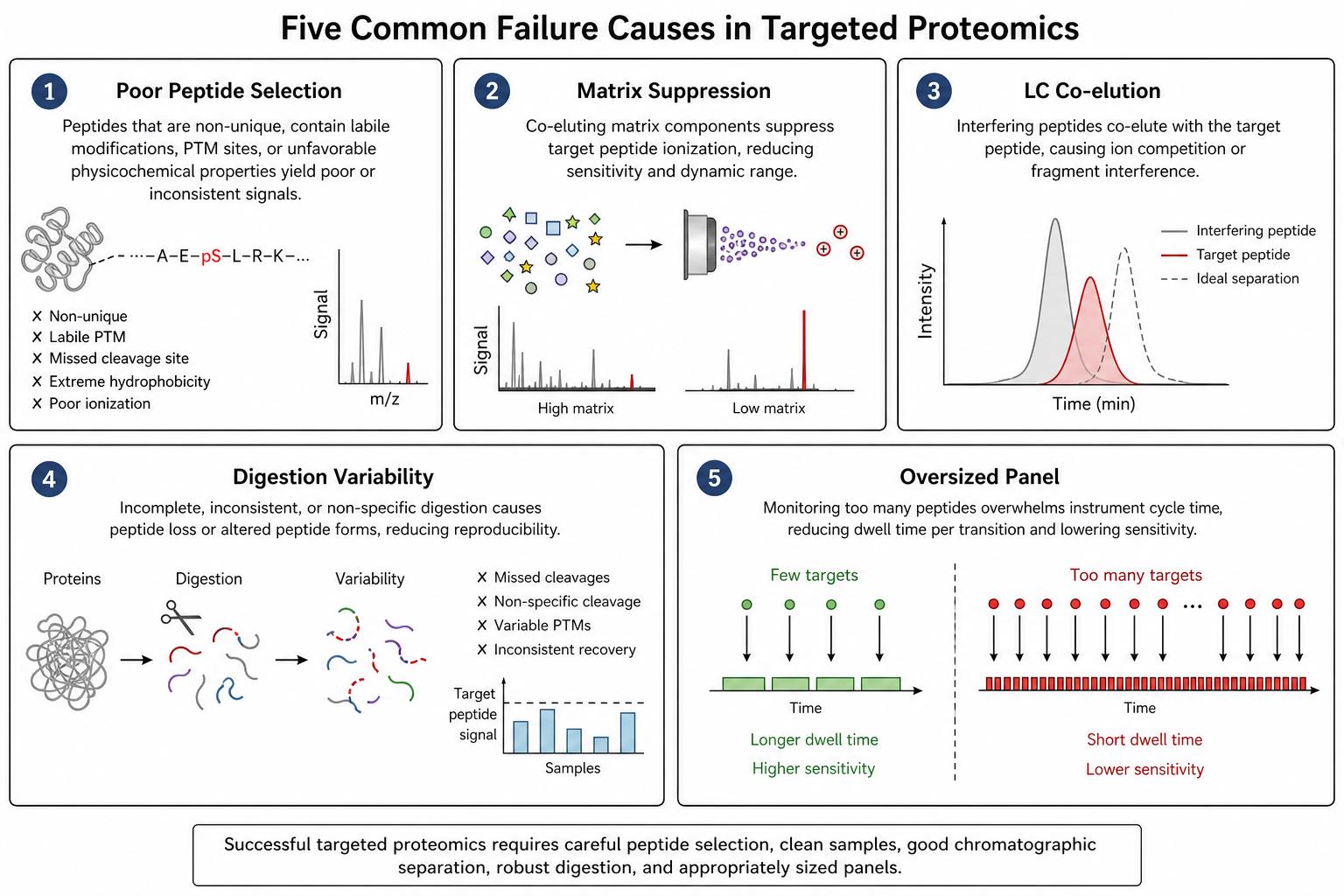
Figure 1. Weak targeted proteomics performance often reflects peptide choice, matrix interference, or panel design rather than instrument malfunction alone.
Step-by-Step Recovery Guide
When targeted proteomics performance fails, use a structured review rather than repeating the same acquisition.
Step 1: Re-evaluate Proteotypic Peptide Choice
Confirm that selected peptides are unique, detectable, and stable in the study matrix and digestion workflow.
Step 2: Test Matrix Effects on Standards and Spikes
Compare response in matrix-matched blanks, spikes, and neat standards to identify suppression or recovery issues.
Step 3: Review LC Method and Retention Stability
Inspect whether co-elution or retention drift is affecting scheduled acquisition performance.
Step 4: Check Digestion and Sample Prep Consistency
Confirm enzyme, ratio, and cleanup steps are reproducible across the cohort.
Step 5: Reduce Panel Priority or Change Platform
If interference persists on MRM, consider Parallel Reaction Monitoring (PRM) Service for affected peptides rather than forcing the full panel through the same route.
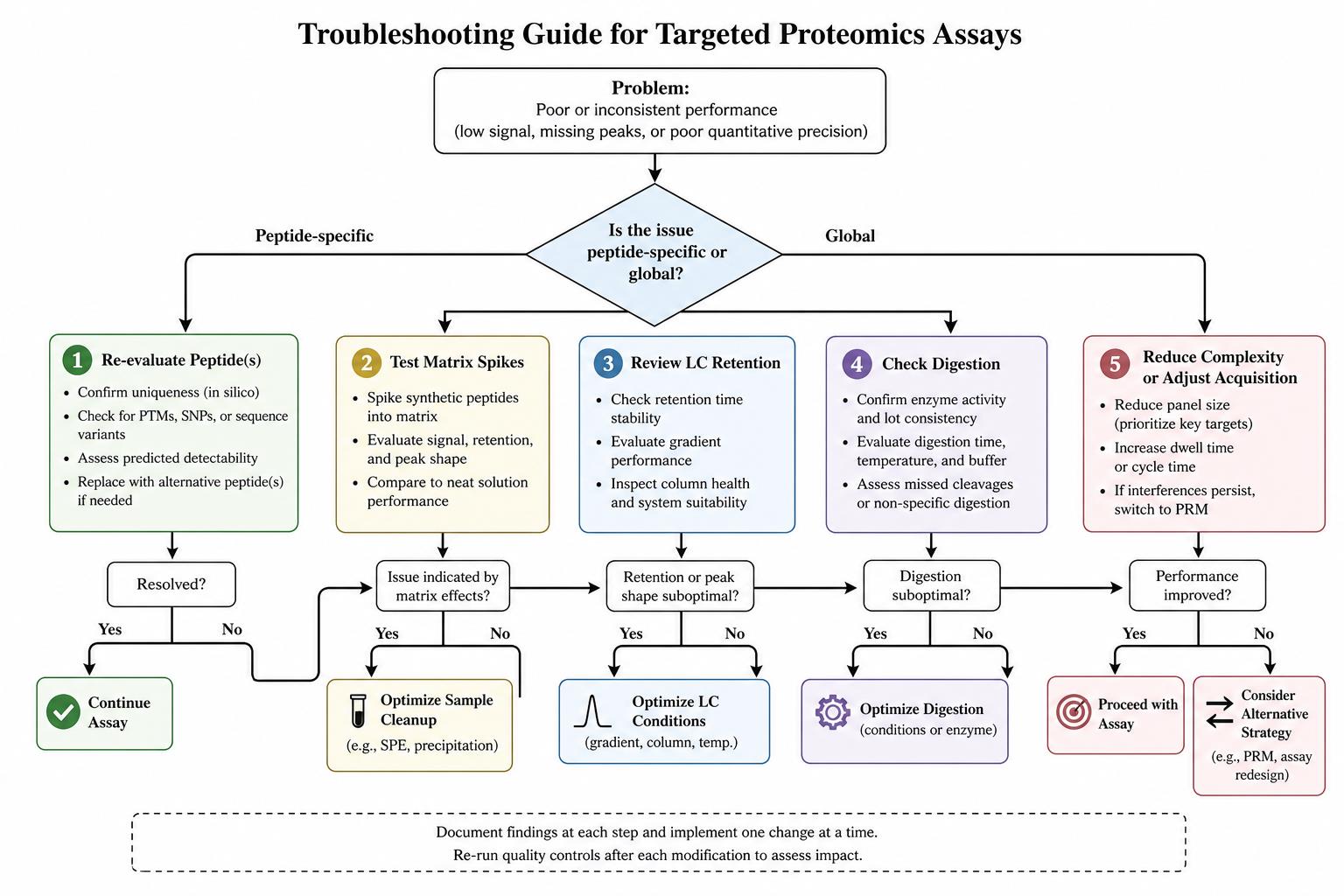
Figure 2. Peptide re-selection, matrix testing, and panel prioritization are the highest-leverage fixes for failed targeted assays.
Assay Design Checks That Most Affect Success
The checklist below summarizes the highest-leverage review points before assay lock-in or resubmission. Matrix-matched pilot samples should be planned early. Testing a small representative set before full cohort submission often reveals suppression or scheduling issues that standards alone cannot predict.
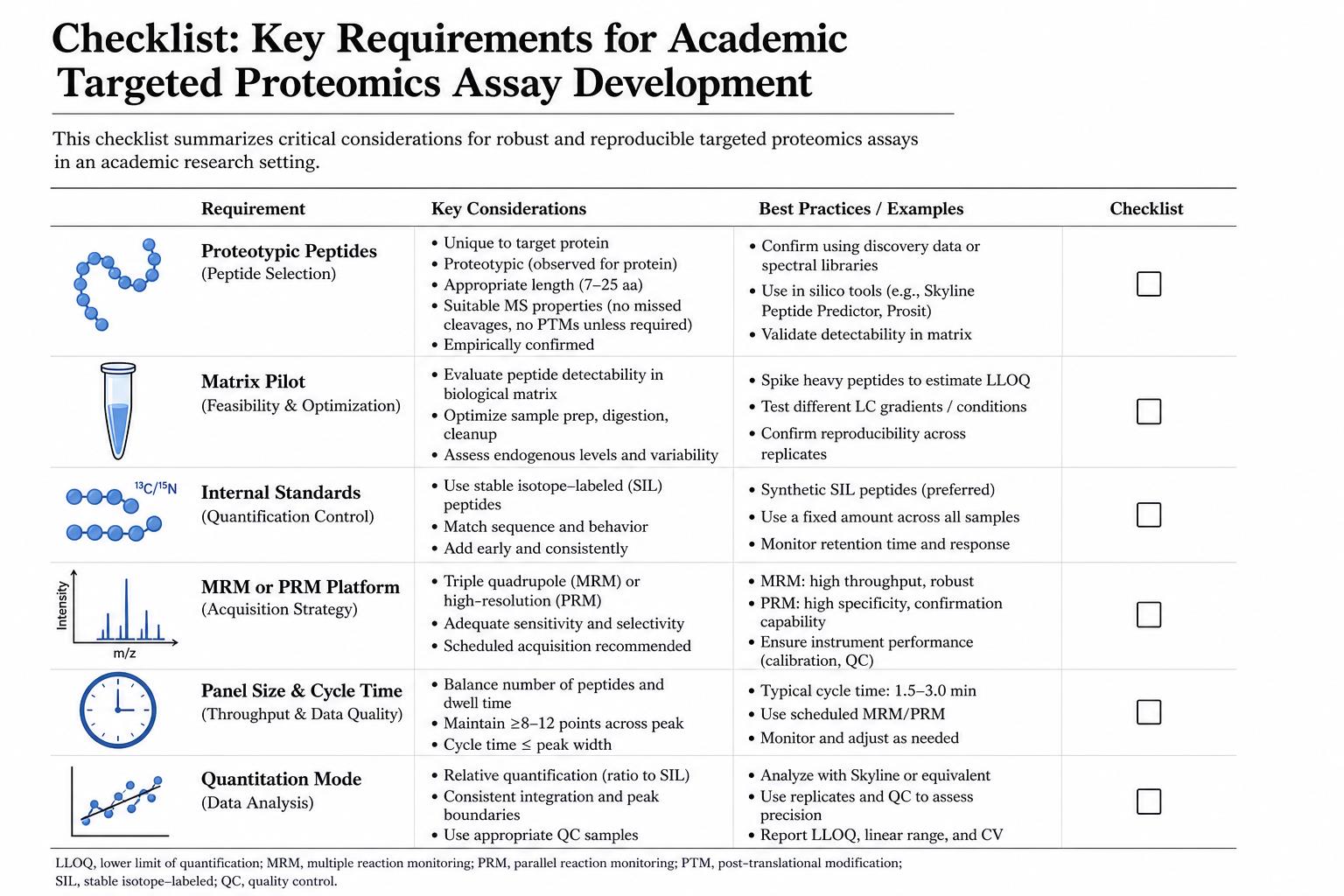
Figure 3. Proteotypic peptide choice, matrix pilot data, and platform fit are central to targeted proteomics assay success.
Expected Results After Recovery
A successful recovery should deliver more than partially integrated peaks. Expected outputs may include:
- revised peptide and acquisition list
- quantified analyte tables with improved replicate precision
- matrix interference notes and acceptance criteria
- recommendation for MRM, PRM, or panel reduction based on pilot data
Validation options depend on project goal:
- Re-optimize peptide and acquisition parameters when response was the primary barrier
- Revise sample prep when digestion or cleanup inconsistency drove variability
- Prioritize tier-one targets when cycle time limits sensitivity
- Move selected peptides to PRM when MRM interference persists
Tier-one peptides required for the primary decision should receive full matrix pilot testing before the remaining panel is expanded. Tier-two targets can be staged in a follow-on assay if cycle time or sensitivity limits the first method.
Key Cautions
Do not assume discovery detectability guarantees targeted assay success in matrix.
Do not expand panel size without reviewing cycle time impact on sensitivity.
Do not rely on a single transition or fragment when specificity is critical.
Do not copy assay parameters from publications without verifying retention time and matrix behavior locally.
Share raw chromatograms or integration notes from the failed run when requesting support. Visual review of peak shape, retention time, and fragment or transition ratios often shows whether the issue is peptide choice, scheduling, or true absence of analyte in matrix.
A practical recovery milestone is a matrix pilot with six to ten representative samples before the full cohort is rerun. If response and replicate precision improve in that pilot, the same targeted method can usually be scaled with greater confidence.
When multiple peptides from one protein are monitored, confirm that the selected surrogate peptide reflects the biology of interest. Alternative proteotypic peptides sometimes recover better in matrix even when they were not the strongest discovery feature.
Frequently Asked Questions
1. Should I rerun the same targeted method without changes?
Only after reviewing peptide choice, matrix effects, and digestion consistency. Repeating the same assay on a suppressed matrix rarely helps.
2. Can a failed MRM panel be fixed with PRM?
Sometimes. PRM is often selected when interference, not absolute detectability, is the primary issue.
3. What if only part of the peptide panel performs well?
Prioritize tier-one targets and stage lower-priority peptides in a follow-on assay rather than forcing one oversized panel.
4. Can sample prep alone fix a weak targeted assay?
Often partially. Prep and peptide selection both matter, and matrix pilot data helps separate the two.
5. How can resubmission delays be reduced?
Provide target list, matrix type, prior run data, and quantitation requirements during feasibility review before shipment. Include any discovery or MRM reports that show which peptides were detectable and which showed unstable ratios in the study background.
Conclusion
Underperforming targeted proteomics assays are often a solvable panel design or matrix compatibility problem rather than a reason to abandon predefined quantitation. By reviewing peptide selection, matrix behavior, LC stability, and panel scope before resubmitting samples, teams can often obtain the quantitative data required for validation, QC, or pathway analysis.
When a targeted panel cannot proceed reliably, MtoZ Biolabs can Plan a targeted proteomics recovery workflow using Targeted Proteomics Service, MRM/PRM Quantitative Proteomics Service, or PRM-based alternatives based on matrix complexity. Contact the technical team to review assay performance and the fastest path to usable results.
How to order?




