






Targeted Mass Spectrometry Explained: How MRM, PRM, and Selective LC-MS/MS Acquisition Quantify Predefined Analytes
Introduction
Discovery LC-MS/MS can profile thousands of features in one run, yet many projects eventually require a narrower question. A biomarker team may need to measure thirty predefined peptides across hundreds of samples. A biopharmaceutical group may need to monitor product-related ions with documented specificity. A metabolomics or lipidomics program may need to track a defined analyte panel with reproducible quantitation rather than repeated untargeted searching.
Targeted mass spectrometry addresses that need by directing instrument acquisition to predefined analytes. Instead of surveying the full m/z space, the method monitors selected precursor-to-product transitions, isolation windows, or fragment ions through routes such as multiple reaction monitoring (MRM), selected reaction monitoring (SRM), and parallel reaction monitoring (PRM). Acquisition time is spent where the assay requires confirmation and quantitation, not on unrelated background ions.
Teams planning selective LC-MS/MS quantitation should define analyte list, platform strategy, and reporting needs before method lock-in. MtoZ Biolabs can Review targeted mass spectrometry feasibility before samples are prepared or submitted.
Related Services
What Targeted Mass Spectrometry Measures
Targeted mass spectrometry quantifies predefined analytes selected before sample analysis. In proteomics, those analytes are often proteotypic peptides representing proteins of interest. In metabolomics, lipidomics, or small-molecule workflows, they may be defined compounds, transitions, or adduct-specific ions monitored on LC-MS/MS platforms.
The method differs from data-dependent discovery acquisition, which selects precursors for MS/MS based on survey scan intensity rather than a fixed target list. It also differs from untargeted profiling workflows that prioritize breadth over repeat measurement of a locked panel.
Targeted mass spectrometry typically answers one of these questions:
-
Can predefined analytes be measured reproducibly across a large sample cohort?
-
Does a validation panel support biomarker, pathway, or QC decisions?
-
Can selective acquisition improve sensitivity for known targets in a complex matrix?
-
Can MRM or PRM performance support documentation for regulated or internal review?
When the analyte list is stable and selective quantitation matters more than open profiling, targeted mass spectrometry is often the most direct route.
How a Targeted Mass Spectrometry Workflow Is Built
Most targeted mass spectrometry projects follow a common sequence, even when the final platform differs.
Phase 1: Analyte selection.
Proteins, peptides, metabolites, or ions of interest are translated into measurable targets with defined acquisition parameters.
Phase 2: Method development.
MRM transitions, PRM isolation windows, or equivalent selective parameters are optimized on standards.
Phase 3: LC method and scheduling.
Chromatography separates analytes and supports retention-time scheduling for multiplexed panels.
Phase 4: Selective acquisition.
The instrument monitors only the predefined target set during sample analysis.
Phase 5: Quantitation and reporting.
Peak areas or fragment intensities are integrated, normalized, and summarized across the cohort.
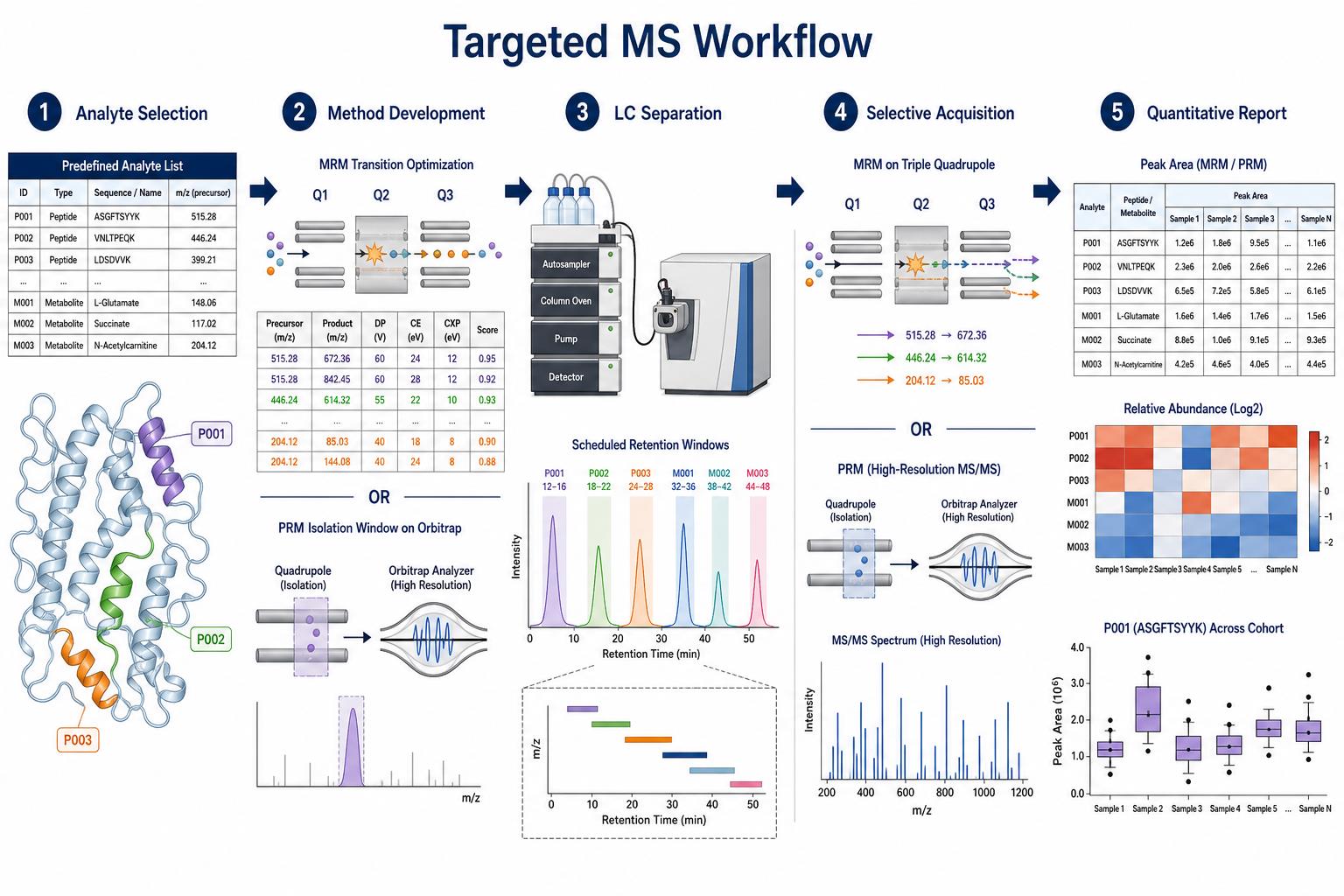
Figure 1. Targeted mass spectrometry moves from predefined analyte selection through method development and selective acquisition to cohort-level quantitation.
Scheduled acquisition is often essential for larger panels. The LC method must place each target in a predictable retention window so cycle time can support all priority analytes without missed acquisitions.
MRM and PRM in Brief
Two platforms dominate protein and peptide targeted mass spectrometry, though the selective logic applies broadly across analyte classes.
1. MRM on Triple-Quadrupole Instruments
Q1 selects a precursor ion, Q2 induces fragmentation, and Q3 monitors one or more product ions. MRM remains efficient for many focused panels in moderately complex matrices.
2. PRM on High-Resolution Instruments
A quadrupole isolates the precursor and an Orbitrap or equivalent analyzer records multiple fragment ions at high resolving power. PRM is often selected when interference or confirmation requirements exceed stable MRM performance.
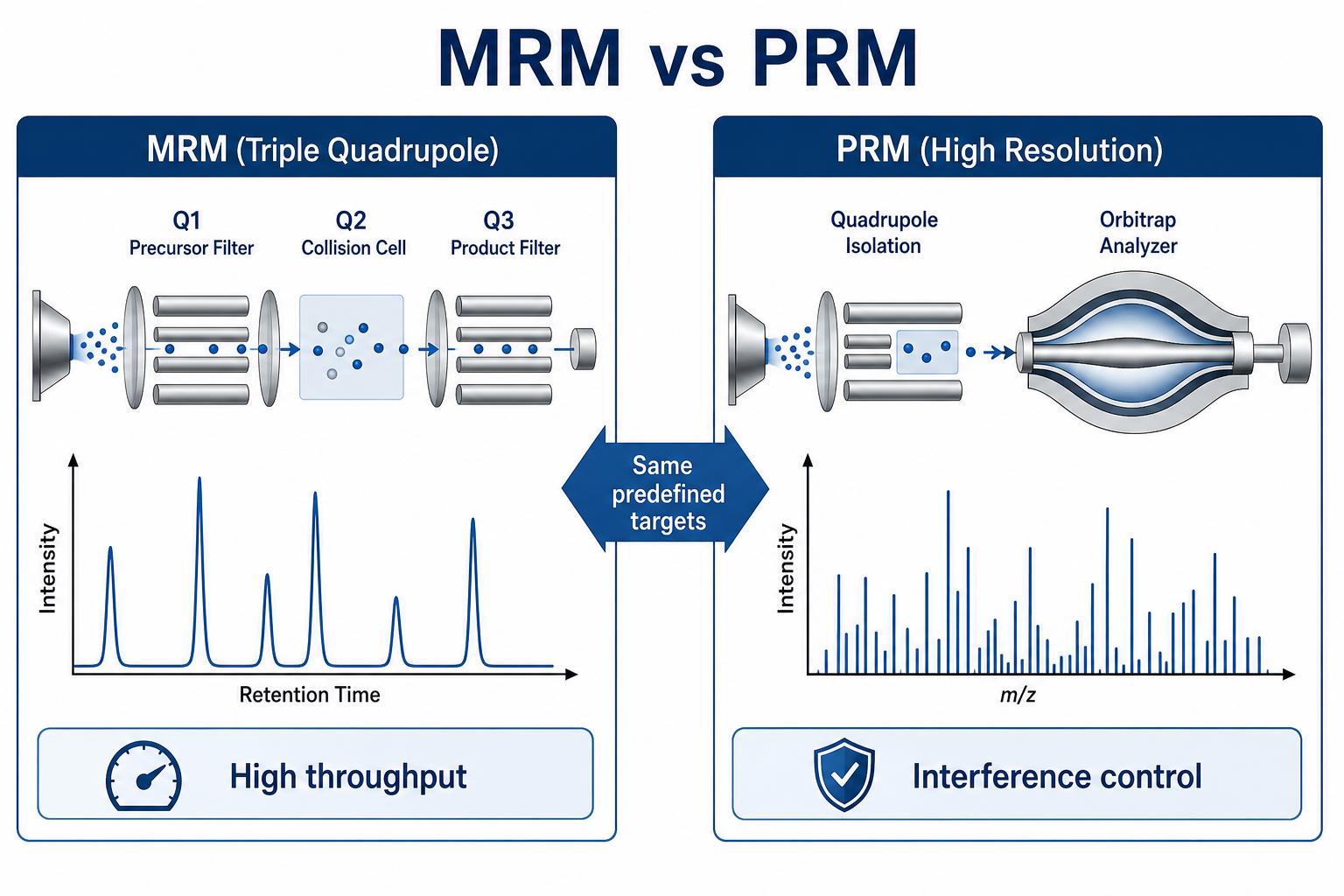
Figure 2. MRM prioritizes throughput on triple-quadrupole platforms, while PRM adds high-resolution fragment confirmation for interference-limited targets.
Both routes belong to targeted mass spectrometry when the analyte list is predefined before sample analysis. Platform choice should follow matrix complexity, panel size, and confirmation needs rather than instrument preference alone.
Technical Advantages and Limitations
1. Technical Advantages
Selective acquisition
Instrument time focuses on predefined targets, improving sensitivity for the panel.
Quantitative precision
Optimized methods support reproducible measurement across large sample sets.
Platform flexibility
MRM and PRM can be matched to throughput and interference requirements.
Efficient validation-scale analysis
Predefined panels are well suited to cohort expansion after discovery.
2. Limitations
Requires prior target definition
Unknown analytes cannot be quantified without method development.
Cycle time constraints
Large panels require scheduling review and may limit dwell time per target.
Matrix sensitivity remains
Suppression, co-elution, and recovery issues still require pilot testing.
Not a substitute for discovery profiling
Targeted mass spectrometry confirms and quantifies known targets rather than generating unbiased maps.
Stable internal standards improve precision but do not replace thoughtful analyte selection. A well-acquired transition on a poorly chosen surrogate can still produce precise yet misleading data if the target does not represent the intended molecule reliably in matrix.
Typical Applications
Researchers commonly apply targeted mass spectrometry in these settings:
-
Biomarker validation. Expand measurement of candidate proteins or peptides identified in discovery studies.
-
Pathway and panel tracking. Quantify predefined signaling or pathway analytes across treatment groups.
-
Biopharmaceutical and QC monitoring. Measure product-related peptides or defined impurities with selective acquisition.
-
Targeted metabolite and lipid panels. Monitor predefined small-molecule or lipid targets with MRM-style selectivity.
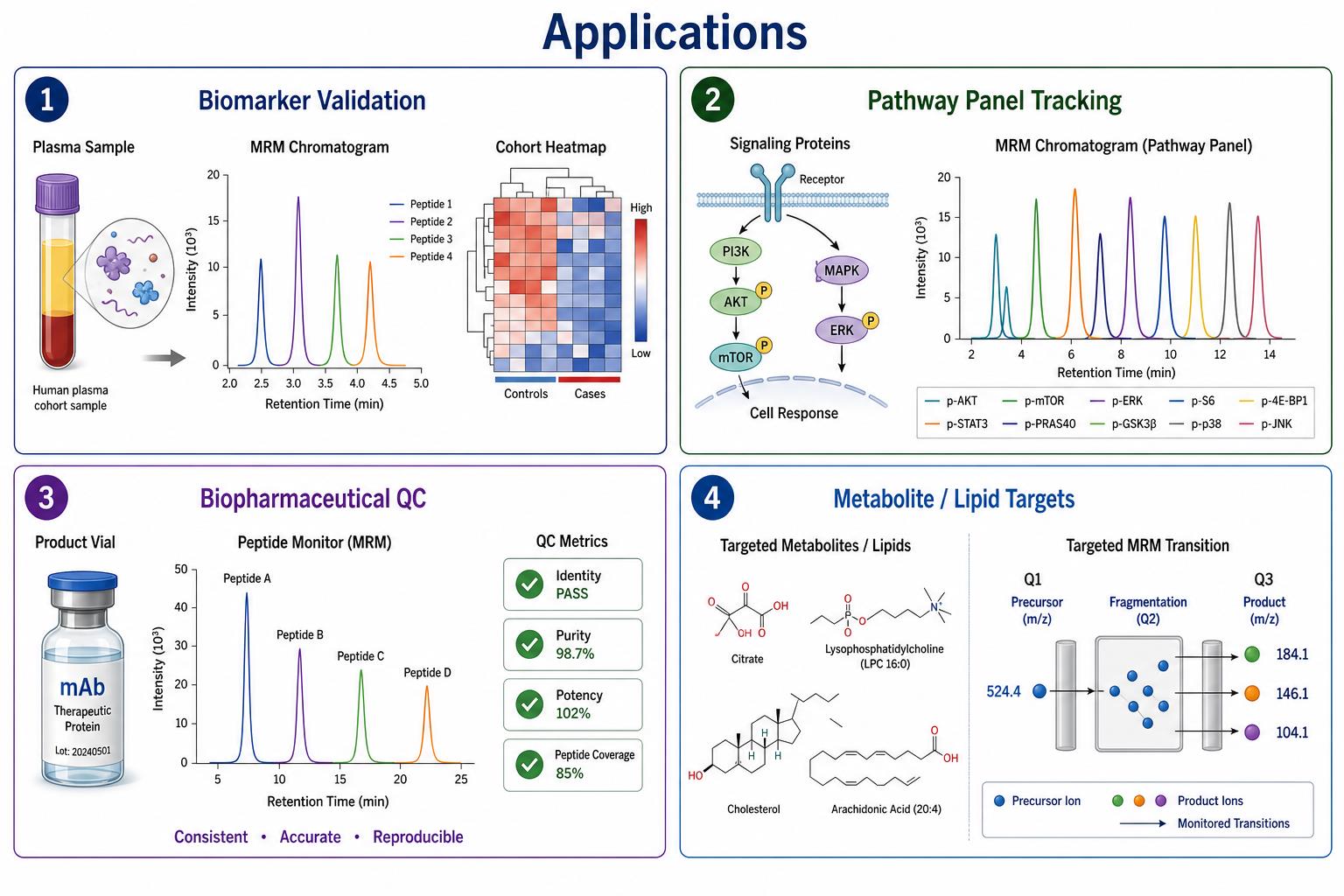
Figure 3. Biomarker validation, pathway panels, biopharmaceutical QC, and defined metabolite targets are common targeted mass spectrometry applications.
Sample and Method Requirements
Reliable targeted mass spectrometry depends on method design and sample quality at submission.
|
Requirement |
Why It Matters |
|---|---|
|
Defined analyte or transition list |
Drives acquisition method and panel scope |
|
Sample matrix type |
Plasma, tissue, lysate, and formulation each need different prep and interference review |
|
Expected abundance range |
Determines whether enrichment or platform change is needed |
|
Internal standard plan |
Stable isotope-labeled standards improve precision and support absolute quantitation |
|
Platform preference |
MRM, PRM, or platform-agnostic recommendation affects feasibility |
|
Quantitation goal |
Relative, normalized, or absolute quantitation changes method design |
Feasibility review before shipment helps avoid building a method that sample chemistry or cycle time cannot support.
Expected Deliverables
Useful targeted mass spectrometry reports often include:
-
quantified analyte tables across samples
-
acquisition method and transition or fragment summary
-
normalization or calibration notes
-
quality comments on failed or borderline targets
-
platform rationale when MRM and PRM are combined in one program
Define expected readout depth during scoping. A validation project may require full QC metrics, while an exploratory targeted screen may accept relative quantitation with a smaller documentation package.
For multi-batch programs, include retention time reference standards and matrix control samples in the acquisition plan from the start. Those controls reduce ambiguity when the same targeted method must remain comparable across instrument runs.
Frequently Asked Questions
1. What is the difference between targeted mass spectrometry and discovery LC-MS/MS?
Discovery acquisition selects precursors dynamically from survey scans. Targeted mass spectrometry monitors a predefined analyte set with selective acquisition parameters.
2. Are MRM and SRM the same in practice?
SRM and MRM both refer to selective precursor-to-product monitoring on triple-quadrupole platforms. Usage varies by field, but the selective acquisition concept is the same.
3. Can targeted mass spectrometry work in plasma?
Yes, when analytes are detectable after appropriate prep and interference is controlled. Matrix pilot testing is often essential.
4. Does targeted mass spectrometry replace label-free profiling?
No. Discovery identifies candidates. Targeted mass spectrometry validates and quantifies predefined targets at scale.
5. How many analytes can one method include?
Panel size depends on chromatography, cycle time, and platform. Feasibility review clarifies realistic multiplexing for a given matrix.
Conclusion
Targeted mass spectrometry provides a selective, reproducible route to predefined analyte quantitation when validation-scale measurement matters more than open profiling. By matching MRM, PRM, or related selective routes to matrix complexity and reporting needs, teams can obtain panel data that supports biomarker validation, pathway analysis, and QC monitoring.
For targeted method design, platform selection, and cohort quantitation, MtoZ Biolabs provides Targeted Mass Spectrometry Service with feasibility review and report-ready deliverables. Contact the technical team to evaluate analyte list, sample matrix, and quantitation requirements before submission.
How to order?




