Targeted Mass Spectrometry Service
MtoZ Biolabs provides Targeted Mass Spectrometry Service using MRM/SRM and PRM for selective measurement of predefined protein and peptide targets across complex biological samples, supporting relative quantification, absolute quantification, and candidate validation.
Target feasibility, surrogate peptide selection, matrix interference, internal standards, calibration strategy, and study scale are evaluated to develop a fit-for-purpose targeted LC-MS/MS workflow.
- Target-specific assay design for complex biological matrices
- Stable-isotope standards for absolute quantification
- Scalable targeted analysis for multi-sample validation studies
Overview
For protein and peptide analysis, targeted mass spectrometry is used when specific targets have already been identified and require focused quantitative verification. Rather than surveying the proteome broadly, targeted LC-MS/MS concentrates acquisition on predefined targets, allowing analytical performance to be optimized around detectability, selectivity, reproducibility, and quantitative range.
This approach is particularly useful for validating candidates from discovery proteomics, measuring predefined protein panels, monitoring lower-abundance targets, and generating relative or absolute quantitative data across multi-sample studies.
Targeted Mass Spectrometry Service at MtoZ Biolabs
MtoZ Biolabs develops MRM/SRM- and PRM-based targeted LC-MS/MS workflows for predefined protein and peptide targets. Each project is configured according to the target panel, quantitative objective, sample scale, and required assay performance.
Projects can support:
- candidate validation following discovery proteomics;
- relative quantification of predefined proteins or peptides;
- calibration-based absolute quantification;
- multiplexed analysis of selected protein panels;
- targeted validation across multi-sample cohorts;
- analysis of selected modified peptides where appropriate.
For protein targets, assay development can include surrogate peptide selection, target-specific method optimization, and interference assessment.
MRM/SRM or PRM is selected according to target characteristics, assay requirements, throughput, and quantitative objectives. Stable isotope-labeled standards and calibration strategies can be incorporated when absolute quantification or more controlled quantitative measurement is required.
Analysis Workflow
1. Target and Project Assessment
Target proteins or peptides, sample matrix, sample number, available material, expected abundance, and quantitative objectives are reviewed before assay development.
2. Surrogate Peptide and Assay Design
For protein targets, suitable surrogate peptides are selected based on sequence specificity and analytical suitability. MRM/SRM transitions or PRM precursor targets are then designed, with potential interference from shared peptides, homologous proteins, or matrix components evaluated where relevant.
3. Sample Preparation and Internal Standard Strategy
Sample preparation is selected according to the biological matrix and target characteristics. Stable isotope-labeled peptides or other suitable internal standards are incorporated where required by the quantitative design.
4. LC-MS/MS Method Development
Chromatographic separation, retention behavior, ion selection, fragmentation conditions, and target interference are optimized for the selected assay.
For larger sample sets, target number, run time, quality-control placement, and batch structure are also considered during method development.
5. Targeted Quantitative Analysis
Study samples are analyzed using the established MRM/SRM or PRM workflow. Target signals are integrated and quantified according to the selected relative or calibrated absolute quantitative strategy.
6. Data Review and Reporting
Results are reviewed for signal quality, quantitative consistency, internal-standard performance, and calibration behavior where applicable.
When multiple surrogate peptides are monitored for the same protein, peptide-level trends can be compared to strengthen protein-level interpretation.
Sample Submission Suggestions
Required sample input is project-dependent and should be confirmed before submission.
Please provide:
- target protein or peptide names and identifiers;
- species and sequence information where available;
- sample type and biological matrix;
- available sample amount or volume;
- number of samples and experimental groups;
- expected target abundance, if known;
- relative or absolute quantitative objective;
- available isotope-labeled standards or reference materials, if applicable;
- previous discovery proteomics data, if relevant.
For low-abundance targets, plasma or serum samples, limited-volume specimens, or other complex matrices, additional sample preparation, depletion, enrichment, or higher sample input may be required. MtoZ Biolabs can assess target and matrix feasibility before submission and recommend an appropriate preparation and targeted LC-MS/MS strategy.
Why Choose MtoZ Biolabs?
1. Advanced Analytical Platform
High-resolution Orbitrap and triple-quadrupole LC-MS/MS platforms support targeted protein and peptide analysis across diverse project requirements.
2. High Selectivity and Quantitative Performance
Target-specific ion monitoring, optimized chromatography, and appropriate internal-standard strategies support reliable quantification in complex biological matrices.
3. Broad Sample Compatibility
Targeted MS workflows can be adapted to purified proteins, cell lysates, tissues, plasma, serum, and other compatible biological samples.
4. Customized Assay Development
Assay conditions are tailored to the target panel, sample matrix, expected abundance, and quantitative objective rather than applying a fixed workflow to every project.
5. One-Stop Service Support
MtoZ Biolabs supports target feasibility assessment, assay development, sample preparation, LC-MS/MS analysis, quantitative data review, and reporting within an integrated workflow.
What Could be Included in the Report?
1. Comprehensive Experimental Details
2. Materials, Instruments, and Methods
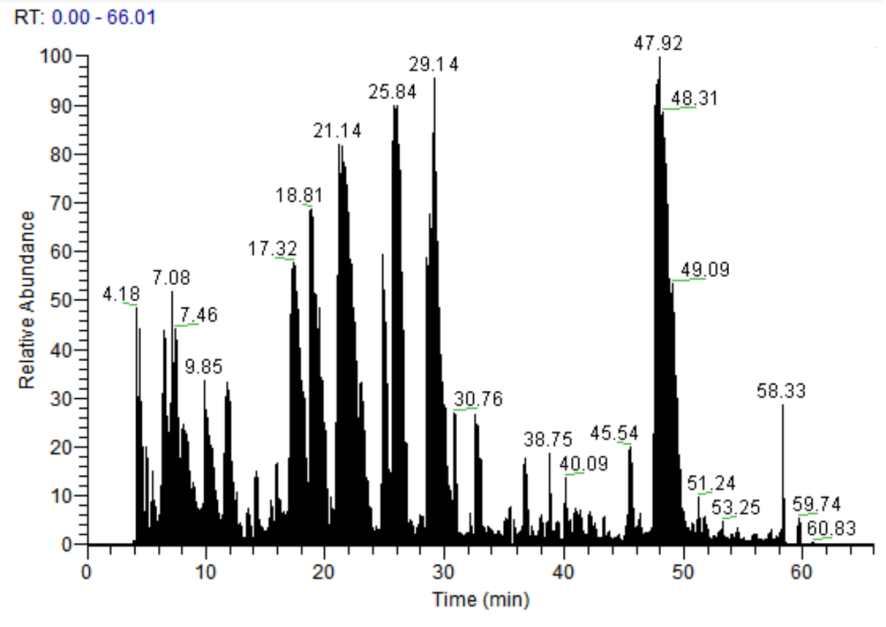
3. Total Ion Chromatogram & Quality Control Assessment
4. Data Analysis, Preprocessing, and Estimation
5. Bioinformatics Analysis
6. Raw Data Files
Case Study
Case 1: Targeted Mass Spectrometry for Early Diagnosis of Pancreatic Cancer Precursors
This study utilized targeted mass spectrometry to accurately identify cystic precursors of pancreatic cancer and uncover associated biomarkers. The results demonstrate that targeted mass spectrometry significantly improves the sensitivity and specificity of early diagnosis, providing critical support for early screening and precision therapy in pancreatic cancer. This highlights the potential application of Targeted Mass Spectrometry Service in cancer diagnostics.
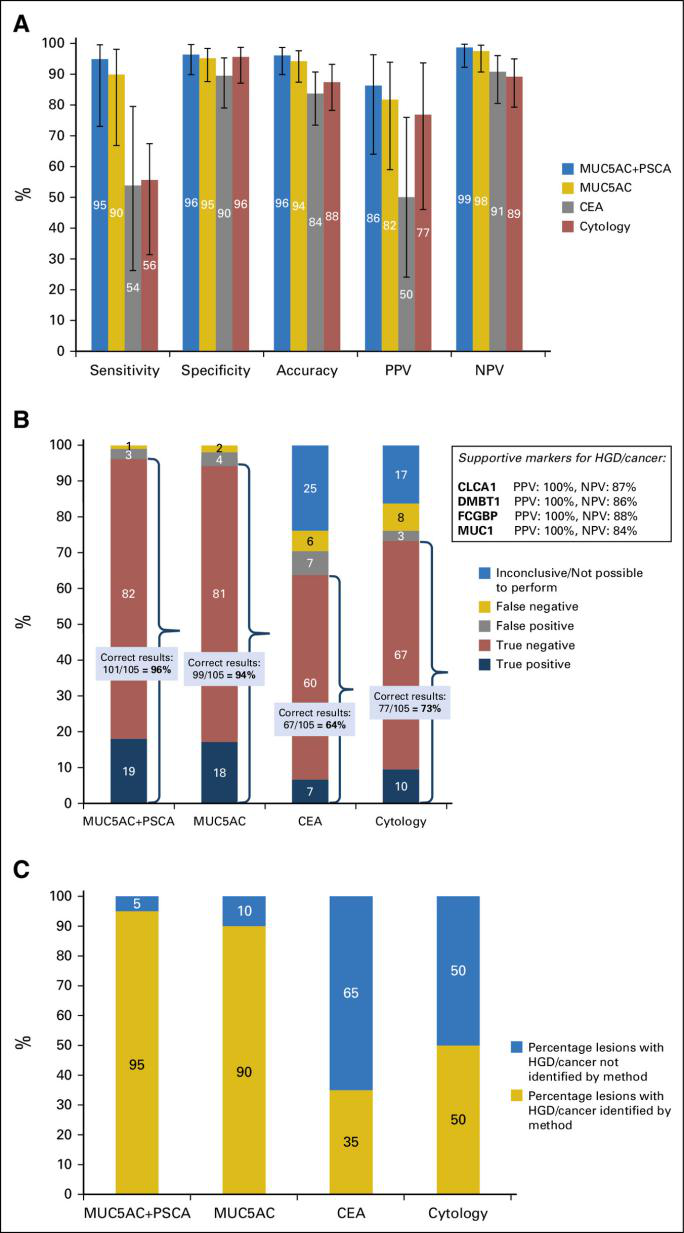
Jabbar, K. S. ET AL. J. Clin. Oncol. 2018.
Case 2: Application of Targeted Mass Spectrometry in Salmonella Detection
This study successfully applied targeted mass spectrometry to detect Salmonella enterica in food samples. By targeting Salmonella-related proteins, the research showcased the high sensitivity and specificity of targeted mass spectrometry for food safety testing, offering a rapid and accurate detection method for Salmonella. This application underscores the advantages of Targeted Mass Spectrometry Service in the food safety sector, providing effective pathogen detection tools for the industry.
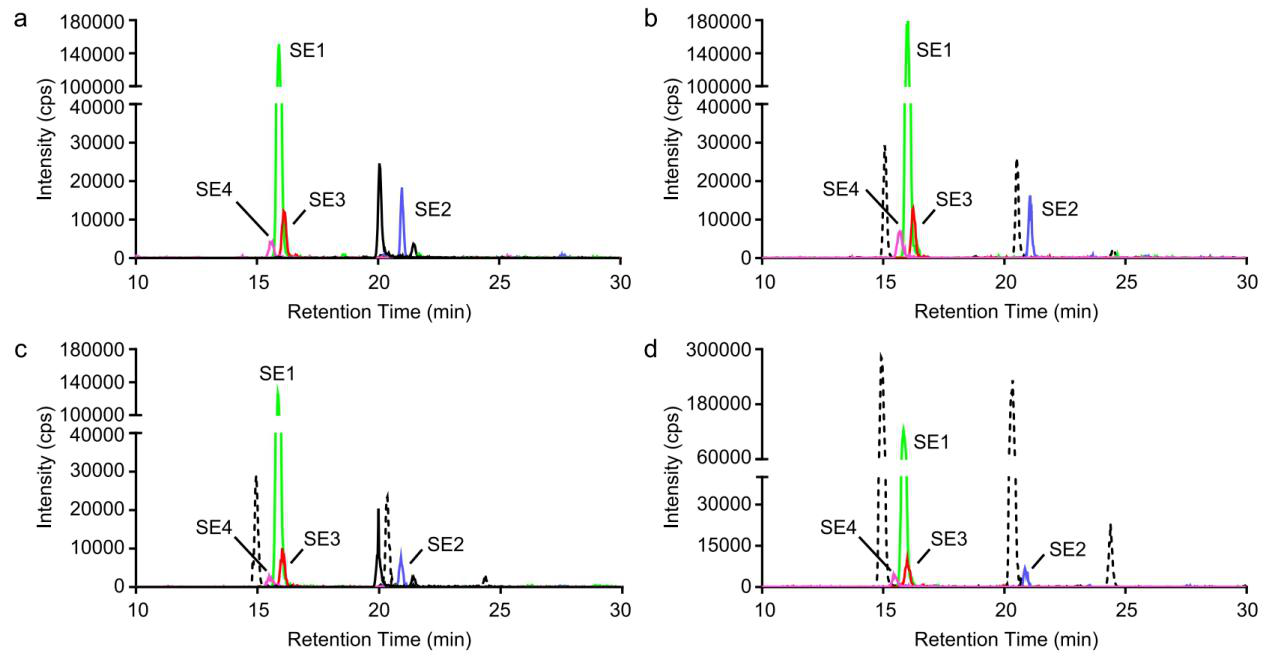
Chen, M. Q. et al. Food Chem. 2024.
FAQ
Q1. Can targeted mass spectrometry measure low-abundance proteins?
Feasibility depends on target abundance, peptide response, sample matrix, and available material. Additional preparation or enrichment may be recommended for challenging targets.
Q2. How is target specificity evaluated?
Surrogate peptides are selected for sequence specificity and evaluated for potential analytical interference. Multiple peptides can be monitored when additional confirmation is required.
Q3. Can Targeted Mass Spectrometry Service provide absolute quantification?
Yes. Absolute quantification can be performed when suitable standards and calibration strategies are available. Stable isotope-labeled peptides can be incorporated according to the assay design.
Q4. Is targeted mass spectrometry suitable for larger validation studies?
Yes. Targeted MS can support focused measurement of predefined targets across larger sample sets when the assay is appropriately developed and quality-control planning is incorporated.
Start Your Project with MtoZ Biolabs
Contact our technical team with your target list, sample matrix, sample number, available material, and quantitative objectives.
MtoZ Biolabs can evaluate target feasibility and recommend an appropriate MRM/SRM, PRM, sample preparation, and quantitative strategy for your project.
MtoZ Biolabs, an integrated chromatography and mass spectrometry (MS) services provider.
Related Services
MRM/PRM Quantitative Proteomics Service
Demo of Targeted Mass Spectrometry Service