






Serum vs Plasma vs CSF for Autoantibody Profiling
Introduction
Autoantibody profiling projects often begin with the wrong sample type selected before the first assay is run. A neurology team may submit plasma when cerebrospinal fluid would better reflect central nervous system reactivity. A rheumatology cohort may switch between serum and plasma across collection sites without documenting anticoagulant differences. A discovery program may apply blood-based enrichment thresholds to CSF and discard weak but biologically meaningful signals because total immunoglobulin is lower in spinal fluid.
Serum, plasma, and cerebrospinal fluid (CSF) each carry autoantibodies, yet the matrices differ in collection chemistry, protein composition, immunoglobulin concentration, and relevance to the disease compartment under study. Choosing the wrong matrix can change enrichment profiles, comparability across batches, and the interpretation of weak CNS-associated signals.
This article compares serum, plasma, and CSF for autoantibody profiling, outlines the key decision dimensions, and explains how sample choice affects discovery screening, validation design, and reporting quality.
When Sample Matrix Choice Becomes Critical
Sample matrix choice matters most when the biological question is tied to a specific body compartment or when cohort samples were collected under different clinical protocols.
Common scenarios include neurology and neuroimmunology studies, where CSF may reflect intrathecal or CNS-relevant reactivity better than blood. Autoimmune cohort discovery often relies on serum or plasma from large case-control collections. Longitudinal treatment monitoring may use whichever matrix is available at each clinic visit, creating comparability risk if matrix is mixed without planning. Modified epitope or PTM-focused serology may be sensitive to complement, fibrinogen, or platelet-derived factors that differ between serum and plasma.
In each case, the matrix should be chosen to match the disease compartment and the analytical workflow, not convenience alone.
Four Comparison Dimensions That Matter Most
A useful comparison should focus on analytical and biological differences rather than sample availability alone.
Collection and processing chemistry.
Serum is collected after clot formation. Plasma is collected with anticoagulant and retains fibrinogen and some cellular components unless removed by centrifugation. CSF requires lumbar collection and specialized handling to limit contamination and degradation.
Immunoglobulin concentration and signal strength.
Serum and plasma contain much higher total IgG than CSF. Enrichment workflows must account for lower antibody abundance in CSF rather than applying blood-based thresholds directly.
Matrix-specific protein background.
Plasma may contain platelet-derived and coagulation-related proteins absent from serum. CSF has lower total protein and a distinct proteome that can reduce nonspecific background or change apparent specificity depending on workflow.
Disease compartment relevance.
Blood-based matrices reflect systemic autoantibody exposure. CSF may better support questions about CNS-associated or intrathecal immune activity when interpreted with appropriate controls and volume constraints.
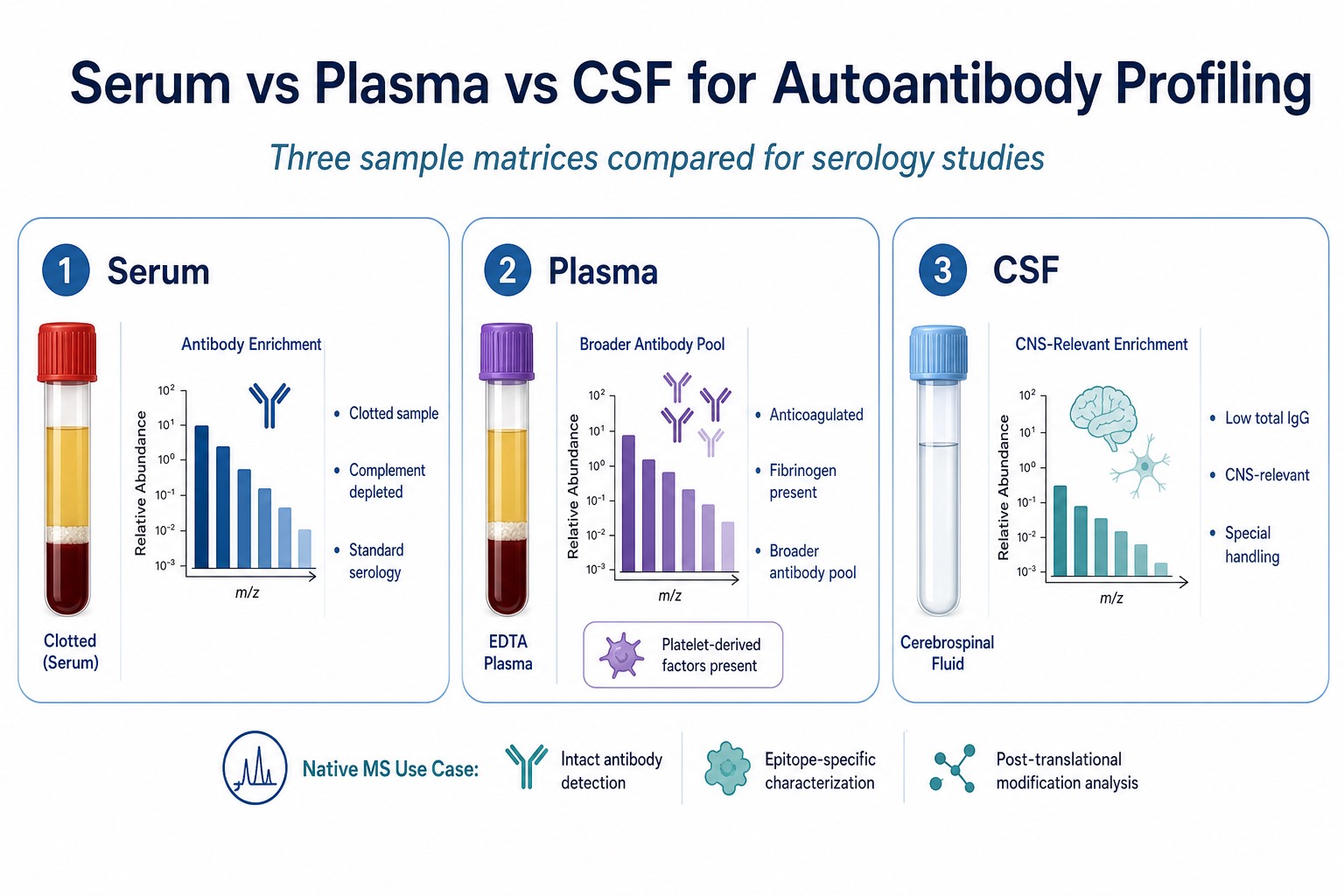
Figure 1. Serum, plasma, and CSF differ in collection chemistry, antibody abundance, background composition, and disease compartment relevance.
Serum for Autoantibody Profiling
Serum is the most common matrix in clinical serology and many discovery cohorts.
Serum is produced after blood clotting, which removes fibrin and many clotting factors while leaving immunoglobulins in the supernatant. Serum is widely used in ELISA, peptide array, and phage immunoprecipitation sequencing workflows because collection protocols are standardized across clinical sites and historical comparator data often exist in serum.
Serum supports broad autoantibody profiling when the research question is systemic rather than compartment-specific. It is often preferred when modified epitope screens require a matrix with lower platelet-derived contamination than some plasma preparation paths.
Serum limitations include loss of some clotting-phase proteins and potential variability if clotting time or centrifugation conditions differ across sites. Serum does not directly represent intrathecal antibody production and may miss CNS-enriched reactivity visible only in CSF.
Plasma for Autoantibody Profiling
Plasma is collected with anticoagulant and retains fibrinogen, complement components, and platelet-derived factors depending on preparation.
Plasma can support large cohort autoantibody profiling when collection is standardized with defined anticoagulant type, centrifugation speed, and delay to processing. Plasma may capture a broader circulating antibody and protein background than serum, which can be useful for discovery but may also increase nonspecific binding if controls are weak.
Plasma is often chosen for biobank samples already stored as EDTA or citrate plasma. Plasma may be preferable when downstream workflows require anticoagulated material or when serum conversion would introduce processing inconsistency across a large archive.
Plasma limitations include matrix effects from platelet release if hemolysis or delayed processing occurs. Anticoagulant type must remain consistent within a study because switching between EDTA, heparin, and citrate can alter background and comparability.
CSF for Autoantibody Profiling
CSF is the relevant matrix when the study question focuses on central nervous system or intrathecal autoantibody activity.
CSF contains much lower total protein and immunoglobulin than serum or plasma. Autoantibody signals may therefore appear weaker by absolute read count even when biologically meaningful within the CNS context. Profiling workflows must use CSF-appropriate input amounts, enrichment thresholds, and matched CSF controls rather than blood-based cutoffs alone.
CSF supports neurology, neuroimmunology, and CNS autoimmunity studies where blood reactivity alone does not explain clinical phenotype. Pairing CSF with serum from the same patient can help distinguish systemic from compartment-associated reactivity when sample volume allows.
CSF limitations include limited volume, higher collection burden, and stricter handling requirements. Contamination with blood during lumbar puncture can introduce serum antibodies and distort CSF-specific interpretation. Replication may require smaller candidate sets because sample volume often restricts repeat assays.
Side-by-Side Matrix Comparison
The table below summarizes practical differences for autoantibody profiling project design.
|
Dimension |
Serum |
Plasma |
CSF |
|---|---|---|---|
|
Typical IgG abundance |
High |
High |
Low |
|
Standard clinical use |
Broad serology |
Biobank and cohort studies |
Neurology and CNS focus |
|
Main processing note |
Clot timing and centrifugation |
Anticoagulant consistency |
Blood contamination control |
|
Background considerations |
Lower fibrinogen than plasma |
Platelet and coagulation factors |
Low protein, distinct proteome |
|
Best-fit study type |
Systemic autoimmunity cohorts |
Large archived cohort screens |
CNS-relevant autoantibody discovery |
|
Common comparability risk |
Variable clotting conditions |
Anticoagulant or hemolysis effects |
Blood contamination and low volume |
Matrix choice should be fixed before screening begins and documented in the final report.
Related Services
PhIP-Seq Antibody Analysis Service
Blood/Plasma/Serum Proteomics Solutions
Cerebrospinal Fluid (CSF) Protein Quantitative Proteomics Solutions
Teams planning autoantibody profiling can consult MtoZ Biolabs to review sample matrix choice, intake requirements, and the workflow best matched to serum, plasma, or CSF study design.
Choosing Matrix by Study Goal
Different research goals favor different sample matrices.
Neurology or CNS autoimmunity discovery often prioritizes CSF when lumbar samples are available and the question is compartment-specific. Large autoimmune case-control discovery frequently uses serum or plasma depending on biobank format and historical comparability. Modified epitope or PTM-focused screens may favor serum or carefully processed plasma with defined anticoagulant use and hemolysis review. Longitudinal monitoring should keep matrix constant across visits rather than mixing serum and plasma within the same analysis set.
When both blood and CSF are available from paired samples, a two-matrix strategy can separate systemic reactivity from CNS-enriched signals before validation.
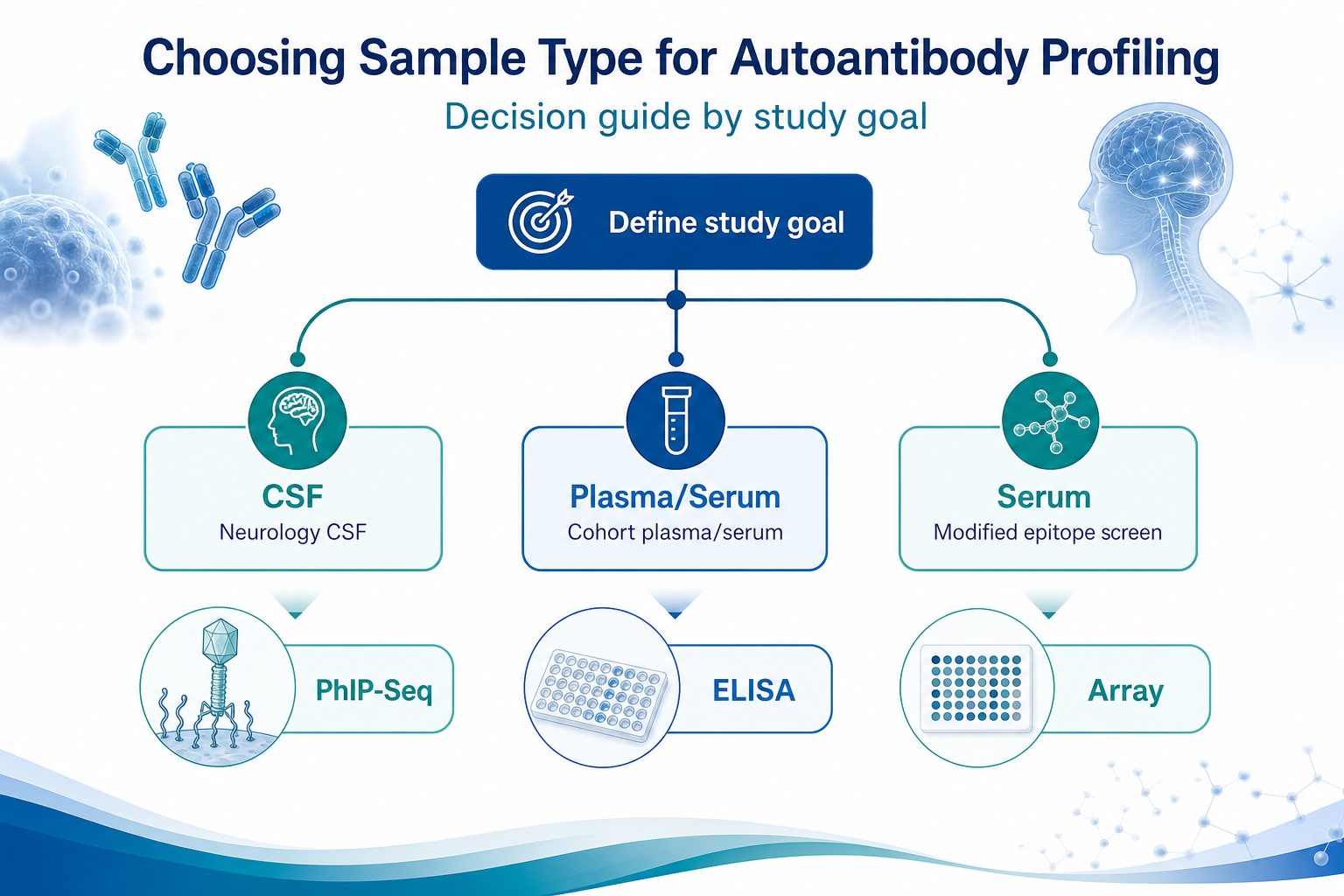
Figure 2. Sample matrix selection should follow study goal, disease compartment, and the downstream profiling or validation method planned for the project.
Sample Handling Essentials
Sample handling strongly affects autoantibody profiling quality regardless of matrix.
Collection should follow a written protocol for tube type, anticoagulant, clot time if serum is used, and time to centrifugation. Processing should separate cellular components promptly and document hemolysis or lipemia when present. Aliquoting should avoid repeated freeze-thaw cycles that can degrade immunoglobulins and alter apparent reactivity. Storage should use defined temperature conditions, typically frozen storage for delayed analysis. Quality control should record volume, appearance, contamination flags, and processing delay before samples enter enrichment or binding workflows.
CSF samples require additional attention to blood contamination, cell content, and limited volume allocation for replicate testing.
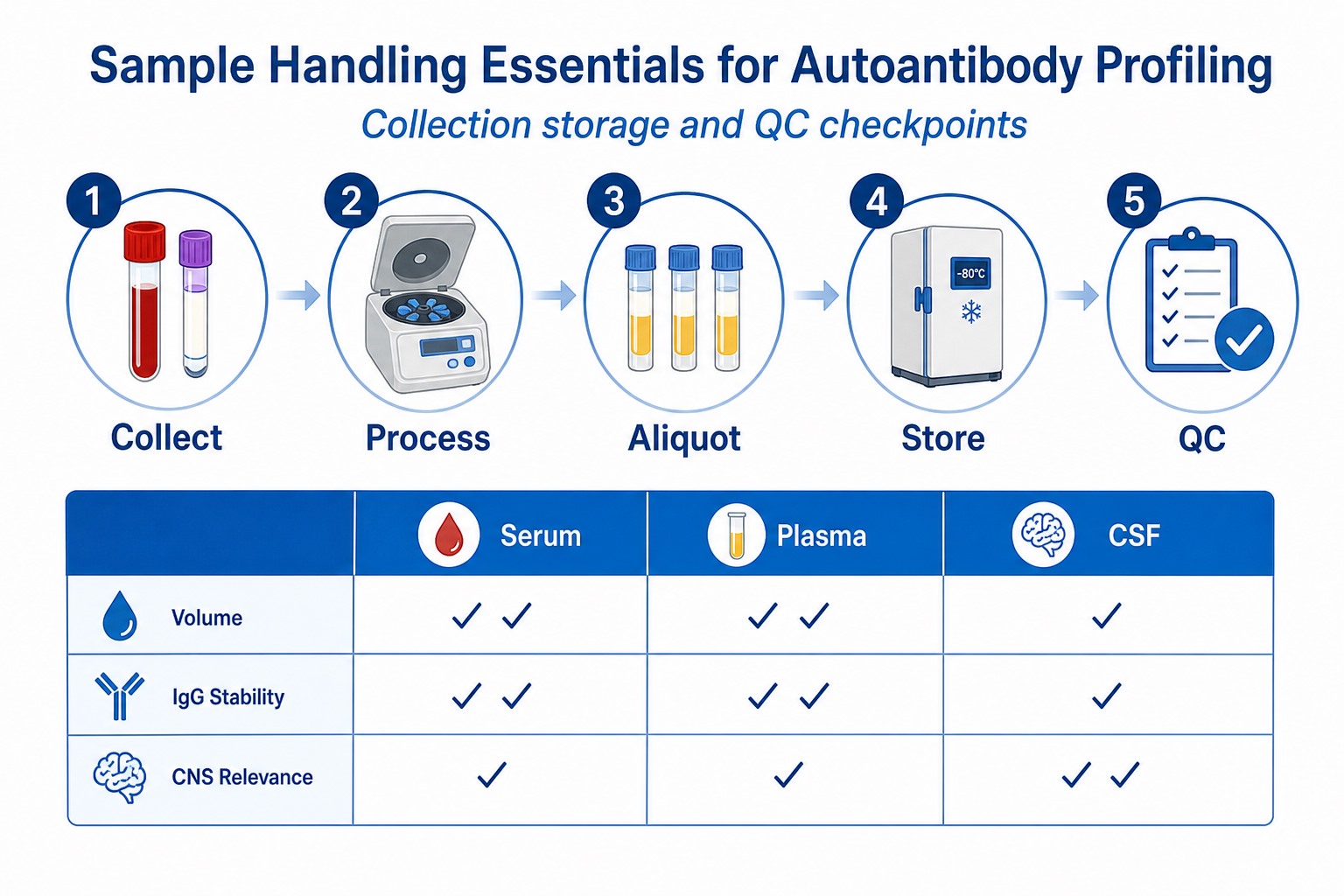
Figure 3. Consistent collection, processing, storage, and QC checkpoints support comparable autoantibody profiling across serum, plasma, and CSF samples.
Applications Where Matrix Choice Shapes Outcomes
Matrix choice affects how profiling results are used in downstream research.
Systemic autoimmune discovery programs often run serum or plasma across large case-control cohorts for peptide display or array screening. Neurology programs may profile CSF to identify CNS-associated candidates before blood validation. Treatment monitoring studies should use one matrix consistently to compare baseline and follow-up reactivity. Paired blood and CSF studies support compartment comparison when intrathecal contribution is analytically relevant. Validation workflows may move from discovery matrix to orthogonal assay format, such as CSF discovery followed by peptide confirmation in independent CSF or serum sets.
Reporting should state the matrix used and whether thresholds were adjusted for IgG abundance or CSF volume constraints.
Key Considerations and Common Mistakes
Several matrix-related mistakes recur in autoantibody profiling projects.
Mixing serum and plasma within one analysis set without batch correction or separate reporting. Applying blood-based enrichment cutoffs directly to CSF and excluding true low-abundance CNS signals. Ignoring hemolysis or blood contamination in CSF samples. Switching anticoagulant type across plasma aliquots from the same study. Failing to document processing delay, which can alter platelet release in plasma and apparent enrichment patterns.
Fixing matrix and handling protocol at intake reduces repeat screening and improves cross-cohort comparability.
Frequently Asked Questions
1. Is serum or plasma better for autoantibody profiling?
Neither is universally better. Serum is common in standard serology. Plasma is common in biobank cohorts. The better choice depends on collection consistency, study history, and background effects relevant to the workflow.
2. When should CSF be used instead of blood?
CSF is preferred when the research question focuses on CNS or intrathecal autoantibody activity and paired blood alone cannot address the compartment hypothesis.
3. Can CSF and serum results be compared directly?
Not without caution. CSF has lower total immunoglobulin and different background. Thresholds, controls, and interpretation should be matrix-specific.
4. Does matrix choice affect PhIP-Seq results?
Yes. Input amount, background composition, and IgG abundance differ across serum, plasma, and CSF, which can change enrichment profiles and candidate ranking.
5. What is the most common handling error?
Inconsistent processing time, hemolysis, or blood contamination in CSF are frequent sources of avoidable variability across autoantibody profiling runs.
Conclusion
Serum, plasma, and CSF each support autoantibody profiling, but they are not interchangeable matrices. Serum and plasma offer higher immunoglobulin abundance and are suited to systemic cohort discovery when collection and processing are standardized. CSF offers compartment relevance for CNS-focused questions but requires lower-volume planning, stricter handling, and matrix-specific interpretation.
The most reliable profiling programs choose one primary matrix before screening, document handling and QC at intake, and match enrichment thresholds to the biology of the sample type. Researchers planning autoantibody profiling can contact MtoZ Biolabs to review whether serum, plasma, or CSF best fits the study goal and how sample intake should be structured for the planned workflow. For paired blood and CSF programs, MtoZ Biolabs can also help align matrix-specific analysis and validation planning before samples are submitted.
How to order?




