






Principles of Quantitative Ubiquitinomics: Enrichment, LC-MS/MS, and Quantification Strategies
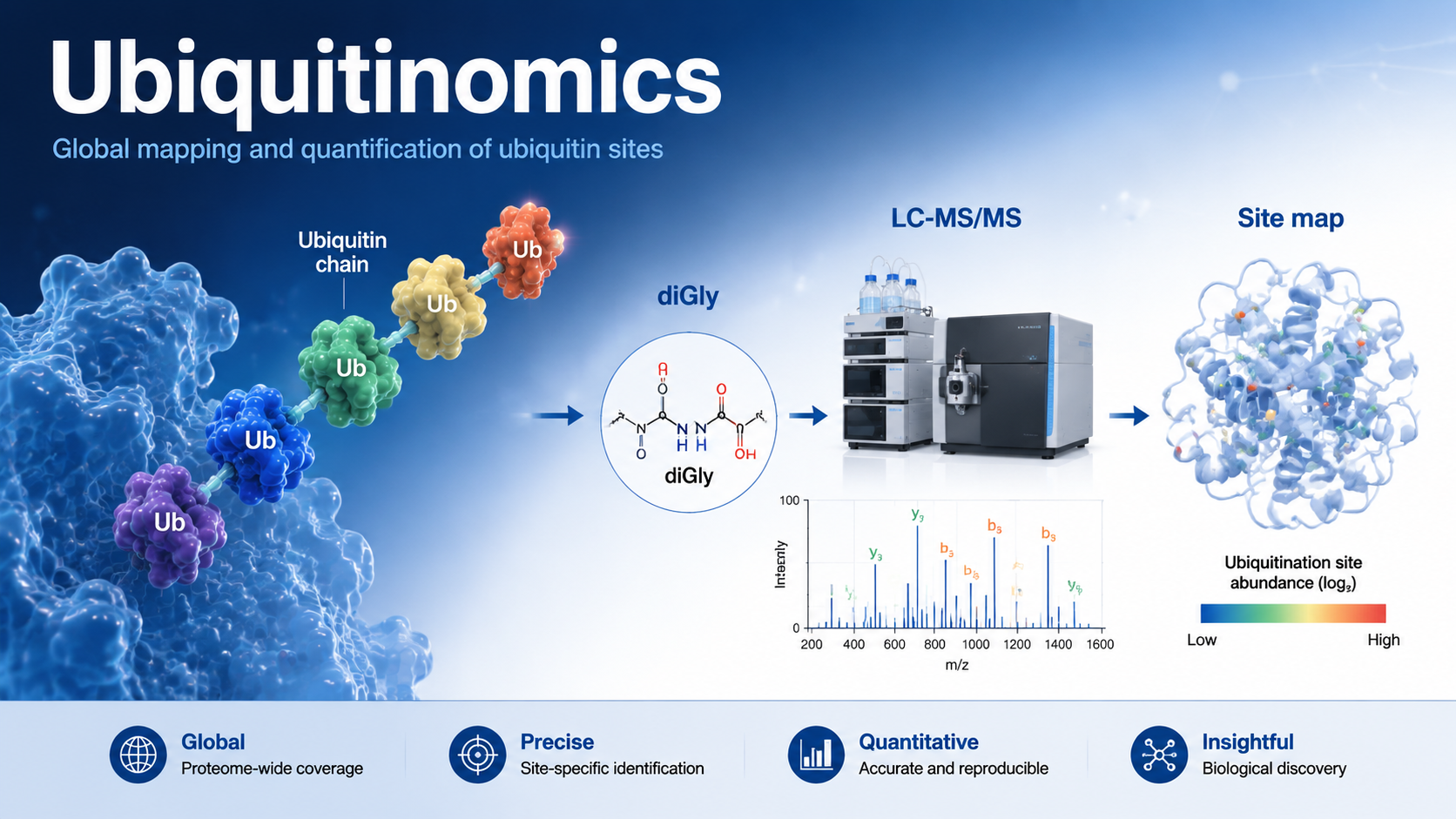
Quantitative ubiquitinomics combines selective enrichment of ubiquitinated peptides with high-resolution LC-MS/MS to map lysine ubiquitination sites and measure how those marks change across conditions. The approach supports studies of protein turnover, signaling, DNA repair, and disease mechanisms where E1–E2–E3 enzyme networks rewrite substrate fate through ubiquitin chains.
Key Takeaways
-
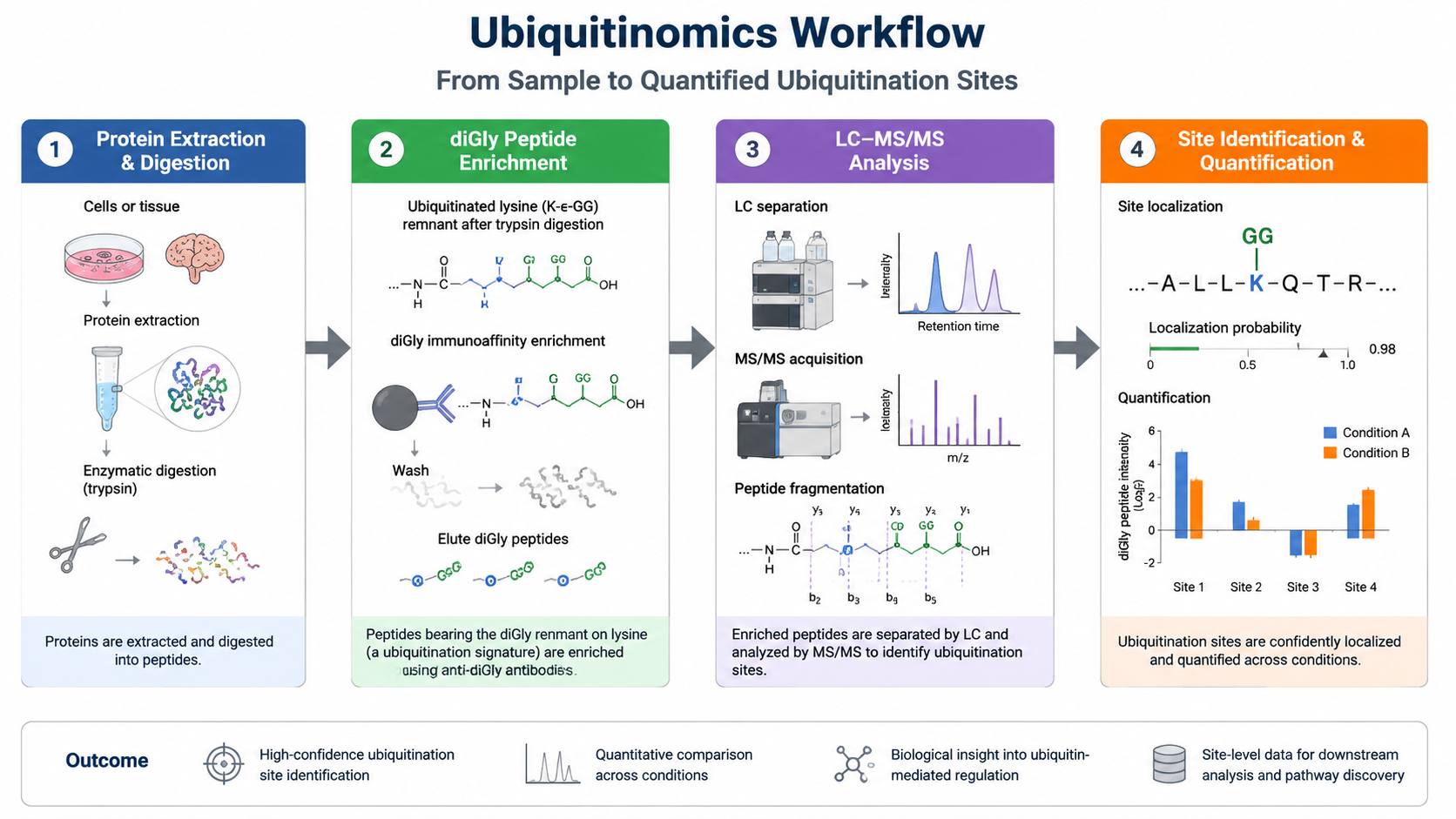
Trypsin digestion leaves a diGly remnant on modified lysines that enables anti-K-ε-GG enrichment.
-
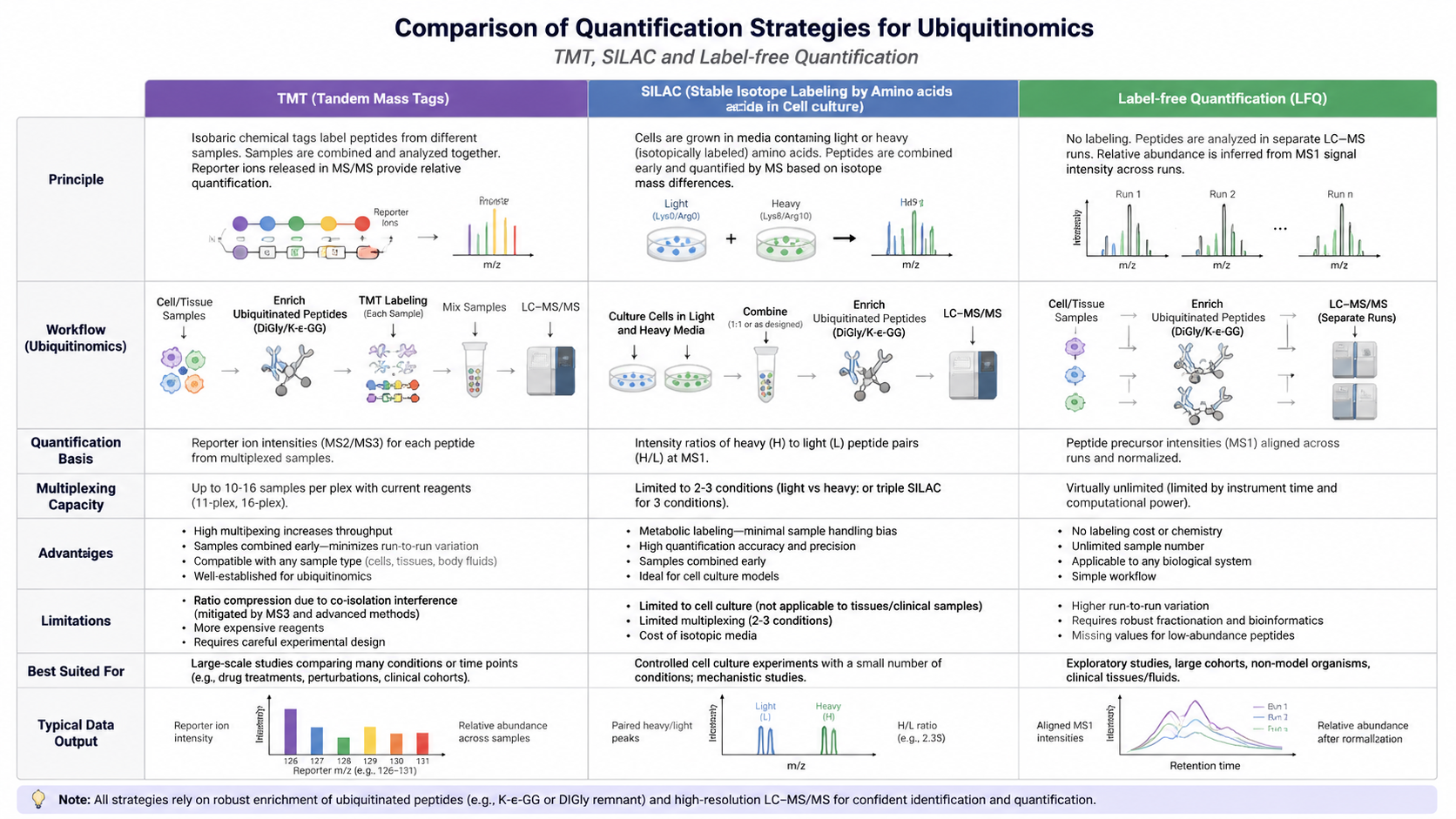
TMT, SILAC, and label-free quantification each fit different experimental scale and replicate design.
-
Site localization and FDR control are as important as peptide identification counts.
-
Low abundance and sample complexity make enrichment and LC optimization non-optional.
-
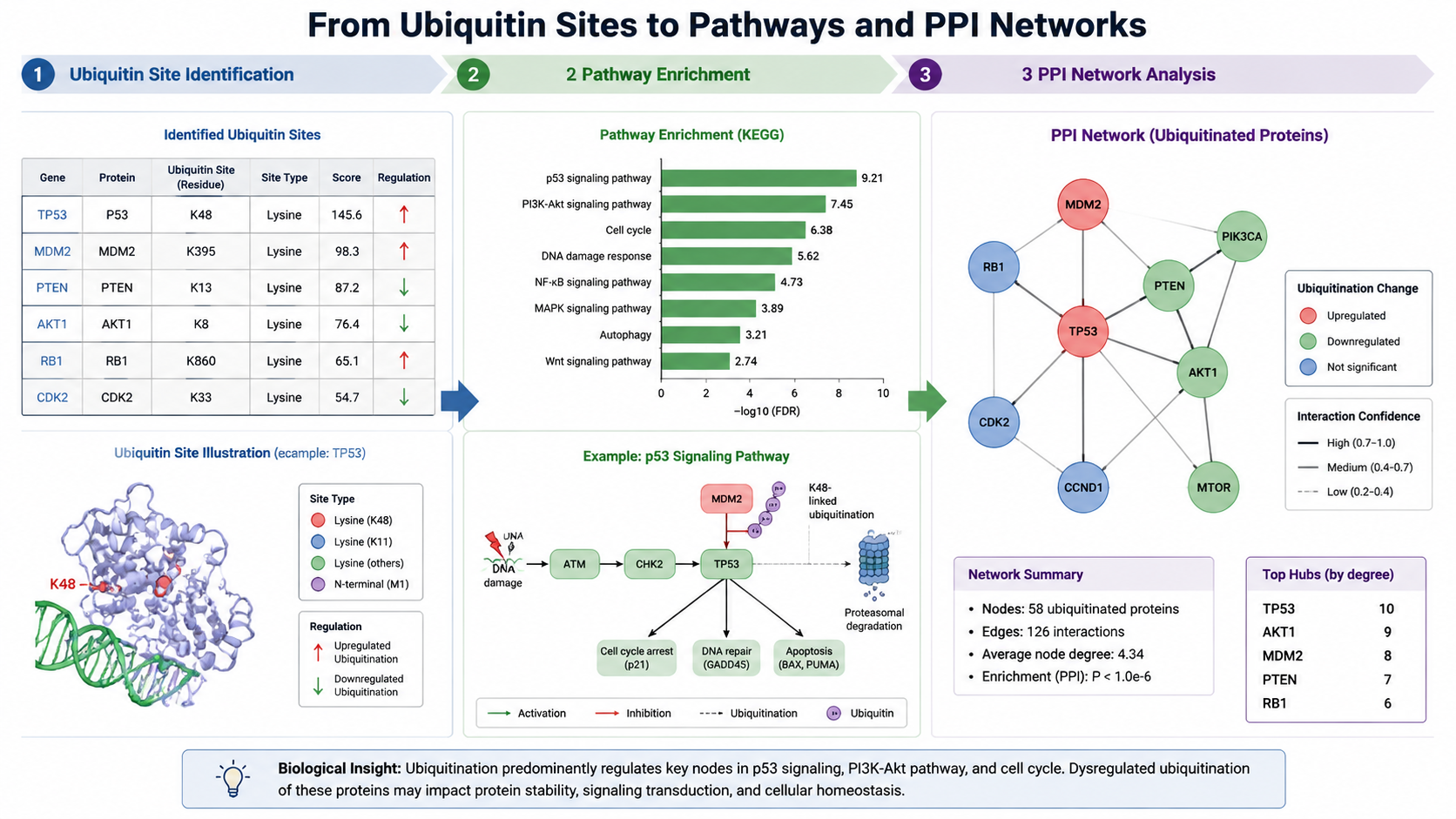
Pathway and PPI analysis translate site lists into regulatory hypotheses.
What is Ubiquitinomics?
Ubiquitination attaches the 76-residue ubiquitin protein to substrate lysines through an E1-E2-E3 cascade. Mono- and polyubiquitin chains alter stability, localization, activity, and interactions. Quantitative ubiquitinomics scales that biology to proteome-wide site maps with quantitative comparison between treatments, genotypes, or time points.
Related Services
Quantitative Ubiquitinomics Service
Ubiquitination Quantitative Proteomic Analysis Service
Ubiquitination Proteomics Service
DIA-MS Ubiquitinome Analysis Services
Protein Ubiquitination Identification Service
Core Technical Principles
1. Specific Enrichment of Ubiquitinated Peptides
After trypsin cleavage, ubiquitin-modified lysines retain a diGly tag. Anti-K-ε-GG antibodies enrich these peptides from complex proteomes.
2. Quantification Strategies
| Method | Strength | Typical Use |
|---|---|---|
| TMT / iTRAQ | Multiplexed comparison | Treatment panels, time courses |
| SILAC | Metabolic labeling | Paired control versus perturbation |
| Label-free | Flexible sample count | Pilot screens, large cohorts |
3. LC-MS/MS Analysis
Orbitrap-class instruments provide resolution for site assignment. Include diGly on lysine as a variable modification with strict localization and FDR filters.
Advantages and Challenges
1. Advantages
Thousands of sites per run; dynamic profiling; pathway and interaction integration.
2. Challenges
Low stoichiometry; sample complexity; batch effects requiring replicate design and normalization.
FAQ
1. What remnant marks ubiquitinated lysines after trypsin digestion?
A diGly remnant remains on modified lysines and is the basis for anti-K-ε-GG enrichment.
2. Is anti-diGly enrichment required?
For deep global site mapping in most proteomes, diGly enrichment is standard practice.
3. Can ubiquitinomics use DIA?
Yes, when spectral libraries and study design support reproducible quantification.
Conclusion
Quantitative ubiquitinomics works when enrichment, quantification, and site reporting are planned as one system rather than as a generic proteomics run with an extra modification table.
How to order?




