



Quantitative protein profiling measures how protein abundance changes across samples, treatments, disease states, or time points. In practice, it usually combines LC-MS/MS with a quantitative strategy such as label-free analysis, data-independent acquisition (DIA), tandem mass tag (TMT) multiplexing, or targeted verification by parallel reaction monitoring (PRM) or selected reaction monitoring (SRM). The goal is not only to identify proteins, but to quantify biologically meaningful differences with enough analytical control to support mechanism studies, biomarker candidate screening, and drug-response interpretation.
Researchers planning cohort-level abundance matrices can review the MtoZ Biolabs Quantitative Proteomics Service for method-family scoping before sample submission.
What Quantitative Protein Profiling Measures
Quantitative protein profiling compares protein abundance across biological conditions. It can evaluate healthy versus diseased tissue, treated versus untreated cells, dose-response series, process-development batches, or longitudinal research samples. The output is usually a protein-by-sample matrix, followed by differential testing, pathway interpretation, and candidate selection for verification.
Profiling summarizes many proteins per sample under one method record. It is not automatic whole-proteome coverage, not molar concentration for every protein, and not a diagnostic certificate by itself. Expression-oriented framing for the same deliverable class is discussed in Protein Expression Profiling in Quantitative Proteomics.
A differential list is a profiling result; biomarker or mechanism conclusions still require matched design, QC, and often targeted follow-up.
Core LC-MS/MS Workflow
A standard quantitative protein profiling workflow includes study design, sample collection, protein extraction, digestion, peptide cleanup, LC-MS/MS acquisition, database search or library-based analysis, quantification, normalization, statistical testing, and biological interpretation.
The highest-risk points are usually upstream. Sample heterogeneity, incomplete digestion, batch effects, variable peptide recovery, and missing-value patterns can distort quantitative conclusions long before the final volcano plot appears. A defensible study therefore treats sample handling, acquisition, and analysis as one controlled workflow rather than as disconnected modules.
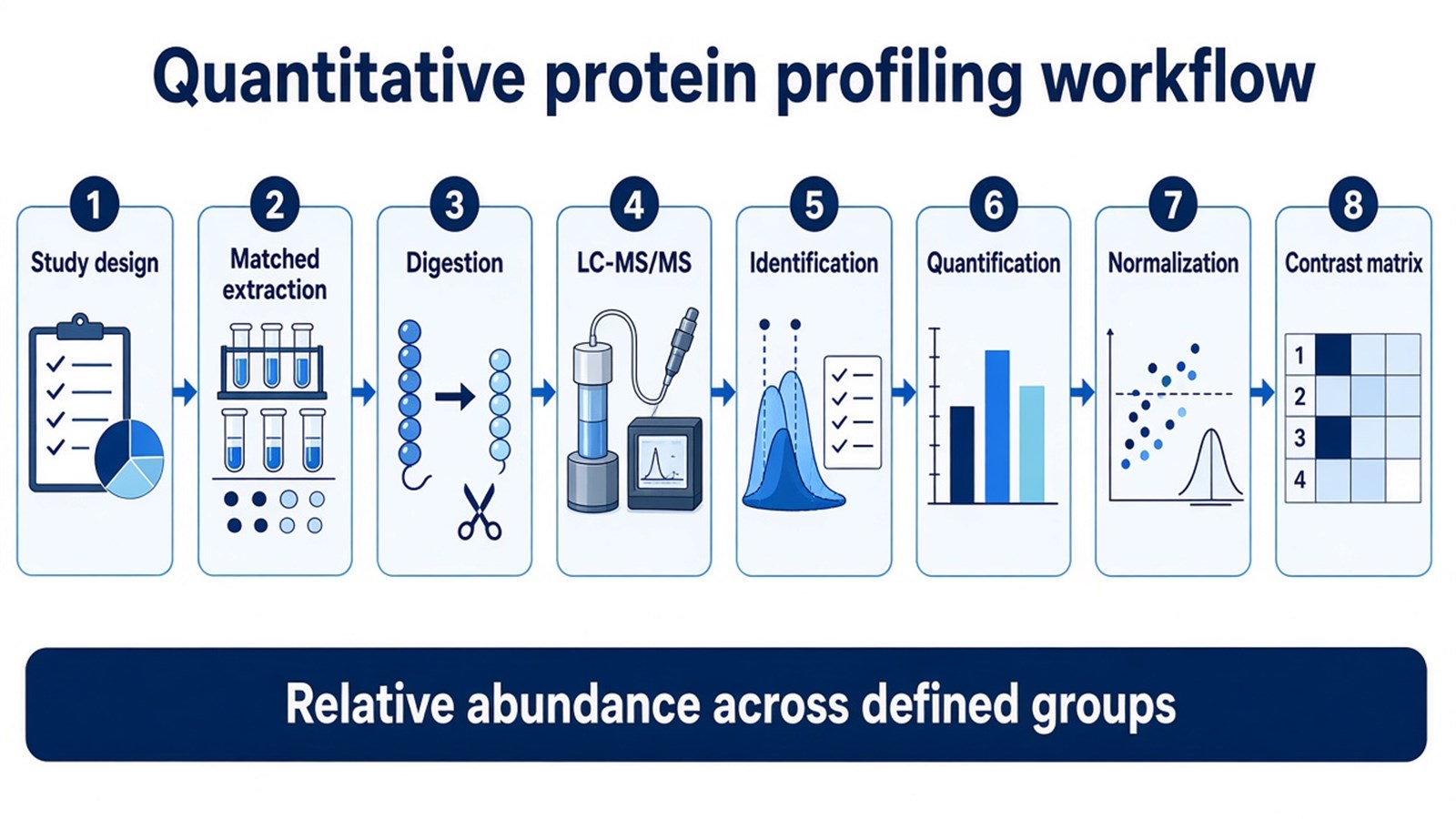
Figure 1. Quantitative protein profiling links matched prep and LC-MS/MS acquisition to a relative protein abundance matrix across defined groups.
Quantification Strategies Used in Profiling
1. Label-Free Quantitative Proteomics
Label-free workflows are flexible when many samples need broad proteome coverage without chemical labeling. They work well for discovery profiling, but they require strong control of injection consistency, chromatographic stability, missing values, and batch-aware normalization.
2. DIA Proteomics
DIA improves consistency across larger cohorts by systematically fragmenting peptide windows instead of stochastically selecting precursors. That makes it attractive for comparative profiling when reproducibility across independent injections matters more than exploratory data-dependent breadth alone.
3. Isobaric Labeling
TMT supports multiplexed experiments in which several arms share one LC-MS/MS analytical block. Reporter-ion ratios reduce some run-to-run variation inside the plex, but ratio compression, channel layout, and interference control still need attention. Related isobaric chemistries follow the same closed-plex logic; project choice should follow enrollment rules rather than kit marketing alone.
4. Targeted Follow-Up
PRM and SRM are not usually the first discovery choice, but they are valuable when shortlisted proteins need tighter quantitative verification in a second-stage study. Targeted panels quantify only scheduled peptides and do not resurvey an open proteome.
Strategy selection across label-free, DIA, and TMT designs is discussed further in DDA vs. DIA vs. TMT in LC-MS/MS Proteomics: How to Choose the Right Strategy.
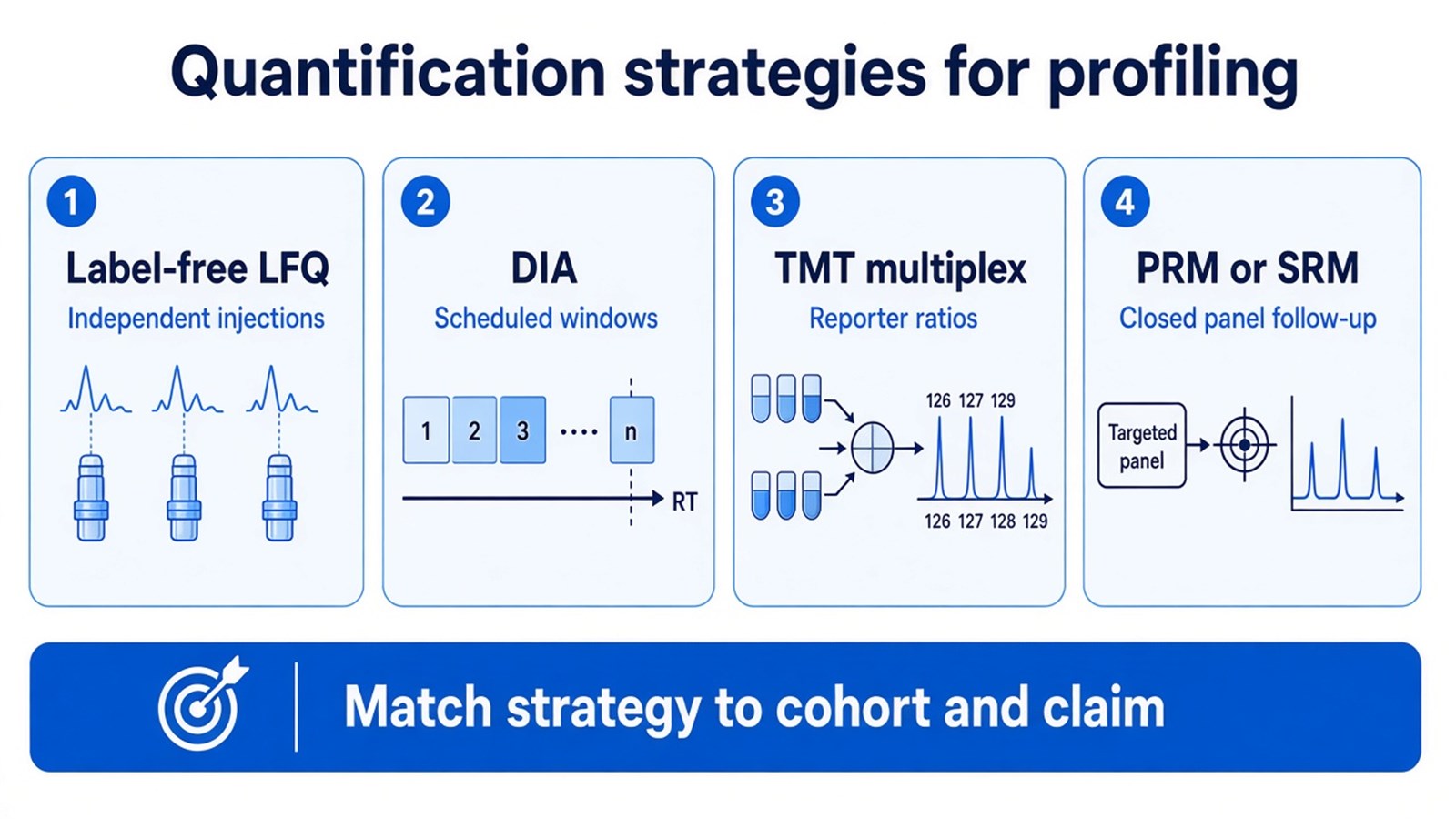
Figure 2. Profiling strategy should match cohort structure and claim type: open discovery, multiplexed relative ratios, or closed-panel confirmation.
Method Selection
Study goal |
Method that often fits |
Main strength |
Main caution |
|---|---|---|---|
Broad discovery across many samples |
Label-free quantitative proteomics |
Flexible enrollment without labeling |
Missing values and batch effects need review |
Cohort-scale consistency |
DIA proteomics |
Reproducible quantification across injections |
Requires optimized extraction and QC |
Multiplexed experimental comparison |
TMT |
Many arms in one analytical block |
Ratio compression can hide smaller changes |
Verification of selected proteins |
PRM or SRM |
Targeted sensitivity on a closed list |
Limited scope compared with discovery workflows |
Research follow-up after discovery |
Quantitative profiling plus orthogonal confirmation |
Stronger decision support |
Validation design often dominates effort |
Prefer unlabeled profiling when enrollment stays open and prep can stay matched. Prefer TMT when arms can close into one kit before pooling. Prefer targeted follow-up when peptides are already named. Prefer absolute amount reporting only when standards and calibration are declared.
Research Applications
1. Biomarker Discovery
Quantitative protein profiling can reveal proteins associated with diagnosis research, disease stage, prognosis hypotheses, or treatment response. The strongest biomarker studies combine abundance differences with independent validation, biological context, and sample stratification rather than discovery ranks alone.
2. Drug Target and Mechanism Studies
By comparing treated and untreated systems, researchers can see whether a compound shifts the intended pathway, produces compensatory responses, or changes off-target proteins that help explain efficacy or toxicity signals in research models.
3. Toxicology and Stress-Response Analysis
Exposure studies often use quantitative protein profiling to map inflammation, detoxification, oxidative stress, apoptosis, or metabolic rewiring under defined conditions.
4. Biopharmaceutical and Process Development Support
In applied settings, profiling can support comparability studies, cell-line evaluation, media optimization, process perturbation analysis, and critical quality investigations tied to protein expression behavior. These uses remain research or CMC-supporting characterization contexts rather than GMP release testing.
Quality Controls and Limitations
Quantitative protein profiling is powerful, but not automatically reliable. Low-abundance proteins, missing peptide evidence, inconsistent digestion, sample degradation, peptide interference, and normalization choices can all change the final ranking of differentially abundant proteins.
For that reason, a defensible study usually includes biological replicates, QC samples, retention-time stability checks, peptide-level review, normalization transparency, false-discovery control, and an explicit plan for downstream validation. Pathway enrichment shows overrepresentation within the quantified background; it does not prove pathway activity. Diagnostic cutoffs sit outside ordinary research profiling unless a separately validated assay framework is declared.
Frequently Asked Questions
1. What is quantitative protein profiling?
Quantitative protein profiling is the measurement of protein abundance differences across samples or conditions, usually using LC-MS/MS combined with a quantitative analysis strategy that produces a protein-by-sample matrix.
2. Which method is best for quantitative protein profiling?
No single method fits every project. Label-free and DIA methods are common for discovery profiling, TMT supports multiplexing when arms can freeze into one kit, and PRM or SRM supports follow-up verification of shortlisted proteins.
3. Why is sample preparation so important?
Quantitative conclusions are only as strong as sample consistency. Variable extraction, digestion, cleanup, or storage conditions can introduce abundance changes that look biological but are actually technical.
4. Can quantitative protein profiling support biomarker studies?
Yes, as a discovery and candidate-ranking layer. Stronger biomarker claims require independent cohorts, orthogonal validation, and careful control of clinical or biological heterogeneity.
5. How are differential proteins validated?
Researchers often validate candidates using targeted MS such as PRM or SRM, independent sample sets, or complementary assays selected for the claim. The validation plan should be declared before the discovery matrix is overinterpreted.
Conclusion
Quantitative protein profiling is most useful when the experimental question, quantification strategy, and validation plan are aligned from the start. A capable LC-MS/MS platform matters, but robust results depend even more on study design, sample discipline, statistical transparency, and a realistic plan for turning differential protein lists into biological evidence. Researchers planning quantitative protein profiling can contact MtoZ Biolabs to review cohort design, method family, and reporting needs before analysis begins, and can also consult the MtoZ Biolabs Quantitative Proteomics Service for project-specific feasibility and workflow planning.
