






Purified IgG or Hybridoma Cells? Selecting the Antibody Sequence Recovery Route for Your Project
Introduction
Antibody sequence recovery projects rarely fail because the binder is unknown. They fail because the team starts with the wrong material assumption. One project may have only an old IgG aliquot in the freezer. Another may still maintain a low-passage hybridoma culture with no sequence file. A third may hold a recombinant lot that must be verified before tech transfer. Each starting point supports a different recovery route.
Antibody protein sequencing from purified IgG and hybridoma PCR recovery from cells or RNA can both produce VH/VL evidence, but they answer the same business need through different sample requirements. Selecting the wrong route wastes time, consumes limited material, and can still leave the team without sequence data suitable for expression design or documentation.
The decision should begin with one question: what material do you actually have today, and what level of evidence does the next milestone require? If your team is weighing IgG-based LC-MS/MS recovery against hybridoma PCR, MtoZ Biolabs can Match the route to available material before samples are prepared or submitted.
Start With the Material You Have, Not the Method You Prefer
Method selection usually begins with one of four material scenarios:
1. Only Purified IgG or Enriched Antibody Protein Remains
Hybridoma cells are unavailable, unrecoverable, or no longer trusted.
2. Viable Hybridoma Cells or High-Quality RNA Are Still Accessible
Sequence recovery can begin from transcript material.
3. A Recombinant IgG Lot Must Be Verified Against an Intended Design
The question is protein-level confirmation, not clone discovery.
4. Documentation Requires Independent Evidence
A prior database match or internal record must be supported by additional sequence data.
Related Services
Route Comparison at a Glance
| Decision Factor | IgG-Based Antibody Protein Sequencing | Hybridoma PCR Recovery |
|---|---|---|
| Required starting material | Purified IgG or enriched antibody protein | Hybridoma cells or RNA |
| Best fit when cells are lost | Strong fit | Not possible without cells |
| Evidence type | Protein-level peptide assembly | Transcript-level VH/VL |
| Typical use cases | Legacy IgG rescue, recombinant lot verification, comparator documentation | Clone backup, hybridoma rescue, vector design |
| Common bottleneck | Variable-region coverage and IgG purity | RNA quality and cell viability |
| Typical turnaround | Often longer due to LC-MS/MS depth | Often faster when cells are healthy |
When Purified IgG Sequencing Is the Better Fit
Protein-level recovery is usually the right first choice when:
- hybridoma cells are gone or no longer viable
- only archived IgG, affinity eluate, or recombinant lot material remains
- the project requires protein-level confirmation of an expressed antibody
- documentation standards require MS-based primary structure evidence
- hybridoma productivity has declined beyond practical cell-based recovery
Strengths include independence from genetic archives and direct evidence from the antibody submitted. Legacy rescue, biosimilar support, and recombinant verification are all common fit cases.
Limitations include dependence on IgG purity, sample amount, and sufficient variable-region coverage. Glycosylated or highly impure material may require repeat digestion or additional cleanup.
Teams with purified IgG may review or depending on scope.
When Hybridoma PCR Recovery Is the Better Fit
Hybridoma PCR remains the preferred route when:
- viable hybridoma cells or high-quality RNA are available
- the goal is efficient VH/VL recovery with CDR annotation
- the project focuses on clone backup before cell line loss
- recombinant vector design requires transcript-level sequence evidence
Strengths include speed and direct transcript-level recovery when cell health is good. For active hybridoma cultures, this route is often more efficient than protein-level assembly.
Limitations include dependence on RNA quality, monoclonality, and primer compatibility. If cells are no longer available, PCR recovery cannot proceed without alternative material.
Where Peptide Mapping Fits
Peptide mapping is not a substitute for unknown VH/VL discovery when no reference sequence exists. It is most useful when a reference is already available and the goal is confirmation rather than initial sequence recovery from purified IgG.
Some projects combine routes strategically. Hybridoma PCR may provide transcript-level VH/VL evidence, while IgG-based LC-MS/MS confirms the expressed product or resolves ambiguity in difficult cases.
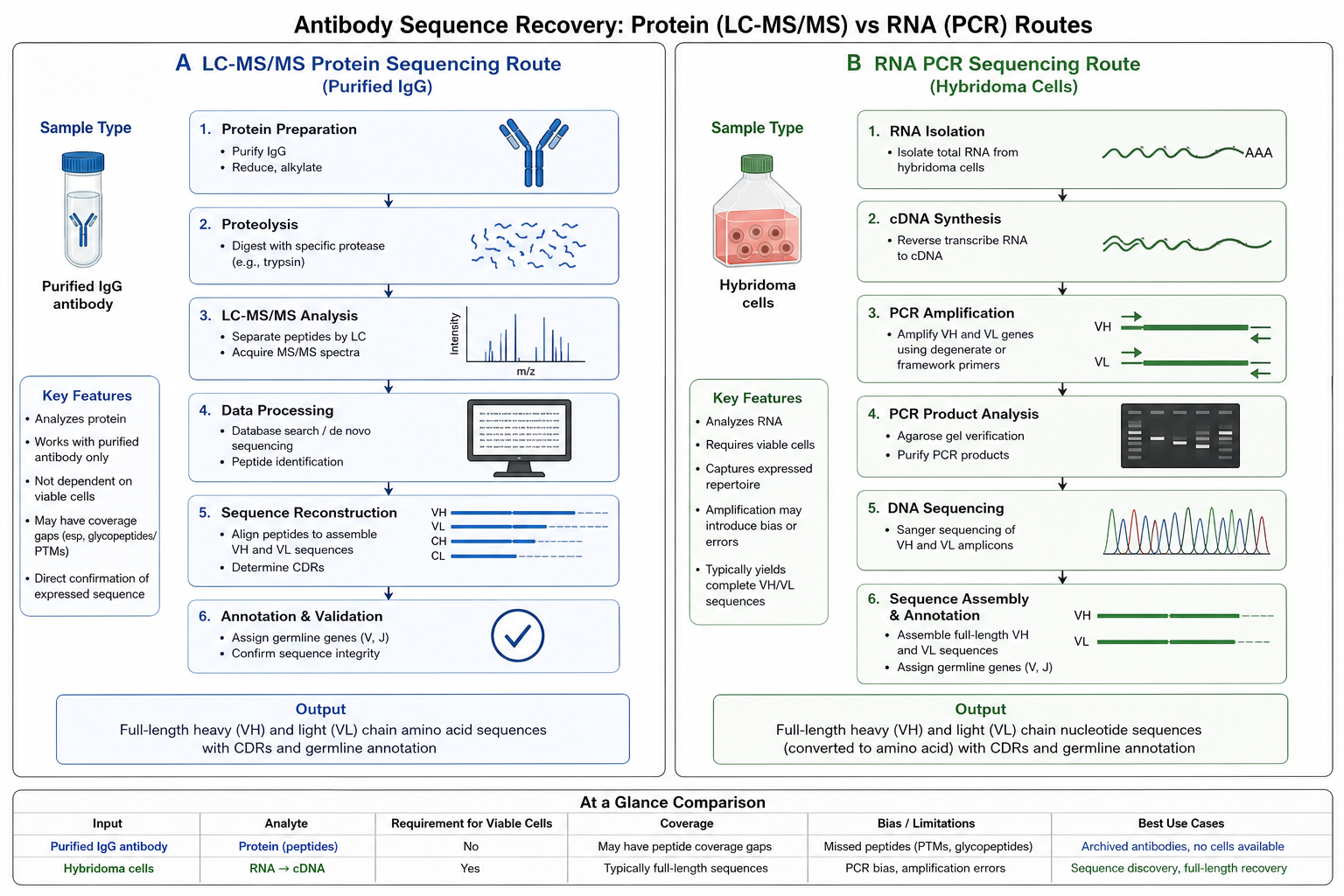
Figure 1. Available material should determine whether IgG-based sequencing or hybridoma PCR is the better first step.
Decision Guide by Project Goal
1. Choose IgG-based antibody protein sequencing when:
- purified antibody is the only reliable material left
- recombinant lot verification is the primary goal
- legacy IgG must be converted into a sequence record for rescue planning
- MS-based documentation is required for publication, patent, or QC review
Protein-level recovery from purified IgG is the default route in most legacy rescue and recombinant verification programs when hybridoma cells are no longer accessible.
2. Choose hybridoma PCR recovery when:
- viable cells or high-quality RNA remain accessible
- clone backup is urgent and cell health is acceptable
- transcript-level VH/VL recovery is sufficient for vector design
- speed matters and hybridoma material is trusted
3. Choose peptide mapping when:
- a reference sequence already exists
- the goal is coverage confirmation rather than discovery
4. Consider combined evidence when:
- the antibody is high value
- expression or documentation standards require orthogonal support
In-House Capability vs Outsourced Recovery
Some labs perform routine database search or partial mapping internally. Full IgG-based VH/VL recovery still requires de novo peptide interpretation, coverage review, and CDR annotation expertise that many teams use only occasionally.
Outsourcing can reduce rework when IgG purity is uncertain, isotype metadata is incomplete, or report-ready deliverables are required on a fixed timeline. When comparing vendors, ask whether difficult IgG samples receive expert manual review rather than automated scoring alone.
For one-time legacy rescue projects, outsourced De Novo Antibody Sequencing Service support is often more efficient than building occasional protein-level interpretation capability internally.
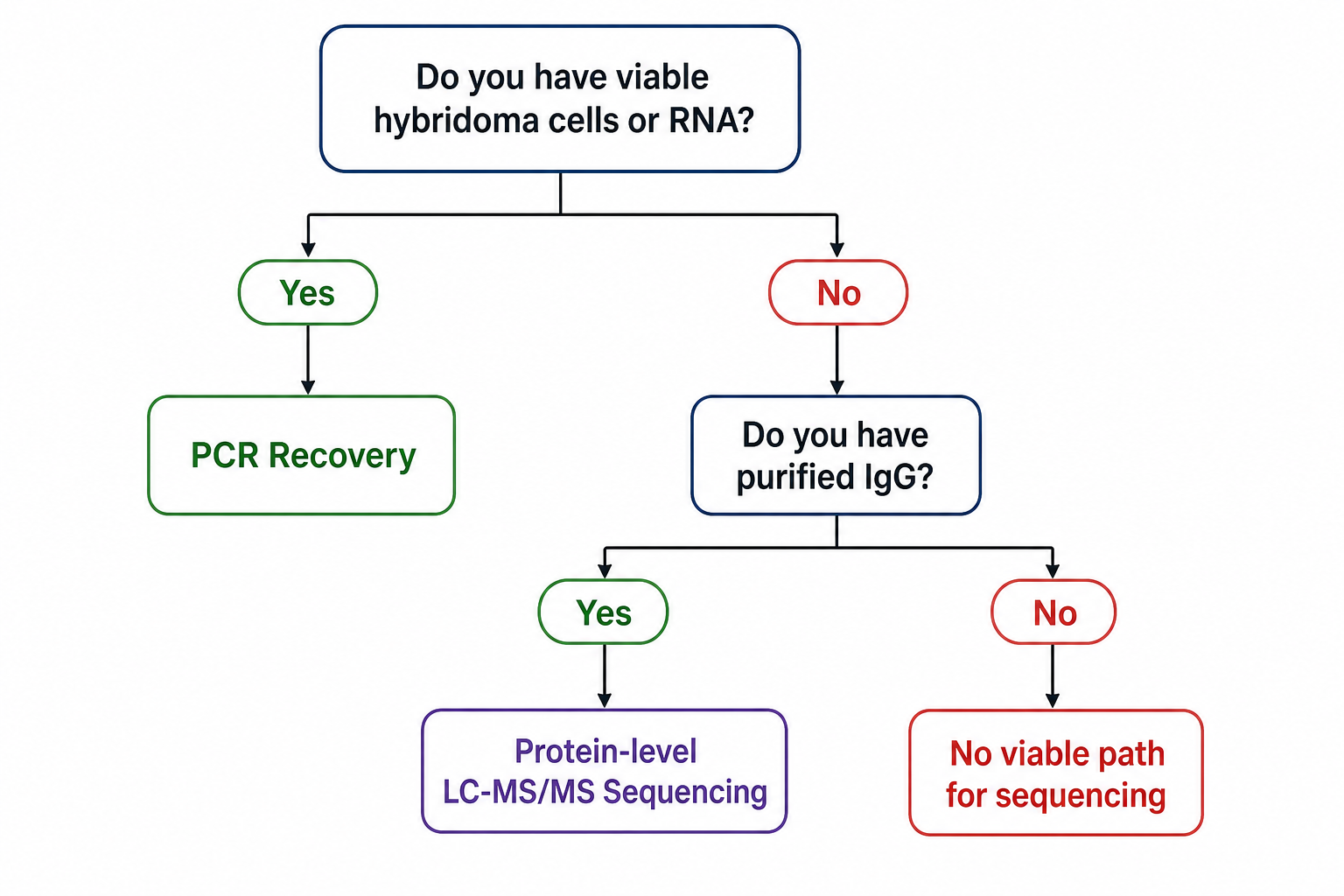
Figure 2. Hybridoma availability determines whether IgG sequencing or PCR recovery should lead the project plan.
Frequently Asked Questions
1. If I still have both IgG and hybridoma cells, which route should I try first?
Usually hybridoma PCR when cell health and RNA quality are acceptable. IgG sequencing becomes the lead route when cell trust is low or only protein archives remain.
2. Can both routes be used in one program?
Yes. Some teams recover sequence by PCR and confirm the expressed IgG by protein-level analysis.
3. Does IgG sequencing always recover full-length antibody sequence?
Many projects focus on VH and VL. Expanded constant-domain coverage depends on scope and sample quality.
4. What if my IgG is low purity but cells are gone?
Feasibility review is critical. Additional purification may be required before variable-region coverage is achievable.
5. When is antibody protein sequencing the only practical option?
When hybridoma cells or RNA are unavailable and purified IgG is the last reliable material for VH/VL recovery.
6. Can IgG sequencing support biosimilar documentation?
Yes, when purified comparator material is available and coverage requirements are defined clearly during scoping.
Conclusion
Purified IgG sequencing and hybridoma PCR recovery solve the same broad need from different starting materials. Antibody protein sequencing is usually the stronger choice when only IgG protein remains or when recombinant verification requires protein-level evidence. Hybridoma PCR is the better first step when viable cells or RNA are still accessible. Route selection should begin with material availability and project evidence requirements, not platform preference alone.
MtoZ Biolabs can Align the recovery plan , , and . Contact the technical team to compare options before sample submission.
How to order?




