






PI3K-AKT Pathway Antibody Solutions for IP-MS Interaction Analysis
PI3K-AKT pathway studies often begin with a clear biological contrast—growth factor stimulation, inhibitor treatment, oncogenic mutation, or nutrient shift—yet stall when the capture reagent does not match the node under investigation. Mapping interactors around PI3K catalytic or regulatory subunits, AKT isoforms, PTEN, mTOR, or downstream effectors requires different bait logic, and not every catalog antibody labeled for western blot will feed interpretable Co-IP-MS data.
PI3K-AKT pathway antibody solutions for IP-MS interaction analysis mean selecting IP-MS validated reagents aligned to the pathway node and activation state that represent the hypothesis, then using LC-MS/MS to identify co-enriched proteins that may explain signaling output. An antibody validated for IP-MS should document bait recovery with MS-compatible background under stated immunoprecipitation conditions—not generic pathway reactivity alone. Share the pathway node, condition contrast, and planned readout with MtoZ Biolabs while antibody and Co-IP-MS design are still open.
Start With the Pathway Node, Not the Catalog Search
PI3K-AKT signaling spans receptor-proximal PI3K assembly, AKT activation, PTEN antagonism, mTORC signaling, and multiple downstream branches. Interaction questions differ by node.
A project focused on PI3K regulatory complex remodeling is not the same as one focused on phospho-AKT-dependent partner exchange or PTEN-containing complexes after stress. Choosing an antibody before defining the node often leads to weak bait recovery, wrong subpopulation capture, or background-heavy lists that cannot support pathway claims.
Two questions should be settled first:
- Which protein state represents the PI3K-AKT hypothesis—total node, isoform-specific bait, or phosphorylated subpopulation?
- Will partner identification depend on endogenous Co-IP-MS, or can tagged AP-MS support the question?
Which Antibody Class Fits Which PI3K-AKT Question
Use the table below to shortlist antibody type before reviewing individual SKUs or services.
|
PI3K-AKT question |
Bait logic |
Antibody class to review first |
Typical workflow fit |
|---|---|---|---|
|
PI3K complex assembly |
p110, p85, or regulatory subunit |
IP-MS validated Target Protein Antibody for that subunit |
Co-IP-MS across conditions |
|
AKT isoform-specific interactome |
AKT1, AKT2, or AKT3 |
Isoform-specific IP-MS validated antibody |
Condition-matched Co-IP-MS |
|
Pan-AKT node comparison |
Total AKT pool |
Pan-AKT IP-MS validated antibody |
Stimulation or inhibitor contrast |
|
Active AKT subpopulation |
Phospho-AKT state |
Phospho-specific IP-MS validated antibody |
Activation-timecourse Co-IP-MS |
|
PTEN-centered signaling switch |
PTEN bait |
IP-MS validated PTEN antibody |
Mutant versus wild-type or stress contrast |
|
mTOR branch coupling |
mTOR or TSC node |
IP-MS validated mTOR or TSC antibody |
Pathway branch comparison |
|
Downstream effector module |
GSK3, FOXO, or related node |
Target-specific IP-MS validated antibody |
Downstream Co-IP-MS mapping |
|
Tagged pathway construct acceptable |
Affinity-tagged bait |
Tag AP route |
AP-MS |
The table is a planning guide. It does not replace SKU-level review of species fit, validation evidence, and bead compatibility for the exact product under consideration.
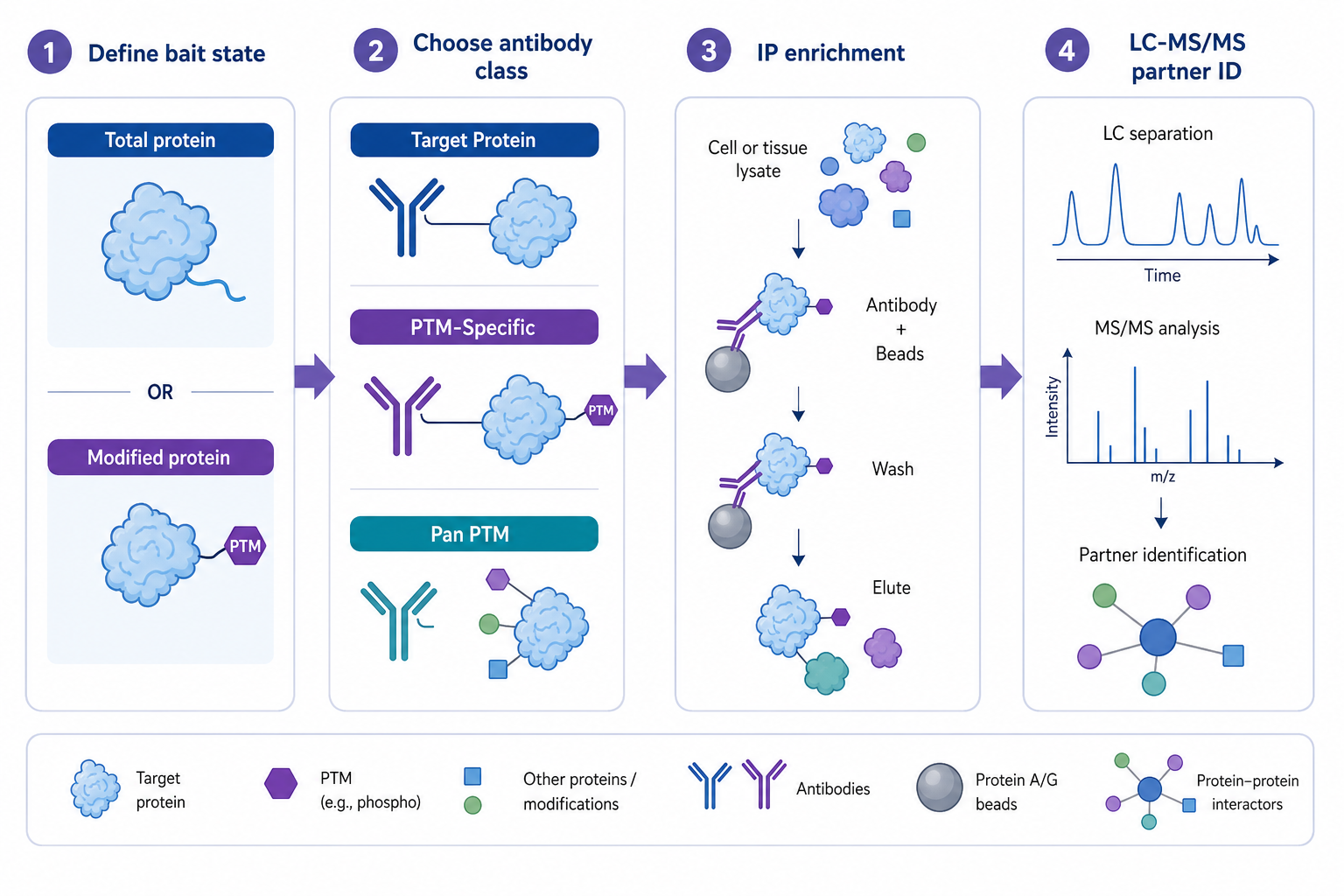
Figure 1. Pathway interaction studies define the bait node first, enrich with a matched IP-MS validated antibody, then identify co-enriched proteins by LC-MS/MS.
Core PI3K-AKT Nodes and Typical Capture Strategies
PI3K subunits and regulatory partners
Questions about class I PI3K activation often center on p110 catalytic subunits, p85 regulatory subunits, or associated adaptors. IP-MS validated antibodies against these nodes support Co-IP-MS designed to compare ligand stimulation, inhibitor treatment, or mutation states. Capture here maps the PI3K neighborhood rather than the entire pathway tree.
AKT isoforms and activation states
AKT-centered projects must decide whether the hypothesis depends on a specific isoform or on the activated pool. Isoform-specific reagents such as IP-MS validated AKT1 antibody options fit isoform-defined questions. Pan-AKT reagents fit broader node mapping when isoform resolution is not the primary claim. Phospho-AKT capture fits hypotheses tied to active signaling state rather than total protein abundance.
PTEN and antagonistic signaling
PTEN-centered Co-IP-MS can map antagonistic complexes, scaffold associations, or stress-dependent remodeling when PTEN is the bait. Validation evidence and matrix fit matter because PTEN biology is context-dependent and abundance can vary across systems.
mTOR, TSC, and downstream branch nodes
When the question is how PI3K-AKT couples to mTOR signaling, mTOR or TSC node capture may be more informative than repeating AKT IP under every contrast. Branch-specific bait choice keeps the interaction claim aligned with the mechanism under study.
Downstream effectors
GSK3, FOXO, and related effector nodes support downstream interaction mapping after upstream activation is established. These designs are useful when the project asks how signal propagation reshapes effector complexes rather than how receptors recruit PI3K.
Total-Protein Capture vs Phospho-State Capture in PI3K-AKT Studies
PI3K-AKT signaling is state-dependent. Antibody class should follow the state that defines the hypothesis.
Total-protein IP-MS validated antibodies fit questions about node-centered complex membership across conditions—for example, which proteins co-enrich with AKT1 after insulin stimulation regardless of phosphorylation readout on the bait IP itself.
Phospho-specific IP-MS validated antibodies fit questions where only the activated subpopulation matters—for example, which partners associate with phospho-AKT during acute pathway activation.
Using total-protein capture when the biology depends on the modified subpopulation can dilute the relevant signal. Using phospho-capture when the question is broader node architecture can reduce bait amount and complicate interpretation. Match capture logic to the pathway claim before ordering.
|
Hypothesis type |
Preferred capture logic |
Common pitfall |
|---|---|---|
|
Node complex remodeling |
Total IP-MS validated node antibody |
Choosing phospho capture unnecessarily |
|
Activation-dependent partners |
Phospho-specific validated antibody |
Using total antibody and missing active pool |
|
Isoform-specific signaling |
Isoform-specific validated antibody |
Using pan reagent when isoform claim matters |
|
Branch-specific mechanism |
Downstream node antibody |
Pulling upstream bait for downstream question |
Review the row that matches the mechanism before scaling replicate Co-IP-MS.
Condition Design and Controls for Pathway Co-IP-MS
PI3K-AKT interaction studies are usually contrast-driven. Growth factor stimulation, PI3K or AKT inhibitors, serum starvation, oncogenic mutation, or drug treatment each changes both bait state and partnership.
Define before product or service selection:
- The condition contrast that represents the pathway hypothesis
- Whether each arm uses the same antibody, lysis, and wash workflow
- Negative controls such as isotype IgG, bead-only controls, or inhibitor arms where appropriate
- Replicate number needed for partner ranking rather than bait detection alone
An IP-MS validated antibody improves bait-side confidence. It does not replace matched controls, replicate IPs, or orthogonal follow-up for pathway mechanism claims.
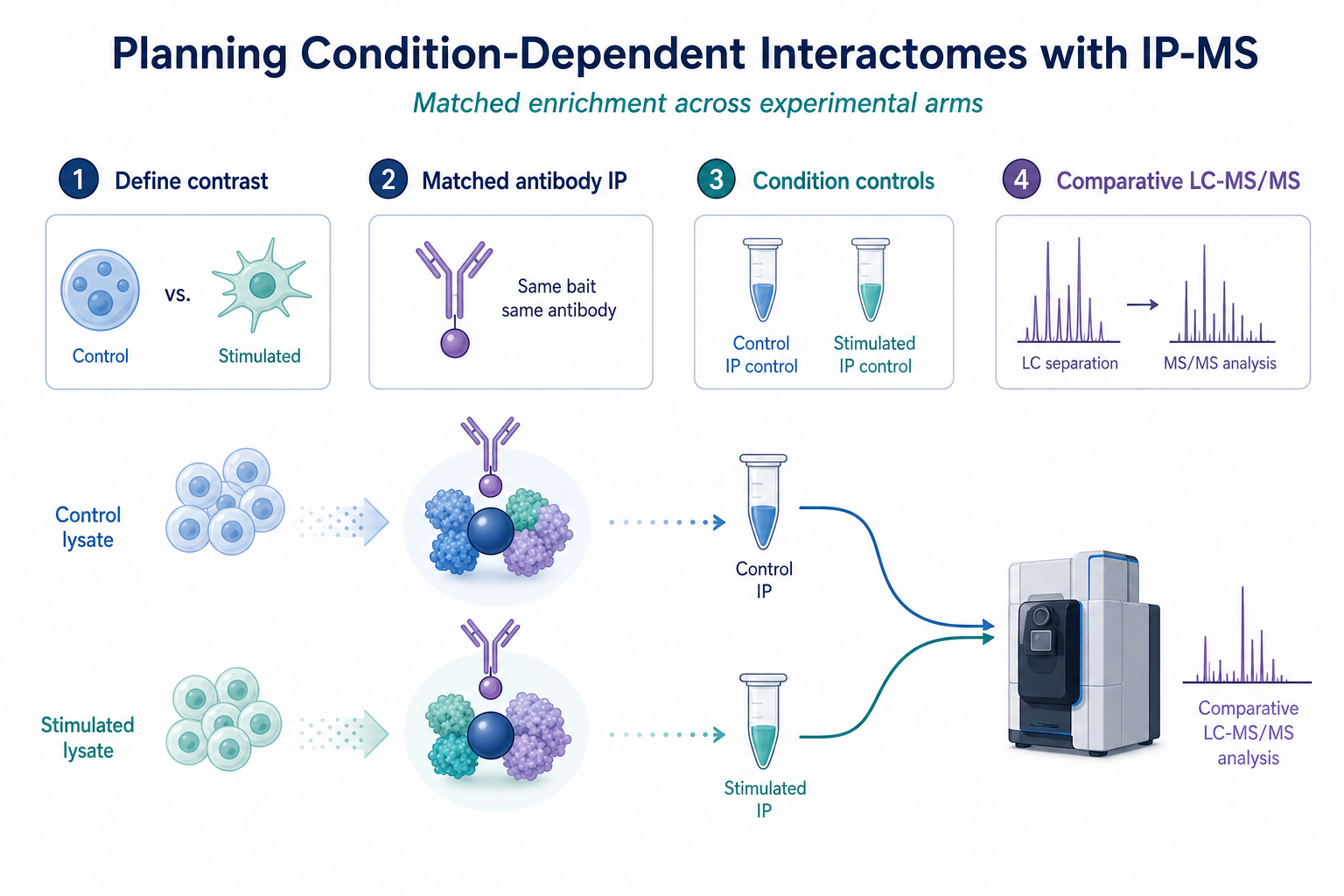
Figure 2. PI3K-AKT Co-IP-MS should preserve matched handling across condition arms and controls.
Product Review and Service Path Selection
Product review for PI3K-AKT projects typically starts from category listings and narrows to node-specific SKUs with IP-MS validation evidence.
Review IP-MS Validated Antibodies for pathway-relevant nodes, then compare Target Protein Antibodies when a validated SKU is unavailable or when total-node capture is sufficient for the readout. Check species reactivity, clonality, host, bead compatibility, and whether validation context resembles your sample matrix.
Service path follows bait format and discovery breadth:
- Co-IP-MS / IP-MS Protein Interactomics when an endogenous PI3K-AKT node antibody defines the experiment
- Co-IP Service when the current phase is bait qualification or targeted partner confirmation by non-MS readout
- Protein Interaction Analysis when enrichment is planned but MS identification, control contrast, and partner ranking need dedicated support
- AP-MS when a tagged pathway construct is acceptable and endogenous capture is uncertain
Pull-down-MS may fit recombinant domain tests but changes the experimental claim relative to endogenous pathway mapping.
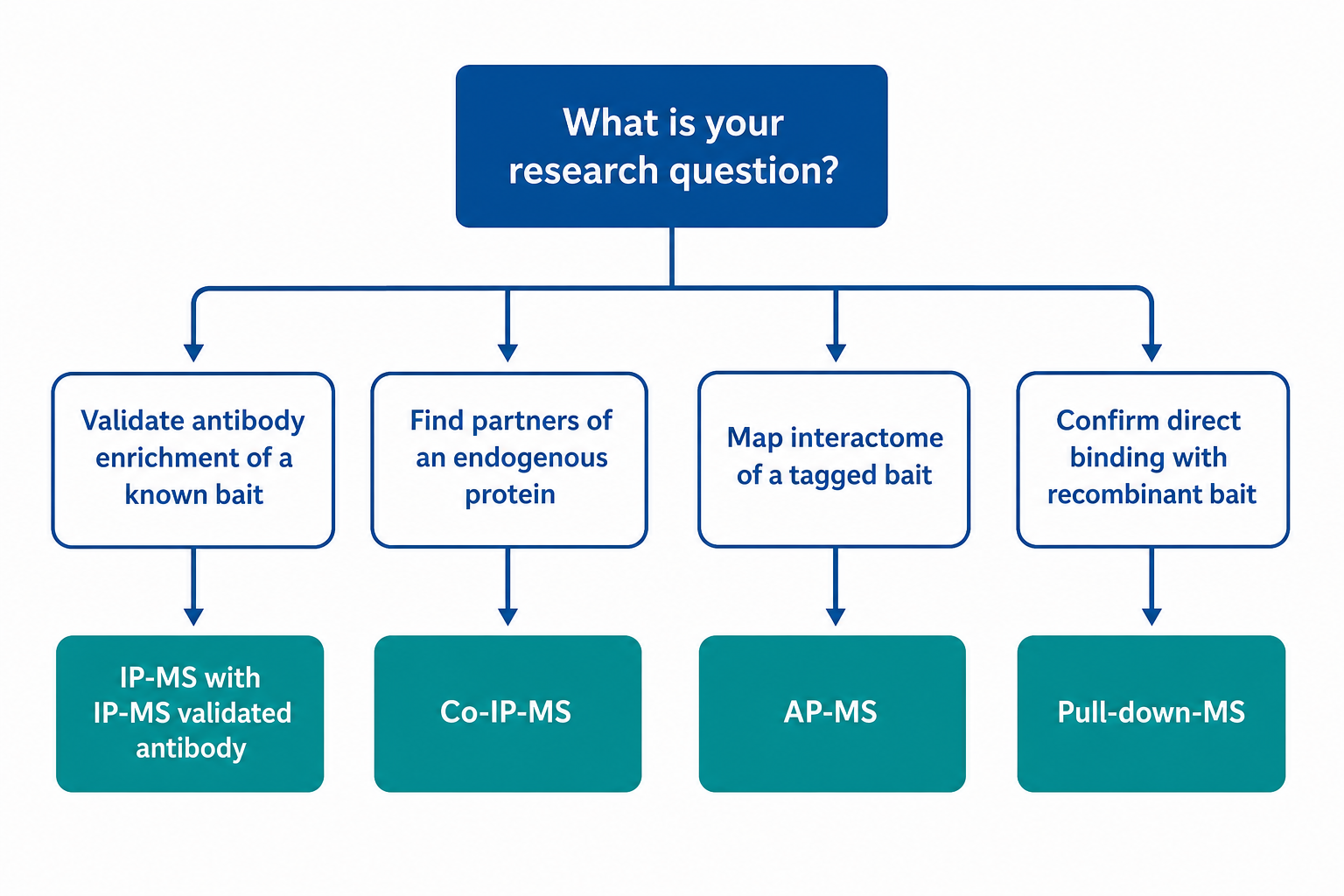
Figure 3. Match service path to bait format, discovery breadth, and whether endogenous capture remains required.
What to Share Before Selecting PI3K-AKT Antibodies or Services
Provide the following during pathway project review:
- Pathway node of interest, such as PI3K subunit, AKT isoform, PTEN, or mTOR
- Whether total, isoform-specific, or phospho-state capture is required
- Species, cell type, and condition contrast
- Prior IP or Co-IP performance, if known
- Whether endogenous Co-IP-MS remains required or AP-MS is acceptable
- Control arms planned or needed
That information supports shortlisting IP-MS validated antibodies and aligning Co-IP-MS scope with the pathway question.
Related Products
Related Services
IP-MS Protein Interactomics Analysis Service
Co Immunoprecipitation (Co-IP) Service
Protein-Protein Interaction Analysis Service
Frequently Asked Questions
1. Which PI3K-AKT node should I immunoprecipitate first?
Choose the node that directly represents the hypothesis—PI3K for receptor-proximal assembly, AKT for central kinase signaling, PTEN for antagonistic control, or mTOR for downstream branch coupling.
2. Should I use pan-AKT or isoform-specific IP-MS validated antibodies?
Use isoform-specific reagents when the claim depends on AKT1, AKT2, or AKT3 behavior. Use pan-AKT when broader node mapping is sufficient.
3. When is phospho-AKT capture better than total AKT IP-MS?
When partners of the activated AKT pool are the biological focus, such as acute stimulation timecourses or activation-state-dependent complex remodeling.
4. Can I use ordinary Co-IP antibodies for PI3K-AKT discovery?
Targeted confirmation may work with IP-capable reagents, but discovery-oriented Co-IP-MS should prefer an antibody validated for IP-MS when available.
5. Do PI3K-AKT pathway studies need matched controls?
Yes. Isotype or nonspecific IgG controls processed in parallel are standard for filtering antibody-associated background. Additional controls may be needed depending on the design.
6. What if no IP-MS validated antibody exists for my node?
Review the closest Target Protein Antibody options, consider pilot IP with MS readout, or evaluate AP-MS if tagging is acceptable.
Conclusion
PI3K-AKT pathway antibody solutions for IP-MS interaction analysis depend on matching capture reagents to the node and signaling state under study. IP-MS validated antibodies reduce upstream risk when endogenous Co-IP-MS will define partner lists, but product choice still requires isoform, phospho-state, species, and workflow fit.
Define the pathway question first, shortlist node-specific validated reagents, plan condition contrasts and controls deliberately, and align Co-IP-MS or Protein Interaction Analysis scope with the discovery claim. Contact MtoZ Biolabs to review PI3K-AKT node context, product shortlists, and IP-MS service fit before committing to a pathway interaction workflow.
How to order?




