






Peptide Charge Identification Service
MtoZ Biolabs offers high-precision Peptide Charge Identification Service to determine the charge state of peptides. The charge state of a peptide is crucial for its solubility, stability, and interactions with biological targets. By accurately identifying the peptide’s isoelectric point (pI) using capillary isoelectric focusing (cIEF), we provide the data necessary for optimizing peptide design, formulation, and development.
What is Peptide Charge Identification?
Peptide charge identification measures how peptides ionize and distribute charge across different pH conditions. The peptide's net charge, charge distribution, and pI are essential properties influencing its solubility, aggregation potential, and interaction with other molecules. Charge behavior is shaped by the peptide’s amino acid composition, including acidic and basic residues, and any modifications.
Accurate charge characterization is vital for peptide optimization, as it provides insights into:
1. Buffer and formulation development
2. Chromatographic behavior
3. Peptide solubility and aggregation risk
4. Bioassay consistency and performance
By understanding a peptide's charge characteristics, researchers can select the appropriate solvents, buffer systems, and conditions to improve peptide stability and functionality.
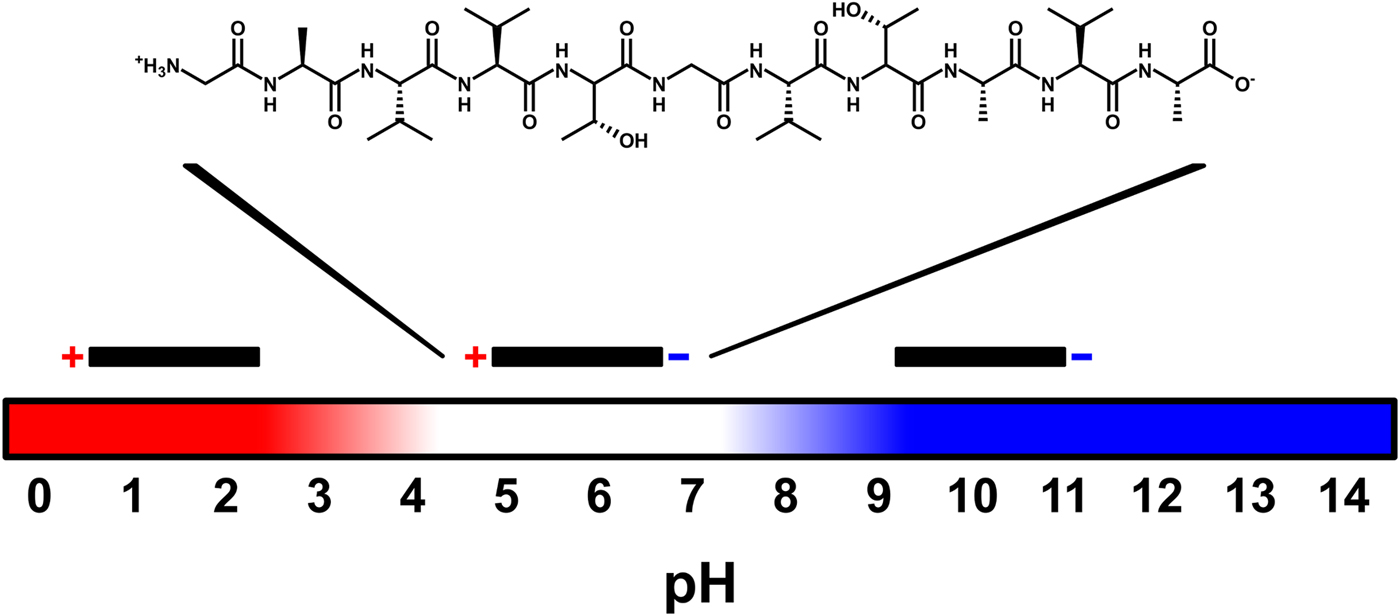
Pallbo, P. et al. Rev. Biophys. 2019.
Figure 1. Schematic Illustration of Peptide Charge for Different PH Values
Peptide Charge Identification Service at MtoZ Biolabs
Our Peptide Charge Identification Service utilizes capillary cIEF as the primary method for accurate pI determination. cIEF separates peptides based on their charge and provides precise, reproducible data. The technique is efficient, requiring minimal sample volume, and delivers rapid, high-resolution results. By testing peptides under different pH conditions, we assess how their charge distribution changes, providing insights into their solubility and stability profiles.
We offer tailored testing protocols to match specific peptide characteristics and experimental requirements, ensuring that our analysis supports your peptide development and formulation needs.
Why Choose MtoZ Biolabs?
✔ Accurate, high-resolution pI determination using cIEF
✔ Reliable, reproducible results with minimal sample requirements
✔ Tailored testing protocols to match peptide characteristics and experimental needs
✔ Efficient turnaround time with clear, actionable reporting
✔ Experienced team with in-depth knowledge of peptide chemistry and charge-related properties
Start Your Project with MtoZ Biolabs
MtoZ Biolabs’ Peptide Charge Identification Service, utilizing the advanced capillary cIEF technology, provides researchers with essential insights into the charge properties of peptides. By accurately determining the isoelectric point (pI), our service supports a range of applications, including peptide therapeutic development, proteomics, biomarker discovery, and peptide-protein interaction studies. With our cutting-edge technology and expertise, MtoZ Biolabs offers the most accurate and efficient peptide charge identification services to help optimize your research.
For more information, contact us today and gain deeper insights into the charge characteristics of your peptides.
FAQ
Q1: What types of samples are suitable?
We accept synthetic peptides, peptide analogs, peptide-drug conjugates, and modified peptides that meet standard purity requirements for charge identification.
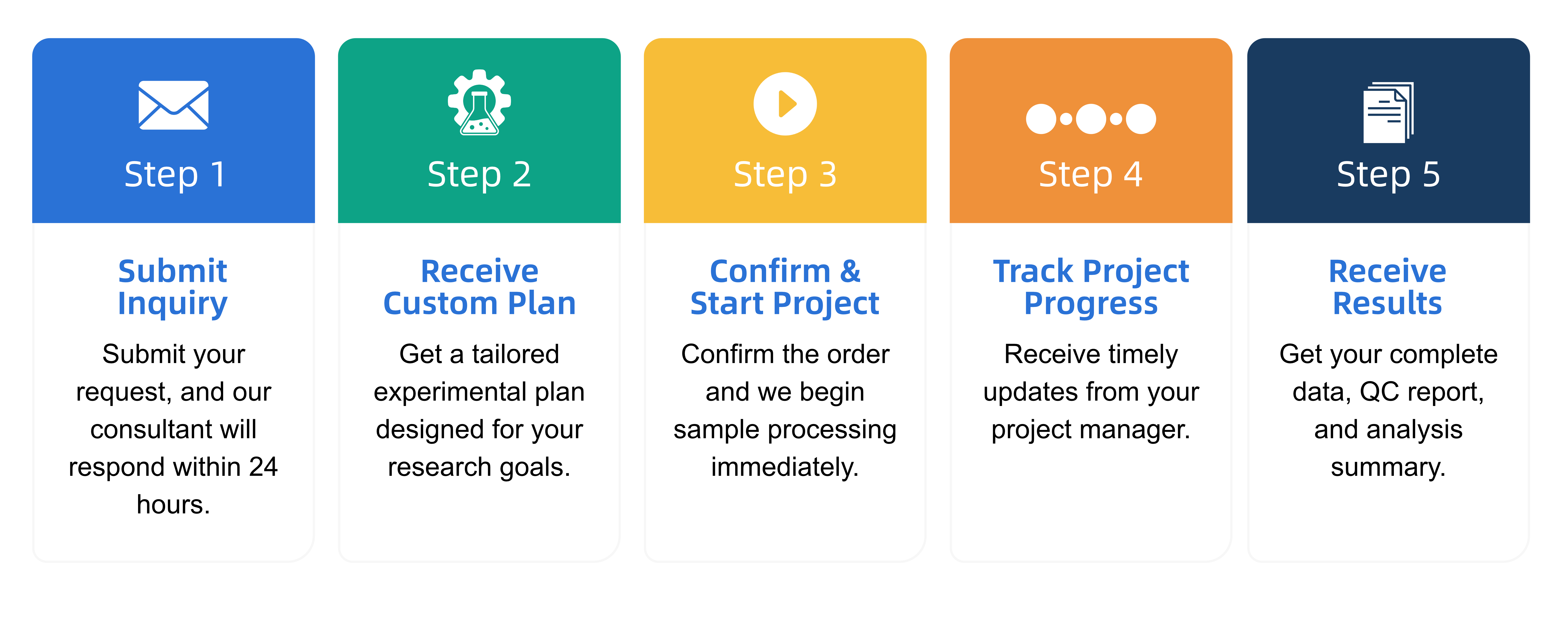
Q2: What is the service general workflow?
Q3: What data formats are provided?
Deliverables include charge state profiles, isoelectric point data, and a comprehensive PDF report summarizing the charge distribution findings.
Q4: How should I prepare my samples?
For accurate and reliable results, we recommend:
1. Submitting purified peptide samples in clean vials with appropriate solvent systems (e.g., water, PBS, or buffer)
2. Providing at least 1 mg of peptide to support charge state analysis
3. Shipping samples under temperature-controlled conditions (cold packs or dry ice)
4. Clearly labeling peptide identity, concentration, and storage requirements
If you are unsure about sample preparation, our team is available for consultation and can guide you through the process to ensure optimal results.
Related Services
How to order?




