






Oligosaccharide Population Analysis Service
Oligosaccharides are low-molecular-weight carbohydrates composed of 2 to 10 monosaccharide units connected by glycosidic bonds. They are widely present in glycoproteins, glycolipids, plants, microorganisms, and other biological organisms. Oligosaccharides play important roles in biological systems, such as cell recognition, signal transduction, and immune responses. Through high-resolution mass spectrometry platforms, combined with optimized data processing methods, oligosaccharides can be accurately separated, identified, and quantified in samples, providing comprehensive oligosaccharide population information to support carbohydrate research.
The oligosaccharide population analysis service is widely applied in glycomics research, food science, environmental monitoring, and biopharmaceutical quality control. In glycomics research, it helps reveal the important roles of carbohydrates in biological processes such as cell recognition and signal transduction. In food and nutrition studies, it can be used to analyze oligosaccharide components in food, ensuring safety and nutritional content. In biopharmaceutical quality control, it ensures the consistency and stability of glycan composition.
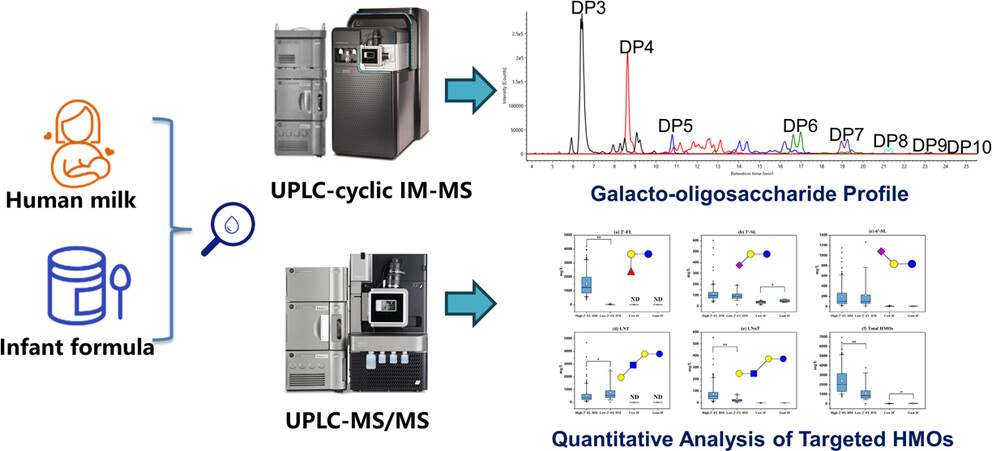
Hou, H Y. et al. Journal of Agricultural and Food Chemistry, 2024.
Figure 1. Profile of Galacto-Oligosaccharides and Absolute Quantification of Major Milk Oligosaccharides.
Services at MtoZ Biolabs
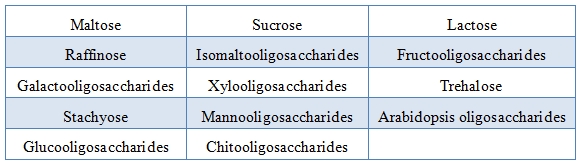
Based on high-resolution liquid chromatography (HPLC) and mass spectrometry (MS) technologies, MtoZ Biolabs' oligosaccharide population analysis service offers high-precision oligosaccharide analysis. Through optimized analytical methods, this service can separate, identify, and quantify various oligosaccharide molecules in biological samples, providing detailed information about the oligosaccharide population in the sample, including the composition, structure, and distribution of each oligosaccharide. The analysis results offer precise quantitative data, helping to deepen the understanding of oligosaccharides' functions in biological systems and their changes under different conditions, providing strong support for carbohydrate research, quality control, and functional analysis. MtoZ Biolabs offers analysis services for oligosaccharides including, but not limited to, the following:
Analysis Workflow
1. Sample Preparation
The sample is pre-treated to remove impurities and contaminants, ensuring the integrity of the oligosaccharide components and providing a clean sample for subsequent analysis.
2. Oligosaccharide Extraction and Enrichment
Oligosaccharides are released from the sample using enzymatic or chemical methods, and specific enrichment techniques are applied to extract the target oligosaccharides, ensuring effective separation and precise analysis.
3. Separation and Derivatization
The extracted oligosaccharides undergo derivatization to enhance their sensitivity and detectability in mass spectrometry and liquid chromatography analyses, ensuring accurate analysis.
4. Separation, Structural Analysis, and Quantification
Oligosaccharides are separated, structurally analyzed, and quantified using liquid chromatography (HPLC) and mass spectrometry (MS), precisely identifying the types, composition, and structural characteristics of the oligosaccharides.
5. Data Interpretation and Report Generation
Bioinformatics analysis is used to process and interpret the data, generating a detailed report that provides information on the composition, structure, and distribution of oligosaccharides, helping clients gain deeper insights into their function and variations within the sample.
Sample Submission Suggestions
1. Sample Types
This service is suitable for various biological samples containing oligosaccharide components, including but not limited to glycoproteins, glycolipids, plant extracts, cell lysates, serum, plasma, etc. Samples can be in liquid or solid form, and it is important to ensure the integrity of oligosaccharide components in the sample.
2. Sample Storage and Transportation
Samples should be transported under low-temperature conditions. Liquid samples can be transported using ice packs or dry ice, while solid samples should be securely sealed and protected from moisture. To ensure sample quality, it is recommended to keep samples frozen or cold during transportation.
Service Advantages
1. High Precision
Using high-resolution liquid chromatography (HPLC) and mass spectrometry (MS) technologies, this service accurately separates and quantifies oligosaccharides in samples, ensuring high precision, and is suitable for glycan analysis in complex samples.
2. High Sensitivity
The service can detect low-abundance oligosaccharide components, especially in complex biological samples, providing sensitive and accurate quantitative data.
3. Customized Analysis
Based on the client's specific research needs and sample characteristics, personalized analysis plans are provided, offering flexibility to meet different research requirements and ensuring the analysis solution meets the client's specific goals.
4. One-Stop Service
From sample preparation, carbohydrate extraction, and analysis to data interpretation, we provide a complete one-stop service, streamlining the experimental process, improving data acquisition efficiency, and helping clients obtain the required results efficiently.
Applications
1. Glycomics Research
The oligosaccharide population analysis service can be used to analyze the composition, structure, and distribution of oligosaccharide populations in samples. It helps gain deeper insights into the important roles oligosaccharides play in biological processes such as cell recognition and signal transduction.
2. Biopharmaceutical Quality Control
During the production of glycoproteins, glycolipids, and other biopharmaceuticals, analyzing the composition and structure of oligosaccharides ensures the stability and consistency of glycan chains in the product.
3. Food Industry Applications
The oligosaccharide population analysis service can be used to analyze oligosaccharide components in food, understanding the distribution and structure of sugars in the product. This helps ensure the standardization and quality of food formulations.
4. Plant and Agricultural Research
By analyzing the composition and structure of oligosaccharide populations in plant samples, this service helps reveal the roles of sugars in plant growth, development, and stress resistance.
Deliverables
1. Comprehensive Experimental Details
2. Materials, Instruments, and Methods
3. Data Analysis, Preprocessing, and Estimation
4. Bioinformatics Analysis
5. Raw Data Files
Related Services
Oligosaccharide Chain Structure Analysis Service
How to order?




