






Native MS vs. Intact Mass, SEC-MALS, and HDX-MS: Which Method Answers Your Protein Structure Question?
Introduction
Protein structure projects often stall at method selection. A team may need the intact mass of a biologic, the oligomeric state of a purified complex, solution conformation changes after ligand binding, or evidence that a noncovalent assembly survives under near-native conditions. Native MS, intact mass analysis, SEC-MALS, and HDX-MS can all appear on the shortlist, yet they answer different questions.
Native MS preserves noncovalent assemblies under non-denaturing ionization conditions and reports mass and stoichiometry for complexes and binding states. Intact mass analysis measures the molecular mass of a protein or biologic, usually under denaturing LC-MS conditions. SEC-MALS separates species in solution and reports molar mass and oligomer distribution without requiring ionization. HDX-MS reports local conformational dynamics through hydrogen-deuterium exchange.
This article compares the four methods across practical decision dimensions and explains which protein structure question each method is designed to answer.
What Each Method Is Designed to Answer
The first comparison step is to match each technique to a primary readout.
Non-denaturing mass spectrometry asks what intact noncovalent species are present, what their masses are, and how stoichiometry or binding occupancy looks under soft spray conditions. It is used for complexes, oligomers, ligand-bound states, and heterogeneous assemblies that must remain associated during measurement.
Intact mass asks what the measured molecular mass of a protein or biologic is after chromatographic introduction into the mass spectrometer. It is used for identity confirmation, PTM-related mass shifts at the intact level, and product variant profiling when denaturation is acceptable.
SEC-MALS asks what molar mass and oligomer distribution are observed in solution after size-exclusion separation with multi-angle light scattering. It is used for aggregate or oligomer profiling when solution-state mass distribution is the priority.
HDX-MS asks which regions of a protein change solvent accessibility or local dynamics under a defined condition. It is used for epitope mapping support, ligand-induced conformational change, and higher-order structure comparison when local protection patterns matter more than intact complex mass.
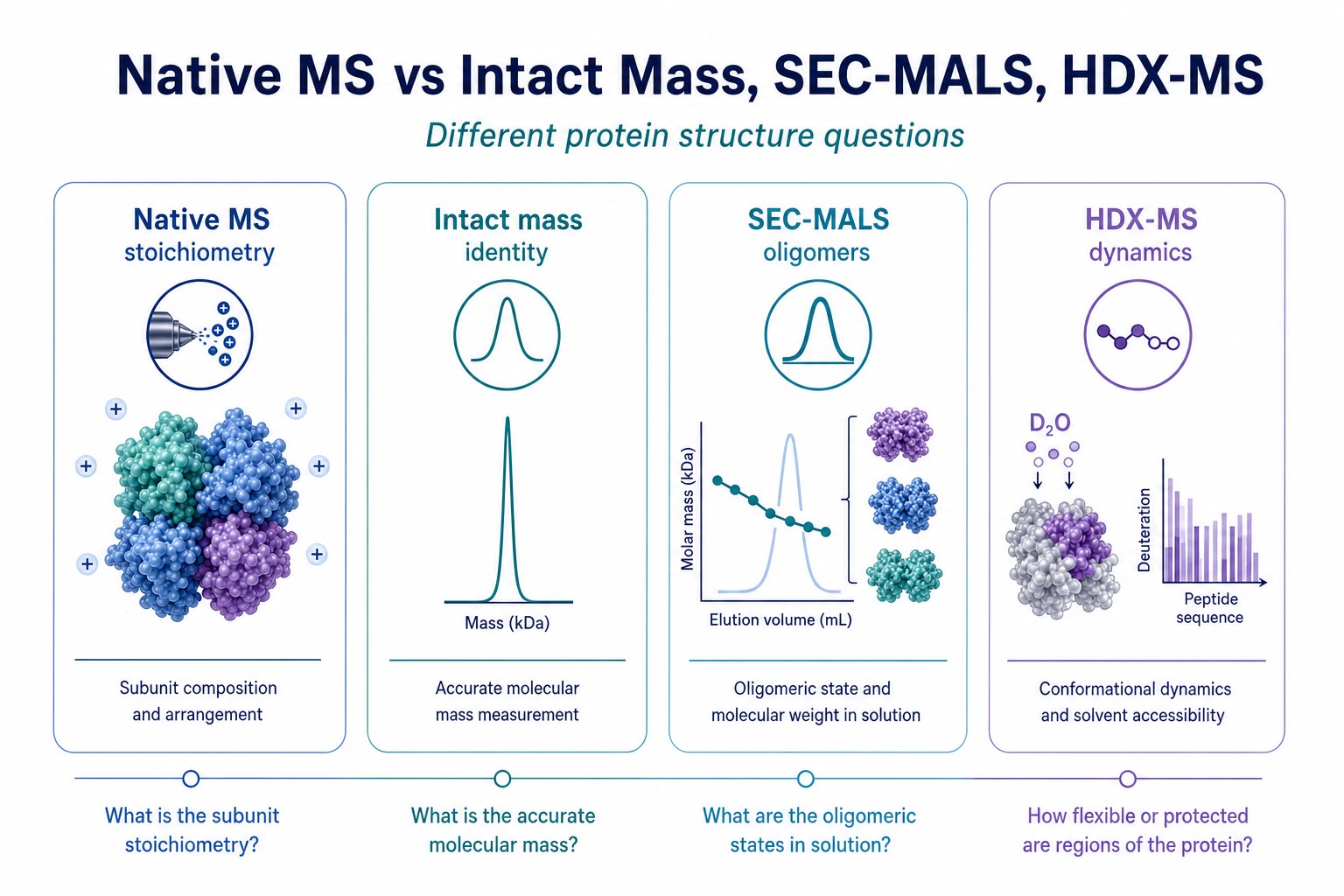
Figure 1. Four common structure methods address different questions, from complex stoichiometry to local conformational dynamics.
Core Comparison Dimensions
A practical method choice depends on four dimensions: structural question, sample state requirements, primary output, and typical limitations.
Structural question
Choose native MS when the question is complex mass, stoichiometry, or binding-state composition under non-denaturing conditions. Choose intact mass when the question is protein or biologic mass identity. Choose SEC-MALS when the question is solution oligomer or aggregate distribution. Choose HDX-MS when the question is local conformational change or dynamics.
Sample state requirements
Non-denaturing electrospray needs volatile buffers and sufficient complex stability. Intact mass usually tolerates denaturing LC conditions and focuses on covalent mass. SEC-MALS needs chromatographic behavior compatible with size-exclusion separation and adequate scattering signal. HDX-MS needs controlled labeling, quench, and digestion or intact workflows suited to exchange readout.
Primary output
Non-denaturing spectra report intact noncovalent species and can resolve coexisting stoichiometries. Intact mass yields accurate mass for protein forms and variants. SEC-MALS yields molar mass estimates and oligomer profiles in solution. HDX-MS yields deuterium uptake differences mapped to peptides or regions.
Typical limitations
Non-denaturing workflows can be sensitive to buffer, adducts, and complex dissociation. Intact mass does not preserve most noncovalent assemblies. SEC-MALS provides lower mass resolution than MS and can struggle with highly heterogeneous mixtures. HDX-MS does not directly report complex stoichiometry and requires careful kinetic and coverage interpretation.
Method-by-Method Analysis
Non-denaturing mass spectrometry
This approach is preferred when the protein structure question centers on intact noncovalent assemblies. Typical use cases include oligomer stoichiometry, antibody-antigen or protein-ligand binding occupancy, and heterogeneous complex composition that must be measured as intact species.
It is less suitable when the only need is covalent mass confirmation under denaturing LC-MS, or when the primary need is local residue-level dynamics. Complex preservation and buffer exchange are part of experimental design, not afterthoughts.
Intact Mass
Intact mass analysis is preferred for molecular mass confirmation of proteins and biologics. It supports identity checks, gross PTM or clipping detection at the intact level, and variant profiling when denaturation is acceptable.
Intact mass is not designed to report noncovalent stoichiometry. If the project asks whether a complex remains assembled, non-denaturing MS or SEC-MALS is the more direct next step.
SEC-MALS
SEC-MALS is preferred when solution-state molar mass and oligomer distribution are required without ionization. It is often used for aggregation assessment, oligomer profiling, and orthogonal support of assembly state in formulation or characterization workflows.
SEC-MALS does not provide the mass resolution of MS. Closely related species with similar hydrodynamic size can be difficult to resolve, and chemical identity still often needs MS support.
HDX-MS
HDX-MS is preferred when the question is conformational dynamics or protection changes after binding, mutation, or process change. It complements mass-based assembly methods by localizing structural effects.
HDX-MS is not a substitute for stoichiometry measurement. If the project needs both complex composition and local dynamics, assembly-focused MS and HDX-MS are often planned as complementary rather than competing assays.
Comparison Table for Study Design
|
Decision factor |
Non-denaturing MS |
Intact mass |
SEC-MALS |
HDX-MS |
|---|---|---|---|---|
|
Primary question |
Complex mass and stoichiometry |
Covalent protein or biologic mass |
Solution oligomer or aggregate mass |
Local conformational dynamics |
|
Typical sample state |
Non-denaturing, volatile buffers |
Often denaturing LC-MS |
Solution SEC conditions |
Controlled H/D labeling |
|
Key output |
Intact noncovalent species masses |
Accurate intact mass |
Molar mass and oligomer profile |
Deuterium uptake maps |
|
Best for |
Assemblies and binding states |
Identity and intact variants |
Aggregation and oligomer distribution |
Epitope or conformational change support |
|
Main limitation |
Buffer and stability sensitivity |
Loses most noncovalent complexes |
Lower mass resolution than MS |
No direct stoichiometry readout |
No single method is universally preferred. The fit depends on whether the project prioritizes assembly state, covalent mass, solution oligomer distribution, or local dynamics.
Related Services
Native Mass Spectrometry Analysis
Native Mass Spectrometry Analysis Service
Intact Protein Mass Spectrometry Service
SEC-MALS Molecular Weight Determination Service
Hydrogen Deuterium Exchange Mass Spectrometry, HDX MS Service
HDX Based Protein Conformation Analysis Service
Protein Conformation Analysis Service
Researchers comparing structure-characterization options can consult MtoZ Biolabs to match the protein structure question to the right assay before sample submission.
Decision Guide by Protein Structure Question
If the question is complex stoichiometry or binding occupancy
Start with native MS. Use SEC-MALS as an orthogonal solution-state check when aggregation or average oligomer distribution also matters.
If the question is protein or biologic identity by mass
Start with intact mass analysis. Add peptide mapping or related assays later if site-level confirmation is required.
If the question is aggregation or oligomer distribution in solution
Start with SEC-MALS. Add non-denaturing MS when discrete stoichiometries or ligand-bound species need higher mass resolution.
If the question is local conformational change after binding or mutation
Start with HDX-MS. Add an assembly-focused MS readout when the same project also needs evidence that a complex remains assembled under the tested condition.
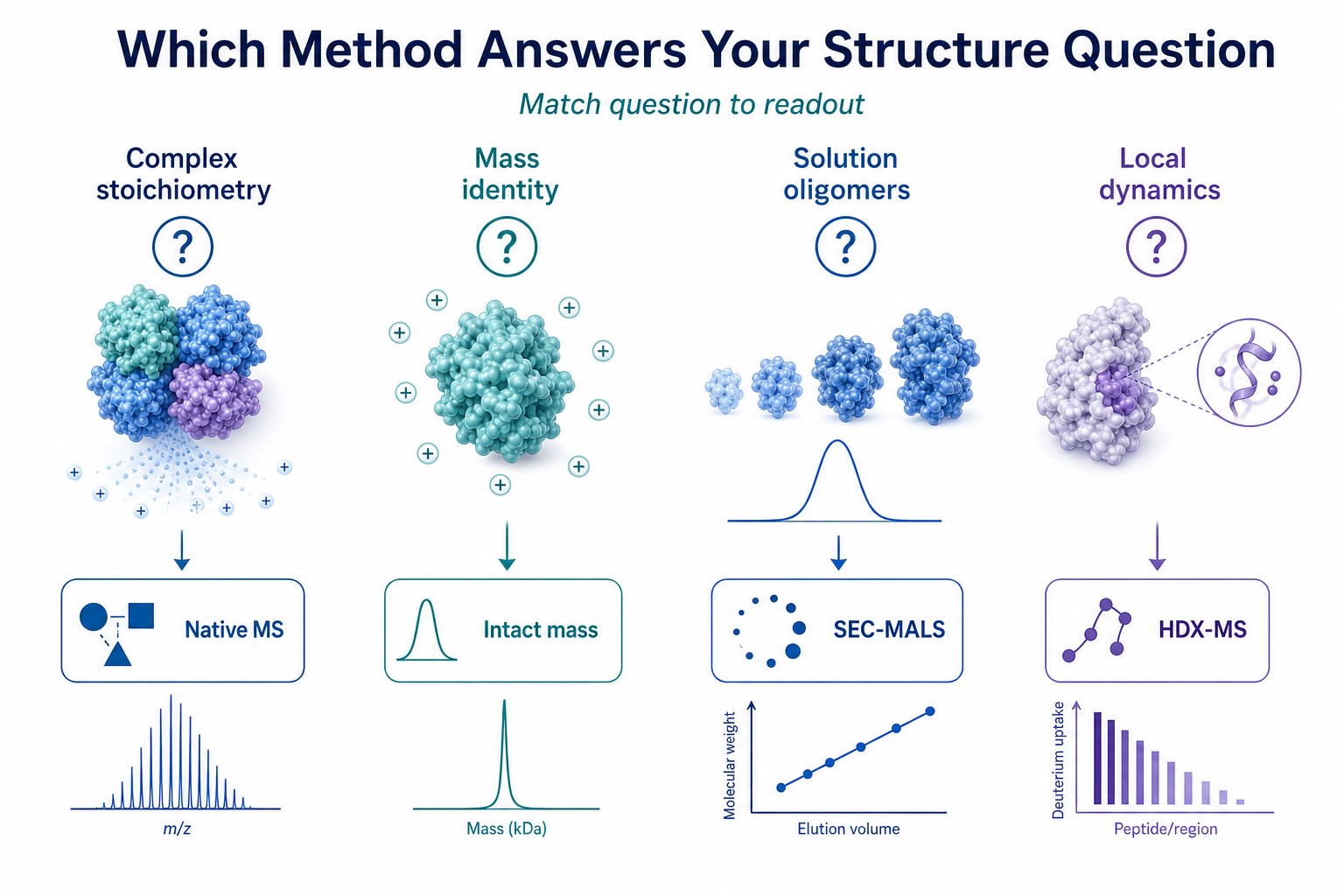
Figure 2. Match the protein structure question first, then select the method whose primary readout fits that claim.
When Methods Should Be Combined
Many characterization packages use more than one method. Intact mass confirms covalent composition. Non-denaturing MS reports whether noncovalent assemblies are present. SEC-MALS places those assemblies in a solution oligomer context. HDX-MS localizes conformational effects of binding or process change.
Combination is especially useful for biologics and multi-subunit complexes, where mass identity, assembly state, and conformational response are all part of the same development question. The planning task is to sequence the assays so each answers a distinct claim.
For projects that need help sequencing these readouts, MtoZ Biolabs can review whether an assembly-focused MS assay should lead, follow intact mass, or pair with SEC-MALS or HDX-MS for the current structure question.
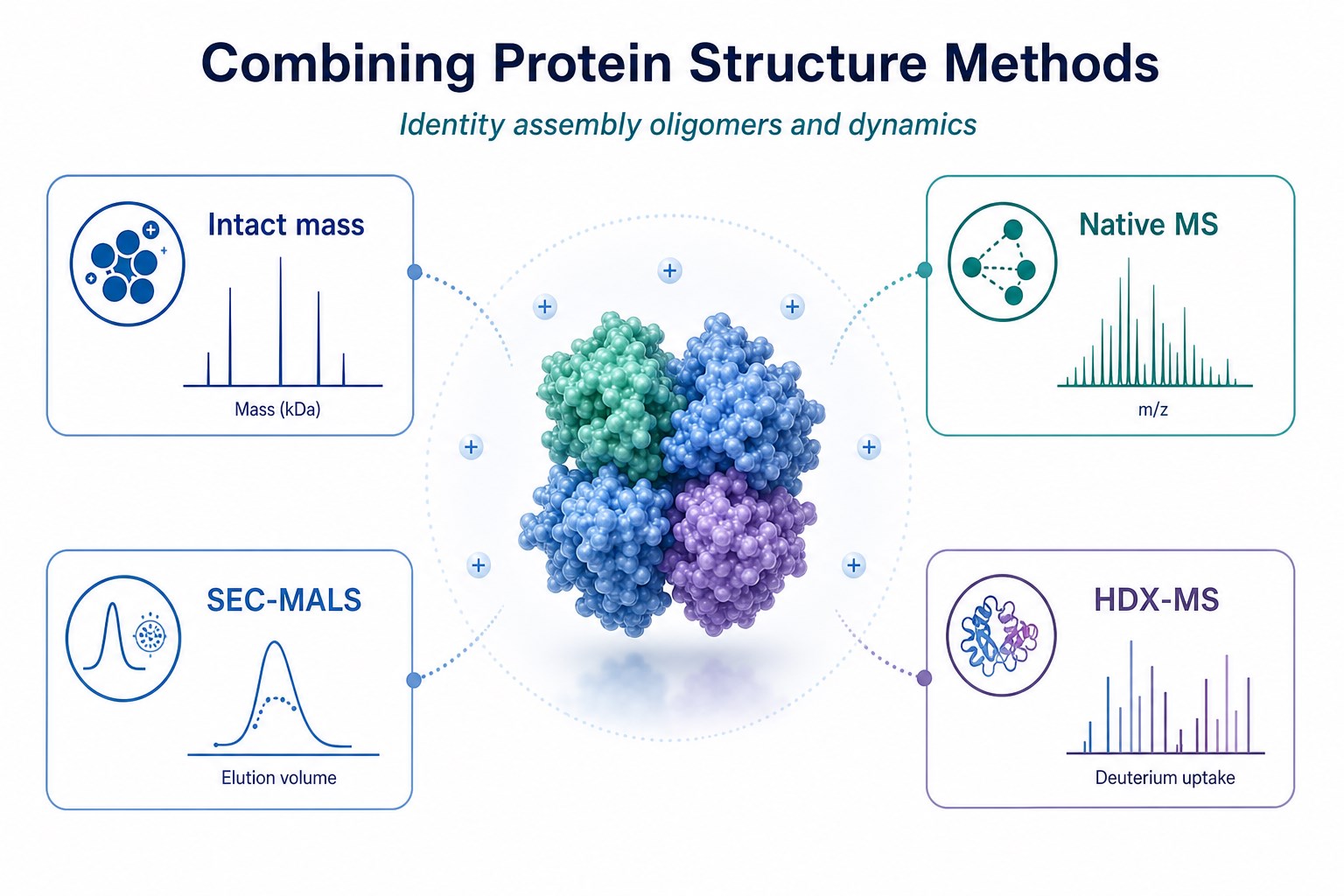
Figure 3. Intact mass, assembly-focused MS, SEC-MALS, and HDX-MS are often combined when identity, assembly, solution oligomers, and local dynamics are all required.
Frequently Asked Questions
1. When is native MS preferred over intact mass analysis?
Use it when noncovalent complex mass, stoichiometry, or binding-state composition is the primary question. Use intact mass when covalent protein or biologic mass identity is the primary question.
2. Can SEC-MALS replace non-denaturing MS for oligomer analysis?
SEC-MALS is strong for solution oligomer and aggregate distribution, but it does not provide the same mass resolution or discrete stoichiometry detail as high-resolution assembly MS. The methods are often complementary.
3. Does HDX-MS report complex stoichiometry?
No. HDX-MS reports local conformational dynamics and protection changes. Stoichiometry questions belong to non-denaturing MS or solution biophysical mass methods such as SEC-MALS.
4. Which method should come first for a new protein complex project?
If assembly state is unknown, non-denaturing MS or SEC-MALS usually leads. If only identity confirmation is needed, intact mass is the more direct start.
5. Are these methods mutually exclusive for biologics characterization?
No. Biologics projects often combine intact mass for identity, assembly-focused MS for binding states, SEC-MALS for solution oligomers, and HDX-MS for conformational comparability.
Conclusion
These four methods answer different protein structure questions. Native MS focuses on noncovalent assemblies and stoichiometry. Intact mass focuses on covalent mass identity. SEC-MALS focuses on solution oligomer and aggregate distribution. HDX-MS focuses on local conformational dynamics.
The most reliable selection rule is to define the structural claim first, then choose the method whose primary output matches that claim. When multiple claims matter, sequence complementary assays rather than forcing one technique to answer every question. Teams preparing protein structure characterization can contact MtoZ Biolabs to review which method package fits the current study design.
How to order?




