






MS-Based Polyclonal Antibody Sequencing vs. BCR-Seq: Which Strategy Fits Your Antibody Discovery Project?
Introduction
Antibody discovery projects often need sequence information from immune samples, but the right sequencing strategy is not always obvious. A team may have antigen-specific polyclonal serum and need sequence evidence for the actual binding antibodies. Another group may have PBMC or spleen material and want broad B-cell receptor repertoire profiling. A translational program may need to recover a lead binder sequence from a purified polyclonal reagent without viable B cells remaining. A discovery workflow may need thousands of clonotypes for repertoire analysis rather than a few dominant protein-level sequences.
MS-based polyclonal antibody sequencing and BCR-seq answer overlapping but distinct discovery questions. MS-based sequencing extracts amino acid sequence information directly from antibody protein using de novo peptide sequencing, middle-down analysis, and sequence-guided assembly. BCR-seq uses next-generation sequencing of B-cell receptor DNA or RNA to profile the immune repertoire at the genetic level.
This article compares MS-based polyclonal antibody sequencing and BCR-seq across key decision dimensions and explains which strategy fits different antibody discovery projects.
When the Strategy Choice Becomes Critical
The choice between MS-based polyclonal antibody sequencing and BCR-seq usually matters at project design stage.
Repertoire profiling projects need to know whether the goal is broad clonal diversity mapping or sequence recovery from the antibodies actually present in a functional reagent. Sample availability may include serum or purified IgG but not viable B cells, making BCR-seq impossible without archived material. Lead binder recovery projects may require protein-level confirmation of the antigen-specific antibody rather than inferred sequence from unselected repertoire data. Reagent documentation projects may start from a polyclonal product with no remaining source tissue. Discovery timelines may favor one strategy depending on whether genetic material or purified antibody is immediately available.
Choosing the wrong approach can produce data that answer a different question than the project requires.
What MS-Based Polyclonal Antibody Sequencing Provides
MS-based polyclonal antibody sequencing analyzes antibody protein directly from serum, purified IgG, or antigen-affinity-enriched material.
The workflow typically includes enrichment, digestion or middle-down fragmentation, LC-MS/MS acquisition, de novo peptide sequencing, and sequence-guided clonotype assembly. The output focuses on dominant or antigen-relevant clonotypes represented in the antibody protein sample. Because the analysis is protein-level, it reflects the antibodies present in the assayed material, including those that may have been enriched by purification or function.
MS-based sequencing is strongest when the project starts from antibody protein and needs sequence evidence tied to the actual reagent or binding fraction.
What BCR-Seq Provides
BCR-seq profiles the B-cell receptor repertoire by sequencing immunoglobulin gene rearrangements from DNA or RNA.
The method can capture large numbers of clonotypes from PBMC, spleen, bone marrow, or sorted B-cell populations. It is widely used for immune repertoire analysis, clonal expansion studies, and discovery pipelines that begin from B-cell source material rather than purified antibody protein. Bioinformatics workflows assemble V(D)J sequences and quantify clonal frequency across the repertoire.
BCR-seq is strongest when the project requires broad repertoire coverage, clonal frequency analysis, or discovery starting from B-cell populations rather than finished antibody material.
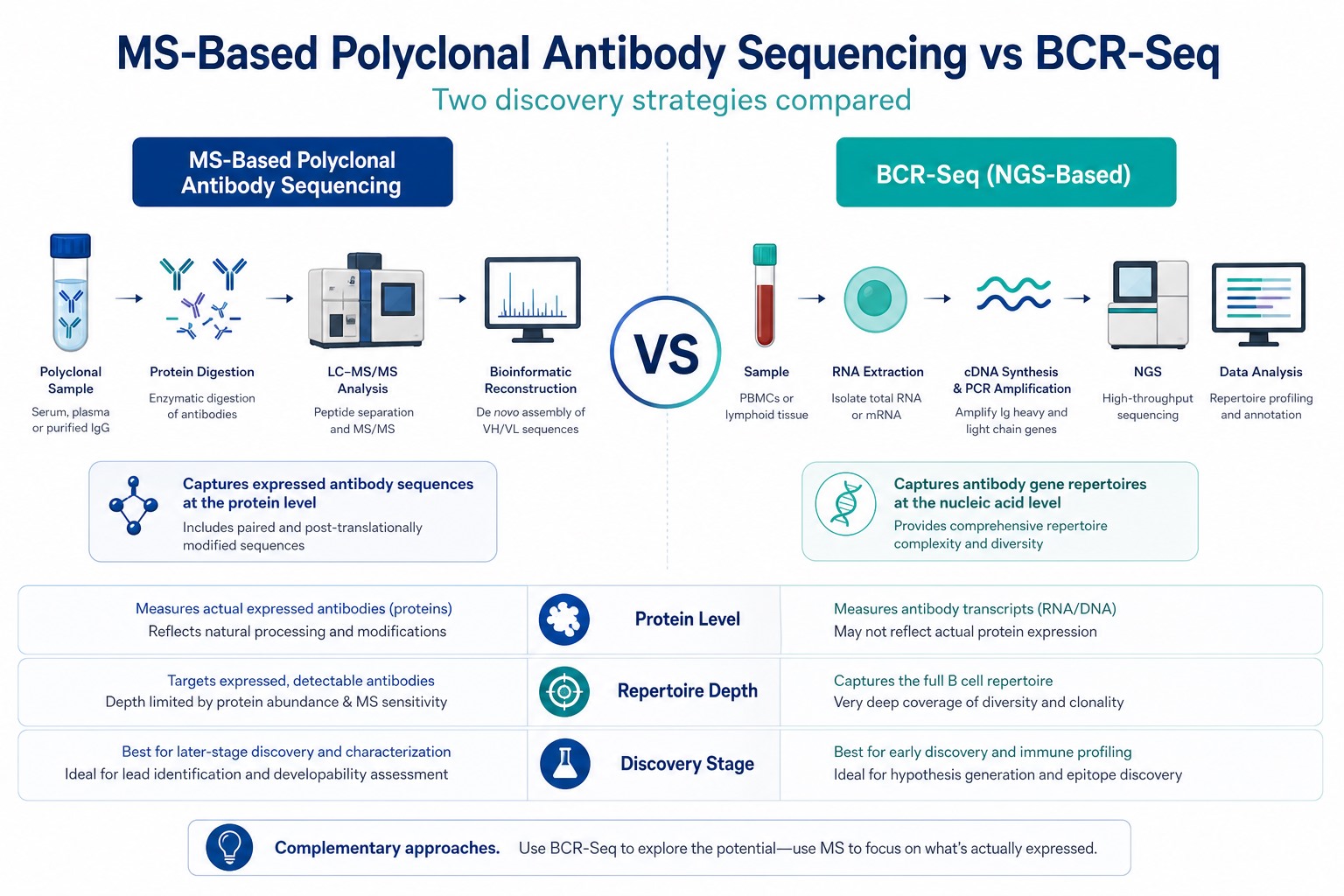
Figure 1. MS-based polyclonal antibody sequencing and BCR-seq support antibody discovery through different sample inputs and information types.
Key Comparison Dimensions
A useful strategy comparison should focus on discovery-relevant differences.
Sample input defines whether the project starts from antibody protein or B-cell nucleic acid. Information type defines whether the output is protein-confirmed sequence or genetic repertoire data. Repertoire depth defines whether broad clonal diversity or dominant functional clonotypes is the priority. Project stage fit defines whether the workflow supports reagent documentation, repertoire mapping, or lead sequence recovery. Validation burden defines how much follow-up is needed to connect sequence to binding function.
These dimensions determine which strategy fits the discovery goal.
Side-by-Side Comparison
|
Dimension |
MS-Based Polyclonal Antibody Sequencing |
BCR-Seq |
|---|---|---|
|
Primary sample |
Serum, purified IgG, antigen-enriched antibody |
PBMC, spleen, sorted B cells, tissue RNA/DNA |
|
Information level |
Protein-derived amino acid sequence |
Genetic repertoire sequence |
|
Repertoire breadth |
Dominant or enriched clonotypes |
Broad clonal diversity |
|
Antigen-specific focus |
Strong when antigen purification is used |
Requires selection or downstream filtering |
|
Best for reagent sequencing |
Yes |
No unless matched B-cell source exists |
|
Best for repertoire profiling |
Limited |
Strong |
|
Template requirement |
Purified antibody protein |
Viable or archived B-cell nucleic acid |
|
Typical output |
Resolved clonotype sequences from protein |
Large clonotype frequency tables |
Neither strategy is universally superior. The fit depends on sample type and discovery question.
Related Services
Mass Spectrometry Based Antibody Sequencing Service
Antibody De Novo Sequencing Service
Mono Poly Clonal Antibody De Novo Sequencing for Drug R&D
Antibody Sequence Analysis Service
Researchers choosing between MS-based sequencing and BCR-seq can consult MtoZ Biolabs to review sample availability, discovery goals, and the workflow best matched to the project.
When MS-Based Sequencing Fits Best
MS-based polyclonal antibody sequencing is usually the better choice in several discovery scenarios.
Use MS-based sequencing when the sample is serum or purified polyclonal antibody rather than fresh B-cell tissue. Use it when the goal is sequence recovery from an antigen-specific binding fraction. Use it when a functional polyclonal reagent must be documented or re-engineered as a recombinant antibody. Use it when no viable B cells remain but antibody protein is still available. Use it when the project needs protein-confirmed sequence from the assayed material rather than inferred repertoire data.
MS-based sequencing ties sequence output directly to the antibody protein under study.
When BCR-Seq Fits Best
BCR-seq is usually the better choice when repertoire-scale discovery is the primary goal.
Use BCR-seq when the project requires broad profiling of clonal diversity in immune tissue. Use it when clonal expansion analysis across many B-cell receptors is central to the study design. Use it when discovery begins from sorted B cells, immunized spleen, or PBMC rather than finished antibody product. Use it when downstream hybridoma, display, or single B-cell workflows will be informed by repertoire frequency data. Use it when the scientific question is immune repertoire biology rather than sequence recovery from one polyclonal reagent.
BCR-seq excels at scale and diversity rather than protein-level confirmation of one reagent.
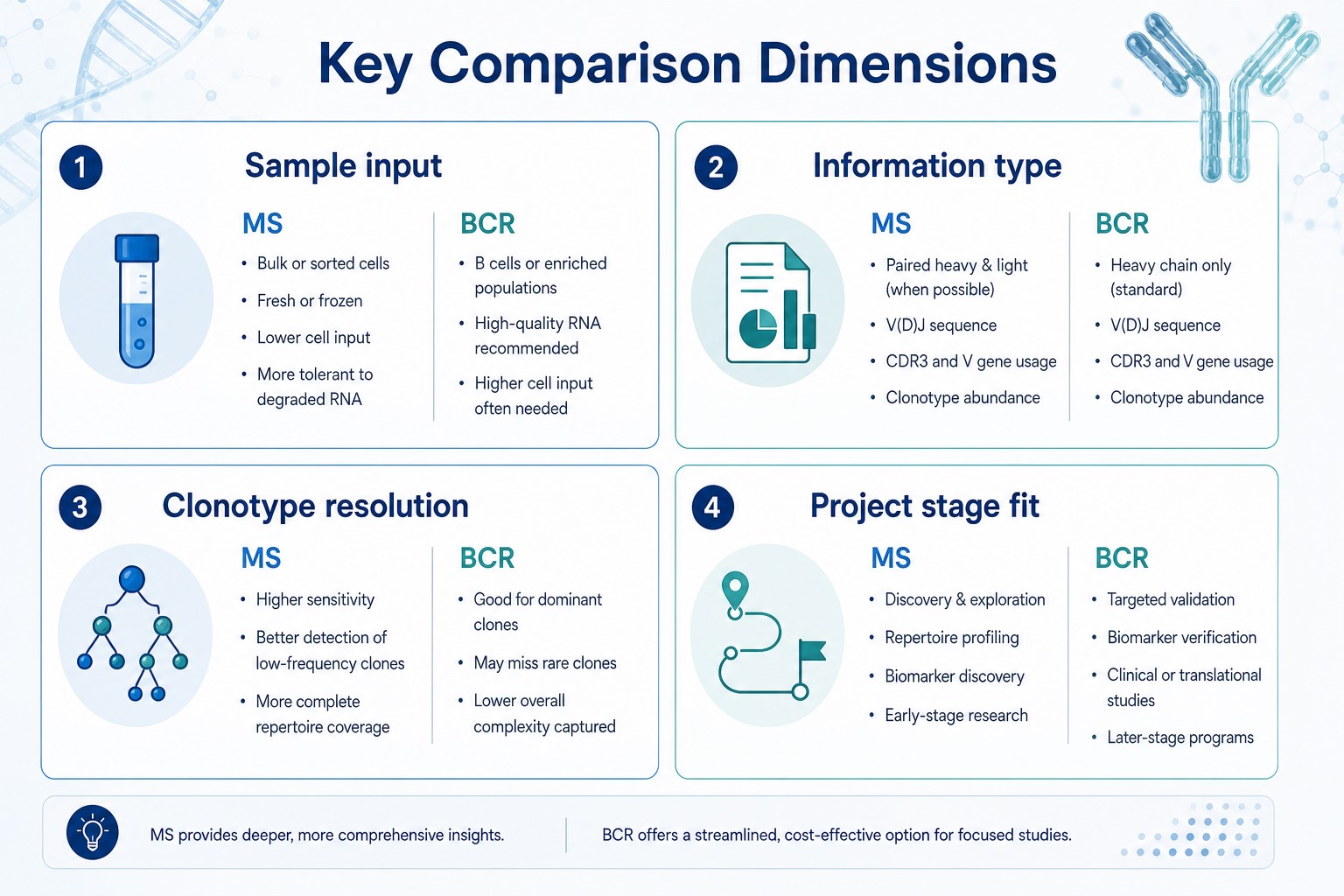
Figure 2. Strategy choice depends on sample input, information type, clonotype resolution needs, and project stage.
Can the Two Strategies Be Combined?
MS-based sequencing and BCR-seq can be complementary in some discovery programs.
BCR-seq may identify expanded clonotypes in immunized tissue, while MS-based sequencing confirms which clonotypes are represented in the antigen-purified polyclonal antibody product. MS data can validate that a repertoire hit is present at the protein level. BCR data can expand context around a dominant clonotype recovered by MS from a functional reagent. Integrated analysis is most useful when both B-cell source material and antigen-specific antibody protein are available.
Combination is optional, not mandatory. Many projects require only one strategy if the discovery question is clearly defined.
Decision Guide by Discovery Goal
Different antibody discovery goals favor different primary strategies.
|
Discovery Goal |
Preferred Primary Strategy |
Rationale |
|---|---|---|
|
Repertoire profiling in immunized tissue |
BCR-seq |
Broad clonal diversity and frequency data |
|
Sequence recovery from polyclonal antiserum |
MS-based sequencing |
Protein-level clonotype recovery |
|
Lead binder identification from antigen-purified IgG |
MS-based sequencing |
Direct sequence from binding fraction |
|
Immune response clonal expansion analysis |
BCR-seq |
Repertoire-scale comparison |
|
Reagent documentation for custom polyclonal antibody |
MS-based sequencing |
Sequence tied to existing reagent |
|
Hybrid discovery with tissue and purified antibody |
Combined approach |
Repertoire context plus protein confirmation |
Strategy choice should follow the sample available and the decision the data must support.
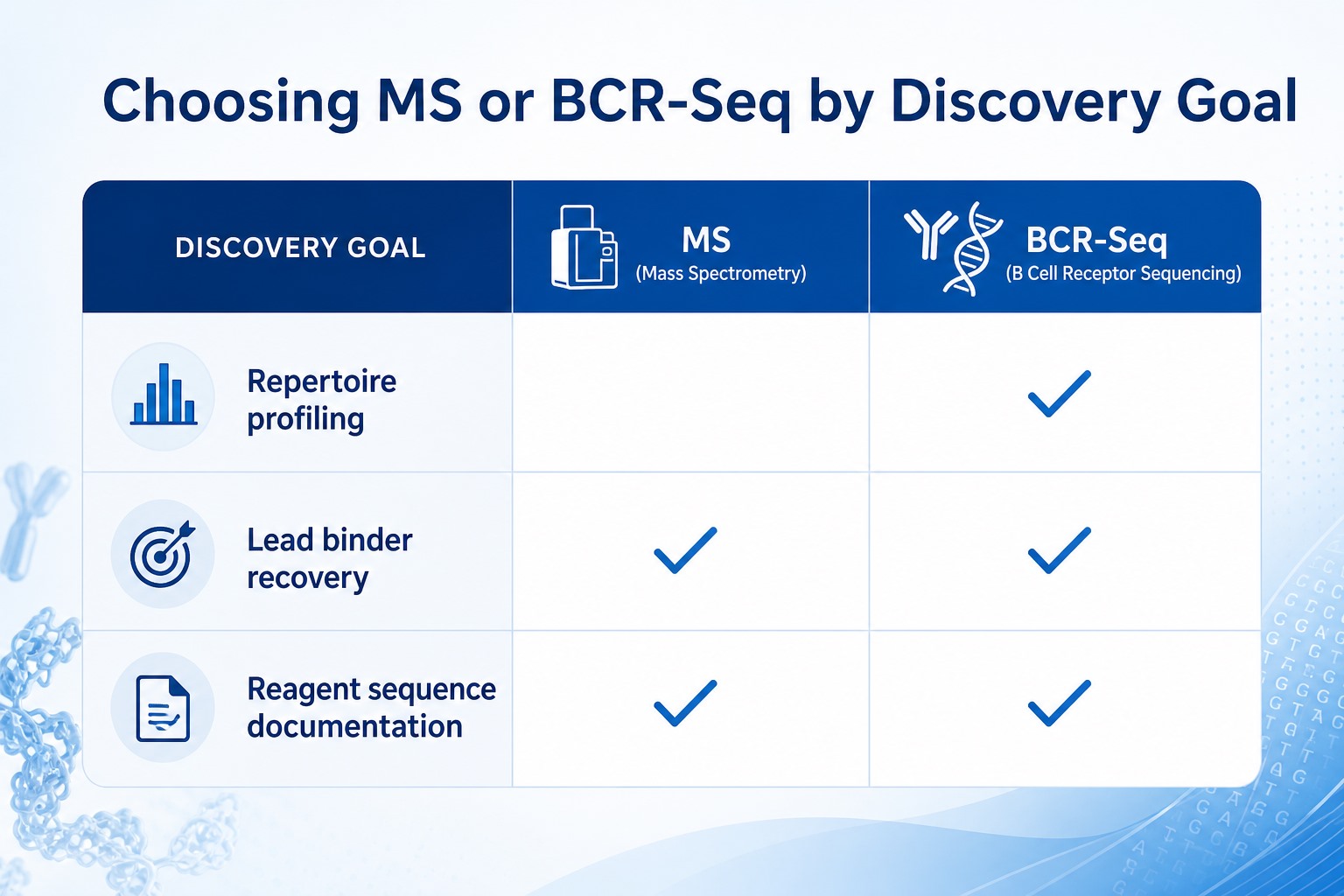
Figure 3. Discovery goal determines whether MS-based polyclonal antibody sequencing, BCR-seq, or a combined approach is the better primary strategy.
Core Advantages and Limitations of Each Strategy
MS-Based Polyclonal Antibody Sequencing
Advantages
Protein-confirmed sequence from the assayed antibody material.
Strong fit for antigen-enriched polyclonal samples and reagent documentation.
Applicable when B-cell tissue is unavailable.
Limitations
Usually resolves dominant clonotypes rather than full repertoire.
Mixture complexity and CDR coverage gaps can limit confidence.
BCR-Seq
Advantages
Broad repertoire coverage and clonal frequency analysis.
Strong for immune discovery starting from B-cell populations.
Scalable clonotype discovery in tissue samples.
Limitations
Does not by itself confirm which clonotypes encode the functional polyclonal reagent.
Requires suitable nucleic acid source material.
Functional binding must be linked through additional selection or validation.
Frequently Asked Questions
1. Is MS-based sequencing or BCR-seq better for antibody discovery?
Neither is universally better. BCR-seq fits repertoire profiling. MS-based sequencing fits protein-level clonotype recovery from polyclonal antibody material.
2. Can BCR-seq replace MS-based polyclonal antibody sequencing?
Not when the only available sample is serum or purified antibody without matched B-cell material.
3. Which method is better for antigen-specific binders?
MS-based sequencing is often stronger when antigen-purified antibody protein is available. BCR-seq requires additional selection or filtering to connect repertoire data to antigen specificity.
4. Can both methods be used in one project?
Yes, when both B-cell tissue and antigen-specific antibody protein are available and the project benefits from repertoire context plus protein confirmation.
5. What sample type determines the choice most strongly?
Sample type is often the first decision factor. Antibody protein favors MS. B-cell nucleic acid favors BCR-seq.
Conclusion
MS-based polyclonal antibody sequencing and BCR-seq serve different antibody discovery needs. MS-based sequencing recovers protein-level clonotype information from serum, purified IgG, or antigen-enriched antibody and is best suited to reagent sequencing, lead binder recovery, and protein-confirmed documentation. BCR-seq profiles immune repertoire diversity from B-cell nucleic acid and is best suited to repertoire mapping, clonal expansion analysis, and tissue-based discovery. The better strategy depends on sample availability, desired repertoire depth, and whether the project requires protein-confirmed sequence or broad genetic repertoire data.
Programs that define the discovery question before selecting a platform obtain more relevant sequence evidence and avoid mismatched workflows. Researchers choosing between MS-based polyclonal antibody sequencing and BCR-seq can contact MtoZ Biolabs to review sample type, project stage, and analytical goals. For teams needing protein-level clonotype recovery from polyclonal material, MtoZ Biolabs can also help design MS workflows matched to the discovery objective.
How to order?




