






Liquid Chromatography-Tandem Mass Spectrometry (LC-MS/MS)-Based Proteomics of Drug-Metabolizing Enzymes and Transporters
Introduction
Drug disposition depends on the combined activity of drug-metabolizing enzymes and membrane transporters that control absorption, distribution, metabolism, and excretion. A pharmacology team may need to quantify cytochrome P450 isoforms in liver microsomes after a compound treatment. A DMPK group may need to compare uptake and efflux transporter abundance across intestine, liver, and kidney samples. A drug interaction program may need protein-level evidence to explain changes in clearance when enzyme or transporter expression shifts before functional assay data are available.
Liquid chromatography-tandem mass spectrometry (LC-MS/MS)-based proteomics provides a bottom-up strategy to identify and quantify drug-metabolizing enzymes and transporters through peptide-level measurement. Unlike activity assays alone, LC-MS/MS proteomics reports protein abundance directly and can survey many ADME-related proteins in one experiment when sample preparation and data analysis are matched to the tissue or matrix under study.
For teams studying ADME biology, the analytical value lies in linking protein abundance to metabolic capacity, transporter-mediated transport risk, induction or suppression responses, and tissue-specific expression patterns that influence exposure and drug interaction potential.
What Drug-Metabolizing Enzymes and Transporters Mean in ADME Proteomics
Drug-metabolizing enzymes (DMEs) catalyze phase I and phase II biotransformation reactions that convert xenobiotics and endogenous compounds into more polar metabolites. Major enzyme classes include cytochrome P450 monooxygenases, UDP-glucuronosyltransferases, sulfotransferases, and other conjugation enzymes. Membrane transporters mediate uptake and efflux across biological barriers and organ systems. Uptake transporters in the SLC superfamily and efflux transporters in the ABC superfamily are commonly studied in ADME and drug interaction research.
LC-MS/MS proteomics of DMEs and transporters measures peptide surrogates derived from these proteins after digestion of complex biological samples. The approach is particularly useful when the goal is to compare protein abundance across treatment groups, tissues, species, or time points rather than to measure catalytic activity of one purified enzyme in isolation.
Typical sample matrices include human or animal liver tissue, liver microsomes, intestinal tissue, kidney, cultured hepatocytes, transporter-overexpressing cell lines, and subcellular fractions enriched for membrane proteins. Because many transporters are membrane-associated and several DMEs are low-abundance relative to housekeeping proteins, sample preparation and enrichment strategy strongly influence detection depth.
Why LC-MS/MS Proteomics Is Used for DME and Transporter Analysis
Protein abundance data help explain variability in metabolic and transport phenotypes that mRNA expression or single-enzyme activity assays may not fully capture. LC-MS/MS proteomics supports several ADME research needs.
Expression profiling across tissues helps define organ-specific abundance of major DMEs and transporters relevant to absorption, hepatic clearance, and renal elimination.
Treatment or induction studies compare protein levels after exposure to drugs, xenobiotics, or disease conditions that may alter ADME protein expression.
Drug interaction risk assessment uses protein-level evidence to support hypotheses about enzyme or transporter involvement when clearance or exposure changes.
Species comparison studies evaluate translational differences in DME and transporter abundance between preclinical models and human tissues.
Mechanistic follow-up connects proteomic shifts to pathway-level interpretation when combined with activity assays, immunoblotting, or targeted quantitation.
LC-MS/MS proteomics does not replace functional enzyme or transport assays when catalytic or transport activity must be confirmed, but it provides direct protein evidence that supports ADME interpretation and follow-up experiment design.
Core LC-MS/MS Workflow for DME and Transporter Proteomics
A standard bottom-up LC-MS/MS workflow proceeds from complex biological matrix to peptide-spectrum matches and protein-level quantitation.
Sample feasibility review defines tissue type, treatment design, required protein coverage, and whether membrane enrichment is needed for transporter detection. Protein extraction uses buffers compatible with downstream digestion. Membrane fractions or enrichment steps may be applied when ABC and SLC transporters are central to the study.
Protein digestion typically uses trypsin or alternative proteases selected to improve coverage of hydrophobic transporter regions. Peptides are separated by reversed-phase LC and analyzed by high-resolution MS/MS with data-dependent or targeted acquisition depending on project scope.
Database searching assigns peptide-spectrum matches to DME and transporter entries in curated proteomic databases. Protein inference groups peptides into protein groups and reports abundance metrics based on spectral counts, extracted ion chromatogram intensity, or targeted peptide quantitation.
Reporting delivers protein identification tables, quantitative comparison across samples, pathway or protein-class summaries for ADME-related proteins, and method notes covering sample preparation, acquisition, and search parameters.
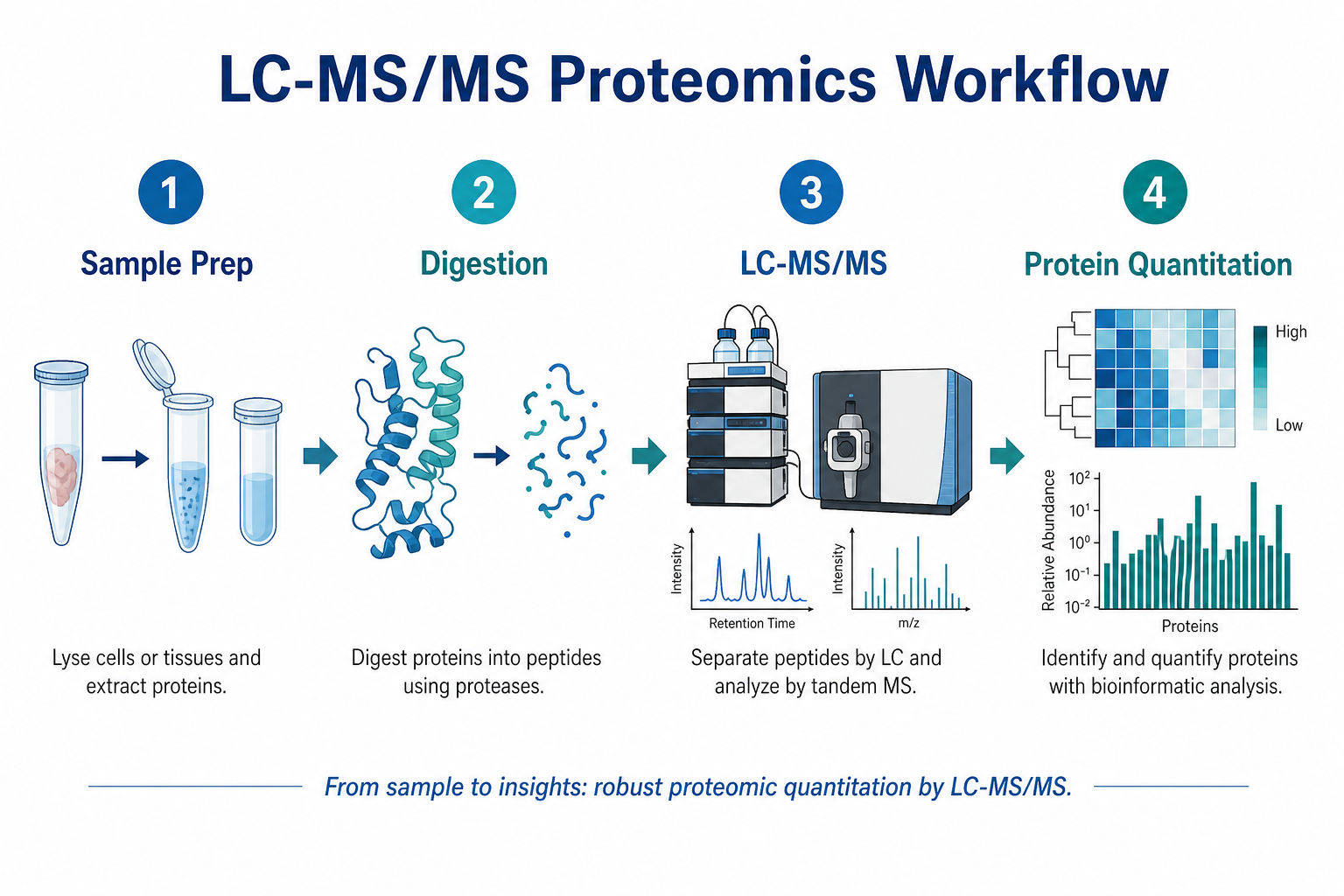
Figure 1. LC-MS/MS proteomics of drug-metabolizing enzymes and transporters follows a bottom-up workflow from sample preparation through digestion, LC-MS/MS acquisition, and protein quantitation.
Related Services
Label-Free Quantitative Proteomics Service, MS Based
MRM/PRM Quantitative Proteomics Service
Researchers planning LC-MS/MS proteomics studies of drug-metabolizing enzymes and transporters can consult MtoZ Biolabs to review sample matrix, quantitation strategy, and the reporting depth required for the ADME study.
Major Protein Classes Commonly Analyzed
ADME-focused LC-MS/MS studies often target defined enzyme and transporter families. The table below summarizes commonly monitored classes and typical study contexts.
|
Protein Class |
Representative Examples |
Common Study Context |
|---|---|---|
|
Phase I enzymes |
CYP3A4, CYP2D6, CYP2C9, CYP1A2 |
Hepatic metabolism and induction screening |
|
Phase II enzymes |
UGT1A1, UGT2B7, SULTs |
Conjugation capacity and elimination pathways |
|
Uptake transporters |
OATP1B1, OATP1B3, OCT1, OAT1 |
Hepatic and renal uptake, DDI risk |
|
Efflux transporters |
P-gp/MDR1, BCRP, MRP2 |
Intestinal absorption, biliary excretion, efflux liability |
|
Nuclear regulators |
PXR, CAR, AhR pathway-linked proteins |
Mechanistic induction and response studies |
Coverage depth varies with sample type and preparation. Liver microsomes may provide strong detection of major CYP isoforms, while intact tissue lysates may require deeper fractionation or membrane enrichment to recover low-abundance transporters reliably.
Quantitative Strategies for DME and Transporter Proteomics
Discovery-oriented projects often use label-free quantitation based on peptide ion intensities across LC-MS/MS runs. This approach supports comparison of many ADME-related proteins across multiple treatment groups without chemical labeling.
Targeted LC-MS/MS using MRM or PRM acquisition improves sensitivity and reproducibility for selected peptides from priority enzymes or transporters. Targeted workflows are useful when a study focuses on a defined panel such as major CYP isoforms, UGT forms, or clinically relevant transporters.
Isobaric labeling strategies such as TMT or iTRAQ can support multiplexed comparison across several conditions in one experiment when broader proteome coverage is required alongside ADME protein review.
Quantitation strategy should match the study decision. Label-free discovery is often appropriate for induction screens and tissue comparisons. Targeted quantitation is often preferred when precise monitoring of a limited ADME panel is the primary reporting goal.
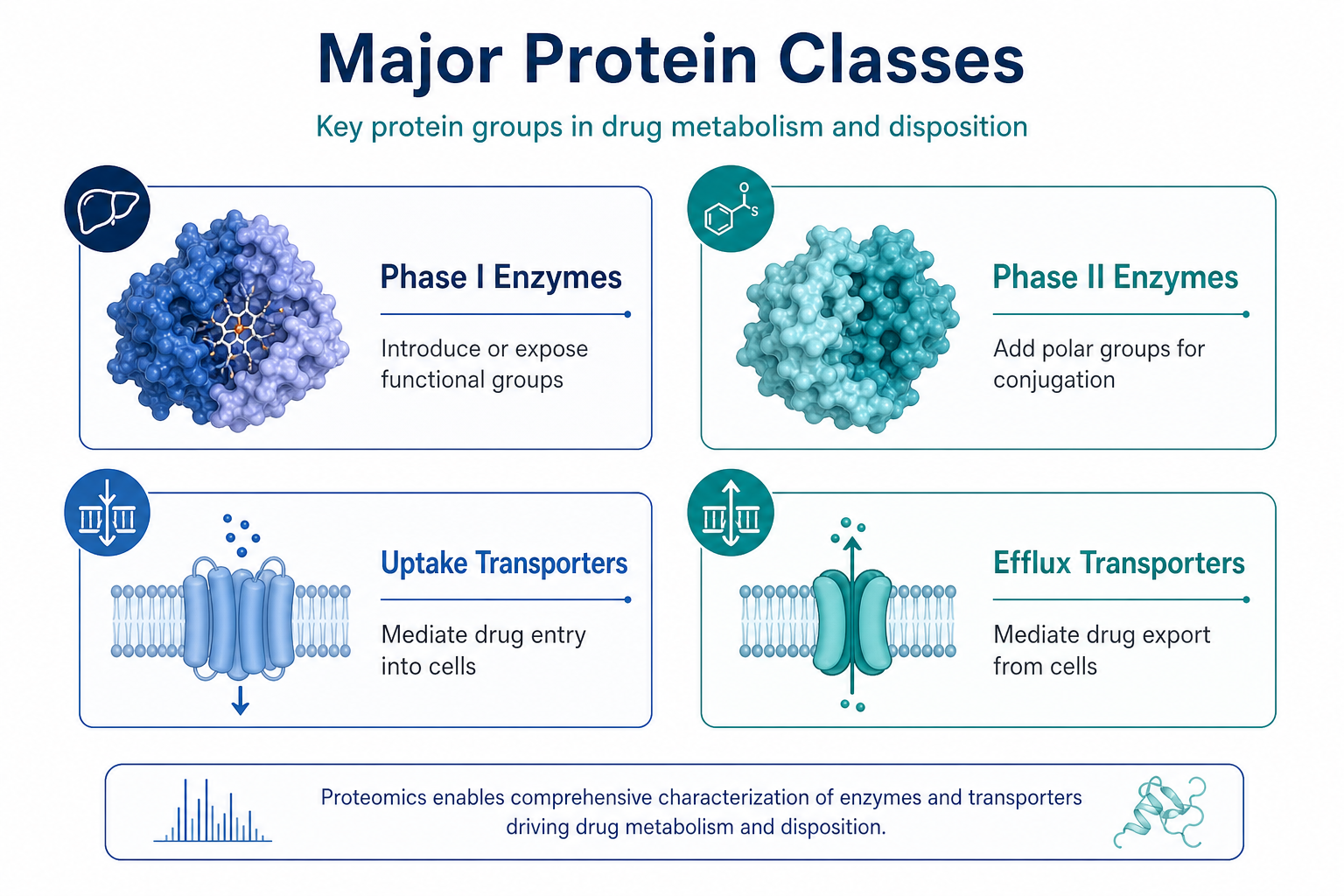
Figure 2. LC-MS/MS proteomics commonly targets phase I and phase II enzymes, uptake transporters, and efflux transporters in ADME-focused studies.
Core Technical Advantages and Current Limitations
Core Technical Advantages
Direct protein abundance measurement.
LC-MS/MS proteomics reports protein-level changes that support ADME interpretation beyond transcript data alone.
Multiplexed ADME protein coverage.
One experiment can survey many enzymes and transporters across a tissue or treatment panel.
Compatibility with complex tissues and subcellular fractions.
Liver, intestine, kidney, microsomes, and cultured cell models are widely used matrices.
Flexible quantitation from discovery to targeted panels.
Label-free and MRM/PRM workflows support both broad screening and focused DME or transporter monitoring.
Integration with functional and interaction studies.
Proteomic data complement enzyme activity assays, transport assays, and drug interaction models.
Current Limitations
Membrane protein recovery remains challenging.
Transporters can be underrepresented without membrane enrichment or optimized digestion conditions.
Protein abundance does not equal activity.
Changes in DME or transporter protein levels may not directly predict catalytic or transport activity without functional confirmation.
Isoform resolution can be limited.
Highly homologous CYP or transporter isoforms may share peptides that complicate isoform-specific quantitation.
Sample heterogeneity affects interpretation.
Tissue composition, subcellular fraction purity, and donor variability influence detected protein profiles.
Low-abundance regulators may require deeper acquisition.
Nuclear receptors and signaling-linked ADME regulators may need targeted enrichment or repeated LC-MS/MS depth.
Applications in ADME and Drug Development Research
LC-MS/MS proteomics of DMEs and transporters supports multiple research and development scenarios.
Induction and suppression studies.
Protein abundance changes after drug or xenobiotic treatment help evaluate enzyme and transporter response patterns.
Tissue and species comparison.
Cross-tissue and cross-species proteomic comparison supports translational ADME modeling.
Drug-drug interaction mechanism support.
Altered DME or transporter protein levels provide evidence for interaction hypotheses when exposure changes are observed.
Transporter-mediated disposition review.
Membrane proteomics helps evaluate uptake and efflux protein abundance in absorption and elimination pathways.
Biomarker and pathway discovery.
Broader proteomic comparison may identify ADME-linked protein changes beyond a predefined enzyme or transporter panel.
These application areas describe common uses. Reporting depth should match the study phase and whether the data support exploratory discovery or targeted ADME panel review.
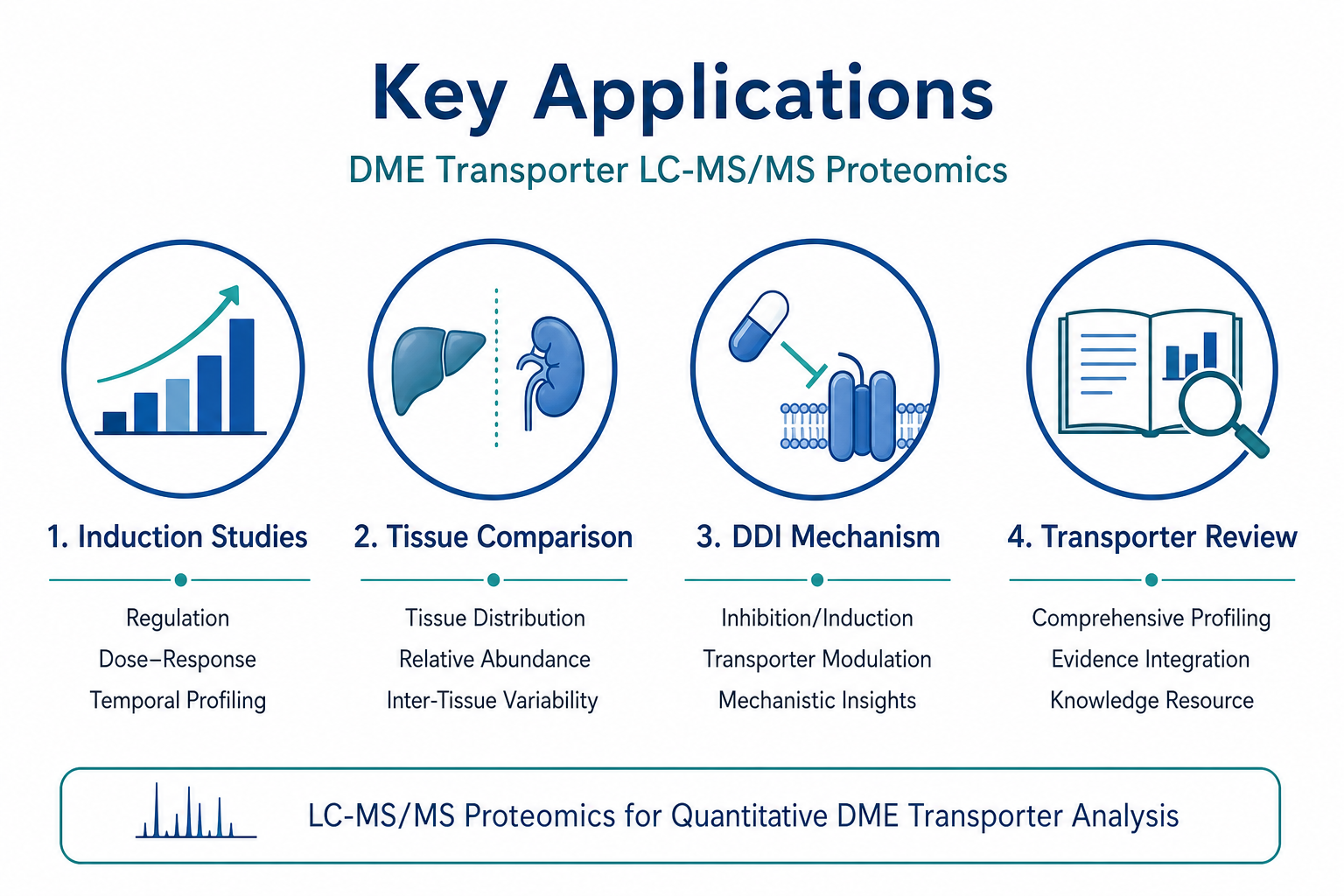
Figure 3. LC-MS/MS proteomics of DMEs and transporters supports induction studies, tissue comparison, and drug interaction mechanism review.
Sample and Study Design Considerations
Reliable ADME proteomics depends on upfront study design. Important planning factors include tissue or matrix selection, number of biological replicates, treatment duration and dose, need for membrane enrichment, species and strain background, and whether the study requires discovery coverage or a targeted DME and transporter panel.
Feasibility review before digestion helps match sample preparation to the proteins of interest and reduces repeat analysis caused by poor transporter recovery or incompatible lysis conditions.
Frequently Asked Questions
1. What is LC-MS/MS proteomics of drug-metabolizing enzymes and transporters?
It is a bottom-up mass spectrometry approach that identifies and quantifies peptides from DMEs and transporters in biological samples to report protein abundance relevant to ADME research.
2. Which sample types are most common for this analysis?
Liver tissue, liver microsomes, intestine, kidney, cultured hepatocytes, and membrane-enriched fractions are common matrices for DME and transporter proteomics.
3. Can LC-MS/MS proteomics replace enzyme activity assays?
No. Proteomics measures protein abundance. Activity and transport assays are still needed when functional capacity must be confirmed.
4. When is targeted MRM or PRM quantitation preferred?
Targeted quantitation is often preferred when the study focuses on a defined panel of enzymes or transporters and requires higher reproducibility than discovery label-free comparison.
5. Why is membrane enrichment sometimes required?
Many transporters are membrane-associated and low in abundance relative to soluble proteins. Enrichment can improve peptide detection and quantitation reliability.
Conclusion
LC-MS/MS-based proteomics provides a direct protein-level approach to studying drug-metabolizing enzymes and transporters in ADME research. Bottom-up workflows combine sample preparation, digestion, LC-MS/MS acquisition, and database or targeted quantitation to profile major phase I and phase II enzymes, uptake transporters, and efflux transporters across tissues and treatment conditions. The method supports induction studies, tissue comparison, drug interaction mechanism review, and translational ADME modeling when reporting goals and quantitation strategy are defined early.
Reliable results depend on sample matrix selection, membrane enrichment when transporters are central, and alignment between protein abundance data and functional follow-up assays. Teams that scope ADME protein panels before analysis can generate more interpretable proteomic evidence with fewer repeat experiments. Researchers planning LC-MS/MS proteomics of drug-metabolizing enzymes and transporters can contact MtoZ Biolabs to review sample type, quantitation route, and the reporting format required for the ADME study.
How to order?




