






Labeling-Based Quantitative Phosphoproteomics: TMT, iTRAQ, SILAC, and Enrichment Strategies
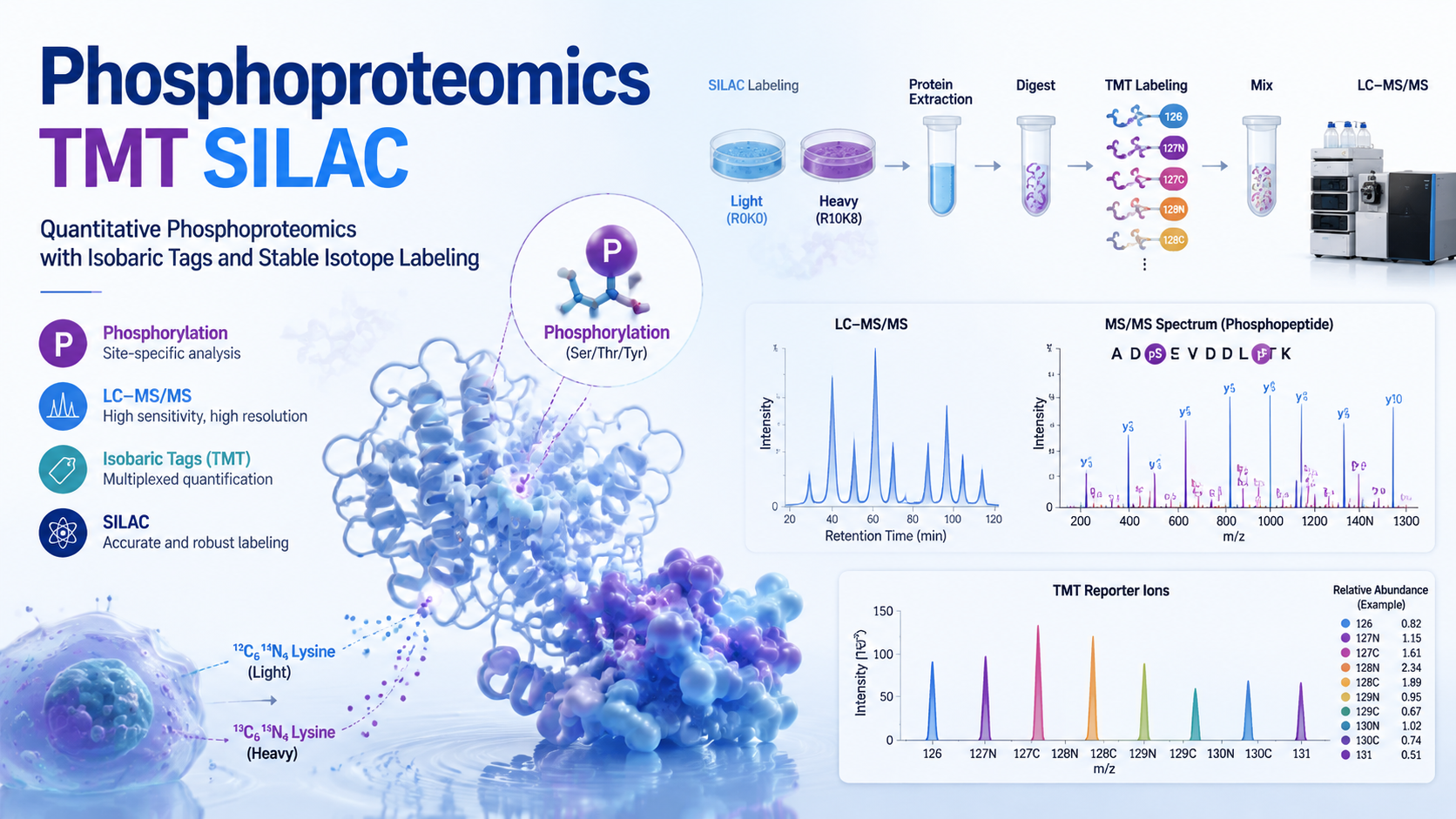
Phosphorylation often changes before total protein abundance shifts. Labeling-based quantification, TMT, iTRAQ, or SILAC, multiplexes conditions when phosphopeptide enrichment and MS settings match phosphoproteome stoichiometry.
Key Takeaways
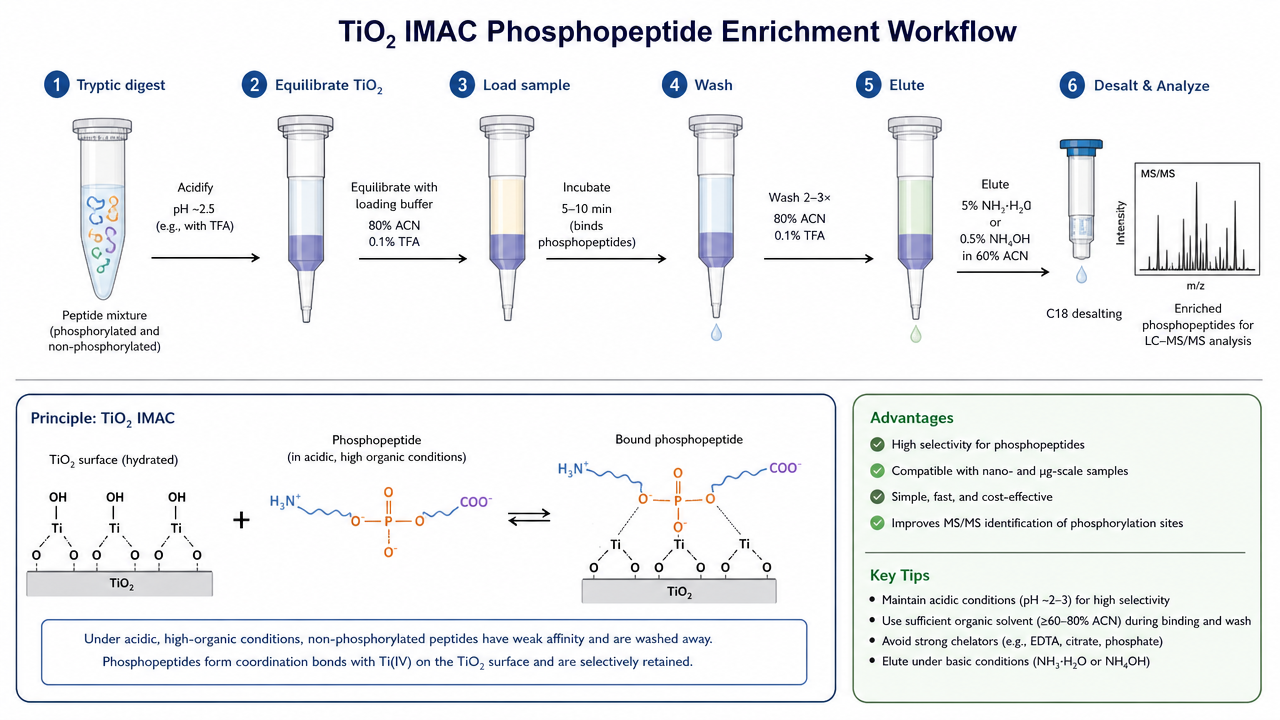
- Phosphopeptides are <1% of peptides; enrichment is standard.
- TMT multiplexes many conditions; manage ratio compression.
- iTRAQ suits defined control-treatment designs.
- SILAC fits cell culture kinetics, not most tissues.
- Dual enrichment can deepen site coverage.
Related Services
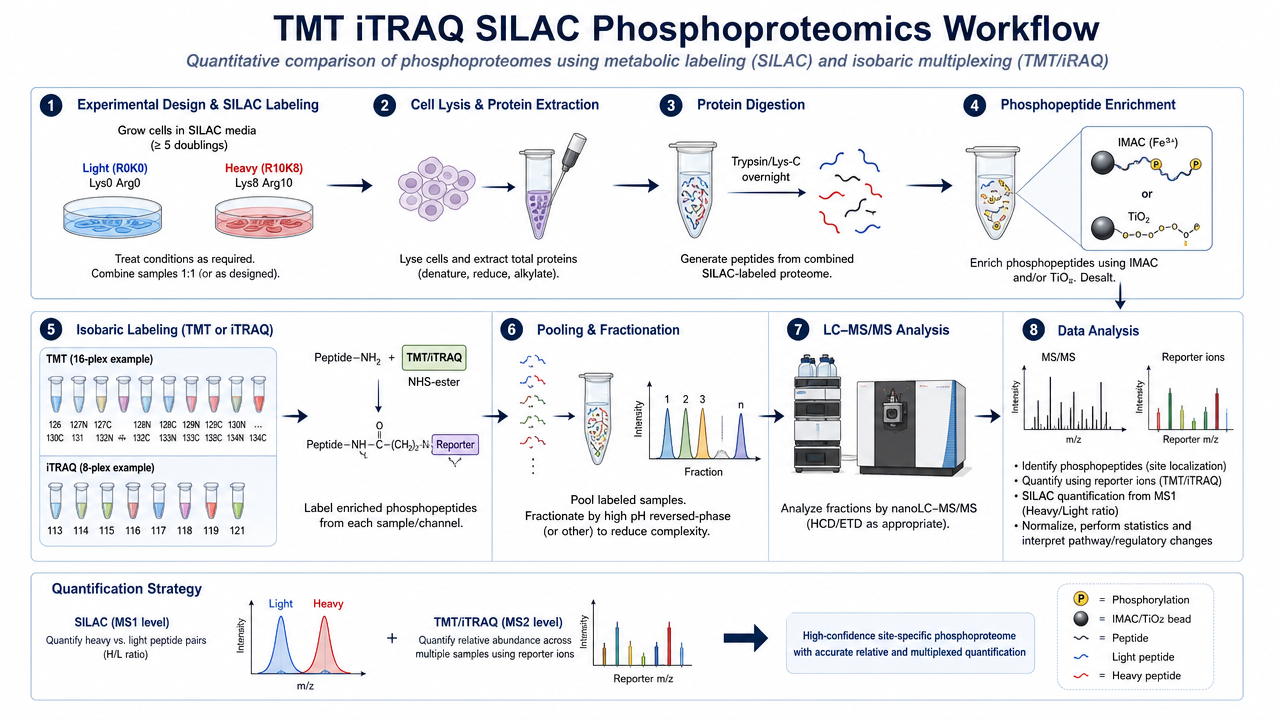
Quantitative Phosphoproteomics Service
Phosphoproteomics Analysis Service
iTRAQ/TMT-Based PTM Quantitative Analysis Service
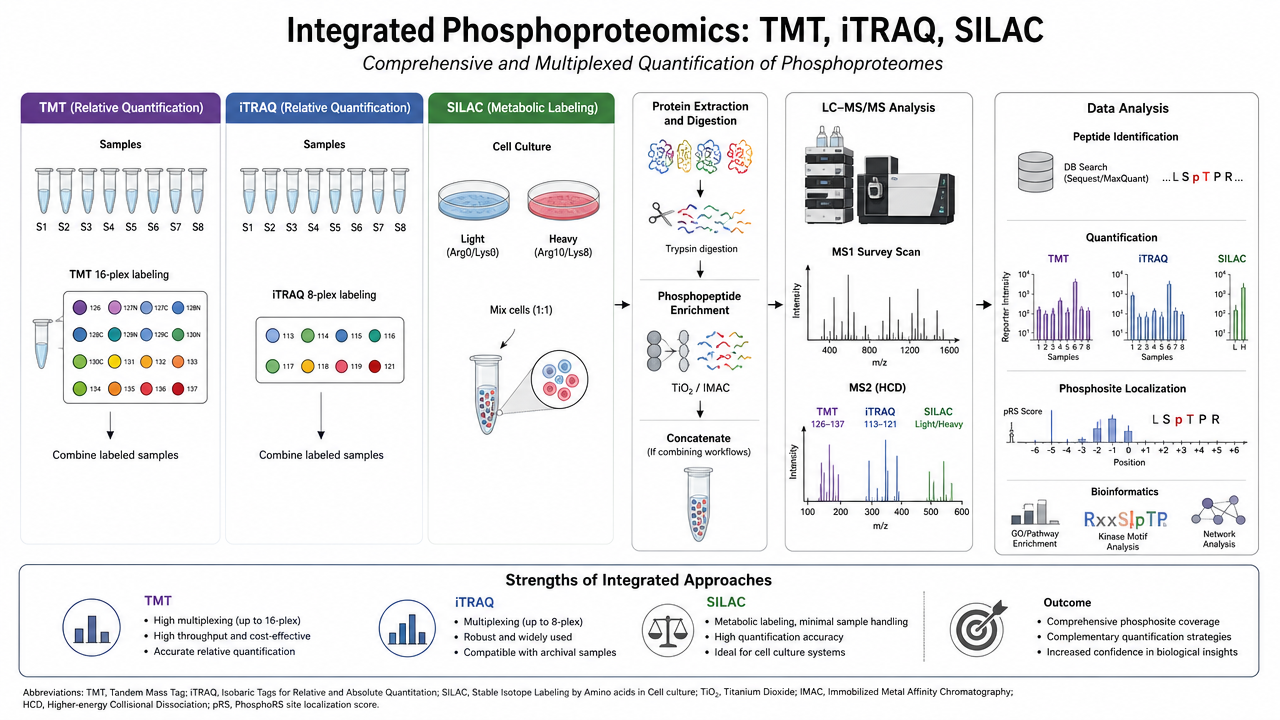
TMT, iTRAQ, and SILAC
| Label | Multiplex | Best fit |
|---|---|---|
| TMT | High plex | Large panels, time courses |
| iTRAQ | Up to 8 | Defined comparisons |
| SILAC | 2–3 states | Cell culture kinetics |
Applications
TMT for multi-condition screens; iTRAQ for moderate cohorts; SILAC for stimulation time courses in cells.
FAQ
Why is enrichment mandatory?
Low phosphopeptide stoichiometry hides sites without enrichment.
Conclusion
Match label chemistry to sample type and invest in phosphopeptide capture for reliable quantitative phosphoproteomics.
Submit Inquiry
How to order?




