






Integrating Mass Spectrometry and Affinity-Based Proteomics
Introduction
A signaling pathway study can identify a bait protein by immunoprecipitation yet still lack confident identification of the co-precipitated partners. A drug target screen may enrich candidate binders by affinity selection but return lists without sequence-level evidence. A biomarker panel may quantify selected proteins efficiently yet miss unexpected interactors or modification states that explain the phenotype. These gaps often appear when affinity-based proteomics and mass spectrometry are treated as separate workflows rather than one integrated analytical system.
Integrating mass spectrometry and affinity-based proteomics combines selective protein capture with LC-MS/MS identification and quantification. Affinity steps reduce complexity and enrich targets, interactors, or modified forms. Mass spectrometry then assigns protein identity, maps post-translational modifications, and supports comparative quantification across conditions. The integration is widely used in interaction proteomics, targeted enrichment studies, and hybrid discovery-to-validation pipelines.
For laboratories planning interaction or target-focused projects, the central question is not whether to use affinity capture or mass spectrometry alone. It is how to link capture quality, digestion strategy, LC-MS/MS acquisition, and data review so the final report supports the biological or pharmacological conclusion.
What Affinity-Based Proteomics Is
Affinity-based proteomics uses selective molecular recognition to enrich proteins or peptides from complex mixtures before analysis. Recognition elements include antibodies, tagged fusion baits, immobilized small molecules, nucleic acid probes, lectins, or engineered binding reagents.
Common affinity formats include immunoprecipitation and co-immunoprecipitation, pull-down assays with tagged bait proteins, affinity purification of fusion constructs, antibody-based protein depletion or enrichment, and targeted enrichment panels designed around predefined protein sets.
The technical value of affinity-based proteomics is selective enrichment. A bait-directed workflow can bring low-abundance interactors or modified proteins into a measurable range that would be difficult to detect in unfractionated lysate analysis. Affinity capture also creates experimentally defined comparisons, such as bait versus control, drug-treated versus vehicle, or mutant versus wild-type, that support interaction or target engagement claims.
The main limitation of affinity-only readouts is that enrichment alone does not provide full sequence evidence. Gel band presence, western blot detection, or panel abundance changes still require mass spectrometry or orthogonal confirmation when residue-level identity or modification mapping is needed.
What Mass Spectrometry Adds to Affinity Workflows
Mass spectrometry provides the identification and quantification layer that converts enriched protein material into searchable evidence.
Protein identification by LC-MS/MS assigns peptide sequences to co-precipitated or captured proteins through database searching or spectral library matching. This supports interactor nomination with sequence evidence rather than molecular weight estimates alone.
Post-translational modification mapping can localize phosphorylation, ubiquitination, acetylation, glycosylation, or other modifications on bait or interactor proteins when digestion and acquisition are configured for modified peptide detection.
Comparative quantification across bait and control pulldowns, treatment groups, or time points helps distinguish specific interactors from background binders when replicate design and normalization are controlled.
Contaminant review is an essential MS contribution. Keratins, abundant cytoskeletal proteins, and nonspecific binders are common in affinity experiments. Peptide-level reporting with quantitative ratios makes it easier to separate likely interactors from technical background.
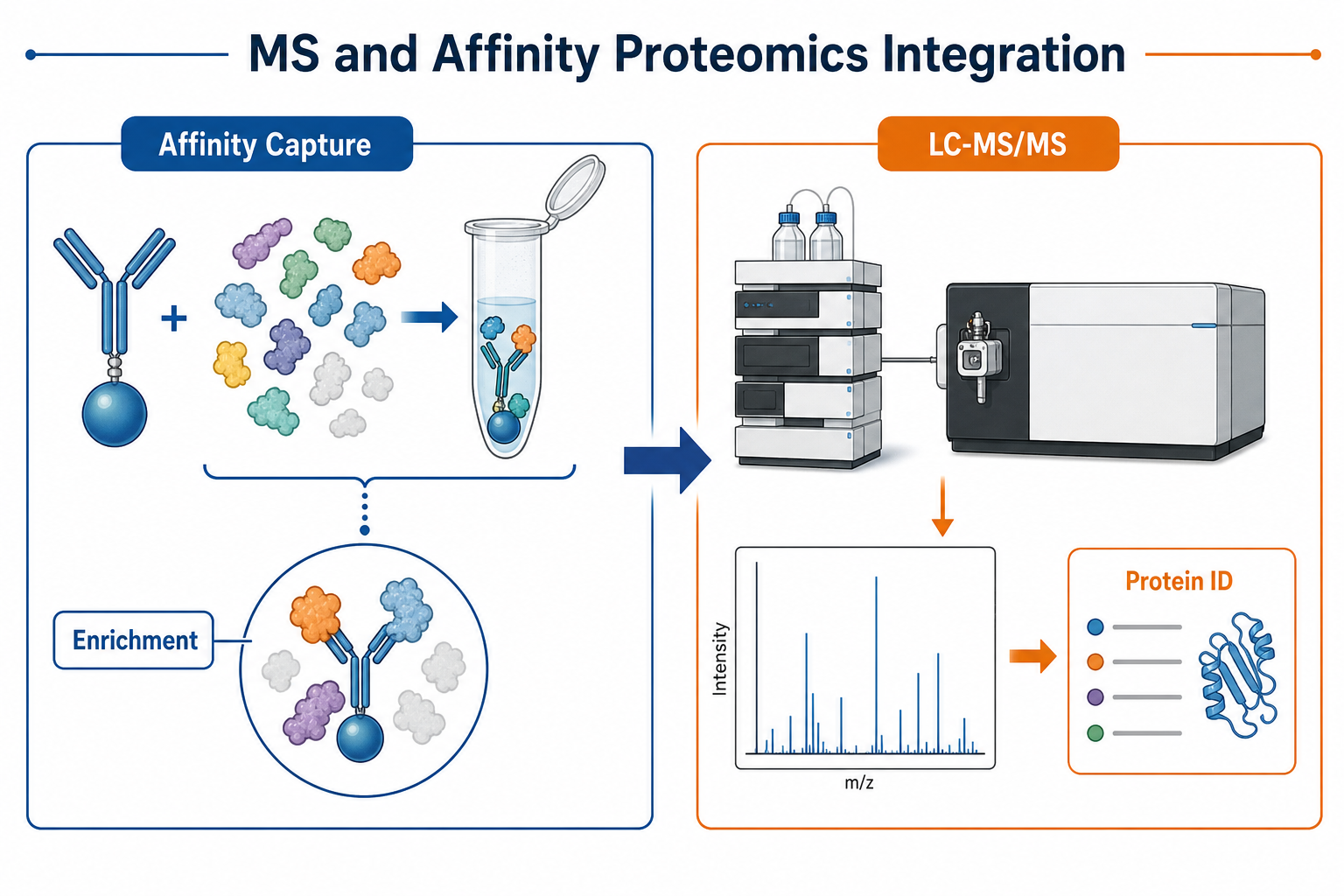
Figure 1. Integrating mass spectrometry with affinity-based proteomics links selective capture to LC-MS/MS identification and quantification.
Core Integration Workflow
A practical affinity-MS proteomics workflow connects biochemical capture with peptide-centric mass spectrometry analysis.
Bait design and control planning define the affinity reagent, tag system, antibody specificity, and control conditions required for meaningful comparison. A weak control design at this stage cannot be rescued by advanced MS acquisition.
Sample incubation and capture perform binding under conditions that preserve relevant interactions while managing nonspecific adhesion. Wash stringency, detergent concentration, and incubation time strongly affect background.
Elution and cleanup release captured proteins in a form compatible with digestion and LC-MS/MS. Overly harsh elution can denature complexes, while incomplete elution can reduce identification depth.
Digestion and peptide preparation convert enriched proteins into peptides suited to reversed-phase LC separation and tandem mass spectrometry.
LC-MS/MS acquisition applies discovery or targeted measurement to identify interactors and quantify abundance differences across conditions.
Data analysis assigns peptide-spectrum matches, applies false discovery rate controls, compares bait-control ratios, and reviews likely interactors against contamination databases and biological context.
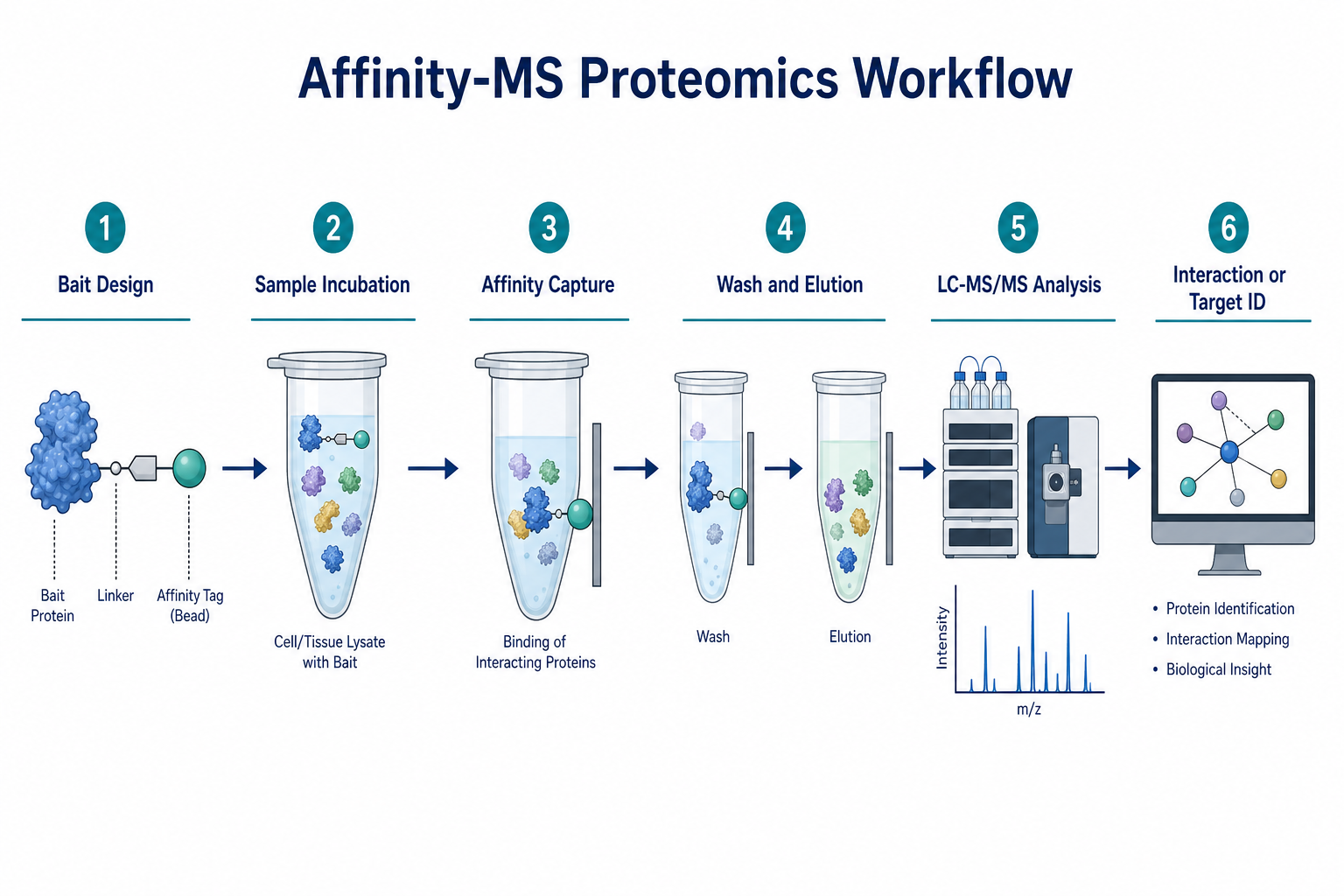
Figure 2. An affinity-MS proteomics workflow connects bait capture, sample cleanup, LC-MS/MS acquisition, and interactor review.
Main Affinity-MS Formats Used in Practice
Different biological questions map to different affinity-MS formats.
Co-immunoprecipitation followed by LC-MS/MS is used to identify proteins that associate with a target antibody bait in cells or lysates. It is common in signaling and interaction mapping when antibody performance and control IgG comparison are validated.
Tagged pull-down assays use recombinant bait proteins to capture binding partners in vitro or in lysate. This format is useful when a defined construct is available and interaction conditions need controlled optimization.
Affinity purification-mass spectrometry applies the same logic at larger scale for systematic interaction mapping when stable bait expression and reproducible capture are established.
Small-molecule affinity enrichment enriches proteins that bind a drug or probe, supporting target identification and selectivity review in chemical biology and early drug discovery.
Antibody-based enrichment panels or depletion steps can reduce dynamic range before LC-MS/MS in biofluids or tissue lysates, bridging targeted enrichment with broader discovery measurement.
Related Services
Affinity-MS proteomics projects often combine interaction capture with protein identification and quantification services. Relevant options include:
Affinity Purification-Mass Spectrometry Service
Co Immunoprecipitation (Co-IP) Service
Pull Down based Protein Analysis Service with Mass Spectrometry
LC-MS Analysis of Pull-down Proteins
Affinity Selection-Mass Spectrometry Analysis Service
Protein Identification Service
Immunoprecipitation Analysis Service
Researchers planning affinity-MS proteomics should define bait strategy, control design, and reporting depth before phase 1 capture experiments and phase 2 LC-MS/MS analysis begin.
Complementary Strengths and Trade-Offs
Affinity-based and MS-only proteomics answer related but not identical questions. Integration works best when each method is assigned the layer it measures most reliably.
The table below summarizes how the two approaches differ in practice.
|
Dimension |
Affinity-Based Proteomics Alone |
Mass Spectrometry Proteomics Alone |
Integrated Affinity-MS |
|---|---|---|---|
|
Primary strength |
Selective enrichment of targets or interactors |
Broad sequence identification and PTM mapping |
Targeted enrichment plus sequence evidence |
|
Background control |
Depends on bait and wash design |
Depends on sample complexity and fractionation |
Bait-control comparison with peptide-level review |
|
PTM information |
Limited without MS |
Strong when enrichment and search are configured |
Strong on captured proteins and interactors |
|
Throughput |
High for predefined panels |
High for discovery cohorts |
Moderate, experiment design dependent |
|
Typical output |
Enriched protein detection |
Protein groups and peptide tables |
Interactor lists with PSM support |
|
Main risk |
False positives without MS confirmation |
Low-abundance targets missed without enrichment |
Poor controls or weak capture reduce MS value |
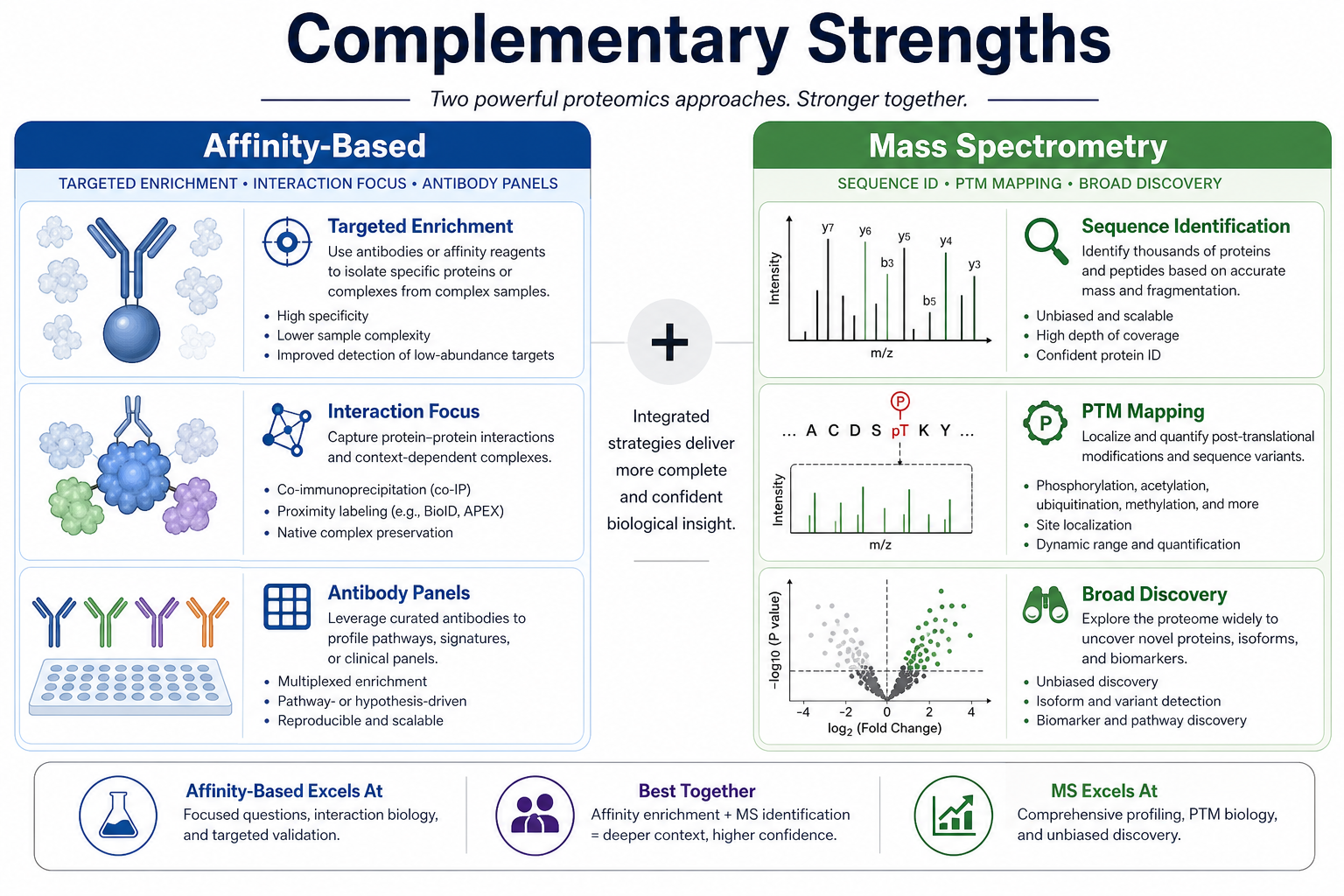
Figure 3. Affinity capture and mass spectrometry provide complementary strengths that converge in affinity-MS proteomics.
Applications in Research and Drug Discovery
Integrating mass spectrometry and affinity-based proteomics supports multiple project types when workflow design matches the biological question.
In signaling biology, co-IP MS identifies pathway interactors for receptors, kinases, or adaptor proteins and can map modification-dependent complex changes across stimulation conditions.
In drug discovery, affinity selection mass spectrometry and compound pulldown workflows help nominate protein targets and off-target binders for small molecules or degraders.
In structural and complex biology, tagged pull-down MS characterizes subunits and transient partners that copurify with a bait protein.
In biologics and mechanism studies, affinity enrichment combined with LC-MS/MS can define interaction partners or modification states on therapeutic targets without relying on predefined immunoassay panels alone.
In biomarker follow-up, panel-style affinity measurements can be extended with MS review when unexpected protein features or modified forms require sequence confirmation.
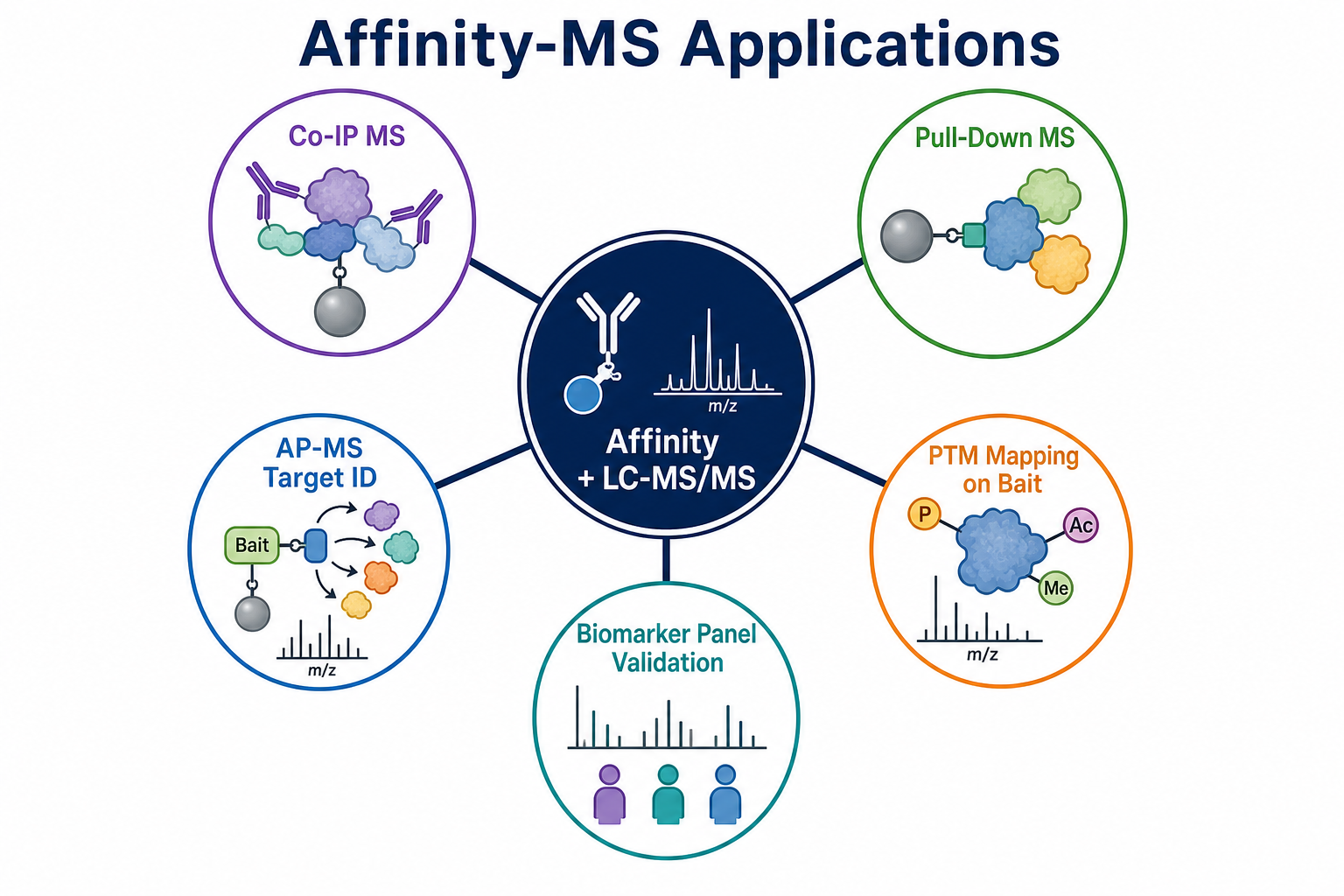
Figure 4. Affinity-MS proteomics supports interaction mapping, target identification, and modification analysis across research and drug discovery settings.
Design Considerations That Affect MS Outcomes
Integration quality depends on decisions made before the mass spectrometer runs.
Control design should include nonspecific antibody controls, empty tag controls, or vehicle-treated pulldowns matched to the bait condition. Without these, MS depth may only produce a longer background list.
Wash optimization balances removal of nonspecific binders against loss of weak but real interactors. Highly stringent washes reduce background but can eliminate biologically relevant low-affinity associations.
Digestion strategy affects coverage of bait and interactor regions. Multi-enzyme digestion or PTM-aware search parameters may be required when modification mapping is part of the goal.
Acquisition mode should match the number of samples and the depth required. Small interaction studies may use DDA for deep identification, while larger comparative screens may require label-free or multiplexed quantitation with replicate review.
Contaminant databases and quantitative ratio filtering are standard review steps in affinity-MS reporting. A protein identified in bait and control pulldowns with similar abundance is less likely to be a specific interactor.
Frequently Asked Questions
What is affinity-MS proteomics?
Affinity-MS proteomics combines selective protein capture using antibodies, tags, or other binding reagents with LC-MS/MS identification and quantification of enriched proteins.
How is affinity-MS different from regular immunoprecipitation western blotting?
Western blotting detects predefined targets. Affinity-MS can identify coprecipitated proteins without prior knowledge of their identity when database searching and control comparison are performed.
When should a project use affinity enrichment before LC-MS/MS?
Affinity enrichment is useful when the target protein class is low abundance, when interaction partners must be enriched from complex lysates, or when a bait-specific comparison is the primary analytical question.
Can affinity-based panels replace mass spectrometry?
Not for sequence-level confirmation. Panels are efficient for predefined proteins, but mass spectrometry is usually required when unknown interactors, modification sites, or unexpected binders must be identified.
What controls are essential in affinity-MS experiments?
Typical controls include nonspecific antibody pulldowns, empty vector controls, or vehicle-treated samples that match the bait condition and wash protocol.
Conclusion
Integrating mass spectrometry and affinity-based proteomics combines selective enrichment with sequence-level evidence. Affinity capture reduces complexity and focuses analysis on targets, interactors, or binding partners. LC-MS/MS then provides protein identification, modification mapping, and quantitative comparison that affinity readouts alone cannot deliver with the same confidence.
Successful affinity-MS projects depend on control design as much as instrument performance. Bait selection, wash conditions, digestion strategy, and peptide-level review determine whether identified proteins support interaction or target engagement claims. When these elements are aligned, the integrated workflow supports signaling studies, drug target analysis, and mechanistic follow-up with stronger evidence than either approach used in isolation.
Teams planning affinity-MS proteomics can contact MtoZ Biolabs to review bait design, control strategy, and LC-MS/MS reporting depth before experiments begin.
If an interaction study requires both capture optimization and peptide-level confirmation, MtoZ Biolabs can help align affinity pulldown conditions with downstream identification and quantification goals.
Researchers building integrated affinity and mass spectrometry workflows for publication or target validation can request a project assessment from MtoZ Biolabs to define phase 1 capture scope and phase 2 MS deliverables.
How to order?




