






Intact Mass Analysis for Biologics Characterization
Introduction
Product characterization often begins with a fundamental question: does the intact product match the expected molecular mass and major structural features? A monoclonal antibody lot may need confirmation that the observed mass aligns with the intended sequence, glycosylation profile, and conjugation state. A fusion protein team may need to detect clipping, dimerization, or unexpected modification before release testing expands. A biosimilar program may need lot-to-lot mass consistency evidence that supports comparability review.
Intact mass analysis measures the molecular weight of proteins in their undigested form using mass spectrometry. The readout can reveal the average or resolved mass of a biologic, distinguish major glycoforms or charge variants when resolution permits, and flag product-related variants that shift mass relative to the main species. For many antibody, fusion protein, and recombinant therapeutic programs, whole-molecule mass measurement provides an efficient first layer of structural confirmation before peptide mapping, glycan analysis, or higher-resolution orthogonal assays are applied.
Understanding how intact MS works, what it can and cannot resolve, and how it fits a broader product characterization plan helps teams define sample requirements and reporting goals before material is submitted.
Related Services
- Intact Mass Analysis Service
- Intact Mass Analysis of Antibodies Service
- Intact Protein Mass Spectrometry Service
- Intact Protein Analysis Service
- High-Resolution LC-MS Molecular Weight Identification Service
- High-Resolution MS Molecular Weight Identification Service
- Native MS Analysis
- Peptide Mapping Service
- Biological Products Analysis Service
For projects where sample purity, glycoform complexity, or reporting depth is still undefined, MtoZ Biolabs can review intact MS feasibility before samples are submitted.
What Whole-Molecule Mass Measurement Reveals in Biologics
This approach reports the molecular weight of an undigested biologic rather than peptide-level fragments. The measurement may be expressed as observed average mass, deconvoluted neutral mass, or a profile of major mass species when multiple variants are present.
The workflow is commonly used to address questions such as:
- Does the main product mass match the expected sequence plus major post-translational modifications?
- Are major glycoforms or other mass-shifting variants visible at the intact level?
- Are clipped, aggregated, oxidized, or conjugated species present as distinct mass components?
- Does a new lot align with a reference material at the intact mass level?
Intact MS differs from peptide mapping, which identifies sequences and localized modifications after digestion. It also differs from simple SDS-PAGE or SEC readouts, which indicate size heterogeneity but do not provide molecular mass with the same specificity. For therapeutic proteins, intact protein mass spectrometry is often used as an early orthogonal check that guides whether deeper structural assays are required.
Core Principles of Intact Mass Spectrometry
1. High-Resolution Mass Measurement
Modern intact workflows rely on high-resolution mass spectrometers that can resolve multiply charged ions from large proteins. Monoclonal antibodies and many fusion proteins produce complex charge state envelopes rather than a single peak. Accurate interpretation depends on sufficient resolving power, appropriate desalting, and controlled ionization conditions.
2. Charge State Deconvolution
Most intact protein spectra are recorded in the m/z domain as a distribution of charge states. Deconvolution converts that envelope into a neutral mass profile. Good deconvolution depends on signal quality, charge state spacing, and separation from interfering species. Poor sample purity or high background can produce ambiguous deconvoluted masses.
3. LC Coupling and Direct Infusion
Intact MS may be performed by LC-MS or direct infusion depending on sample complexity and project goal.
- LC-MS separates intact species before mass measurement, which can help resolve main product from closely eluting variants.
- Direct infusion can be useful for relatively clean samples when rapid mass confirmation is needed and chromatographic separation is less critical.
The better route depends on whether the sample contains multiple intact species that must be separated before interpretation.
4. Native and Near-Native Considerations
Some projects preserve noncovalent interactions or use native mass spectrometry conditions to characterize complexes, antibody assemblies, or ligand-bound states. Standard denaturing intact workflows focus on covalent mass and major covalent variants. Native approaches address a different question and require separate method design.
5. Link to Expected Biologic Mass
Interpretation requires an expected mass model. For an mAb, that model may include constant-region sequence, variable-region composition, C-terminal lysine clipping, glycosylation at conserved sites, and other known modifications. The workflow is most informative when the expected mass range is defined before data review.
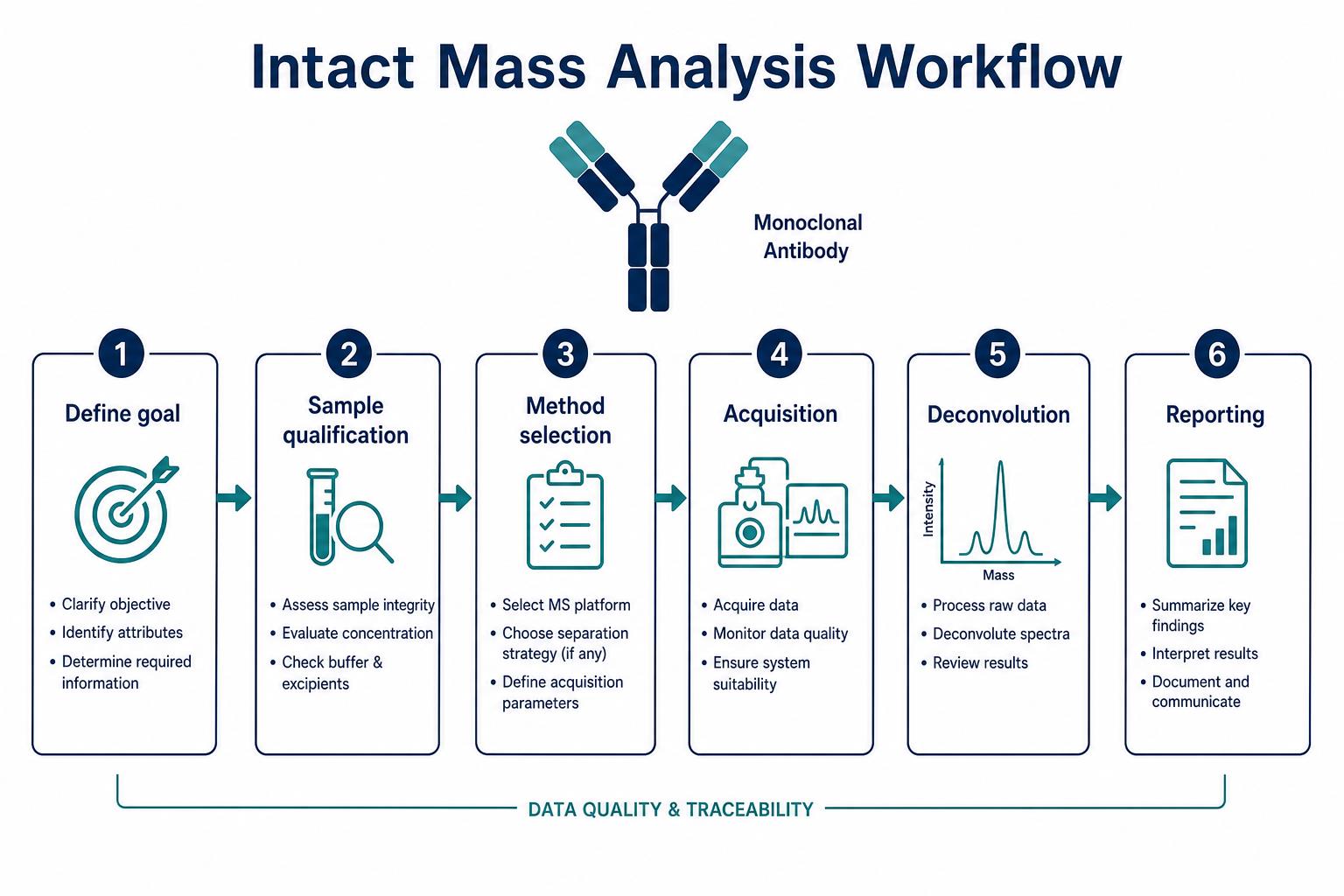
Figure 1. Intact MS moves from sample preparation through high-resolution acquisition and deconvolution to product reporting
Standard Workflow Phases
A robust intact mass project follows a defined sequence. Each phase affects data quality and report usability.
Phase 1: Define characterization goal
Confirm whether the project needs main species mass only, glycoform profiling, variant detection, or lot comparison.
Phase 2: Sample qualification
Review purity, buffer composition, concentration, and storage history. Salts, detergents, and excessive additives can suppress intact signal.
Phase 3: Method selection
Choose LC-MS, direct infusion, denaturing, or native-compatible conditions based on sample complexity and reporting need.
Phase 4: Acquisition
Record high-resolution intact spectra with sufficient signal for charge state interpretation.
Phase 5: Deconvolution and annotation
Convert charge envelopes to neutral mass profiles and compare observed species to expected biologic mass.
Phase 6: Reporting and follow-up
Document main mass, major variants, and recommendations for peptide mapping, glycan analysis, or other orthogonal assays when needed.
Biologic type strongly affects feasibility. mAb analysis, fusion proteins, antibody-drug conjugates, and heavily glycosylated therapeutics each present different separation and interpretation challenges.
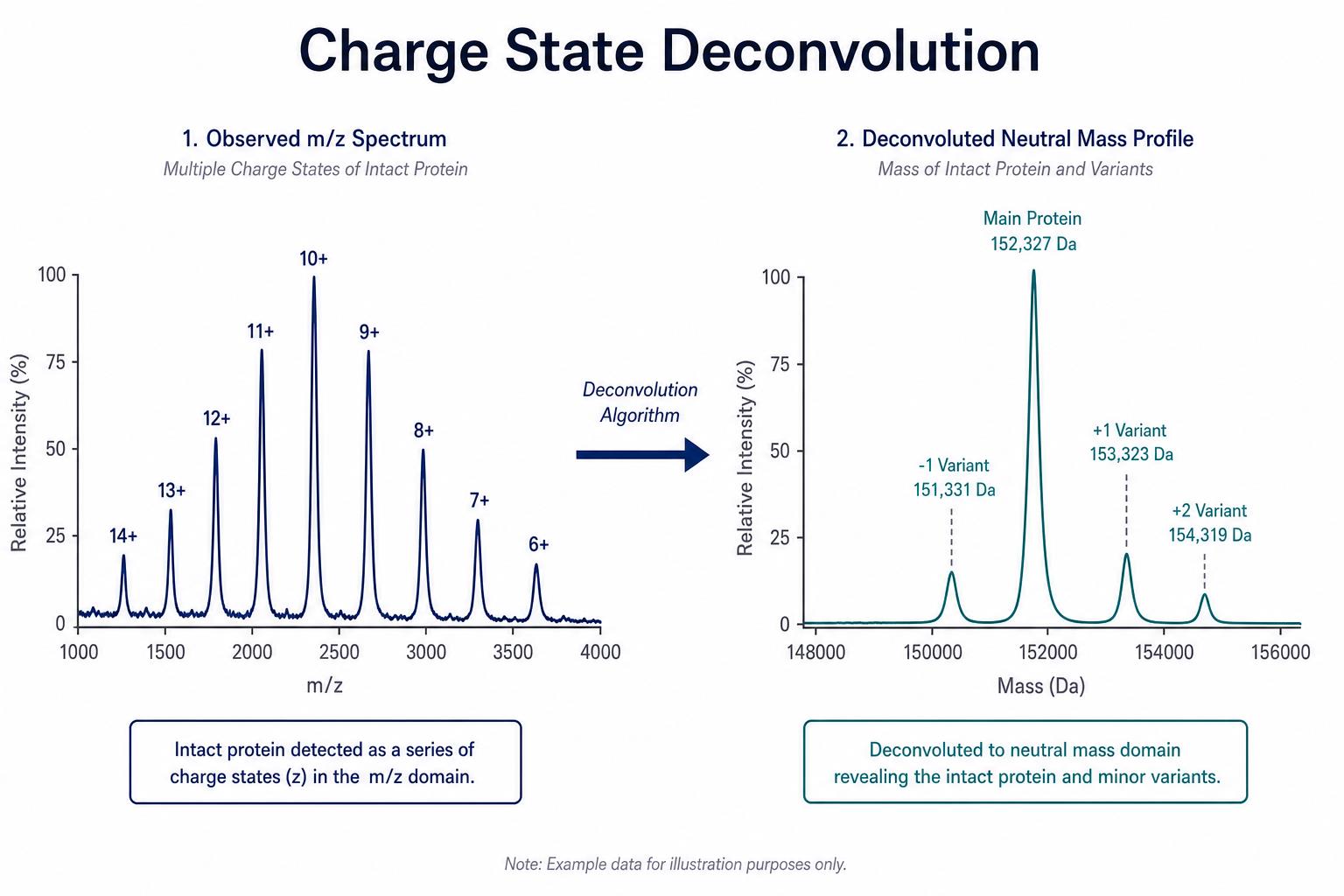
Figure 2. Multiply charged intact protein ions are deconvoluted into neutral mass profiles for biologics interpretation
Sample and Method Requirements
Reliable intact MS depends on sample quality and method fit.
|
Requirement |
Recommended Practice |
Why It Matters |
|---|---|---|
|
Sample purity |
Main product clearly dominant when possible |
Impurities complicate deconvolution and annotation |
|
Buffer and salt content |
Compatible with desalting or LC cleanup |
Excess salt reduces intact ionization quality |
|
Protein concentration |
Within workable range for selected method |
Too little signal weakens charge envelope interpretation |
|
Expected mass model |
Sequence and major PTMs defined |
Interpretation requires comparison to expected biologic mass |
|
Variant expectations |
Known clipping, conjugation, or glycoform issues if present |
Guides whether LC separation or native MS is needed |
|
Reporting depth |
Main mass only vs glycoform or variant profile |
Determines method rigor and follow-up assays |
Researchers should share biologic type, buffer composition, approximate concentration, and the decision the intact mass result must support before analysis begins.
Core Advantages and Current Limitations
1. Core Advantages
Direct mass readout at the intact level
The method measures the undigested biologic without requiring full digestion first.
Efficient variant screening
Mass shifts can reveal clipping, oxidation, conjugation, glycoform differences, or other product-related changes.
Strong fit for antibody and fusion protein QC
The method is widely used when lot release or comparability needs a rapid mass-level check.
Useful gateway to deeper characterization
Unexpected intact masses can trigger peptide mapping, glycan analysis, or terminal sequencing.
2. Current Limitations
Resolution limits for complex mixtures
Closely spaced glycoforms or low-abundance variants may not fully resolve without additional separation.
Cannot localize every modification
Intact mass shows that a mass shift exists, but localization usually requires peptide mapping or orthogonal assays.
Sample purity sensitivity
Heterogeneous or poorly prepared samples can produce ambiguous deconvoluted profiles.
Not a substitute for full primary structure proof
Sequence confirmation still depends on peptide-level or sequencing evidence when that is the project requirement.
The approach is powerful for whole-molecule biologic review, but the evidence depth depends on sample quality, method choice, and reporting goal.
Applications in Biologics Characterization
Researchers commonly apply this workflow in the following settings:
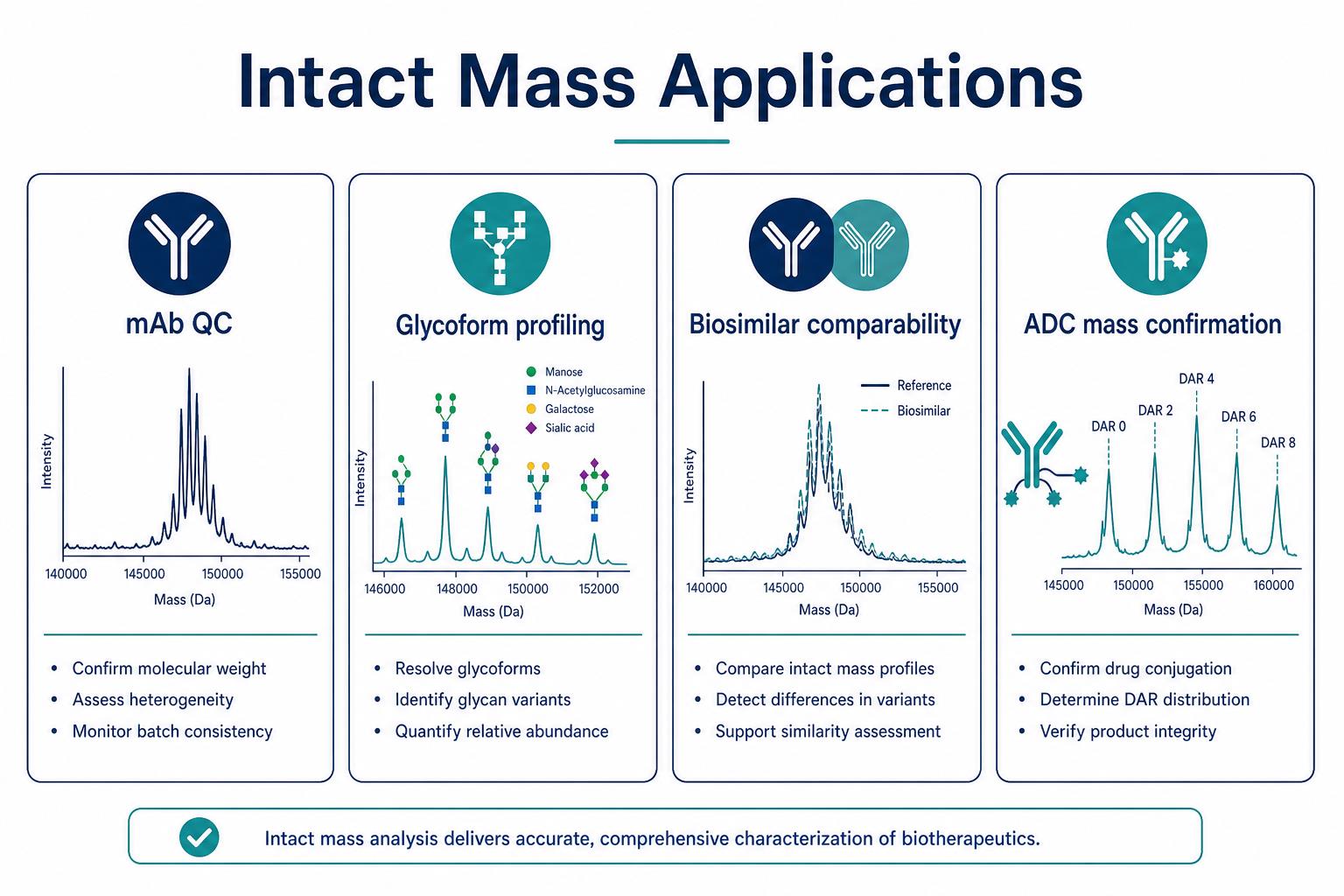
Figure 3. Common applications include monoclonal antibody QC, glycoform profiling, biosimilar comparability, and conjugate mass confirmation
Typical use cases include:
- Monoclonal antibody lot release and stability support. Confirm that the main antibody mass remains consistent across lots or storage conditions.
- Glycosylation profiling at the intact level. Identify major glycoform mass differences when resolution supports profile interpretation.
- Fusion protein and recombinant therapeutic QC. Detect clipping, sequence variants, or unprocessed leader-related mass changes.
- Antibody-drug conjugate characterization. Confirm average drug-to-antibody ratio shifts or major conjugation mass species.
- Biosimilar and comparability studies. Compare intact mass profiles between reference and test materials.
- Early clone or construct screening. Use intact mass as a rapid check before investing in deeper mapping.
These applications show why the workflow is often used early in a therapeutic characterization program rather than as a standalone sequence proof tool.
Expected Deliverables
A useful intact mass report should include more than a single number. Depending on project scope, deliverables may include:
- deconvoluted mass profile of the main species
- annotated major variant peaks when resolved
- comparison to expected biologic mass
- method summary and sample preparation notes
- comments on unresolved heterogeneity or follow-up recommendations
- orthogonal assay suggestions such as peptide mapping or glycan analysis when needed
Reporting depth should match the intended use. Exploratory clone screening may require a narrower package than regulated QC or comparability documentation.
How Intact MS Fits Broader Characterization Programs
Therapeutic characterization often combines multiple evidence types. Whole-molecule mass measurement may precede peptide mapping, N-terminal or C-terminal sequencing, glycan profiling, disulfide mapping, or charge variant analysis. A mass shift observed at the intact level can define which follow-up assay is most efficient.
The strongest programs define the characterization question before method selection. A project that only needs confirmation that a purified antibody matches expected mass may not require the same reporting depth as a comparability study with multiple glycoform species under review.
Frequently Asked Questions
1. What is intact MS used for in biologics?
The workflow is used to measure the molecular weight of undigested biologics and to detect major mass-shifting variants such as glycoforms, clipped forms, oxidized species, or conjugated products.
2. Can intact MS replace peptide mapping?
No. Whole-molecule mass evidence is valuable, but peptide mapping is usually required to localize modifications and confirm sequence-level detail.
3. Is LC-MS required for intact measurement?
Not always. LC-MS is helpful when separation is needed before mass measurement. Direct infusion may be sufficient for relatively clean samples requiring rapid mass confirmation.
4. Can intact MS profile antibody glycosylation?
It can reveal major glycoform mass differences at the intact level when resolution is sufficient. Detailed glycan structural profiling usually requires dedicated glycan analysis.
5. What sample information is needed before submission?
Share biologic type, buffer composition, approximate concentration, purity estimate, expected sequence or mass model, and the reporting goal such as QC, comparability, or exploratory screening.
Conclusion
Intact mass analysis provides a direct, efficient route for biologics characterization when whole-molecule molecular weight confirmation and major variant screening are required. By combining high-resolution acquisition, charge state deconvolution, and comparison to expected biologic mass, the workflow supports mAb QC, fusion protein review, biosimilar comparability, and conjugate mass confirmation. It does not replace peptide mapping or full sequence proof, and it depends on sample quality and appropriate method selection. Researchers planning product characterization can contact MtoZ Biolabs to review sample suitability, reporting depth, and the best intact mass analysis path for their product.
How to order?




