



Introduction
Absolute quantitation in quantitative proteomics depends on choosing the right surrogate peptide before synthetic standards are ordered. A biomarker program may need plasma reporting in ng/mL. A biopharmaceutical team may need ppm-level host cell protein evidence. A pathway study may need stoichiometric readouts across treatment arms. In each case, the AQUA peptide must track the endogenous light peptide reliably after digestion, spike-in, and targeted LC-MS acquisition.
Selection errors are expensive. A non-proteotypic surrogate, weak matrix response, poor label placement, or incompatible spike level can force standard resynthesis, assay redesign, or unreliable light-heavy ratios across the cohort. Many failed absolute assays trace back to proteotypic peptide choice rather than instrument limits alone.
The sections below provide a practical workflow for selecting labeled standards, with emphasis on proteotypic peptide criteria, labeling design, spike planning, and matrix validation before full calibration begins. Broader assay design steps that follow peptide selection are described in How to Design an Absolute Protein Quantification Assay.
For projects where surrogate peptide choice, labeling scheme, or matrix feasibility is uncertain, MtoZ Biolabs can review selection strategy before stable isotope labeled peptides are synthesized.
Why Surrogate Selection for AQUA Standards Often Fails
Most selection problems appear before calibration is complete. The chosen peptide may not be proteotypic in the study organism or digestion workflow. Label positions may weaken fragment coverage or create standards that do not co-elute with the light peptide. Spike levels may sit far above or below the endogenous range and distort ratio interpretation. Candidates may be chosen from in silico lists without matrix testing.
Another common issue is copying a literature peptide without confirming performance in the local matrix. A surrogate that works in cell lysate may ionize poorly in plasma or show unstable heavy-light ratios in formulation background.
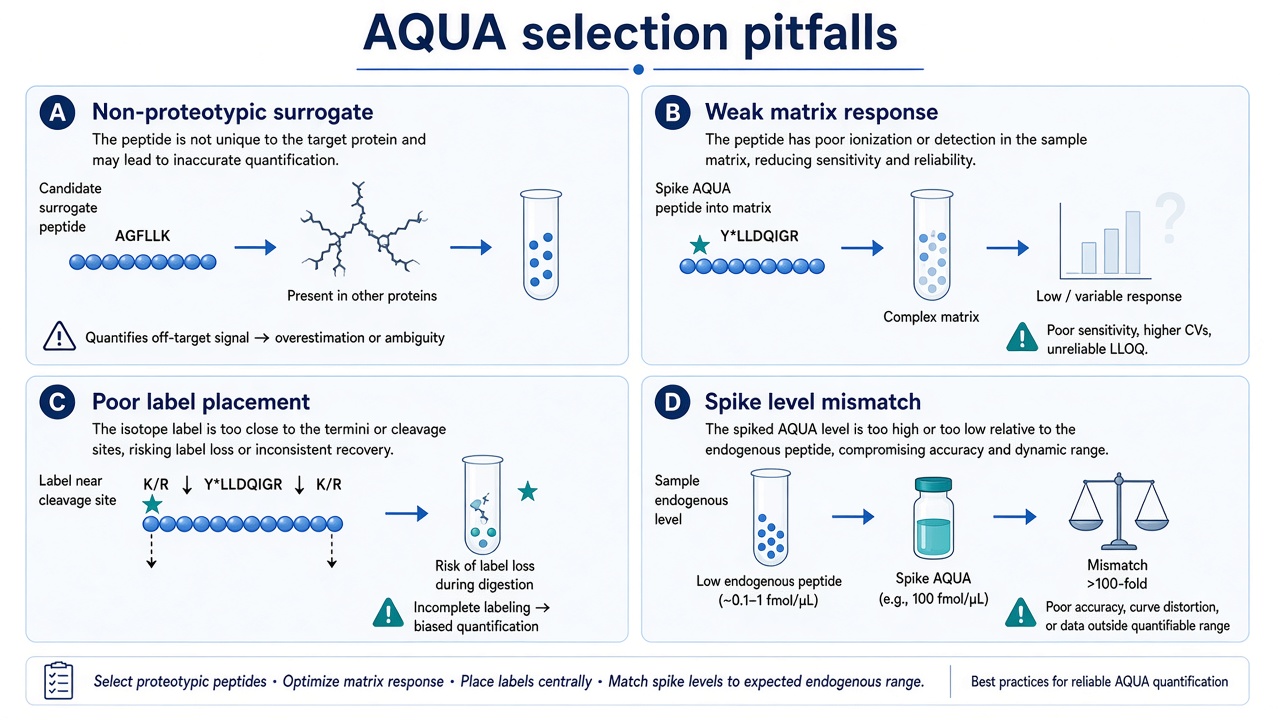
Figure 1. Common selection pitfalls that reduce calibrated assay performance before validation is complete.
Selection should be matrix-aware from the start. Plasma, tissue lysate, cell extract, and biopharmaceutical matrix each present different digestion, recovery, and interference challenges for stable isotope labeled peptides.
Step 1: Define the Reporting Goal and Sample Matrix
Before shortlisting peptides, define what the assay must measure and where it will be used.
Useful planning questions include:
- Which proteins must be quantified, and in what units?
- What sample matrix will be analyzed across the full study?
- Will standards be spiked before or after digestion?
- Is the assay for exploratory screening, validation, or repeated QC use?
- Will acquisition use triple-quadrupole targeting or high-resolution PRM?
A three-protein pilot in cell lysate is a different selection task from a ten-protein plasma panel intended for specification reporting. Scope definition prevents ordering standards for surrogates that cannot support the final reporting goal.
Step 2: Shortlist Proteotypic Surrogate Candidates
AQUA peptides should represent proteotypic peptides that reliably track the parent protein after the chosen digestion workflow.
Selection Factor |
Preferred Characteristic |
Why It Matters |
|---|---|---|
Sequence uniqueness |
Proteotypic within the relevant proteome context |
Reduces ambiguity in protein inference |
Peptide length |
Often 7-25 residues after tryptic digestion |
Very short or long peptides may fragment or ionize poorly |
Missed cleavages |
Predictable and acceptable if documented |
Unexpected cleavage patterns complicate quantitation |
Modifications |
Known and controlled when present |
Oxidation or other shifts can alter light-heavy pairing |
Ionization behavior |
Strong precursor signal in matrix-relevant tests |
Weak responders reduce sensitivity and ratio stability |
Retention behavior |
Reproducible elution without severe co-elution |
Supports co-elution of light and heavy peptide pairs |
Start with in silico filtering, then rank candidates using discovery data, spectral libraries, or unlabeled peptide injections in matrix-matched material. Final selection should depend on observed performance rather than prediction alone.
For multi-protein panels, prioritize one to three surrogate candidates per protein initially. Backup peptides can be retained if the primary standard fails pilot validation.
Step 3: Test Unlabeled Surrogates in Matrix Before Ordering Standards
Synthetic AQUA peptides are costly to replace. Testing unlabeled surrogate peptides in the study matrix before ordering labeled standards reduces resynthesis risk.
Practical testing priorities include:
- confirm detectability after the planned digestion and cleanup workflow
- compare precursor intensity and chromatographic behavior across replicates
- inspect whether co-eluting interferences affect integration
- reject peptides with unstable retention or weak response in real matrix
- document expected m/z, charge state, and retention time for standard design
A strong signal in neat solvent does not guarantee performance in plasma, tissue, or formulation matrix. Matrix testing should use the same preparation workflow planned for study samples. For standard-level and absolute quantification scope that frames surrogate choice, see Absolute Protein Quantification Mass Spectrometry.
Step 4: Design the Labeling Scheme
Label design must preserve chromatographic and fragmentation similarity while creating a measurable mass shift between light and heavy forms.
Labeling priorities include:
- place stable isotopes, commonly 13C and 15N, to maintain interpretable fragment ions
- confirm the mass shift is sufficient for selective integration on the chosen platform
- avoid label patterns that weaken key product ions used for quantitation
- document label positions for synthesis specification and method transfer
- order enough purity and quantity for calibration spikes and QC use
Poor label placement can produce standards that do not track the endogenous peptide during acquisition even when the sequence appears correct on paper.
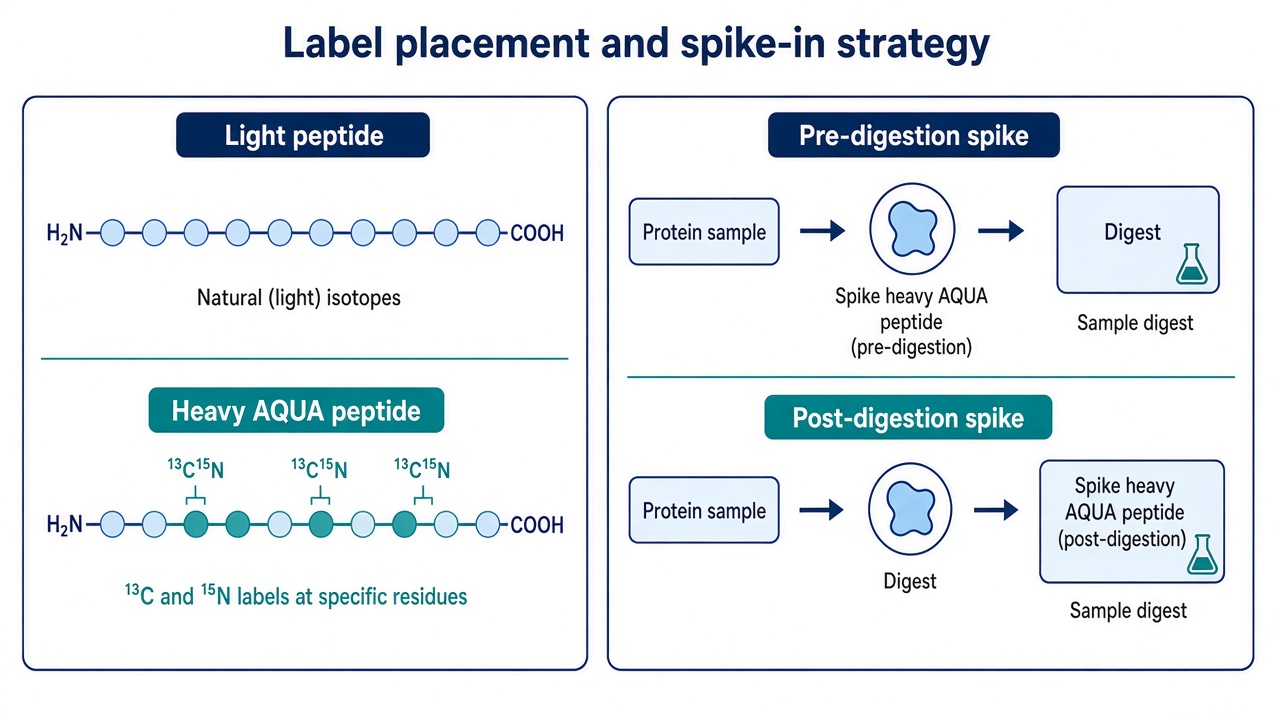
Figure 2. Label placement and spike-in strategy should be defined before stable isotope labeled peptides are synthesized.
Step 5: Plan Spike Level and Calibrator Pairing
Spike amount affects ratio accuracy and calibration behavior.
Spike planning priorities include:
- set spike levels near the expected endogenous range when possible
- avoid spikes so high that light signal becomes negligible
- avoid spikes so low that heavy signal is noisy or poorly integrated
- define whether post-digestion or pre-digestion spike-in will be used
- prepare matrix-matched calibrators that bracket the expected sample range
Changing spike strategy after synthesis can alter apparent recovery and force recalibration. Spike design should therefore be fixed before validation begins.
Step 6: Validate Heavy-Light Performance in a Pilot Assay
After labeled standards arrive, confirm that each heavy peptide performs as intended in matrix-relevant pilot injections.
A useful pilot review includes:
- co-elution of light and heavy peptides under the planned LC method
- stable heavy-light ratios across replicate injections
- acceptable transition or fragment selectivity during targeted acquisition
- inspection of ratio drift across QC injections
- rejection of standards that show persistent interference or poor integration
Do not move to full cohort calibration until primary standards pass pilot review in matrix-matched material.
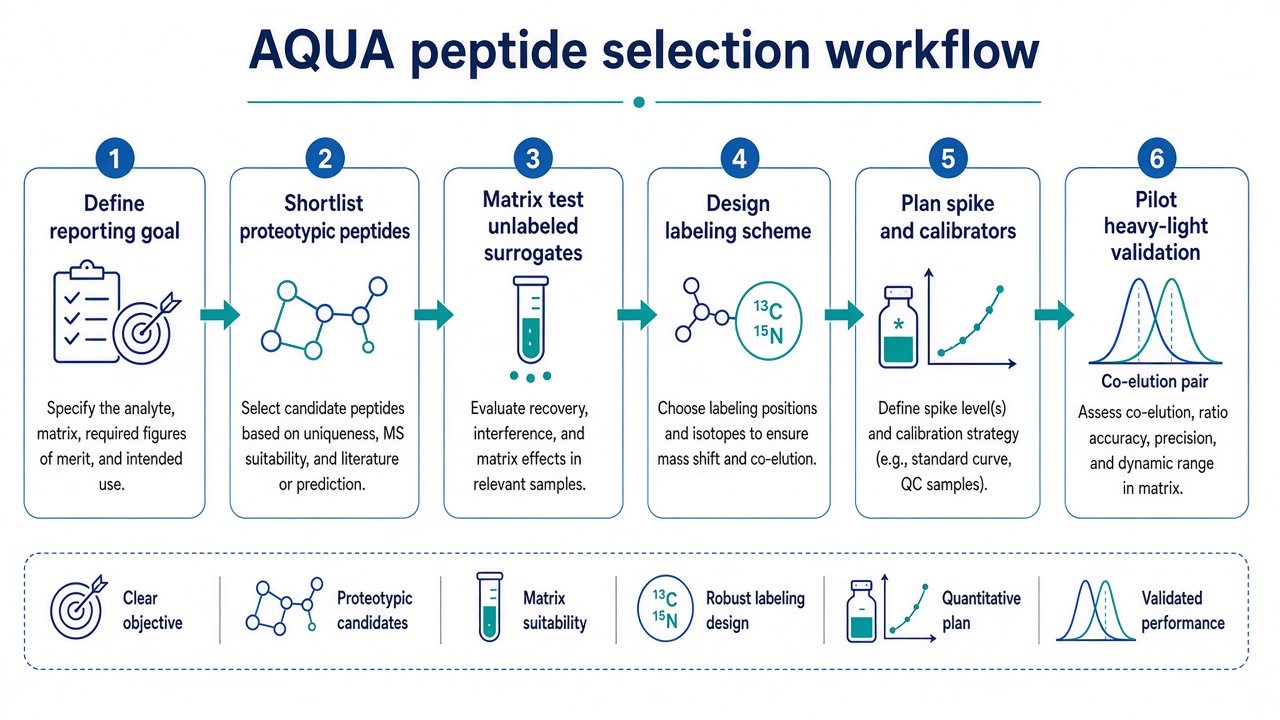
Figure 3. Practical workflow from target definition through surrogate testing, label design, and pilot validation.
Expected Outputs From a Sound Selection Process
Output Type |
Typical Content |
Best Used For |
|---|---|---|
Surrogate peptide shortlist |
Ranked proteotypic candidates per protein |
Standard ordering and assay planning |
Matrix test summary |
Detectability and retention notes in study matrix |
Go or no-go before synthesis |
Labeling specification |
Isotope positions, purity, and amount |
AQUA peptide synthesis order |
Spike-in plan |
Spike point and target level per sample |
Calibration and ratio design |
Pilot validation notes |
Co-elution and ratio stability results |
Assay lock-in before cohort analysis |
Backup peptide list |
Secondary surrogates if primary fails |
Panel resilience |
The deliverable should match the decision behind the project. Exploratory selection may require less documentation than an assay intended for regulated QC or multi-site transfer.
Key Cautions
Do not order labeled standards solely from in silico prediction without matrix testing of the unlabeled surrogate. Do not assume discovery detectability proves ratio stability. Do not choose a peptide with poor retention or severe co-elution if scheduled acquisition is required. Do not change label or spike design casually after pilot validation. Do not expand the panel late without reviewing whether each new standard can be validated in the same matrix workflow.
Pilot selection on a limited protein subset often prevents costly resynthesis across a full panel. Early matrix testing is especially valuable for plasma, tissue, and formulation backgrounds.
1. What is the first step in selecting AQUA peptides?
The first step is to define the reporting goal, target proteins, sample matrix, spike-in strategy, and acquisition platform for the assay.
2. How many proteotypic peptides should be selected per protein?
Many assays begin with one primary and one backup proteotypic peptide per protein. Additional candidates can be retained if the primary surrogate fails matrix or pilot validation.
3. Should unlabeled peptides be tested before ordering AQUA standards?
Yes. Testing unlabeled surrogates in matrix-matched material helps confirm detectability, retention, and interference risk before synthetic standards are ordered.
4. What labeling scheme is commonly used for AQUA peptides?
Stable isotopes such as 13C and 15N are commonly incorporated at selected residues or at the C-terminus to create a measurable mass shift while preserving fragmentation similarity.
5. When are selected standards ready for full calibration?
Selected AQUA peptides are usually ready when heavy-light co-elution, ratio stability, and selective integration are acceptable in matrix-relevant pilot injections representative of the study design.
Conclusion
Selecting AQUA peptides for quantitative proteomics depends on deliberate proteotypic surrogate choice, matrix-aware testing before synthesis, careful labeling and spike design, and pilot validation of heavy-light performance. Weak absolute assays are often traceable to peptide selection shortcuts rather than instrument limits alone. Define the reporting goal early, test surrogates in the real matrix, and validate labeled standards before committing to full calibration.
If you need help choosing surrogates, designing labeling schemes, or validating AQUA peptides for biomarker, biopharmaceutical, or pathway quantitation, contact MtoZ Biolabs to discuss absolute quantification, targeted proteomics, and standard selection before peptide synthesis begins. Researchers can also review the MtoZ Biolabs Absolute Quantitative Analysis (AQUA) Service for surrogate review, labeling scheme planning, and pilot validation before peptide synthesis.
