






How to Detect Low-Abundance Proteins in Serum and Plasma Proteomics
Serum and plasma span a wide protein abundance range. Dominant proteins can suppress weaker peptide signals, while digestion efficiency, peptide properties, acquisition limits, and reporting thresholds further affect whether lower-abundance proteins are identified reliably. The practical way forward is not one universal trick. It is a matched strategy: lock a clean serum or plasma matrix, decide whether the claim truly depends on low-abundance targets, then choose a path that improves their visibility without breaking group comparability.
For many projects, the useful options are a standard discovery pilot to test claim fit, a depth-focused blood proteomics route when low-abundance detection is central, or high-abundance protein depletion when dominant proteins clearly block the target class. CSF can face low-abundance questions too, but blood contamination should be resolved before borrowing plasma-style depth logic.
If you already know the target class, share with MtoZ Biolabs the matrix, anticoagulant for plasma, available volume constraints, and whether the claim is broad profiling or low-abundance detection. That brief is usually enough to choose a realistic serum/plasma/CSF proteomics path before aliquots are thawed.
Why Low-Abundance Detection Is a Design Problem
Serum and plasma cover a wide protein abundance range. Albumin, immunoglobulins, and other dominant proteins are biologically real, but they can leave less analytical room for lower-abundance candidates such as tissue-derived, secreted, or signaling-related circulating proteins. That is why a standard discovery report can look “complete” as a research package and still miss the proteins that define your claim. In serum/plasma/CSF proteomics, this gap is one of the most common reasons teams feel the first dataset under-delivered.
Low-abundance detection therefore starts before acquisition. If groups differ in hemolysis, freeze-thaw history, or plasma anticoagulant, the apparent low-abundance pattern can reflect sample chemistry rather than biology. Prefer EDTA or citrate for plasma and avoid heparin. Keep serum and plasma as separate matrices. Samples with severe hemolysis, marked lipemia, visible contamination, substantial precipitation, or excessive or group-imbalanced freeze-thaw histories should be reviewed before analysis.
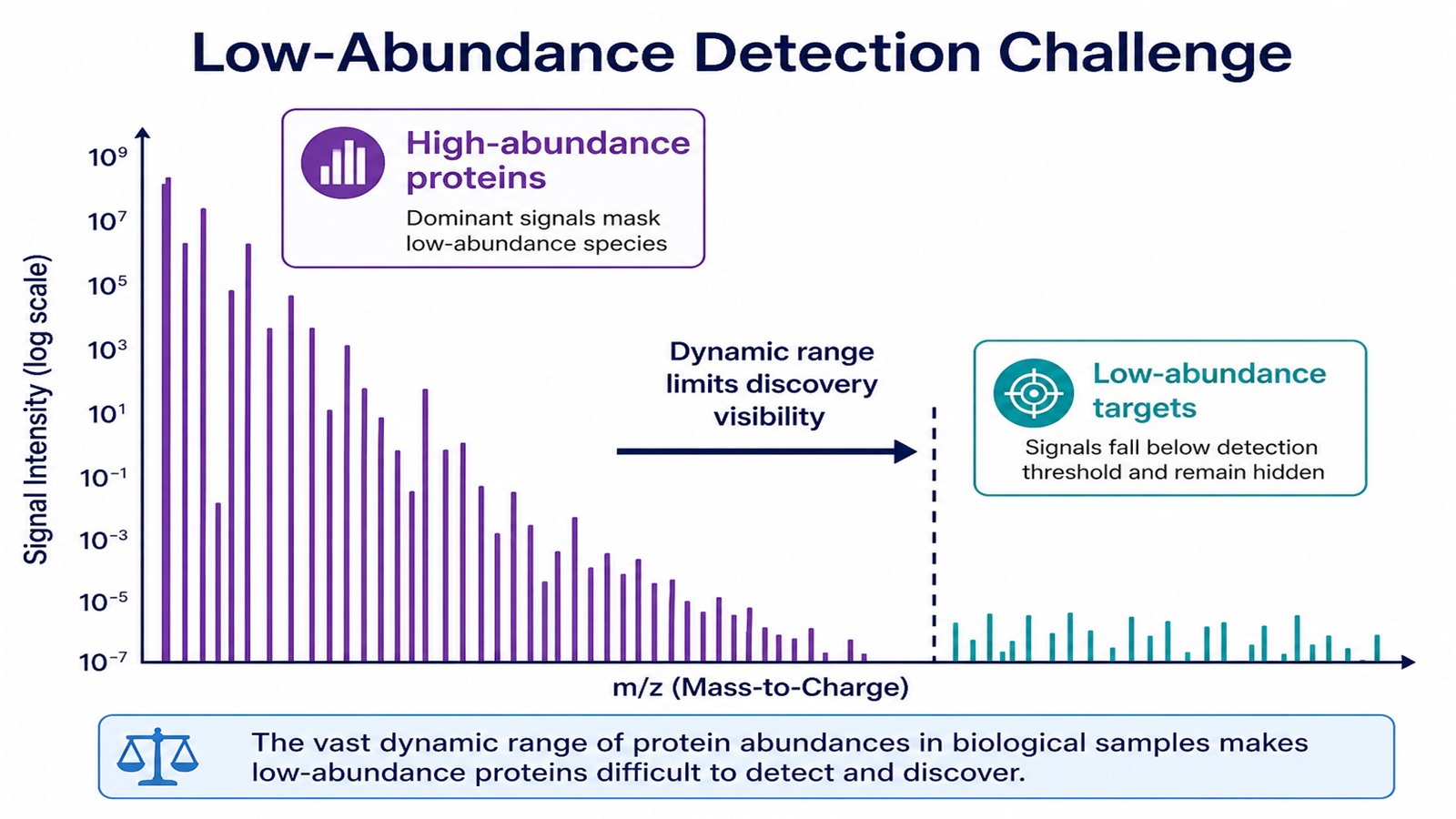
Figure 1. High-abundance circulating proteins can occupy much of the discovery signal, so low-abundance goals need an explicit detection strategy.
Three Practical Paths to Improve Detection
Use the comparison below as a planning tool. The best path is the one that matches the claim and the sample budget.
|
Path |
Best when |
What it improves |
Main tradeoff |
|---|---|---|---|
|
Standard discovery first |
You need a first map or the claim may still be served by mid- to high-abundance changes |
Fast read on whether the target class appears at all |
Low-abundance proteins may remain hard to rank |
|
Depth-focused blood proteomics |
Low-abundance detection is the primary goal and a depth-first route fits the cohort |
Visibility of lower-abundance circulating proteins without assuming depletion is required |
Still matrix-dependent; sample plan must support the route |
|
High-abundance protein depletion |
Dominant proteins clearly mask the target class and all arms can share the same depletion chemistry |
Chance to recover proteins previously buried under abundant background |
Extra material use and process complexity; off-target removal risk |
Read this as strategy selection, not as a promise that every low-abundance protein will appear. Serum/plasma/CSF proteomics can improve odds through better path choice. It cannot guarantee exhaustive recovery of every circulating target in one run.
Path A: Start with a controlled discovery pilot
A pilot makes sense when the team is unsure whether the biology already shows up in a standard profile. Keep matrix, anticoagulant, and harvest handling tightly matched. If the pilot provides reproducible evidence for the intended protein class, a more complex workflow may be unnecessary. If coverage remains insufficient, compare depth-focused, depletion, enrichment, or targeted options before processing the main cohort.
Path B: Use a depth-focused blood proteomics route
Choose this when low-abundance detection is central to the study. A depth-focused workflow may combine optimized sample preparation, peptide fractionation, sensitive acquisition, and extended analysis without requiring routine high-abundance protein depletion.
Path C: Plan depletion only when the claim requires it
Depletion can help when dominant proteins block the target class, but it is not automatic. All comparison arms should receive the same depletion chemistry. Do not deplete one group and leave another untouched. If volume is too limited for depletion plus backup aliquots, prioritize one consistent workflow across the full cohort rather than creating uneven preprocessing histories between groups.
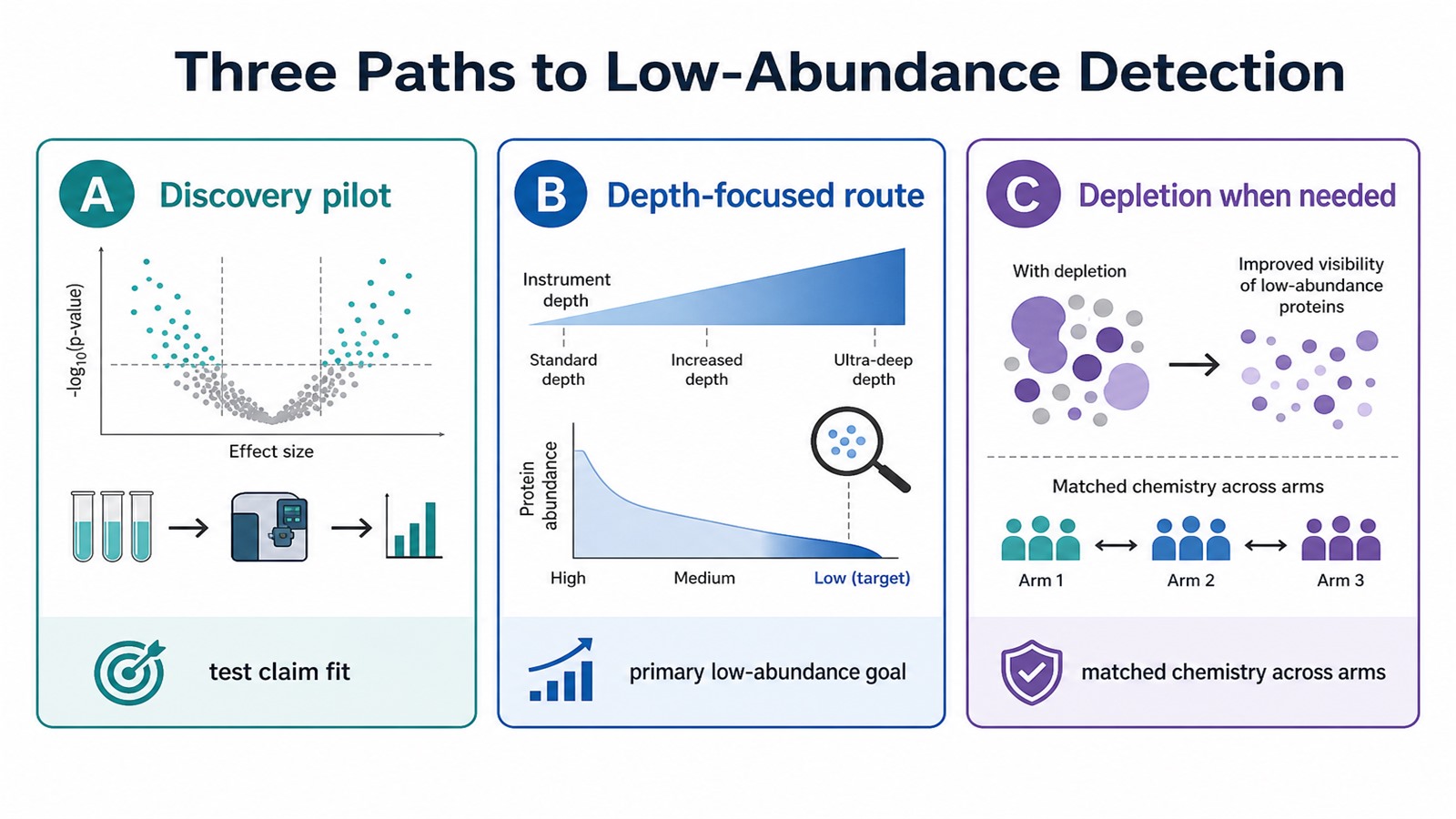
Figure 2. Choose pilot discovery, depth-focused analysis, or depletion according to claim strength and sample budget.
Controls That Matter More Than Extra Steps
Extra preprocessing cannot rescue a weak design. Before adding depth or depletion, lock the basics that decide whether a low-abundance difference is interpretable in serum/plasma/CSF protein analysis.
Matrix identity: serum and plasma answer related but different circulating questions. Do not mix them inside one primary contrast.
Plasma anticoagulant: prefer EDTA or citrate; avoid heparin. Mixed tube chemistry is a common false lead in low-abundance interpretation.
Biological units and replicates: independent subjects or animals remain the comparison unit. Technical re-injection of one depleted vial is not a substitute for biological replication.
Acquisition and analysis route: once the preprocessing path is chosen, keep DDA or DIA consistent with the cohort. DDA supports flexible discovery and protein identification, while DIA often improves data completeness and quantitative consistency. Software direction commonly includes MaxQuant or Proteome Discoverer for DDA, and Spectronaut or DIA-NN for DIA. Platform options such as Orbitrap Exploris 480, timsTOF Pro, and Orbitrap Astral can be reviewed after the sample plan is clear.
Report interpretation: identification or quantitative matrices, differential screening, and annotation layers such as GO, KEGG, COG, PPI, and Reactome can organize candidates where species support allows. For serum or plasma projects, Reactome can be delivered for Bos taurus, Canis familiaris, Gallus gallus, Homo sapiens, Mus musculus, Rattus norvegicus, Sus scrofa, and Xenopus tropicalis. Pathway enrichment is hypothesis-generating and does not by itself establish pathway activity, causality, or a confirmed disease mechanism.
CSF note: if the low-abundance question is CSF-centered, first ask whether blood contamination is distorting the profile. Blood-style depletion logic is not the first fix for a contaminated CSF vial.
A Simple Decision Sequence Before Thawing Aliquots
Write the target class in one sentence.
State whether failure to detect that class would prevent the study from answering its primary research question.
Confirm serum or plasma, and lock plasma anticoagulant if plasma is used.
Estimate whether the available material supports one depth-focused path, a depletion path, or only a clean pilot.
Keep every arm on the same preprocessing and acquisition plan.
Only then thaw the proteomics aliquots.
This sequence keeps serum/plasma/CSF proteomics focused on detectable biology instead of improvising after the first disappointing protein table.
Related Services
High-Depth Blood Proteomics Service
Main route when low-abundance detection in blood-derived matrices is the primary study goal.
Blood/Plasma/Serum Proteomics Solutions
Complementary for standard discovery pilots that test whether a deeper path is truly needed.
Alternative when the low-abundance plan is plasma-specific and anticoagulant-controlled from the start.
Frequently Asked Questions
Why are low-abundance proteins difficult in serum and plasma?
Because high-abundance circulating proteins can dominate discovery LC-MS/MS signal. The issue is dynamic range and design fit, not a reason to abandon proteomics altogether.
Is depletion always required?
No. Use depletion when dominant proteins clearly block the claim and all arms can share the same depletion chemistry. Otherwise consider a pilot or a depth-focused route first.
Can a standard discovery run still be useful?
Yes. It can show whether the intended protein class appears under matched conditions and whether a deeper second phase is justified.
Does the same logic apply to CSF?
Only partly. CSF low-abundance questions should first control blood contamination. Do not copy plasma depletion logic by default.
What should be shared before choosing a low-abundance strategy?
Share matrix, plasma anticoagulant if relevant, target class, available material constraints, and whether the claim fails without low-abundance detection. MtoZ Biolabs can then align the project with a realistic serum/plasma/CSF proteomics path rather than forcing every study through depletion by default.
Conclusion
Detecting low-abundance proteins in serum and plasma is a strategy problem first and an instrument problem second. Lock a clean matrix, decide how central the low-abundance claim really is, then choose among a controlled pilot, a depth-focused route, or depletion with consistent preprocessing across comparison groups. Keep interpretation at the candidate level until validation is done. Used this way, serum/plasma/CSF proteomics stays honest about dynamic-range limits while still giving the study a workable detection plan.
Researchers planning this work can review target class, matrix, anticoagulant, and sample budget with MtoZ Biolabs before the first proteomics aliquot is thawed. That check keeps serum/plasma/CSF protein analysis aligned with the low-abundance claim from the start.
How to order?




