






Histone Butyrylation (Kbu): Butyrate Metabolism, Epigenetic Regulation, and LC-MS/MS Detection
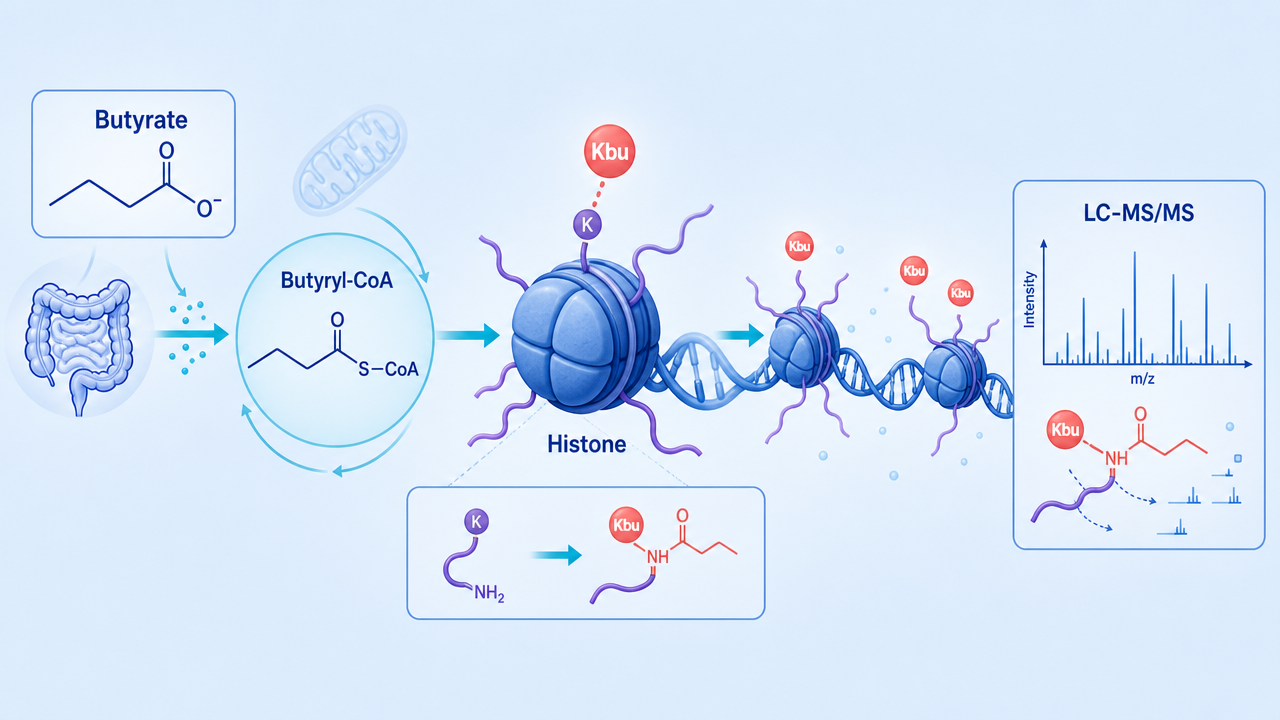
Histone butyrylation (Kbu) is a lysine acylation modification in which a butyryl group is attached to the epsilon-amino group of lysine residues on histone proteins. Its direct acyl donor is butyryl-CoA, which can be influenced by fatty acid beta-oxidation, gut microbiota-derived butyrate metabolism, and amino acid metabolism. This makes Kbu a metabolism-linked epigenetic modification that can connect cellular nutrient state with chromatin regulation.
Key Takeaways
- Kbu is a histone lysine acylation related to, but chemically distinct from, histone acetylation.
- Butyryl-CoA is the direct donor for histone butyrylation and can reflect metabolic inputs.
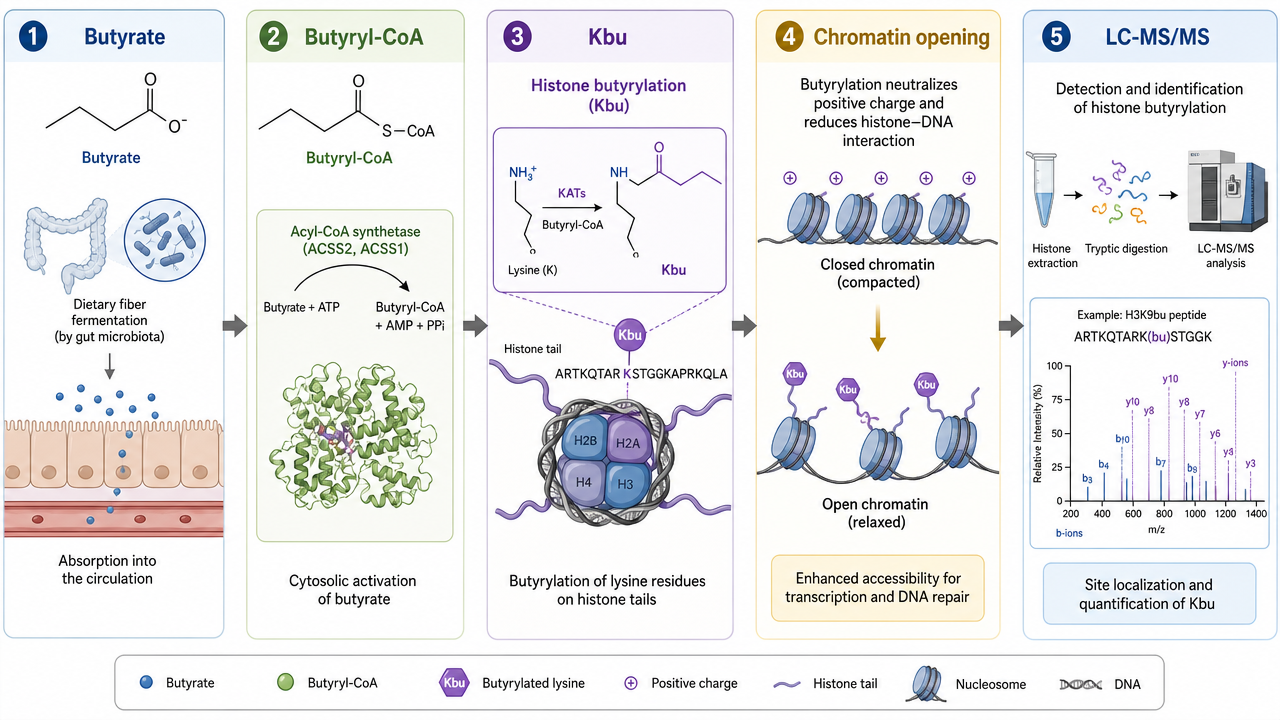
- Kbu may promote chromatin relaxation and transcriptional activity by neutralizing lysine charge and changing histone-DNA interactions.
- Reliable Kbu detection usually requires antibody enrichment, high-resolution LC-MS/MS, careful search settings, and site-level validation.
What Histone Butyrylation Means?
Histone butyrylation modifies lysine residues with a four-carbon butyryl group. Compared with acetylation, the butyryl group is larger and more hydrophobic, which may influence chromatin structure, protein recognition, and transcriptional regulation differently from shorter lysine acylations.
Related Services
Histone PTM Identification Service
Histone PTMs Quantitative Analysis Service
Histone PTM Data Analysis Service
How Butyrate Metabolism Connects to Kbu?
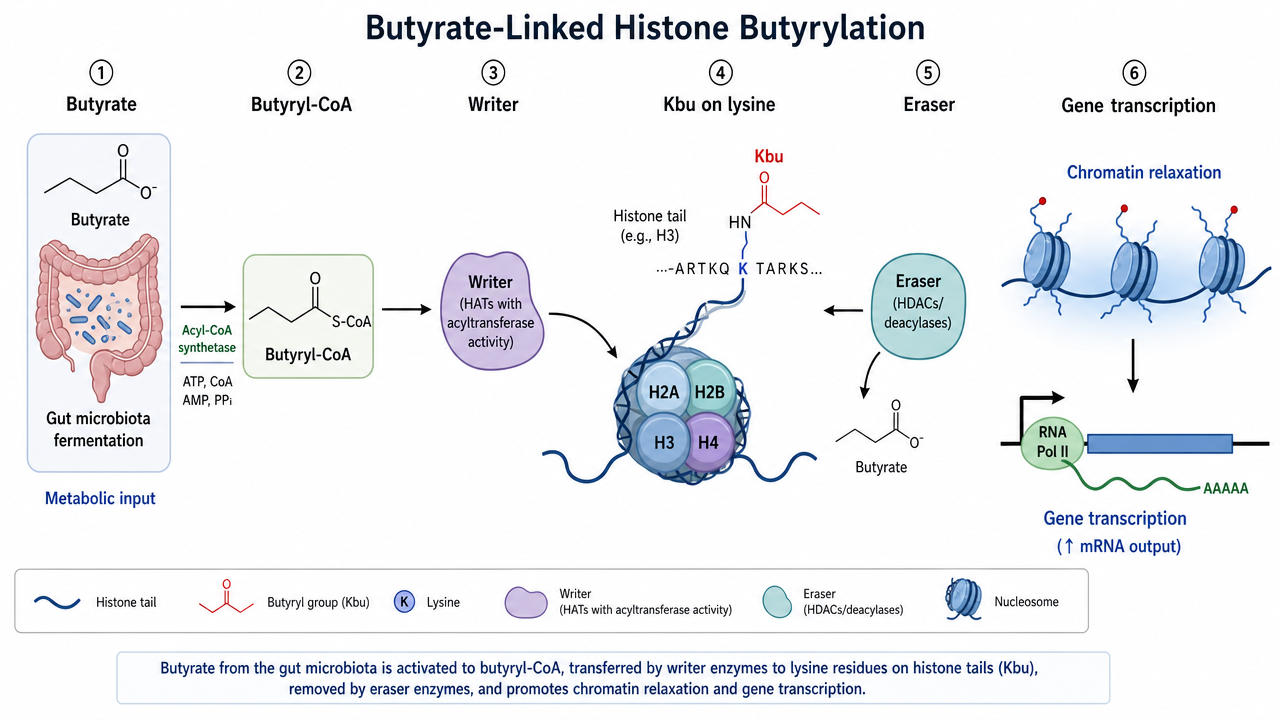
Butyrate can contribute to cellular pools of butyryl-CoA through metabolic conversion. In biological systems, butyrate may originate from gut microbial fermentation, fatty acid metabolism, or related metabolic pathways. When butyryl-CoA availability changes, histone Kbu levels may also shift, making Kbu a potential readout of metabolism-epigenetics coupling.
This relationship does not mean that every increase in butyrate automatically increases every Kbu site. Enzyme activity, chromatin accessibility, cell type, compartmental metabolism, HDAC activity, and substrate availability all affect site-level outcomes.
Some acetyltransferases can use non-acetyl acyl-CoA donors, including butyryl-CoA, under suitable conditions. p300/CBP is often discussed in this context. Removal of Kbu may involve deacylase activity from HDACs or sirtuins, although enzyme specificity can vary by site and cellular state. Reader proteins for Kbu are still an active area of study.
Biological Relevance
Histone Kbu has been associated with transcriptionally active chromatin and may participate in cancer metabolism, immune regulation, inflammation, neurological biology, and gut microbiota-host interactions. Because Kbu is metabolism-sensitive, it is especially relevant in studies that combine epigenomics, metabolomics, microbiome biology, and PTM proteomics.
LC-MS/MS Detection Strategy
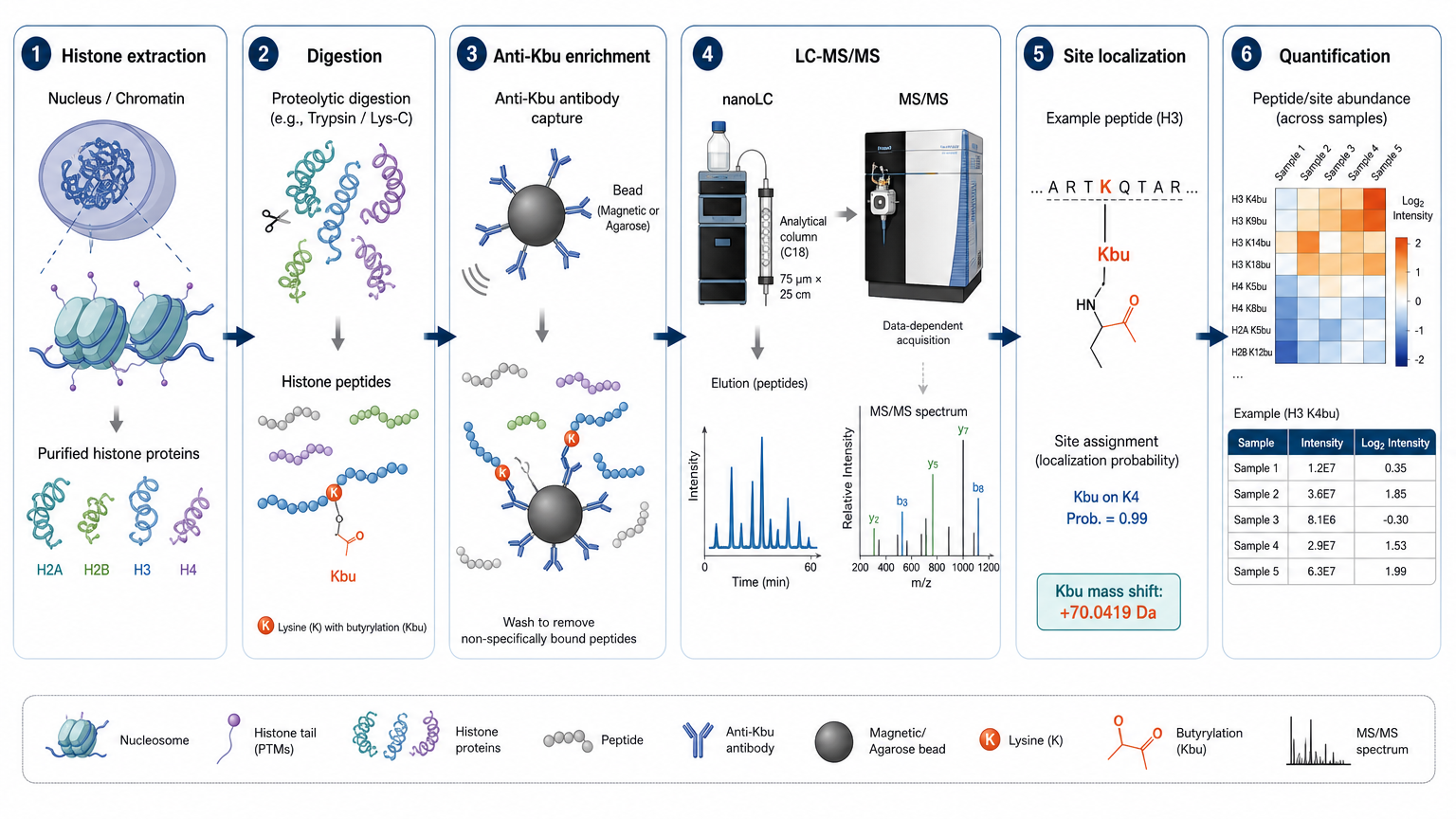
Kbu is often low abundance and close to other lysine acylation signals in complex histone samples. A typical workflow includes histone extraction, digestion or derivatization, anti-Kbu enrichment, high-resolution LC-MS/MS, database searching with Kbu as a variable modification, false discovery rate control, and site-level manual review for key peptides.
Practical Interpretation Table
| Question | Evidence needed | Why it matters |
|---|---|---|
| Is Kbu present? | Accurate mass shift and matched MS/MS fragments | Confirms the modification class |
| Which lysine is modified? | Site-determining fragment ions | Separates nearby candidate lysines |
| Does butyrate change Kbu? | Quantitative comparison across treatments | Links metabolism to PTM abundance |
| Is the finding biological? | Replicates, pathway context, and validation | Reduces false or incidental calls |
FAQ
1. What is histone butyrylation?
Histone butyrylation is a lysine acylation in which a butyryl group is covalently attached to lysine residues on histone proteins.
2. What is the role of butyrate in histone butyrylation?
Butyrate can contribute to butyryl-CoA metabolism, and butyryl-CoA is the direct acyl donor for Kbu. This links metabolic state to histone acylation.
3. How is Kbu different from histone acetylation?
Both modify lysine residues, but Kbu adds a larger four-carbon butyryl group, while acetylation adds a two-carbon acetyl group. This can change steric and hydrophobic effects on chromatin.
4. How is Kbu detected?
Kbu is commonly detected with anti-Kbu enrichment followed by high-resolution LC-MS/MS and database searching for butyrylated lysine peptides.
Conclusion
Histone butyrylation is a useful example of metabolism-driven epigenetic regulation. It connects butyrate and butyryl-CoA metabolism to chromatin state, transcriptional regulation, and disease biology. For reliable Kbu research, LC-MS/MS analysis should combine enrichment, high mass accuracy, site-localized spectra, and quantitative validation.
How to order?




