






Glycan Degradation Analysis Service
Glycan degradation refers to the process in which polysaccharides or oligosaccharides are cleaved into smaller fragments through enzymatic reactions, chemical reactions, or physical actions. This process alters the structure, function, and interaction characteristics of glycans with other molecules. With the advancement of glycomics and analytical technologies, platforms such as high-resolution liquid chromatography (HPLC) and mass spectrometry (MS) enable precise characterization of the composition, structural features, and linkage patterns of glycan degradation products, revealing degradation patterns and mechanisms. Its features include high sensitivity, strong resolution, and broad coverage of complex samples, providing powerful technical support for studying glycan stability.
The glycan degradation analysis service has broad applications across multiple fields. In glycomics research, it can be used to explore the relationship between glycan structural changes and functional regulation. In food and nutritional science, it can analyze glycan degradation during food processing and storage to assess its impact on quality and nutritional value. In environmental and agricultural research, it can be applied to study glycan degradation processes and mechanisms in soil, plants, or microbial systems, providing references for environmental monitoring and crop improvement.
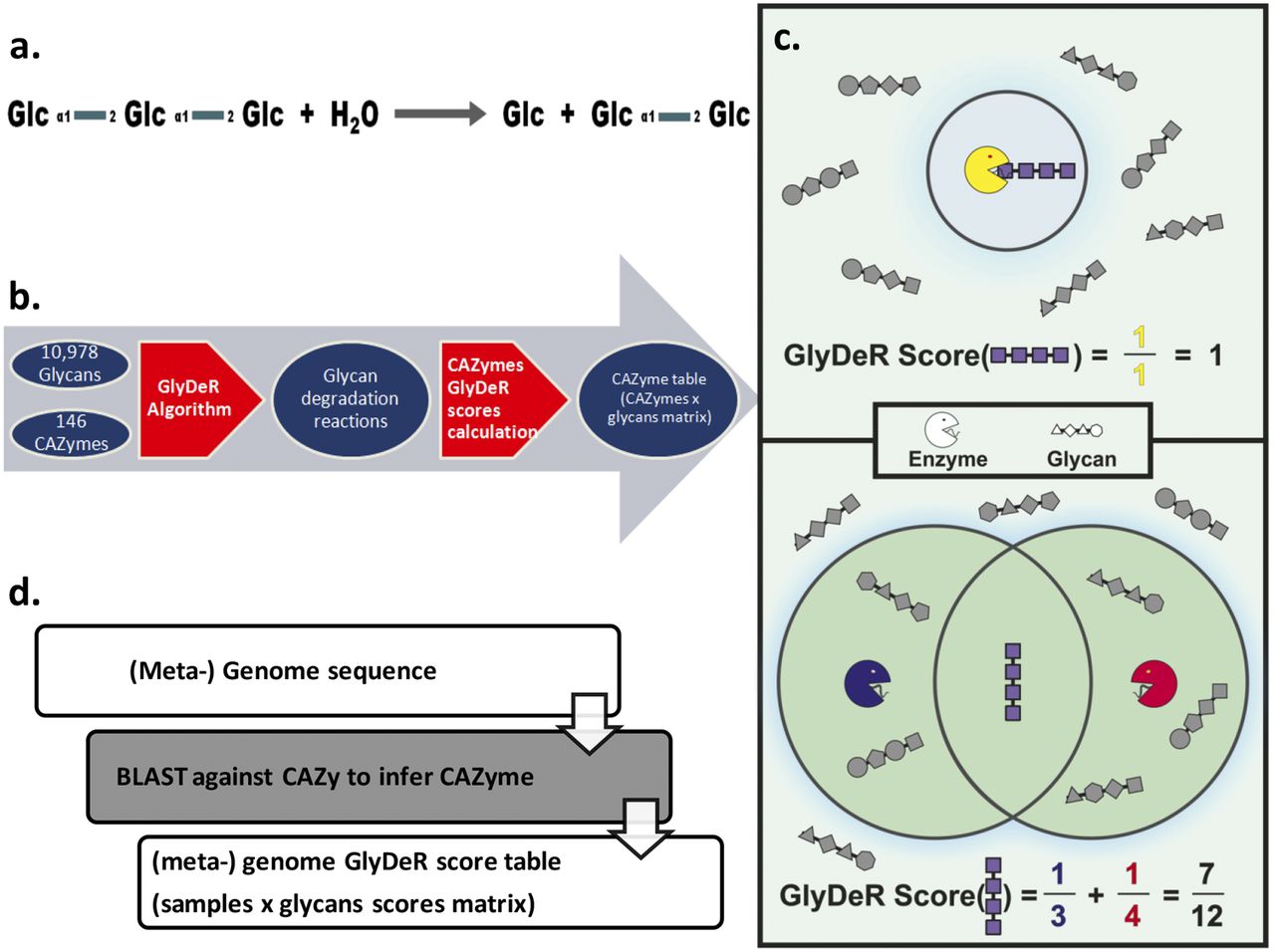
Eilam, O. et al. mBio, 2014.
Figure 1. The Glycan Degradation Platform.
Services at MtoZ Biolabs
Based on high-resolution liquid chromatography (HPLC) and mass spectrometry (MS) platforms, the glycan degradation analysis service launched by MtoZ Biolabs enables precise detection and characterization of glycan degradation products in samples such as glycoproteins, glycolipids, plant extracts, and microbial metabolites. This service can analyze the types, structural features, linkage patterns, and relative abundance of degradation products, and, combined with bioinformatics methods, reveal degradation patterns and their distribution characteristics. Ultimately, it can provide researchers with comprehensive qualitative and quantitative data to support studies on glycan stability, degradation mechanism exploration, and functional property analysis.
Analysis Workflow
1. Sample Pretreatment
Remove impurities and interfering components to ensure the integrity of glycan structures, providing high-quality samples for subsequent degradation analysis.
2. Glycan Release and Enrichment
Release glycans from samples through enzymatic or chemical methods, and use specific enrichment techniques to extract target glycans.
3. Chromatographic Separation
Use high-performance liquid chromatography (HPLC) to finely separate glycans and degradation products, reducing co-elution interference.
4. Mass Spectrometry Detection
Apply high-resolution mass spectrometry (MS) platforms to perform precise qualitative and quantitative analysis of the separated glycans and degradation fragments, elucidating their structural features and degradation patterns.
5. Data Analysis and Report Generation
Combine bioinformatics methods to conduct in-depth analysis of the composition, structural changes, and distribution characteristics of glycan degradation, and generate a detailed analysis report.
Sample Submission Suggestions
1. Sample Types
Applicable to a wide range of biological samples containing glycan components, including glycoproteins, cell lysates, tissue extracts, serum, and plasma. Samples can be in liquid or solid form, and the integrity of glycan structures must be ensured.
2. Sample Purity
It is recommended to remove impurities such as proteins and lipids as much as possible to reduce interference and improve analytical accuracy. For complex samples, preliminary impurity removal may be performed.
3. Sample Storage and Transportation
Samples should be transported at low temperatures. Liquid samples can be shipped with ice packs or dry ice, while solid samples should be sealed and protected from moisture. To ensure sample quality, it is recommended to maintain frozen or chilled conditions during transportation.
Service Advantages
1. High-Resolution Analysis
With advanced mass spectrometry platforms, we can precisely analyze the composition and structure of glycan degradation products, ensuring the accuracy and reliability of results.
2. High-Sensitivity Detection
Capable of detecting low-abundance glycan degradation products, this service is suitable for analyzing trace components in complex samples, ensuring comprehensive data coverage.
3. Customized Analytical Solutions
Based on the characteristics of the client’s samples and research objectives, we develop tailored analytical strategies to address diverse research needs.
4. One-Stop Service
We provide an end-to-end workflow, from sample processing and glycan extraction to analytical testing and data interpretation, simplifying the experimental process and improving research efficiency.
Applications
1. Glycomics Research
Glycan degradation analysis service can be used to analyze the composition and structural changes of glycan degradation products, helping to reveal the role of glycan degradation in biological processes and advancing in-depth glycomics research.
2. Biological Product Quality Assessment
Enables monitoring of glycan degradation in glycoproteins, glycolipids, and other biological products during production and storage, evaluating their quality stability and consistency.
3. Food and Nutritional Science
Glycan degradation analysis service can be used to analyze the types and distribution of glycan degradation products in food, studying their impact on nutritional content, flavor, and storage stability.
4. Plant and Agricultural Research
Used to investigate the patterns of glycan degradation in plant samples and explore its role in plant growth, maturation, and stress resistance.
FAQ
Q1: Will Glycan Degradation Analysis Damage Other Components in the Sample?
A1: No. The analysis process uses highly specific and mild treatment methods that act only on glycans and their degradation products, without causing significant impact on non-target components in the sample, thereby ensuring the specificity and accuracy of the results.
Q2: What Types of Glycan Degradation Products Can Be Detected?
A2: It can detect various degradation products derived from N-linked glycans, O-linked glycans, glycolipids, and polysaccharides, covering monosaccharides, oligosaccharides, and partial polysaccharide fragments, and can use mass spectrometry and chromatography to analyze their composition, structure, and distribution characteristics.
Related Services
How to order?




