






Extracellular Vesicle Proteomics Service: From EV Protein Profiling to Comparative Analysis
-
catalog proteins present in an EV preparation
-
evaluate enrichment of expected vesicle-associated markers relative to sample context
-
compare EV protein cargo between disease and control groups or treated and untreated conditions
-
support biomarker discovery hypotheses at the protein level
-
document batch or process differences in EV manufacturing and isolation workflows
-
sample type and approximate starting volume or EV amount
-
isolation and purification method already used or needed
-
available EV characterization data
-
project goal: profiling, comparative analysis, or process documentation
-
group design, replicate expectations, and contrasts
-
whether additional validation, functional experiments, or matched project metadata will be used for follow-up interpretation
-
expected report depth and any follow-up validation needs
Introduction
Many researchers search for extracellular vesicle proteomics rather than exosome proteomics, even when the laboratory ultimately works with small EVs enriched by similar isolation workflows. The terminology difference is not only semantic. Extracellular vesicles include exosomes, microvesicles, and other secreted vesicle populations, and search behavior often follows the broader EV vocabulary used in current papers and grant language.
An extracellular vesicle proteomics service addresses that search intent directly. It supports EV protein profiling for identity and cargo description, then extends to comparative analysis across sample groups, conditions, or isolation strategies. This article explains what EV proteomics analysis covers, how profiling differs from comparative designs, and what information is needed before starting a project with MtoZ Biolabs.
What Extracellular Vesicle Proteomics Service Covers
An extracellular vesicle proteomics service uses mass spectrometry to identify and, when designed for comparison, quantify proteins recovered from EV-enriched preparations. Typical inputs include EVs isolated from plasma, serum, urine, cerebrospinal fluid, or cell culture conditioned medium.
EV proteomics analysis is commonly used to:
For researchers who are planning EV protein profiling, comparative EV proteomics analysis, or candidate protein prioritization, MtoZ Biolabs provides an Exosome Protein Analysis Service to support workflow review based on sample source, EV preparation status, group design, and expected output.
From EV Protein Profiling to Comparative Analysis
1. EV Protein Profiling
Profiling answers what proteins are detectable in an EV-enriched sample under defined preparation and acquisition conditions. Outputs typically include protein identification lists, associated peptide evidence, and annotations that help place cargo in functional or cellular-context categories.
Profiling is appropriate when the immediate need is cargo inventory, method feasibility assessment, or documentation of a production or isolation batch. It is not a substitute for group comparison when differential biology is the real question.
2. Comparative EV Proteomics Analysis
Comparative analysis answers which EV-associated proteins differ between defined groups. This requires matched sample handling, sufficient biological or process replicates, and a quantification strategy suited to the study scale.
Comparative EV proteomics is appropriate for case-control discovery, treatment-response studies, and process comparison when isolation variables must be evaluated at the protein cargo level. Candidate differences remain exploratory until orthogonal validation and independent cohorts support stronger claims.
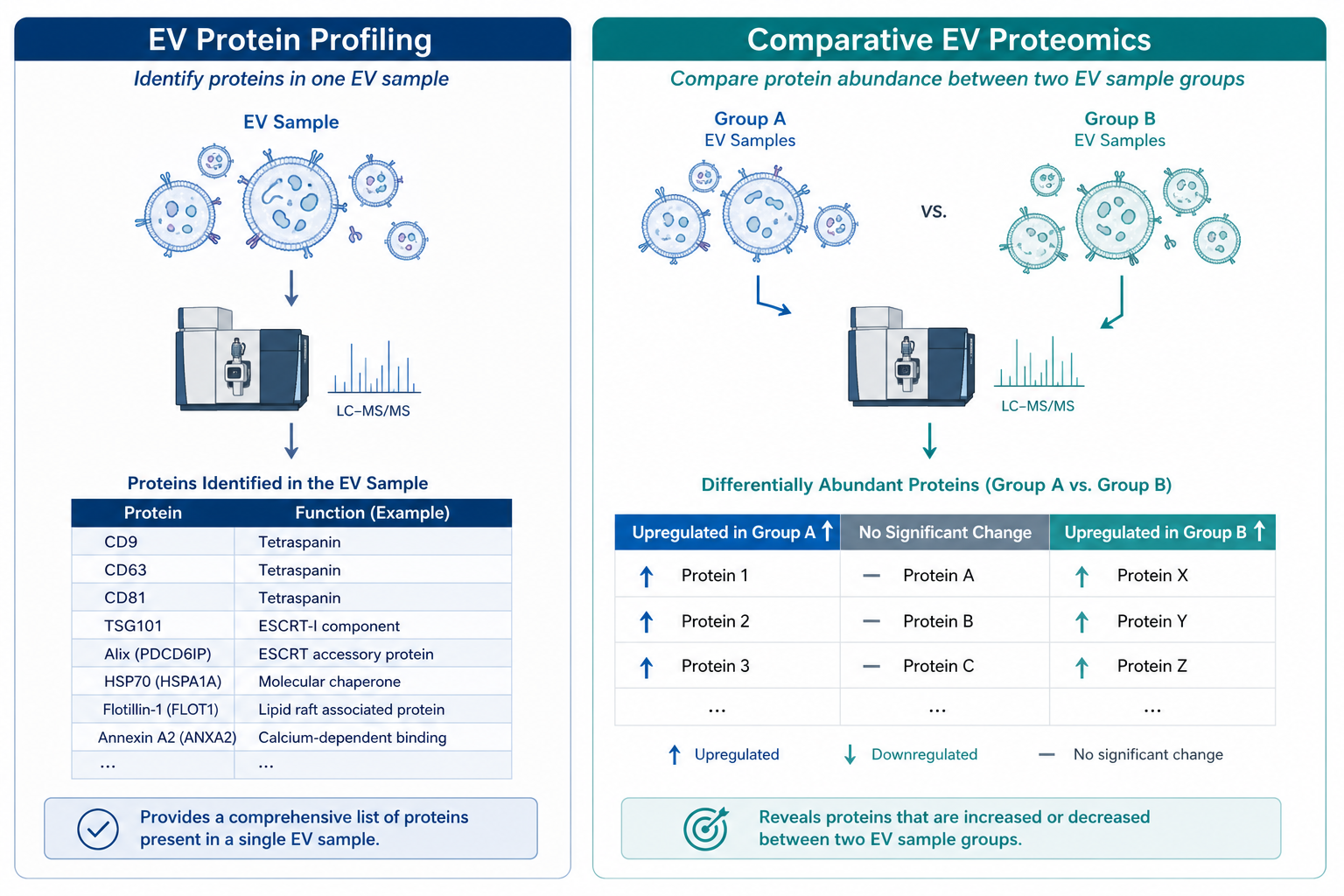
Figure 1. EV protein profiling inventories cargo in a sample, while comparative EV proteomics ranks protein differences across defined groups.
Typical EV Proteomics Service Workflow
A practical extracellular vesicle proteomics service workflow includes the following stages.
1. Project Scoping
Define whether the goal is profiling, comparative analysis, or both. Confirm sample type, approximate EV amount or starting volume using the matrix-specific planning ranges when possible, isolation method, and available characterization data such as NTA particle metrics, TEM or cryo-EM morphology, or WB marker evidence.
2. EV Sample Readiness Review
Proteomics quality depends on vesicle preparation quality. Highly contaminated preparations increase plasma protein background or culture-medium protein interference and weaken biological interpretation. Isolation and purification support may be needed before MS when EV readiness is uncertain.
3. Protein Extraction and Digestion
Proteins are extracted from EV preparations and digested into peptides for LC-MS/MS. Extraction conditions should be compatible with the lipid-rich vesicle matrix and the planned acquisition depth.
4. LC-MS/MS Acquisition
Label-free, TMT or iTRAQ, or DIA quantitative strategies may be selected according to study design. Expected identification depth varies by species and isolation quality and should not be treated as a fixed coverage promise.
5. Data Analysis and Reporting
Reports commonly include identification tables, quantification summaries for comparative designs, functional annotation such as GO and KEGG analysis when quantitative designs support it, quality notes on sample suitability, and interpretation boundaries for candidate findings. Custom candidate prioritization can be discussed when research background is provided.
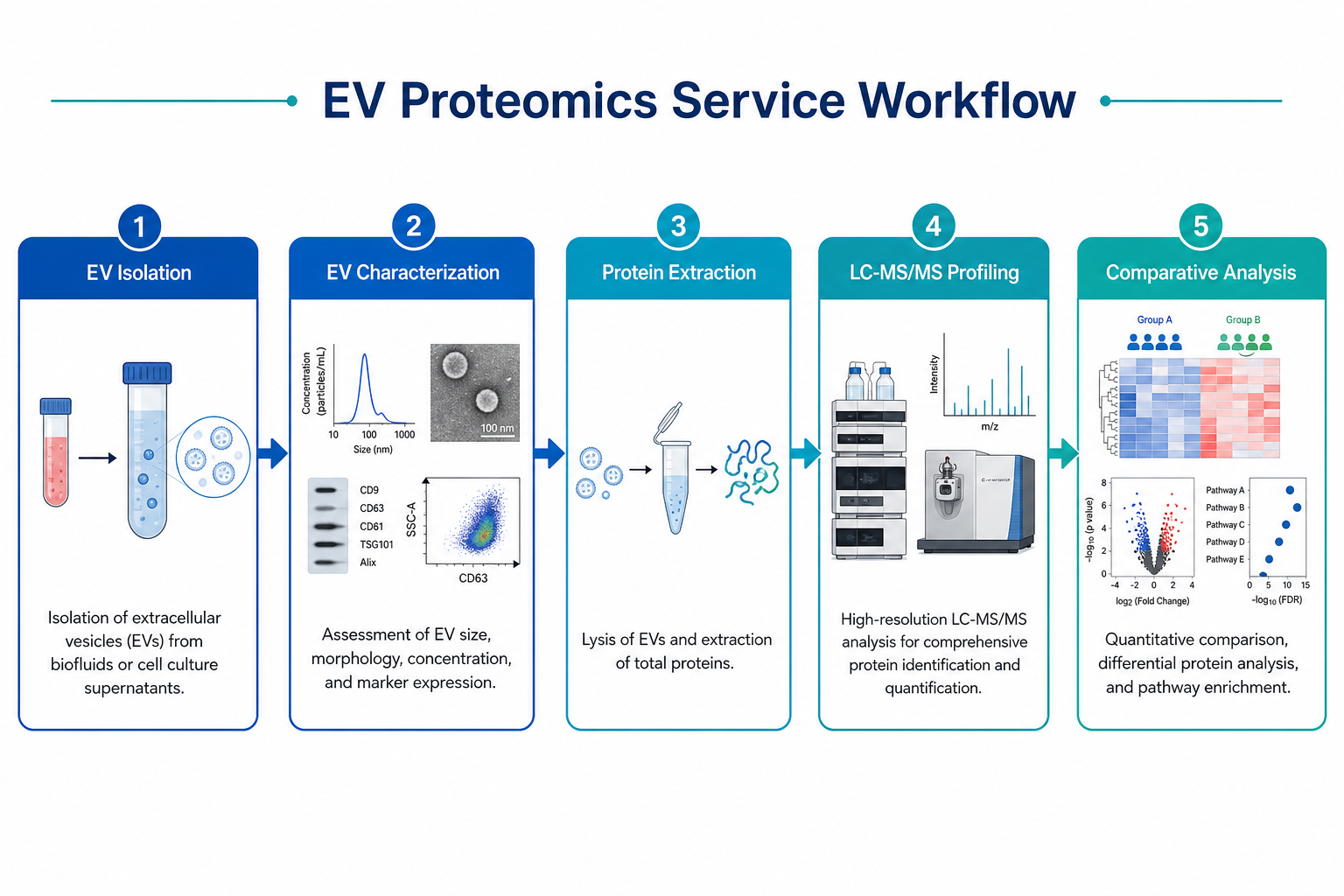
Figure 2. An EV proteomics service workflow connects vesicle readiness, protein extraction, LC-MS/MS, and profiling or comparative interpretation.
Design Points That Change EV Proteomics Outcomes
Several planning choices can strongly affect EV proteomics outcomes, from the composition of the material entering mass spectrometry to the depth and interpretation of the resulting data.
1. EV Isolation and Sample Background
The isolation method determines which vesicle populations and co-isolating proteins enter the MS sample. This is particularly important for biofluids, where background composition differs substantially by matrix. Plasma and serum preparations, for example, often contain abundant soluble proteins that can dominate spectra when enrichment is incomplete.
2. Sample Input and Identification Depth
Input amount also limits the achievable identification depth. When EV yield is low, the available material may support only shallow profiling unless sample pooling or more focused analytical methods are justified.
3. Study Design and Result Interpretation
The appropriate study design depends on the intended analytical goal. Exploratory profiling may be sufficient for descriptive studies, whereas comparative claims require defined groups, biological replicates, and predefined contrasts.
Characterization evidence should also be considered when interpreting proteomic differences. Particle metrics and marker data do not replace proteomics, but they can help determine whether apparent cargo differences may partly reflect isolation quality rather than underlying biology.
Extracellular Vesicle Profiling Services
What EV Proteomics Analysis Can and Cannot Conclude
1. Technical Value
EV proteomics analysis can inventory proteins recovered from EV-enriched preparations.
It can support comparative ranking of cargo differences across carefully matched groups.
It can help evaluate isolation or process consistency at the protein level.
It can generate candidate proteins for biomarker or mechanism follow-up.
2. Boundaries
Identified proteins are associated with the EV preparation, not automatically proven as exclusive cargo of one vesicle subtype.
Differential candidates from discovery designs remain exploratory until validated.
Low-abundance EV proteins may fall below detection even when biologically relevant.
Clinical or diagnostic conclusions require additional evidence beyond a single EV proteomics dataset.
Related Services
Exosome Protein Analysis Service
Exosome Quantitative Proteomics Service
Label-free Exosomal Proteomic Detection Service
Information to Prepare Before Service Inquiry
Before requesting an extracellular vesicle proteomics service, assemble:
MtoZ Biolabs provides extracellular vesicle and exosome proteomics support for researchers entering through either EV or exosome search terms. The technical team can review sample readiness, profiling versus comparative design, and related vesicle characterization options before LC-MS/MS begins.
To discuss an EV proteomics analysis project, contact MtoZ Biolabs with your sample type, isolation status, study groups, and whether the priority is EV protein profiling or comparative cargo analysis.
Frequently Asked Questions
1. Is extracellular vesicle proteomics the same as exosome proteomics?
They share the same analytical core of vesicle-enriched protein MS analysis. EV is the broader term, while exosome is often used for small EV preparations. Project design should state the isolation method and intended vesicle population clearly.
2. When should I choose profiling instead of comparative EV proteomics?
Choose profiling when you need a cargo inventory, feasibility check, or batch documentation. Choose comparative analysis when the question is which proteins differ between defined groups.
3. Do I need EV characterization before proteomics?
It is strongly recommended. Size, concentration, morphology, or marker data help interpret whether proteomics differences may reflect preparation quality rather than biology alone.
4. What sample types are commonly used for EV proteomics analysis?
Plasma, serum, urine, cerebrospinal fluid, and cell culture conditioned medium are commonly submitted after EV enrichment. Suitability depends on yield, purity, and study design.
5. Can EV proteomics alone confirm a biomarker?
No. Discovery proteomics can prioritize candidates. Biomarker claims require validation design, independent samples, and appropriate clinical or biological evidence.
Conclusion
An extracellular vesicle proteomics service is designed for researchers who search and plan in EV language while still needing rigorous mass spectrometry of vesicle-enriched proteins. Profiling establishes what cargo is detectable. Comparative analysis ranks differences across groups when study design supports it.
Clear isolation documentation, sample readiness, and a decision between profiling and comparison remain the most useful planning steps. Teams that define these elements early can obtain clearer EV proteomics analysis outputs and more actionable follow-up paths. For projects involving source materials, isolated EV preparations, EV protein lysates, or prepared peptides, researchers can refer to MtoZ Biolabs’ Exosome Protein Analysis Service page to review suitable workflow options and prepare key project information before inquiry.
How to order?




