






Reading the N-Terminus by Cycles: Edman Sequencing for Protein and Peptide N-Terminal Confirmation
Introduction
Many protein characterization projects do not begin with a full primary structure question. They begin with a narrower but critical one: does the N-terminus match the intended design? A recombinant product may pass intact mass and peptide mapping yet still require direct N-terminal confirmation. A synthetic peptide may need verification before release. A biologic lot may require documented N-terminal evidence for QC or tech transfer.
Edman sequencing, also called Edman degradation, answers this question by removing and identifying N-terminal amino acids one cycle at a time from a purified protein or peptide. Each cycle cleaves the terminal residue, converts it to a phenylthiohydantoin (PTH) derivative, and identifies it, typically by HPLC. The process repeats to build an N-terminal sequence read of defined length.
The method remains widely used because it provides direct, cycle-based N-terminal evidence from purified material without requiring full LC-MS/MS de novo assembly. For teams evaluating whether a sample can support reliable N-terminal confirmation, MtoZ Biolabs can review Edman sequencing feasibility before samples are prepared or submitted.
Related Services
What Question Does Edman Sequencing Answer?
At its core, Edman sequencing answers: what is the amino acid sequence from the free N-terminus of this purified protein or peptide?
This differs from database-assisted peptide mapping, which asks whether observed peptides match a reference entry. It also differs from full protein sequencing by LC-MS/MS, which assembles sequence from many digested peptides across the entire chain. Edman degradation focuses specifically on sequential N-terminal readout from intact or purified N-terminal material.
The method is especially relevant when researchers need to:
-
confirm the N-terminus of a recombinant protein or peptide drug substance
-
verify expression product processing, signal peptide removal, or leader sequence cleavage
-
document N-terminal identity for publication, patent, or batch release files
-
provide orthogonal confirmation alongside mass spectrometry data
-
characterize short purified peptides where N-terminal identity is the decision point
When full-length primary structure is unknown and no reference exists, or LC-MS/MS-based recovery may be required. When the question is N-terminal confirmation of purified material, Edman degradation is often the most direct route.
How Edman Degradation Works
Edman sequencing begins with a purified protein or peptide bound to a solid support or presented in a sequencer-compatible format. In each cycle, the free alpha-amino group reacts with phenyl isothiocyanate (PITC) under controlled conditions. The N-terminal residue is cleaved as a PTH-amino acid, which is then identified, most commonly by reversed-phase HPLC comparison with PTH-amino acid standards.
The remaining chain exposes a new N-terminal residue for the next cycle. Repeating this process builds a sequential N-terminal read. In automated protein sequencers, coupling, cleavage, conversion, and delivery of the PTH derivative occur in a programmed cycle with instrument logging of each identified residue.
A typical Edman sequencing workflow includes:
-
feasibility review of sample purity, N-terminal accessibility, and target read length
-
sample loading onto sequencer support or blot preparation
-
automated Edman degradation cycles
-
PTH-amino acid identification per cycle
-
sequence assembly and signal review
-
report delivery with cycle data and confidence notes
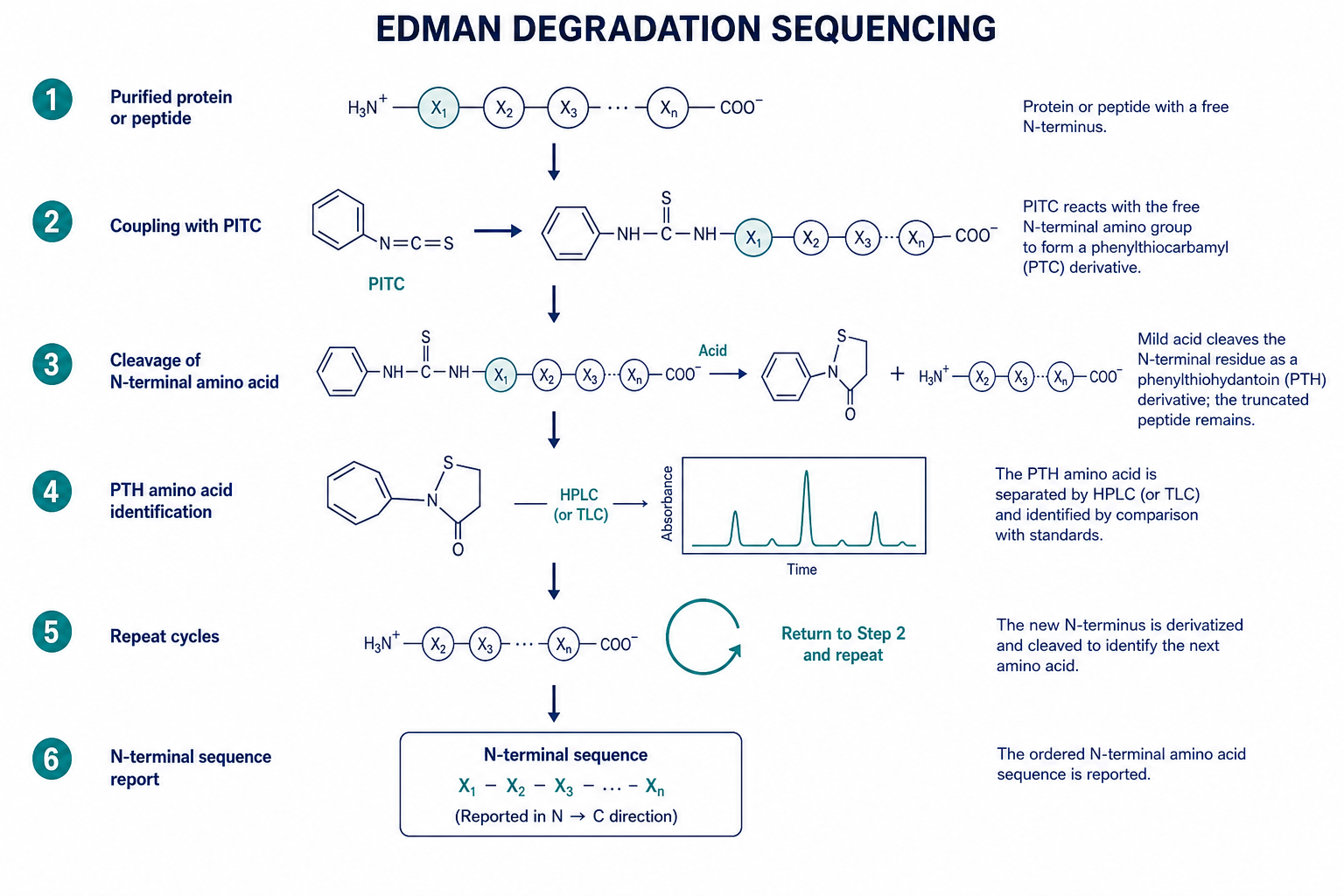
Figure 1. Edman sequencing builds N-terminal sequence evidence through repeated coupling, cleavage, and PTH-amino acid identification cycles.
The quality of the final read depends on sample purity, N-terminal blocking status, cycle efficiency, and instrument sensitivity. Highly pure material with a free N-terminus generally produces the cleanest data. Modified, blocked, or impure samples may show weak early cycles or rapid signal loss.
One Cycle in Detail
Each Edman cycle includes three core chemical steps:
1. Coupling
PITC reacts with the free N-terminal alpha-amino group to form a phenylthiocarbamyl (PTC) derivative.
2. Cleavage
The N-terminal amino acid is cleaved under anhydrous acid conditions, leaving the shortened peptide chain with a new N-terminus.
3. Conversion and Identification
The cleaved residue is converted to a stable PTH-amino acid and identified, typically by HPLC retention time comparison with standards.
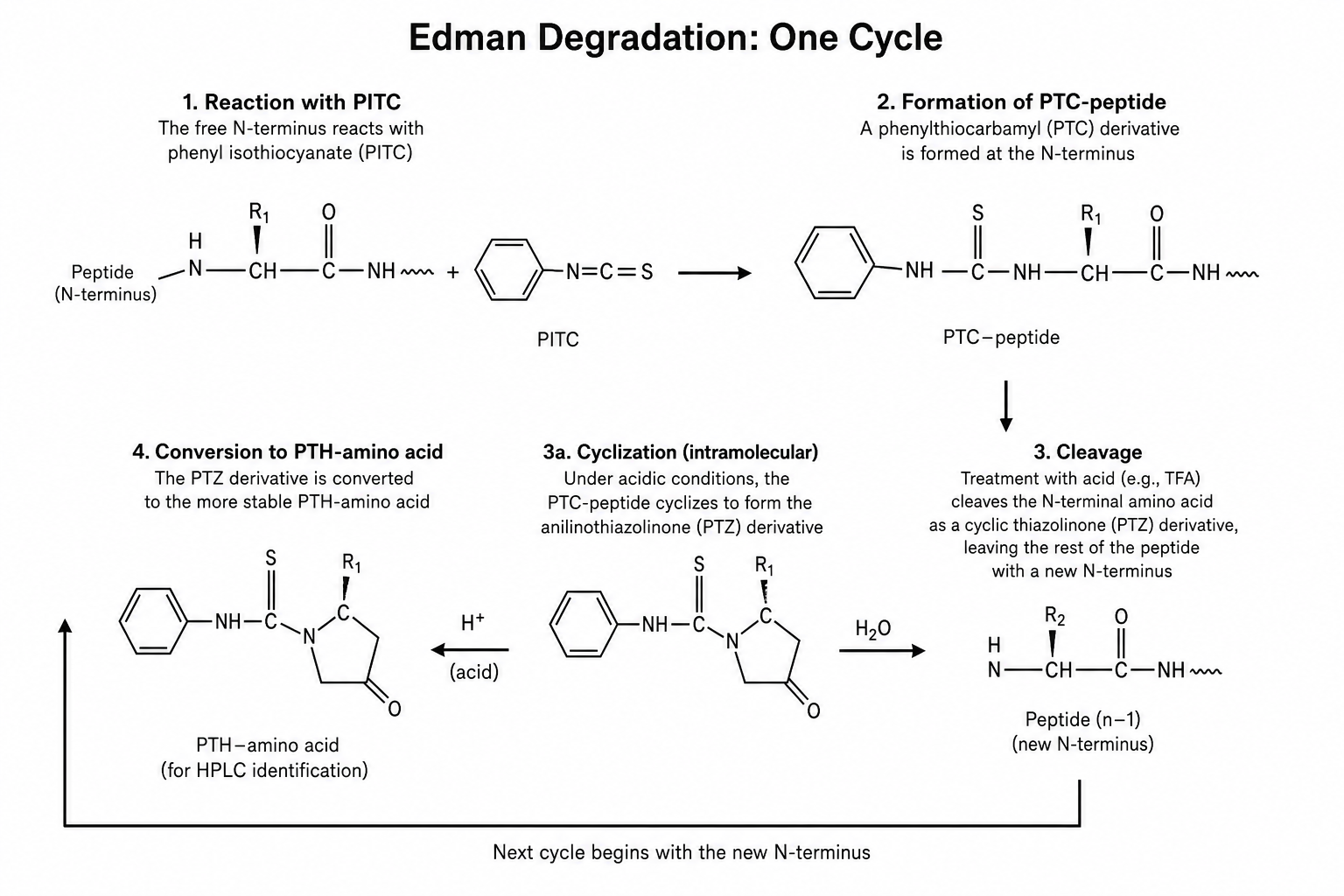
Figure 2. One Edman cycle removes and identifies a single N-terminal residue before the next cycle begins.
Because identification occurs residue by residue from the N-terminus outward, Edman sequencing is especially valuable when the project goal is explicit N-terminal confirmation rather than whole-protein reconstruction.
Typical Application Scenarios
Researchers commonly use Edman degradation in four settings:
1. Recombinant Protein QC
Confirm that the expressed product begins with the expected sequence after signal peptide removal or processing.
2. Synthetic Peptide Verification
Verify N-terminal sequence before release or downstream use.
3. Biopharmaceutical Lot Documentation
Record N-terminal identity as part of primary structure or release testing packages.
4. Orthogonal Confirmation
Support LC-MS/MS or peptide mapping results when N-terminal ambiguity remains.
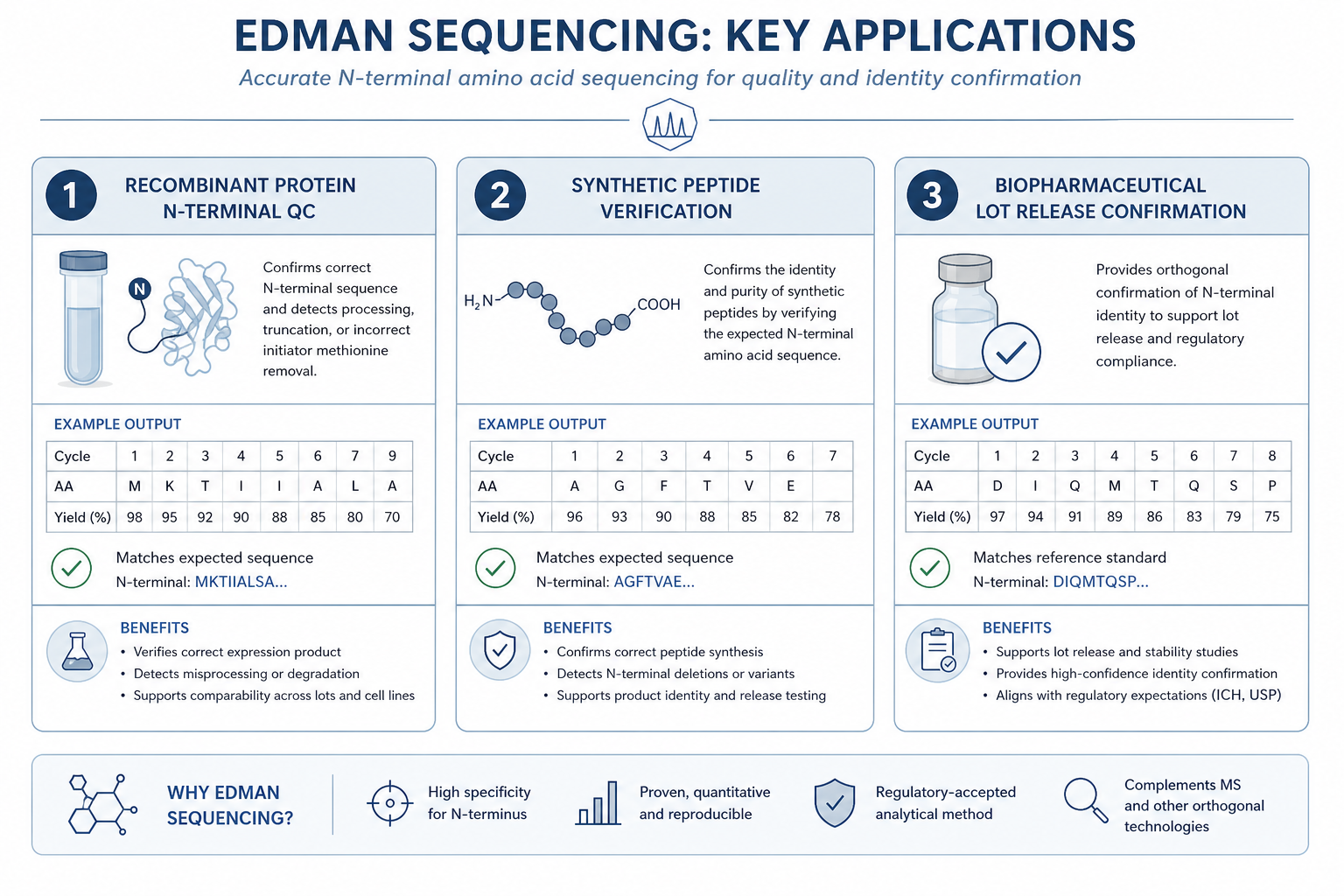
Figure 3. Recombinant QC, peptide verification, and biopharmaceutical documentation are common drivers for N-terminal Edman analysis.
Advantages and Limitations
Advantages
Direct N-terminal readout. Each cycle identifies one residue from the true N-terminus outward.
Strong fit for QC confirmation. The method is widely accepted for N-terminal verification of purified proteins and peptides.
Useful orthogonal evidence. Edman data can complement or MS-based N-terminal analysis.
Efficient for short N-terminal reads. Many QC projects require only the first 5 to 15 residues.
Limitations
Requires a free N-terminus. Acetylation, pyroglutamate formation, or other blocking modifications can prevent sequencing unless treated.
Limited read length. Signal often fades after a practical number of cycles, especially for complex or impure samples.
Sample purity matters. Contaminating proteins can interfere with cycle interpretation.
Not a substitute for full-length sequencing. C-terminal or internal sequence information requires other methods.
What Results Should Researchers Expect?
A strong Edman sequencing report should include more than a residue list. Useful deliverables often include:
-
assigned N-terminal sequence by cycle number
-
PTH-amino acid identification data or chromatogram summaries
-
notes on signal strength, background, or cycle dropout
-
comments on ambiguous residues or low-confidence cycles
-
comparison against target sequence when verification is the project goal
Researchers should define expected read length during scoping. A QC project may require only the first ten residues, while a characterization project may request a longer read if sample quality supports it.
Sample preparation also shapes success. Proteins submitted as liquid samples should be concentrated and buffer-exchanged into sequencer-compatible conditions when possible. PVDF-bound samples should come from well-resolved gel bands with minimal contamination from neighboring proteins. Peptide samples should be sufficiently pure by HPLC or gel analysis before Edman degradation begins, because co-eluting impurities can dominate early cycle identification even when the target peptide is the major component by mass.
Frequently Asked Questions
How is Edman sequencing different from LC-MS/MS N-terminal analysis?
Edman degradation reads the N-terminus sequentially by chemical cycles. LC-MS/MS typically analyzes digested or enriched N-terminal peptides by mass spectrometry.
Can Edman sequencing distinguish leucine and isoleucine?
Standard PTH-HPLC Edman systems often cannot distinguish Leu and Ile. Some projects accept this ambiguity or use complementary MS methods.
What sample types are suitable?
Purified proteins, peptides, PVDF blots, and some HPLC fractions can be suitable when purity and N-terminal accessibility are acceptable.
What if the N-terminus is blocked?
Blocking modifications may require pretreatment or an alternative route such as .
Does Edman sequencing prove full protein identity?
No. It confirms N-terminal sequence over the read length obtained. Broader identity may require peptide mapping or additional methods.
Conclusion
Edman sequencing provides a direct, cycle-based route to N-terminal sequence confirmation when purified protein or peptide material is available and the project requires explicit N-terminal evidence. By repeating coupling, cleavage, and PTH-amino acid identification, the method supports recombinant QC, peptide verification, and biopharmaceutical documentation workflows focused on the N-terminus rather than full primary structure assembly.
For N-terminal confirmation, lot release support, or orthogonal QC documentation, MtoZ Biolabs provides with feasibility review, cycle data reporting, and report-ready N-terminal deliverables. Contact the technical team to evaluate sample purity, blocking status, and the expected read length before submission.
How to order?




