






What Is the Difference Between Top-Down and Bottom-Up Proteomics?
Introduction
Two proteomics papers can both claim protein characterization results, yet describe experiments that measure fundamentally different things. One study reports thousands of identified proteins from a cell lysate digest. Another reports a small set of intact proteoforms from a purified antibody preparation. Both used mass spectrometry and both used the word proteomics, but the starting material, data interpretation, and biological meaning were not the same.
Top-down and bottom-up proteomics are often discussed together because both address protein structure with LC-MS, yet they begin at different points in the analytical chain. Bottom-up proteomics breaks proteins into peptides before measurement. Top-down proteomics measures intact proteins or large fragments with minimal digestion. That starting difference shapes every downstream step, from sample preparation to the type of evidence a report can support.
The Core Difference in One Analytical Sentence
Bottom-up proteomics identifies proteins by measuring digested peptides and inferring protein identities from peptide-spectrum matches. Top-down proteomics characterizes proteoforms by measuring intact proteins or large fragments and interpreting mass and fragmentation patterns at the intact level.
The difference is not simply instrument type or software choice. It is the level at which structural information is captured. Bottom-up proteomics is peptide-centric. Top-down proteomics is proteoform-centric.
What Bottom-Up Proteomics Is
Bottom-up proteomics is a digestion-first workflow. Proteins in a sample are enzymatically cleaved, usually with trypsin, into peptides that are separated by liquid chromatography and analyzed by tandem mass spectrometry. Peptide-spectrum matches are generated by database searching or spectral library matching, and proteins are inferred from the peptides observed.
In routine use, bottom-up proteomics is synonymous with shotgun proteomics for many laboratories because complex mixtures are analyzed without isolating individual proteins first. The same workflow supports label-free quantification, TMT or iTRAQ labeling, SILAC, and DIA-based acquisition when a project requires comparative measurement across samples.
The technical strength of bottom-up proteomics is scalable analysis of complex mixtures. A single LC-MS/MS run can produce large peptide datasets, and established false discovery rate controls support protein-level reporting across discovery cohorts, modified peptide enrichment studies, and biologics peptide mapping.
What Top-Down Proteomics Is
Top-down proteomics is an intact-protein workflow. Proteins are extracted and typically separated or purified more extensively before introduction into a high-resolution mass spectrometer. Intact mass measurement assigns proteoform families, and fragmentation of selected intact ions provides sequence and modification information while preserving molecular context.
Top-down proteomics is used when the question depends on proteoform identity rather than peptide coverage alone. Examples include distinguishing clipped antibody forms, resolving histone proteoforms, and determining whether multiple modifications occur on the same protein molecule.
The technical strength of top-down proteomics is direct structural readout at the proteoform level. When sample complexity is controlled, the workflow can link mass differences to specific sequence or modification features without relying on protein inference from shared peptides.
Key Differences That Change Project Design
The two approaches differ in ways that matter before samples are prepared.
Starting material.
Bottom-up proteomics begins with digested peptides. Top-down proteomics begins with intact proteins or large fragments.
Structural context.
Bottom-up proteomics reconstructs protein-level conclusions from peptide evidence. Top-down proteomics retains proteoform context during measurement.
Mixture tolerance.
Bottom-up proteomics is built for complex lysates, biofluids, and large sample sets. Top-down proteomics usually requires cleaner inputs or stronger prefractionation.
Protein inference.
Bottom-up proteomics depends heavily on protein inference rules. Top-down proteomics can assign defined proteoforms more directly when spectra are resolved.
Typical outputs.
Bottom-up proteomics produces protein groups, peptide tables, and quantification matrices. Top-down proteomics produces proteoform profiles, intact mass distributions, and fragment evidence tied to specific proteoforms.
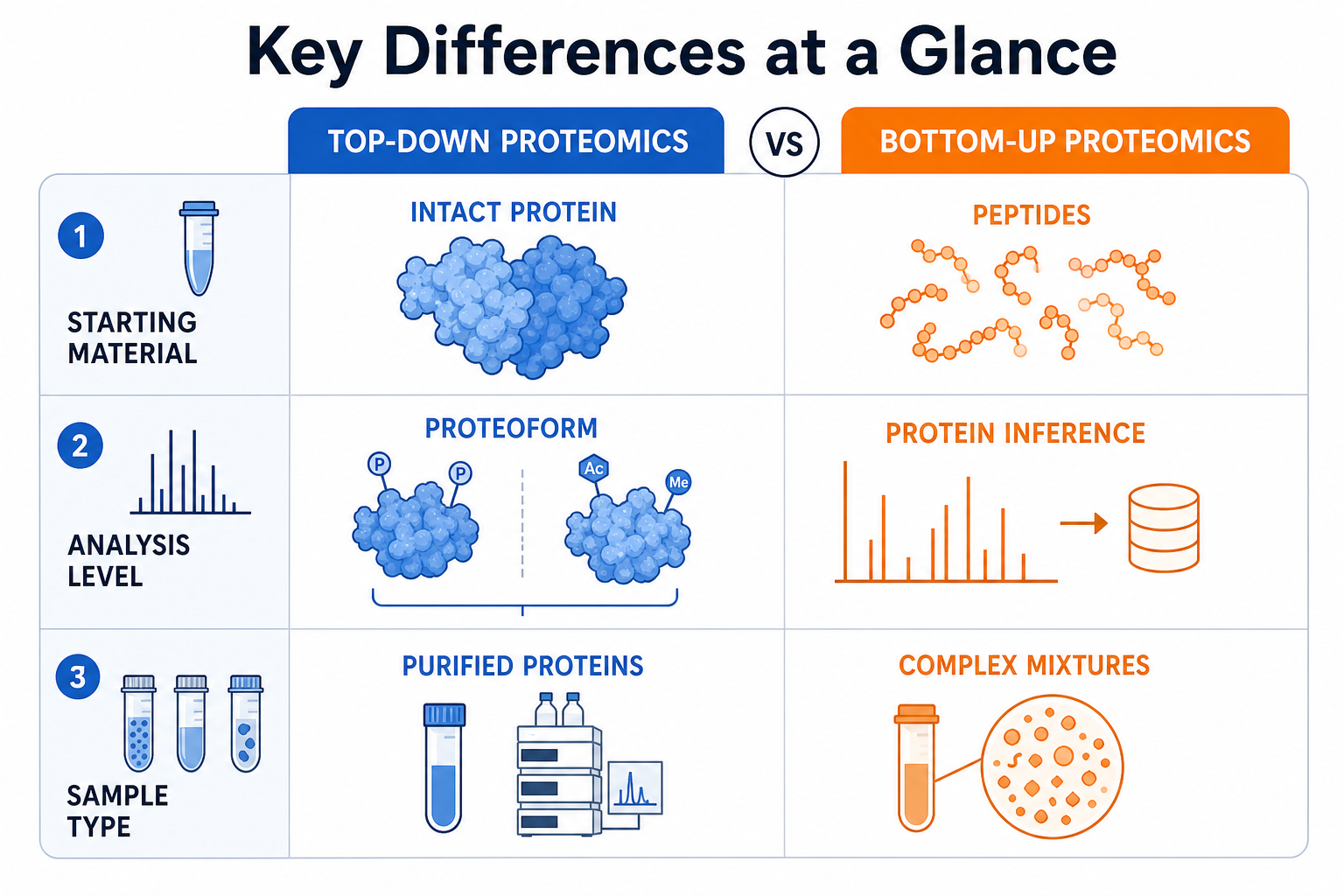
Figure 1. Top-down and bottom-up proteomics differ in starting material, structural context, mixture tolerance, and reporting format.
What Each Approach Actually Measures
The practical distinction becomes clearer at the molecule level. Bottom-up proteomics measures peptide ions created after digestion. A modified protein may yield several modified peptides, but the original arrangement of those modifications across the full protein is not directly observed unless overlapping peptide evidence supports the same proteoform.
Top-down proteomics measures intact protein ions or large fragment ions. If two modifications occur on one molecule, that coexistence can be observed directly when the intact mass and fragment pattern are resolved. If a clipped variant exists, the intact mass shift can identify the variant family before detailed fragmentation.
This difference explains why bottom-up proteomics is efficient for cataloging proteins and localizing many modification sites, while top-down proteomics is often required when intact proteoform identity drives the decision.
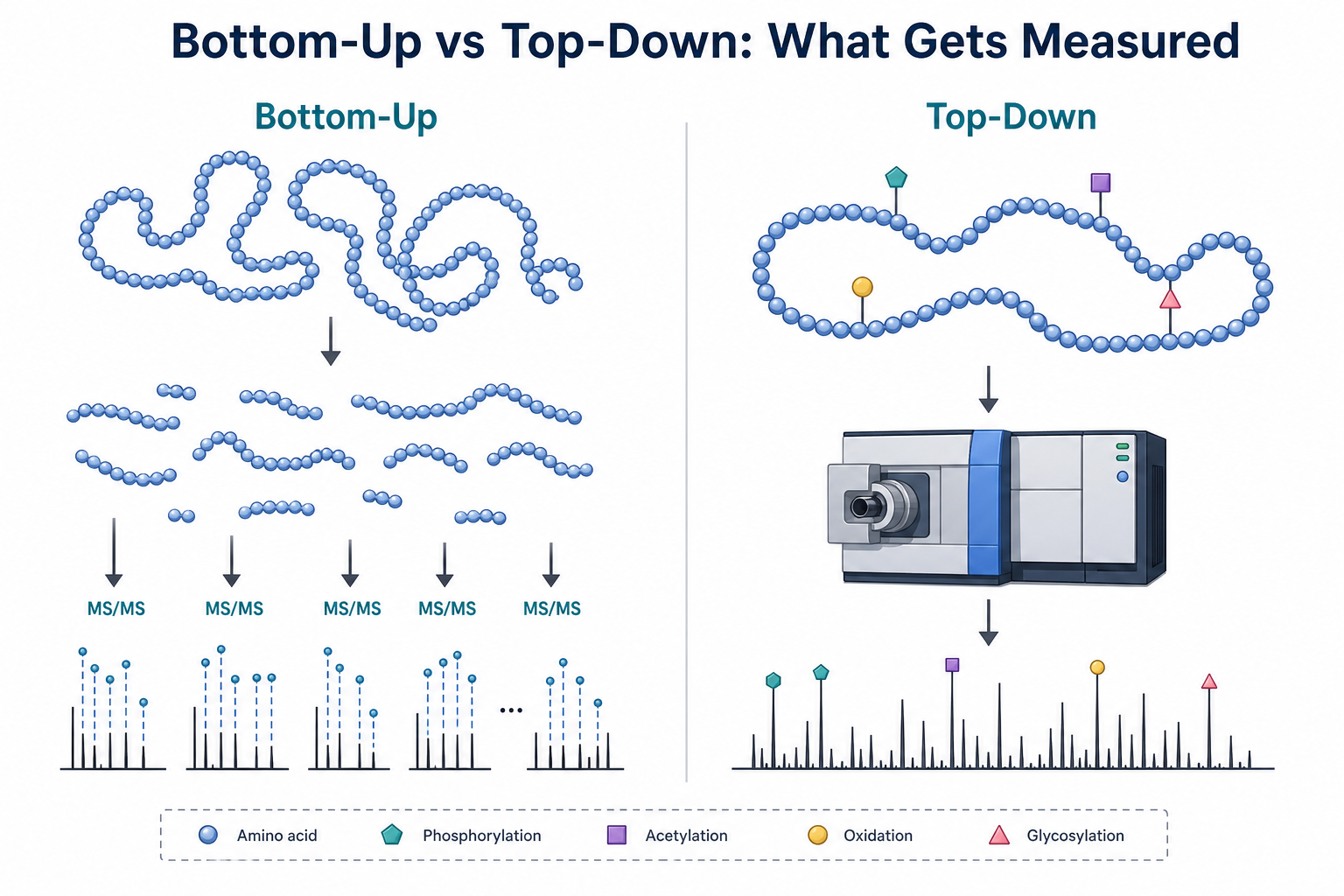
Figure 2. Bottom-up proteomics measures digested peptides, while top-down proteomics measures intact proteins or large fragments with preserved proteoform context.
Related Services
Laboratories exploring the difference between top-down and bottom-up proteomics often review service options for both routes before defining study scope. Relevant options include:
Protein Identification Service
Label-Free Quantitative Proteomics Service, MS Based
LC-MS Based Intact Protein Analysis Service
Intact Protein Analysis Service
Quantitative Proteomics Service
Researchers evaluating top-down and bottom-up proteomics should define the structural question, sample matrix, and required deliverable before selecting a service route.
How the Difference Affects Sample Preparation and Reporting
Sample preparation follows the strategy, not the other way around. Bottom-up proteomics emphasizes efficient extraction, reproducible digestion, cleanup, and optional enrichment for modified peptides. Top-down proteomics emphasizes protein recovery, intact mass preservation, and separation steps that reduce mixture complexity before intact ions enter the mass spectrometer.
Reporting also changes. A bottom-up report is built around peptide-spectrum matches, protein groups, and optional site-level modification tables. A top-down report is built around proteoform assignments, intact mass profiles, and fragment evidence supporting each proteoform call.
The table below summarizes how the same project question can produce different evidence depending on the route chosen.
|
Project Question |
Bottom-Up Evidence |
Top-Down Evidence |
|---|---|---|
|
Which proteins are present in a lysate? |
Protein groups inferred from peptides |
Limited in complex mixtures without extensive separation |
|
Where is a phosphorylation site located? |
Modified peptide with site localization metrics |
Possible on intact fragment if resolved |
|
Do two modifications occur on one molecule? |
Inferred from overlapping peptides |
Direct intact proteoform evidence when resolved |
|
Is a clipped antibody variant present? |
May appear as unexpected peptides |
Intact mass shift often visible directly |
|
How do two treatment groups differ quantitatively? |
Peptide or protein group quant matrices |
More specialized intact quant workflows |
These output differences are why the two terms are not interchangeable in project planning, even though both fall under mass spectrometry-based protein analysis.
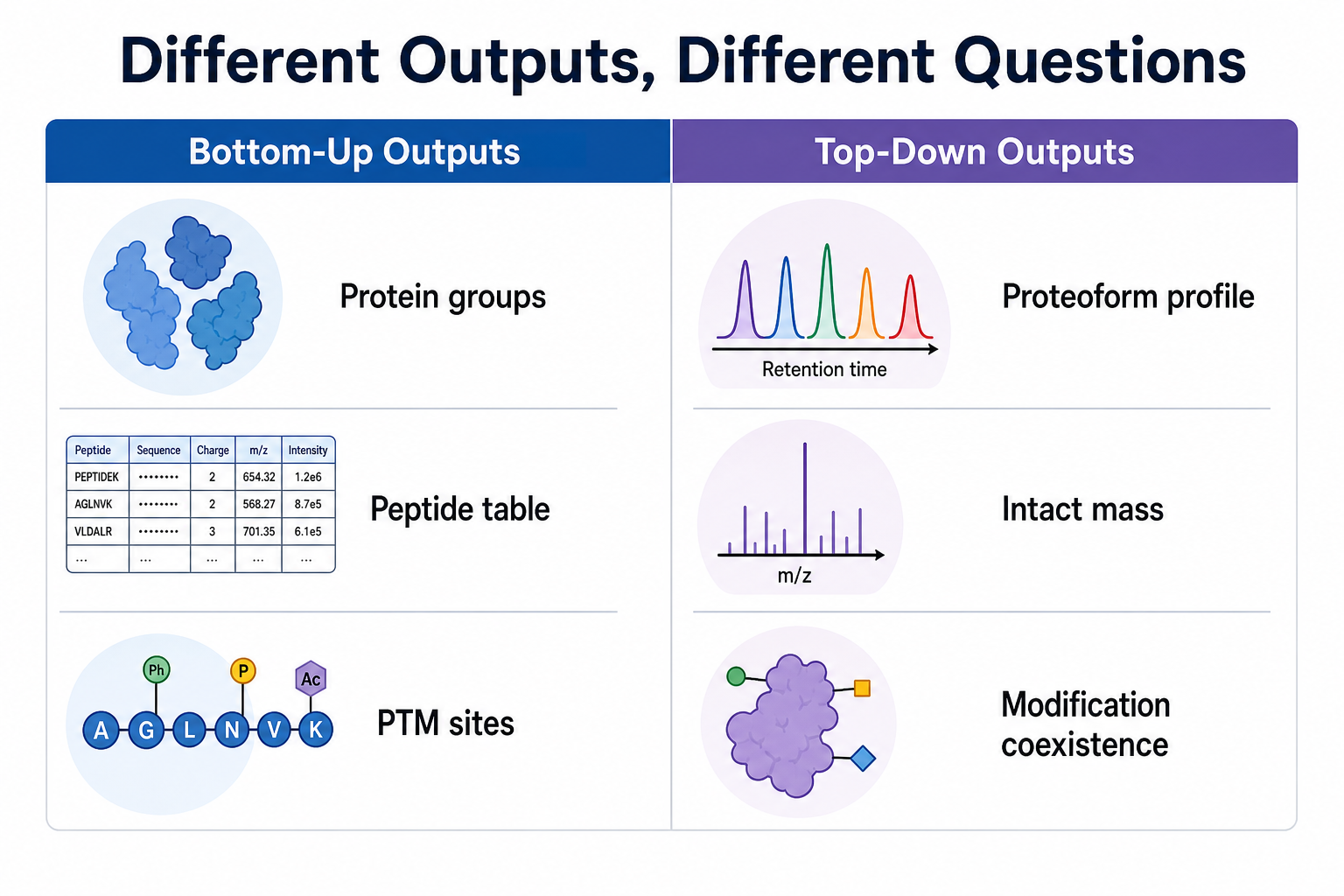
Figure 3. Bottom-up and top-down proteomics produce different deliverables because they answer different structural questions.
Where the Difference Matters in Practice
The analytical distinction becomes visible in real project settings.
In discovery proteomics, bottom-up workflows are widely used because complex lysates require high peptide throughput and established quantification formats. In biologics peptide mapping, bottom-up LC-MS/MS remains the standard route for sequence coverage and modification localization against a known product.
In proteoform QC, top-down analysis is often the more informative route when intact mass differences suggest clipped forms, mass variants, or modification patterns that peptide tables do not explain cleanly. In histone biology and some enzyme characterization projects, top-down proteomics is used because modification coexistence on one molecule is part of the biological question.
In staged projects, the difference matters less as a strict either-or choice and more as a sequence of evidence levels. Bottom-up analysis can define the protein list and modified regions, while top-down analysis can confirm intact proteoforms for selected targets.
Overlap, Misconceptions, and Combined Use
Top-down and bottom-up proteomics overlap in purpose but not in evidence type. Both aim to characterize proteins with mass spectrometry. Both can support post-translational modification analysis. Both may appear in biologics or discovery programs. They do not produce equivalent reports for every question.
A common misconception is that top-down proteomics replaces database searching entirely. In practice, many top-down projects still rely on sequence databases and specialized interpretation tools, but the primary measurement remains intact or large-fragment ions rather than digested peptides.
Another misconception is that bottom-up proteomics cannot support high-quality structural conclusions. For many projects it can, especially when reference sequences are strong, digestion is controlled, and modification localization is supported by high-quality fragment spectra.
A practical combined pattern uses bottom-up proteomics for breadth and top-down proteomics for confirmatory intact analysis on selected proteins or variants.
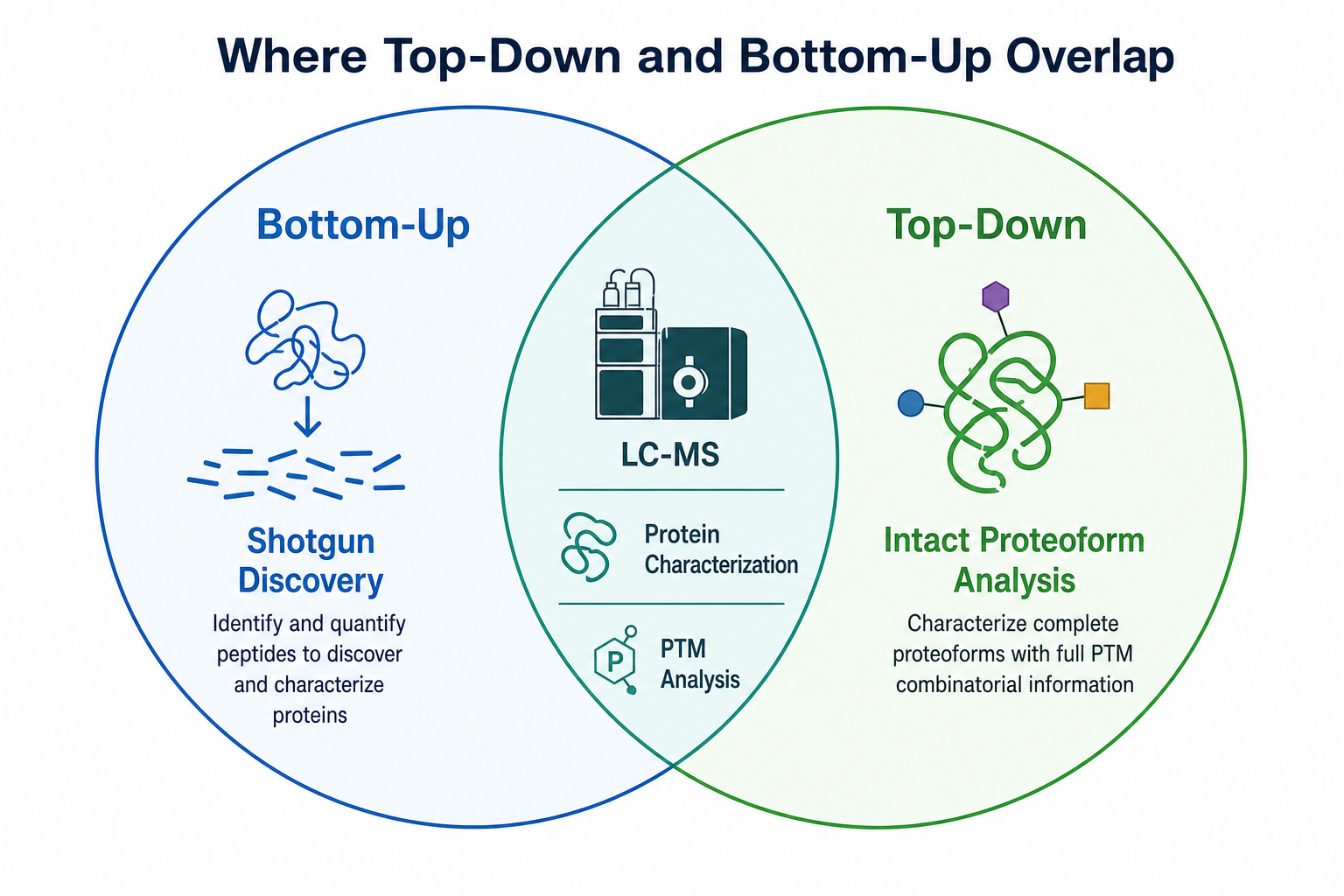
Figure 4. Top-down and bottom-up proteomics share LC-MS foundations but differ in the structural level captured and the questions each report can answer.
Frequently Asked Questions
Is bottom-up proteomics the same as shotgun proteomics?
In many laboratories, yes. Shotgun proteomics usually describes analysis of complex peptide mixtures generated by digestion without prior protein purification. That workflow is a form of bottom-up proteomics.
Does top-down proteomics require more sample purity?
Often yes. Intact protein spectra are more complex than peptide spectra, so top-down proteomics generally benefits from cleaner samples or stronger separation before MS analysis.
Which approach is better for biologics characterization?
It depends on the question. Bottom-up peptide mapping is the standard route for coverage and modification review against a known sequence. Top-down analysis is often more informative when intact mass differences or proteoform heterogeneity must be explained directly.
Can one dataset answer both peptide-level and proteoform-level questions?
Usually not completely. Bottom-up data can suggest proteoform possibilities, but direct proteoform confirmation often requires intact or large-fragment measurement.
Do both approaches use LC-MS/MS?
Yes. Both rely on liquid chromatography and mass spectrometry, but bottom-up proteomics centers on peptide ions after digestion, while top-down proteomics centers on intact or near-intact protein ions.
Conclusion
The difference between top-down and bottom-up proteomics comes down to the structural level measured and the type of evidence produced. Bottom-up proteomics digests proteins into peptides, infers protein identities from peptide data, and supports large-scale discovery, quantification, and peptide-level modification mapping. Top-down proteomics preserves intact proteoform context and is suited to questions that require direct characterization of protein variants and modification coexistence.
Neither approach fits every project equally well because they answer different questions. Bottom-up proteomics is the practical default for complex mixtures and cohort-scale comparison. Top-down proteomics adds value when intact proteoform evidence is required to support the next quality, mechanistic, or structural decision.
Teams comparing top-down and bottom-up proteomics can contact MtoZ Biolabs to clarify which structural level their sample and reporting goal require.
If peptide-level discovery has already been completed and intact proteoform confirmation is the next step, MtoZ Biolabs can help design a follow-up workflow that bridges both approaches.
Researchers planning proteomics experiments for publication or biologics review can request a project assessment from MtoZ Biolabs to define phase 1 sample strategy and phase 2 reporting scope.
How to order?




