






Critical Review of Bottom-Up Proteomics
Introduction
A proteomics project can generate thousands of high-quality MS/MS spectra and still leave the biological question unresolved. Peptide identification may be strong, yet protein inference remains ambiguous for isoforms and sequence variants. A phosphorylation site may be reported with borderline localization confidence. A clinical lysate may show strong coverage for abundant proteins while missing the low-abundance regulators that motivated the study. These outcomes are common in bottom-up proteomics, not because the workflow is poorly understood, but because peptide-centric analysis has structural trade-offs that deserve honest review.
Bottom-up proteomics remains the default route for large-scale protein identification and quantification in academia and industry. Laboratories depend on it for discovery studies, post-translational modification mapping, biologics comparability support, and targeted follow-up by PRM or MRM. The method is mature, instrument-accessible, and supported by extensive software. It also carries well-known constraints around protein inference, sequence coverage, and dynamic range that shape what can be claimed from a dataset.
What Bottom-Up Proteomics Is
Bottom-up proteomics is a peptide-centric strategy in which intact proteins or complex mixtures are enzymatically digested into smaller peptides, separated by liquid chromatography, analyzed by tandem mass spectrometry, and identified through database searching or spectral library matching. Protein-level conclusions are inferred from the peptides detected, not from direct readout of full-length proteins.
The approach is often called shotgun proteomics because complex mixtures are analyzed without upfront isolation of individual proteins. In practice, bottom-up proteomics covers label-free quantification, isobaric labeling with TMT or iTRAQ, metabolic labeling with SILAC, and data-independent acquisition workflows such as SWATH or diaPASEF. Despite different acquisition and quantification modes, all of these routes share the same core logic: measure peptides first, then assemble protein-level evidence from peptide-spectrum matches.
How Bottom-Up Proteomics Works
A standard bottom-up proteomics workflow moves through sample preparation, digestion, LC-MS/MS acquisition, peptide identification, and protein inference. Each phase affects the depth and reliability of the final report.
Sample preparation begins with lysis, reduction, alkylation, and cleanup steps matched to the sample matrix. Enrichment for phosphopeptides, glycopeptides, ubiquitinated peptides, or other modified forms is added when the study priority extends beyond global protein identification.
Enzymatic digestion converts proteins into peptides suitable for LC-MS/MS. Trypsin is the widely used protease of choice because it produces peptides with lengths and charge states that work well on modern mass spectrometers. Multi-enzyme strategies can improve coverage of regions that trypsin misses, especially across membrane proteins and highly modified segments.
LC-MS/MS acquisition separates peptides before MS/MS fragmentation. Data-dependent acquisition selects precursors on the fly, while data-independent acquisition fragments peptides in predefined windows to improve reproducibility. Peptide identification matches experimental spectra to database predictions, and protein inference groups peptide evidence into protein groups according to shared peptide rules and false discovery rate controls.
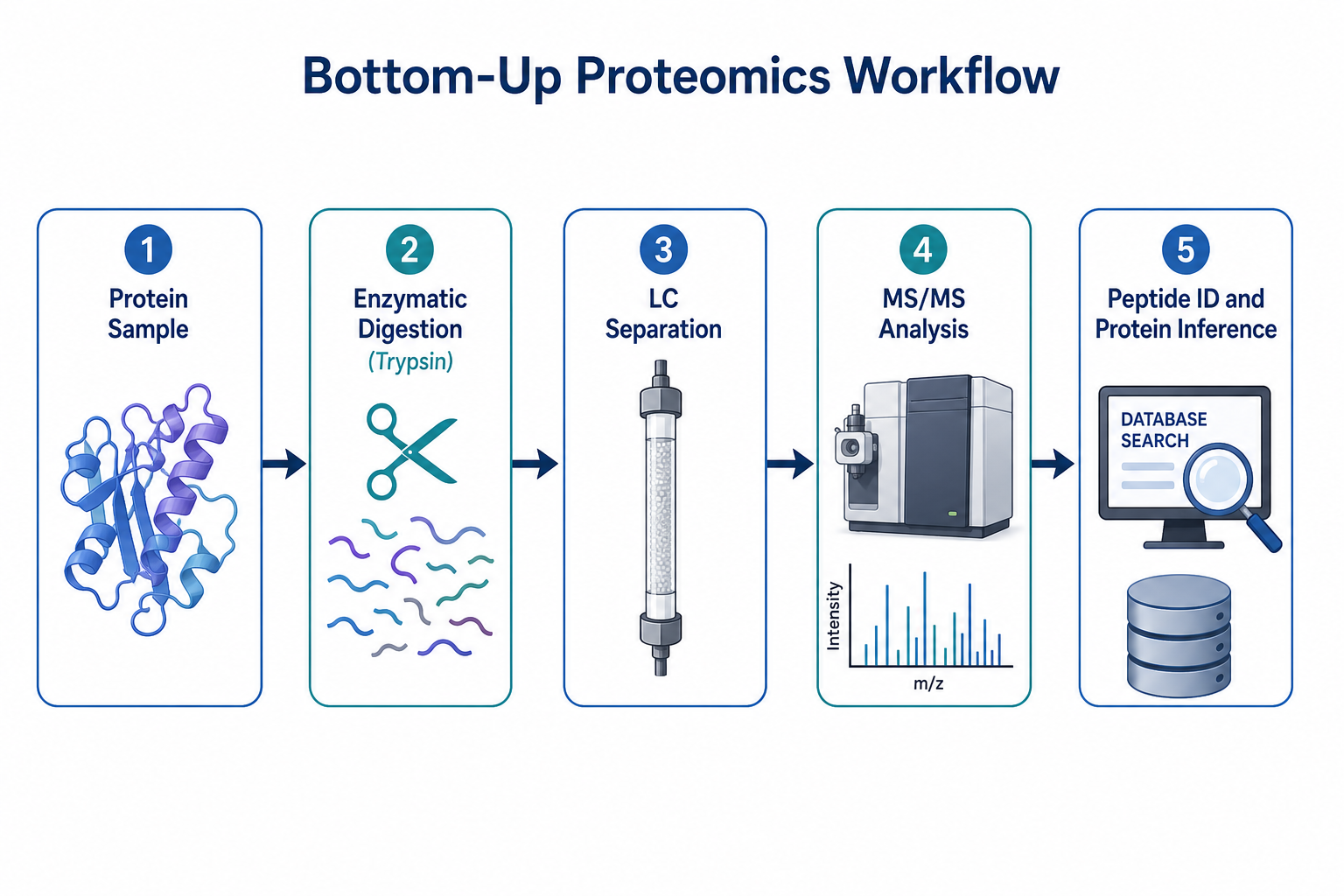
Figure 1. Bottom-up proteomics converts proteins into peptides, analyzes them by LC-MS/MS, and infers protein identities from peptide-spectrum matches.
Technical Strengths of Bottom-Up Proteomics
The method earned its central role in proteomics because several technical properties scale well across project types.
High analytical throughput is a major strength. Modern LC-MS/MS platforms can measure large peptide pools in a single run, and multiplexed labeling strategies allow many conditions to be compared in one experiment. This supports cohort studies, treatment time courses, and multi-condition screens where broad coverage matters.
Mature identification software and public spectral resources reduce friction during data processing. Database search engines, FDR estimation tools, and spectral library approaches are widely documented, which helps laboratories standardize reporting and compare results across projects.
Peptide-level resolution supports modification mapping when acquisition and search parameters are set correctly. Phosphorylation, acetylation, ubiquitination, glycosylation, and other post-translational modifications can be localized at residue level when sufficient fragment ions are observed around the modified site.
Flexible quantification options allow the same digestion workflow to support discovery and follow-up. Label-free intensity comparison, TMT or iTRAQ ratio reporting, SILAC-based turnover analysis, and targeted PRM confirmation can be layered onto a bottom-up proteomics foundation without changing the basic sample format.
Current Limitations in Bottom-Up Proteomics
The same peptide-centric design that enables throughput also creates structural limitations that reviewers, regulators, and principal investigators encounter regularly.
Protein inference ambiguity arises when shared peptides map to multiple protein entries or isoforms. A peptide table can look strong while the protein grouping remains conservative or incomplete, especially in complex databases with redundant entries.
Incomplete sequence coverage is common for large proteins, membrane proteins, and highly modified biologics. Digestion leaves gaps at termini, between transmembrane segments, and around dense modification clusters. Missing peptides do not always mean absent proteins, but they limit the strength of primary structure claims.
Dynamic range compression remains a persistent challenge in unfractionated lysates and biofluids. Low-abundance signaling proteins, cytokines, and peptide antigens may fall below useful identification thresholds unless enrichment or deeper fractionation is planned early.
Artifact risk increases when sample preparation is rushed. Missed cleavages, over-digestion, deamidation, and oxidation can create peptide features that complicate database searching and quantitative interpretation if QC checkpoints are weak.
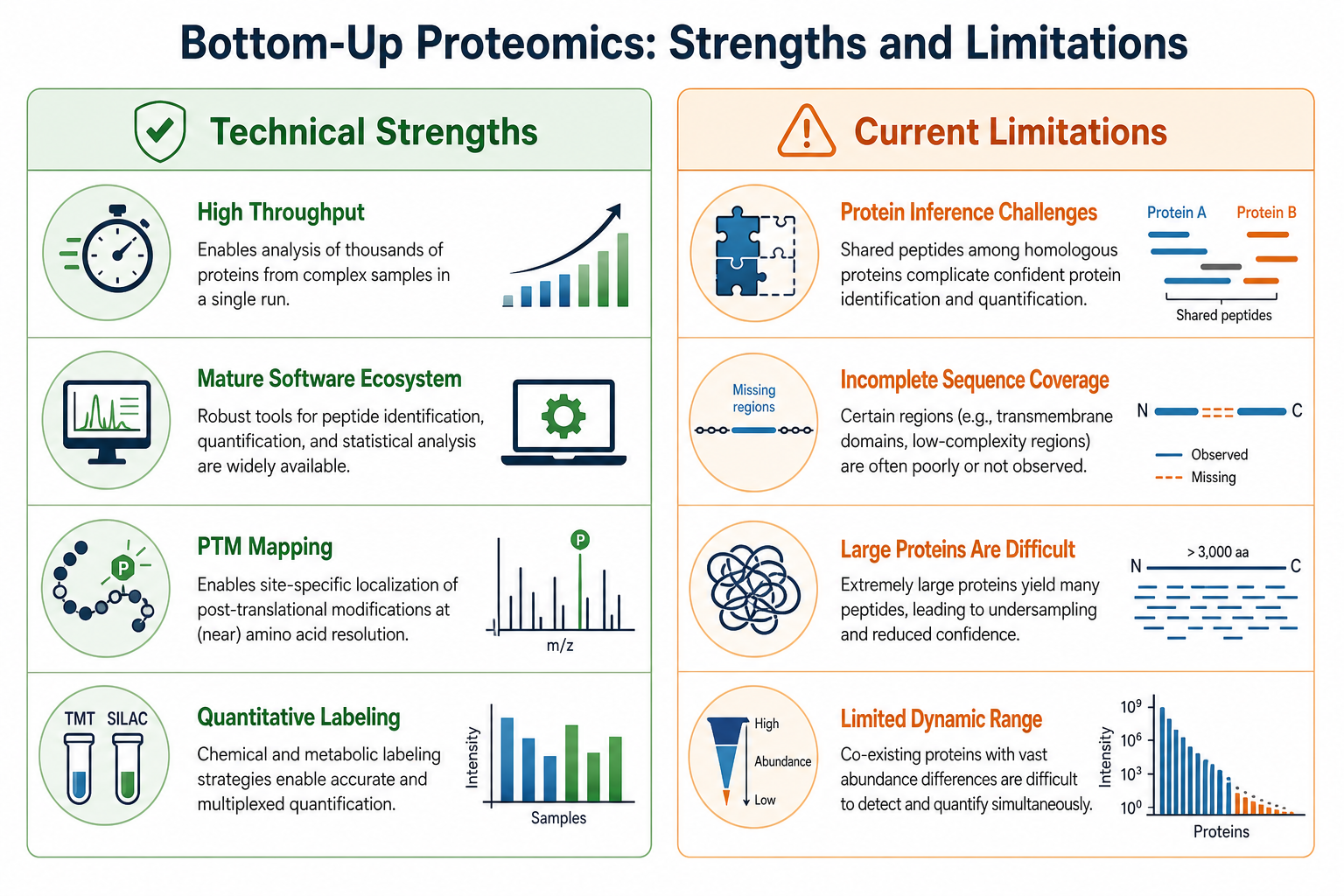
Figure 2. Bottom-up proteomics offers strong throughput and modification mapping capability, while protein inference, coverage gaps, and dynamic range remain recurring constraints.
Related Services
Bottom-up proteomics projects often move faster when core identification is paired with adjacent services that match the biological question. Relevant options include:
Protein Identification Service
Label-Free Quantitative Proteomics Service, MS Based
iTRAQ/TMT/MultiNotch Quantitative Proteomics Service
SWATH Based Protein Quantitative Service
Quantitative Phosphoproteomics Service
Researchers planning bottom-up proteomics studies should define sample type, quantification mode, and reporting depth for discovery, comparability, or follow-up validation before selecting a service scope.
Applications in Discovery and Biopharma
Bottom-up proteomics is used across research and development settings where peptide-level evidence is sufficient to support the decision at hand.
In basic and translational research, the workflow supports differential expression analysis, pathway interpretation, biomarker prioritization, and signaling studies that combine phosphoproteomics enrichment with LC-MS/MS.
In biopharmaceutical development, bottom-up proteomics supports identity confirmation, host cell protein monitoring, and comparability review after manufacturing changes. Peptide mapping by LC-MS/MS remains a standard route for documenting sequence coverage and localized modifications on therapeutic proteins.
In immunopeptidomics and metaproteomics, peptide-centric acquisition is often the practical route because relevant antigens or proteins are short, variable, or poorly represented in standard databases. Discovery results also commonly feed PRM or MRM assay development for repeated measurement across many samples.
Bottom-Up, Middle-Down, and Top-Down Compared
No single proteomics strategy solves every structural question. Bottom-up proteomics is usually selected for breadth, while middle-down and top-down approaches are considered when larger sequence fragments or intact proteins are required.
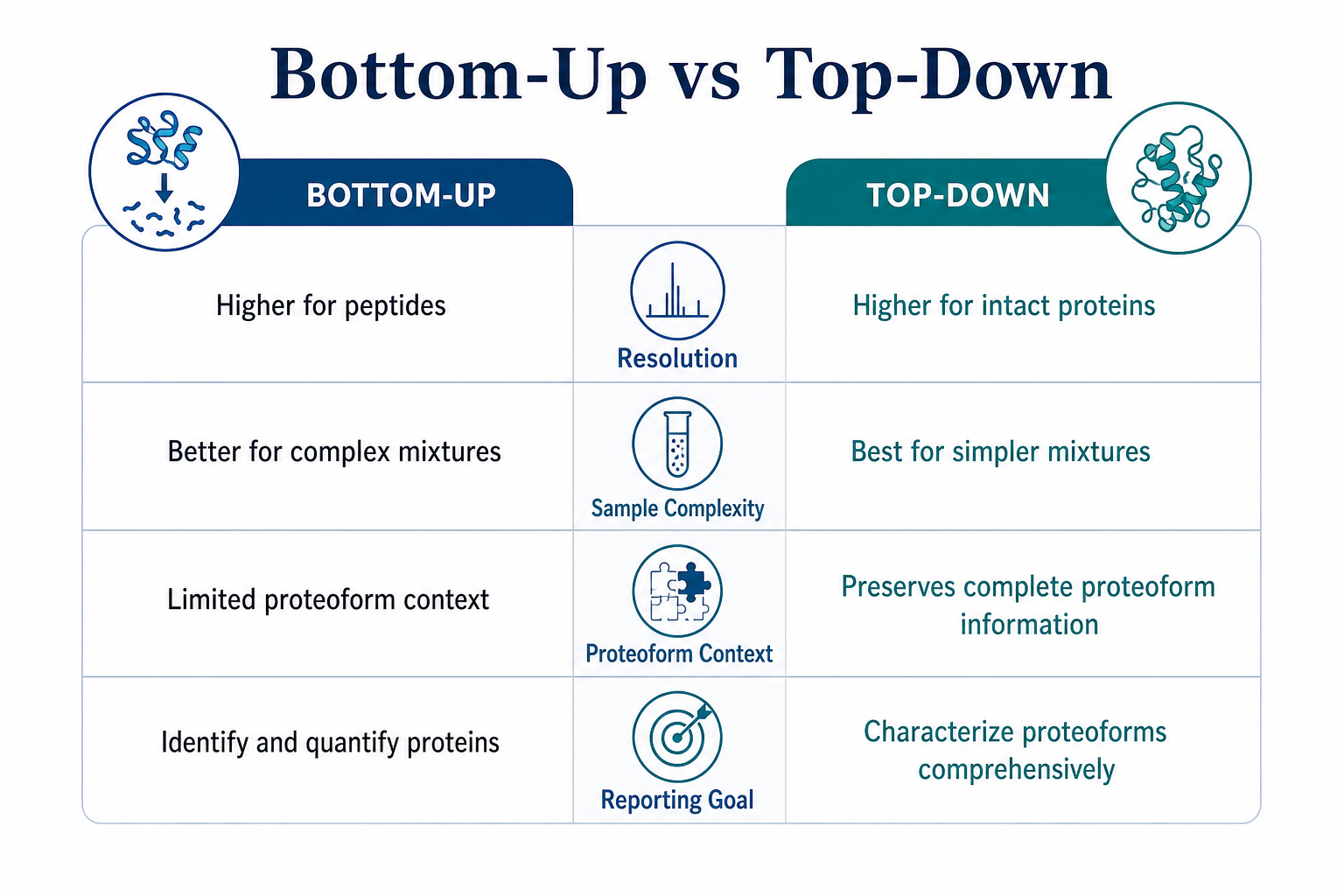
Figure 3. Bottom-up proteomics analyzes digested peptides, whereas middle-down and top-down strategies retain larger protein segments or intact proteins for MS analysis.
Workflow selection should begin with the structural question, not with instrument availability alone. Bottom-up analysis is often chosen when the priority is broad peptide detection across a complex mixture. Middle-down and top-down strategies are considered when larger fragments or intact proteoforms are required for follow-up on unresolved regions.
The table below summarizes practical differences that influence workflow selection.
|
Dimension |
Bottom-Up |
Middle-Down |
Top-Down |
|---|---|---|---|
|
Starting analyte |
Digested peptides |
Larger peptide fragments from limited digestion |
Intact or lightly fragmented proteins |
|
Primary strength |
Throughput and deep peptide coverage |
Improved coverage across modified regions |
Direct proteoform readout |
|
Protein inference |
Required in most projects |
Reduced but not always eliminated |
Often minimal for defined proteoforms |
|
Typical quant mode |
Label-free, TMT, SILAC, DIA |
Less standardized, often qualitative first |
Often qualitative, growing quant interest |
|
Sample complexity tolerance |
High with fractionation |
Moderate |
Lower without extensive separation |
|
Common fit |
Discovery, PTM mapping, biologics peptide mapping |
Glycoprotein and antibody region analysis |
Proteoform characterization, intact mass linkage |
For many laboratories, bottom-up proteomics remains the first-line strategy because software, throughput, and reporting conventions are well established. Middle-down or top-down analysis is often added when a specific region, modification pattern, or proteoform question cannot be answered confidently from peptides alone.
Sample Requirements and Typical Outputs
Project success in bottom-up proteomics depends on matching sample input to the planned depth of identification and quantification. The table below outlines common starting points and realistic output layers.
|
Sample Type |
Typical Starting Amount |
Common Preparation Notes |
Typical Output Layer |
|---|---|---|---|
|
Cell or tissue lysate |
Microgram to milligram protein range |
Lysis buffer compatibility, fractionation for high depth |
Protein groups, peptide table, optional PTM site list |
|
Biofluid such as plasma or serum |
Volume-dependent, often microliter scale |
Depletion or enrichment often needed for low-abundance targets |
Focused protein subset or enriched pathway panel |
|
Purified protein or biologic |
Low microgram amounts may be sufficient |
Digestion conditions tuned to product stability |
Coverage map, modified peptide summary |
|
Phospho-enriched digest |
Based on input lysate protein content |
Enrichment chemistry matched to kinase question |
Phosphosite table with localization metrics |
|
Immunopeptidomics sample |
Cell count or tissue mass dependent |
Specialized lysis and cleanup, conservative FDR |
MHC-associated peptide list |
Typical deliverables include raw instrument files, searchable peptide-spectrum match tables, protein group lists, quantitative matrices when applicable, and interpretation notes that separate high-confidence calls from provisional features. Projects intended for publication or regulatory review should define which output layer is required before phase 1 sample intake and phase 2 data acquisition begin.
Future Directions in Bottom-Up Proteomics
The field is evolving around acquisition design, sample handling, and interpretation rather than around a single replacement technology.
Data-independent acquisition and spectral library workflows continue to improve reproducibility across large sample sets. Single-cell and low-input proteomics extend bottom-up proteomics into sample-limited settings through miniaturized LC and longer effective measurement time per cell equivalent.
Immunopeptidomics, metaproteomics, and host cell protein monitoring are driving more project-specific database design, including customized reference sets and hybrid search strategies that combine database matching with de novo peptide evidence. Automation in sample preparation and machine-assisted rescoring are also improving quantitative consistency and borderline peptide review, although expert validation remains important for high-stakes reporting.
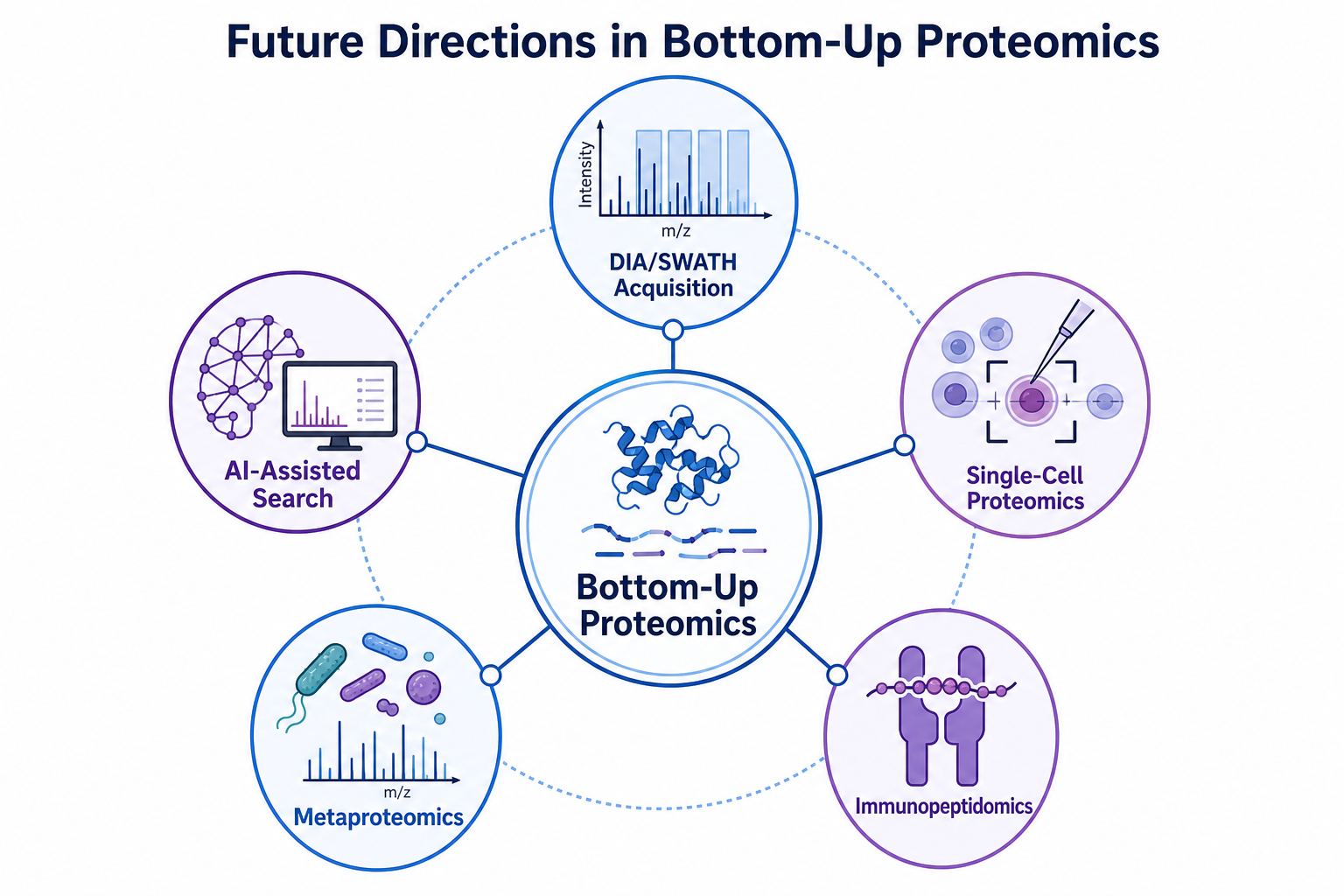
Figure 4. Future development in bottom-up proteomics centers on DIA acquisition, low-input workflows, specialized applications, and more structured data review.
Frequently Asked Questions
Why is bottom-up proteomics still the default proteomics workflow?
Bottom-up proteomics combines broad peptide coverage, flexible quantification modes, and mature data analysis tools in a format that works across many sample types. That balance of throughput and interpretability keeps it central even as complementary strategies mature.
What is the main difference between bottom-up and shotgun proteomics?
Shotgun proteomics usually refers to analyzing complex peptide mixtures without prior protein separation. In current usage, shotgun proteomics is largely synonymous with bottom-up proteomics because both describe digestion-first, peptide-centric LC-MS/MS analysis.
When does bottom-up proteomics struggle most?
Performance drops when protein inference is ambiguous, when sequence coverage is required across difficult regions, when targets are low abundance in unfractionated matrices, or when many variable modifications expand the search space without enough spectral quality to support site calls.
Can bottom-up proteomics support biologics characterization?
Yes. Bottom-up proteomics is widely used for peptide mapping, modification localization, and comparability assessment on therapeutic proteins. The fit is strong when the product has a defined sequence and the report requires peptide-level evidence rather than intact proteoform assignment.
Do I need fractionation for a bottom-up proteomics project?
It depends on sample complexity and depth goals. Simple purified proteins may require minimal fractionation, while tissue lysates, biofluids, and deep phosphoproteomics studies often benefit from pre-fractionation or enrichment to reach the proteins or modifications that motivate the study.
Conclusion
Bottom-up proteomics remains a practical workhorse because it delivers peptide-level identification and quantification at a scale few other strategies can match. Its technical value lies in throughput, modification mapping capability, and a mature analysis ecosystem. Its limitations are equally real: protein inference can be conservative, coverage can be uneven, and low-abundance targets require deliberate enrichment or fractionation rather than default acquisition settings.
For discovery proteomics, biologics peptide mapping, or modification-focused studies, the method is often the right starting point when project scope, database quality, and reporting expectations are defined before samples enter the workflow.
Teams planning a bottom-up proteomics project can contact MtoZ Biolabs to review sample complexity, quantification goals, and reporting depth before acquisition begins.
If peptide coverage gaps or modification mapping are central concerns, MtoZ Biolabs can help align digestion strategy, enrichment, and data review with the study objective.
Researchers evaluating proteomics service options for publication or regulatory support can request a project assessment from MtoZ Biolabs to define phase 1 feasibility and phase 2 reporting scope.
How to order?




