






Co-IP for Low-Expression Proteins: Enrichment Strategies, IP-MS Sensitivity, and Experimental Troubleshooting
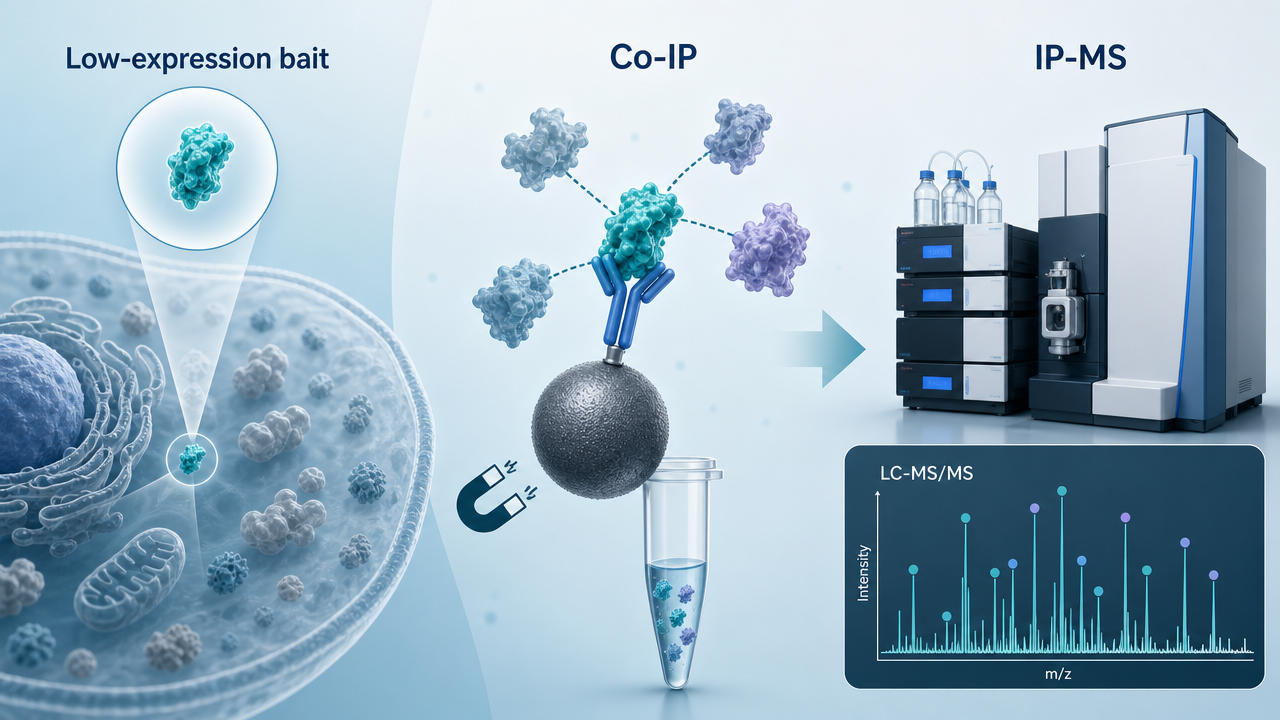
Co-immunoprecipitation (Co-IP) for low-expression proteins is difficult because endogenous target abundance is limited, background proteins can dominate the pull-down, and weak interaction partners may be lost during lysis or washing. The highest-yield workflows combine biologically informed sample selection, high-affinity antibodies, gentle complex-preserving extraction, and sensitive IP-MS analysis rather than relying on one enrichment step alone.
Key Takeaways
- Low target abundance reduces both bait recovery and interactor recovery, so signal can disappear before MS analysis even starts.
- Antibody quality, lysis chemistry, bead choice, and wash stringency matter more for low-expression proteins than for abundant baits.
- Cross-linking, pre-clearing, and low-background magnetic beads can improve specificity when carefully optimized.
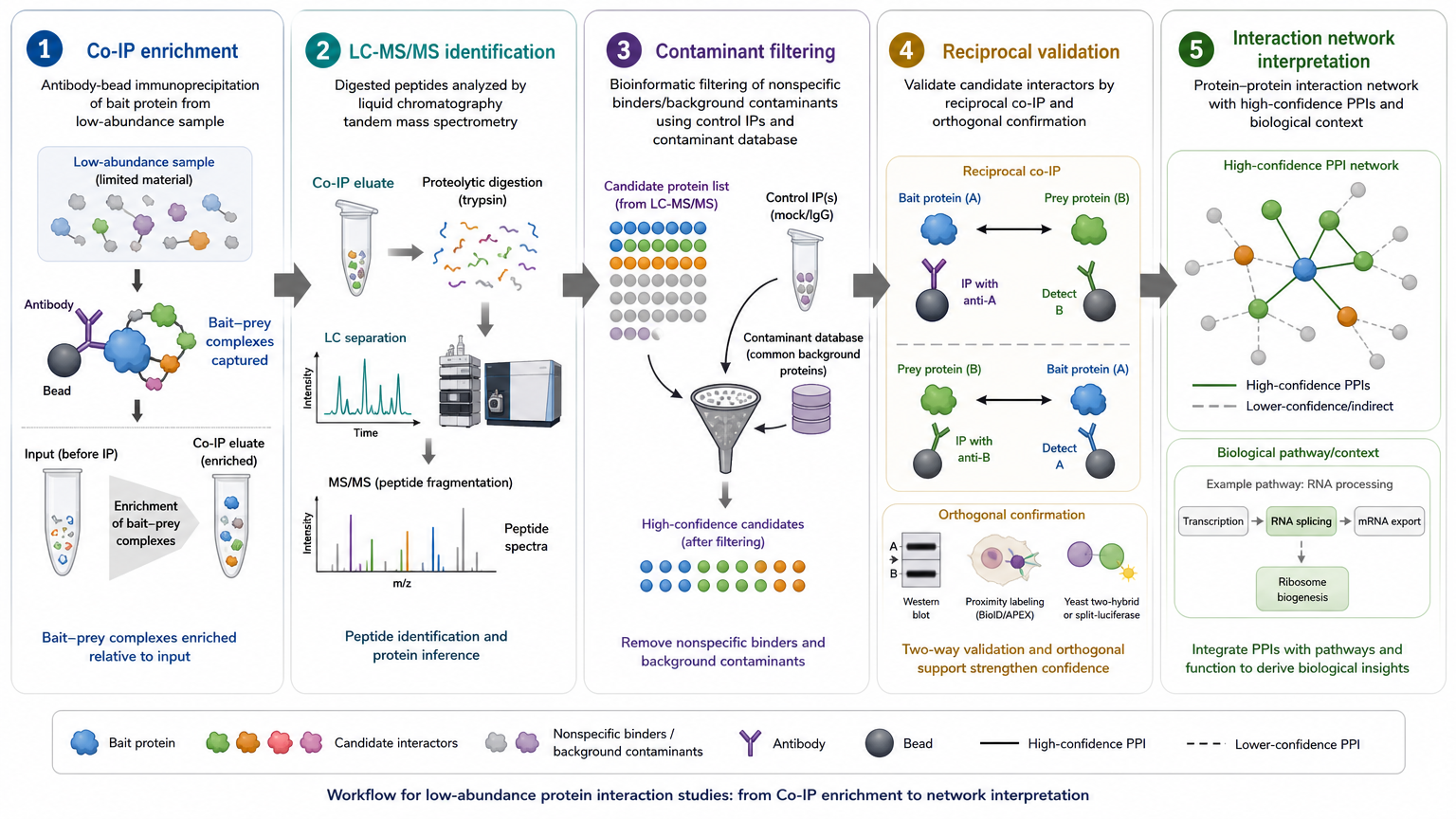
- IP-MS usually outperforms gel-based readouts for low-abundance interactors because it offers deeper detection and better contaminant filtering.
Why Low-Expression Proteins Are Hard in Co-IP?
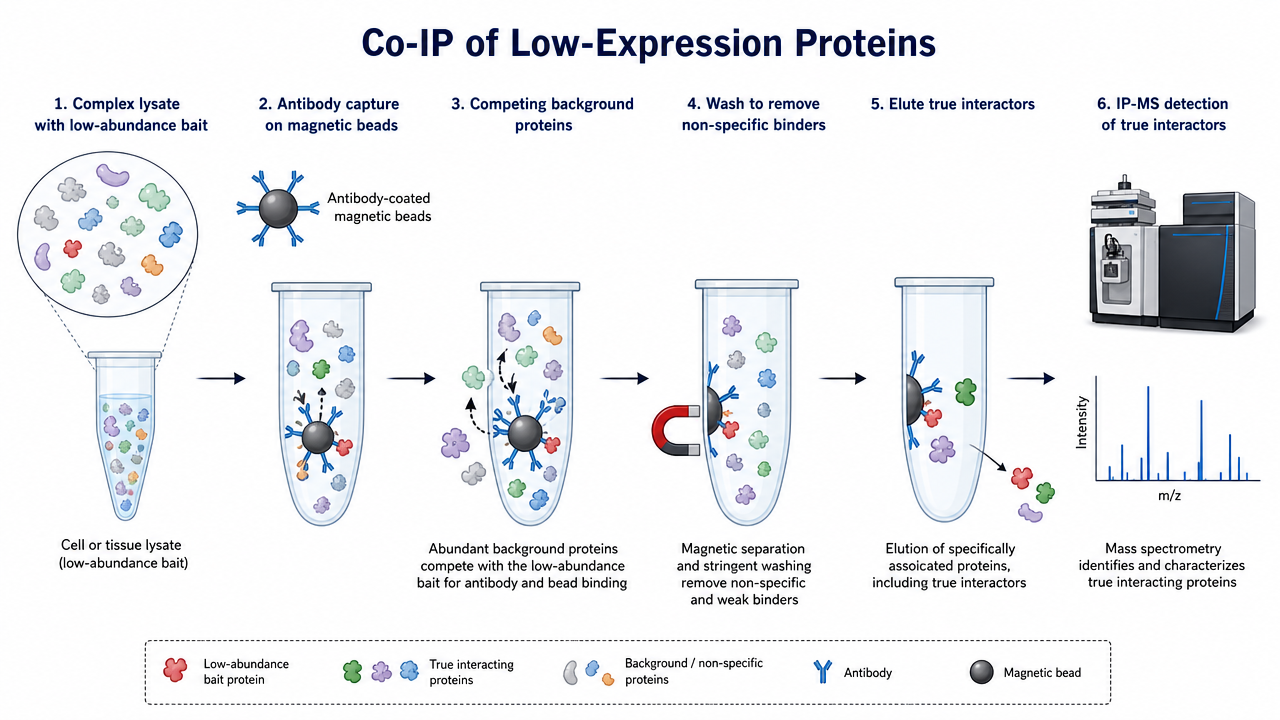
Co-IP depends on recovering enough bait protein to pull associated complexes out of a lysate. When the bait is scarce, antibody occupancy drops, non-specific proteins compete for bead surface, true interactors fall below detection, and conventional gel-based readouts become insensitive.
Related Services
Co-Immunoprecipitation Protein Interaction Analysis Service
Co Immunoprecipitation (Co-IP) Service
SILAC Based Co-IP-MS for Protein Interaction Analysis Service
Choose the Right Biological System First
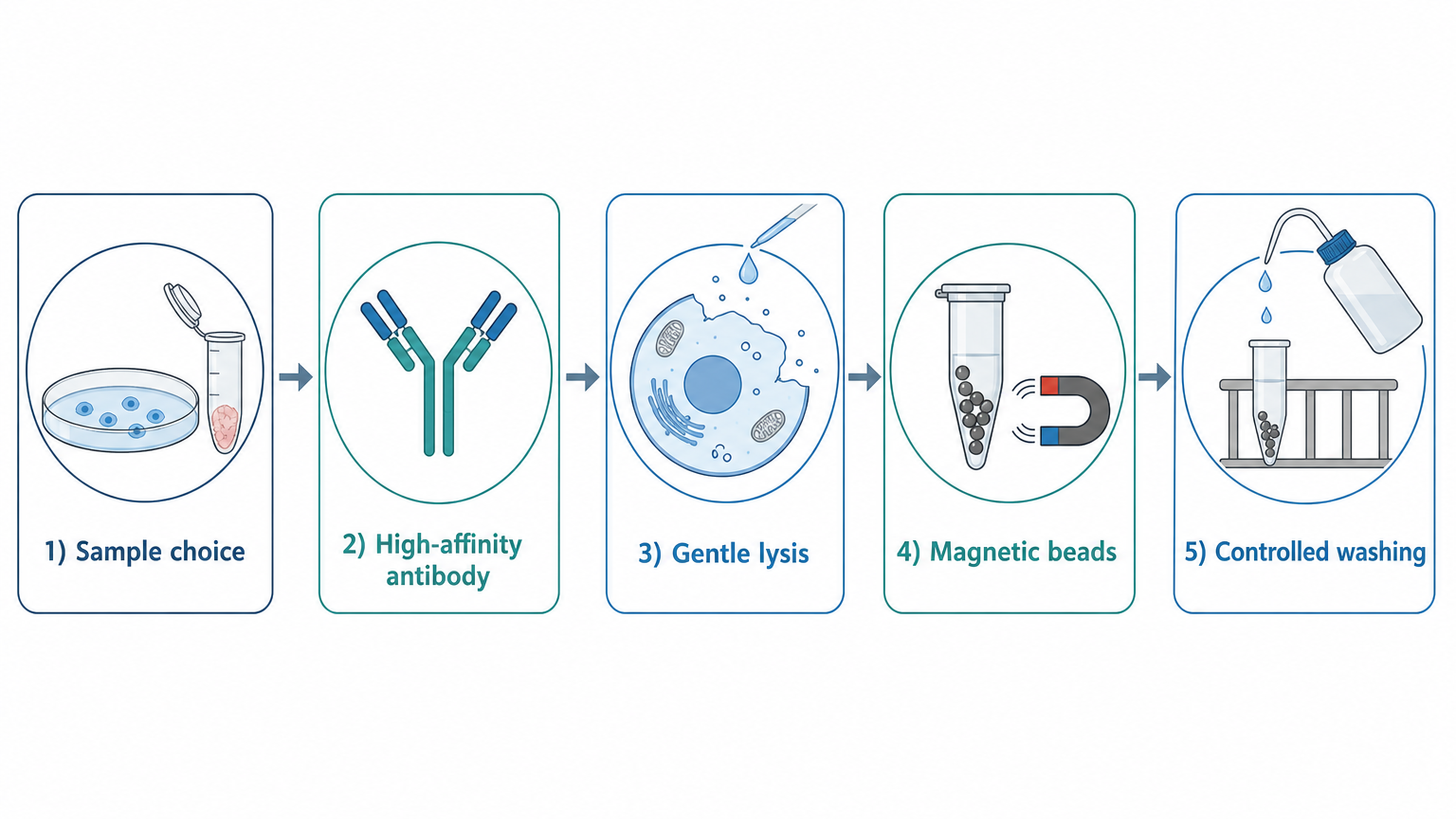
The simplest way to improve low-expression Co-IP is to start with a sample in which the bait is less scarce. That may mean selecting a different cell line, using a tissue with higher endogenous expression, applying a physiological stimulus, or using a controlled low-copy induction system.
Antibody Selection and Bead Strategy
High-affinity, well-validated antibodies are essential when antigen is limiting. For MS-oriented Co-IP, antibody cross-linking to magnetic beads is often worth the extra setup because it reduces heavy/light chain contamination and improves wash control.
Protect Interaction Complexes During Lysis
Low-expression proteins are frequently part of transient or weak complexes. Use low-temperature workflows, protease and phosphatase inhibitors, and gentle detergents such as NP-40 or digitonin when the biology allows.
Optimize Specificity without Washing Away the Signal
Pre-clearing with control IgG, reducing bead overload, and shortening nonspecific exposure times can improve specificity. Washing must balance removing sticky contaminants while keeping weak interactors attached.
Why is IP-MS often Necessary?
For low-expression proteins, interaction partners may be invisible by gel staining even when the immunoprecipitation worked. High-resolution LC-MS/MS improves sensitivity and allows contaminant filtering, label-free comparison, SILAC-based specificity assessment, or broader interactome discovery.
Troubleshooting Table
| Problem | Likely reason | Practical fix |
|---|---|---|
| No bait recovery | Antibody weak or bait too scarce | Revalidate antibody, increase starting material, enrich expression context |
| High background | Non-specific bead or antibody binding | Pre-clear lysate, cross-link antibody, optimize washes |
| Interactors disappear | Complex disrupted during lysis | Use gentler detergents, colder handling, optional cross-linking |
| MS signal too weak | Low peptide load after IP | Improve enrichment, reduce contamination, use nanoLC-MS |
FAQ
1. Why does Co-IP fail more often for low-expression proteins?
Because the bait is scarce, both capture efficiency and downstream detection are weak, while background proteins can still bind efficiently to antibodies and beads.
2. Should I overexpress a low-expression protein for Co-IP?
Sometimes, but only carefully. Mild or inducible expression can help recover complexes, while strong overexpression may create artificial interactions.
3. When is IP-MS better than Western blot detection?
IP-MS is better when interaction partners are unknown, low abundance, or too weak to visualize confidently by gel-based methods.
Conclusion
Successful Co-IP for low-expression proteins depends on treating the experiment as a sensitivity-limited interactomics workflow. Better sample choice, stronger antibodies, complex-preserving lysis, low-background immunoprecipitation, and sensitive IP-MS together give the best chance of recovering biologically meaningful low-abundance interaction partners.
How to order?




