SILAC Based Co-IP-MS for Protein Interaction Analysis Service
MtoZ Biolabs provides SILAC-based Co-IP-MS for quantitative analysis of proteins associated with a defined target across controlled experimental conditions.
Stable isotope labeling is combined with co-immunoprecipitation and high-resolution LC-MS/MS to strengthen interaction candidate prioritization and reduce interference from non-specific background.
- Quantitative comparison of target-associated proteins
- Improved discrimination of specific enrichment from background
- Broad interaction discovery with high-resolution mass spectrometry
What Is SILAC-Based Co-IP-MS?
SILAC-based Co-IP-MS combines Stable Isotope Labeling by Amino acids in Cell Culture (SILAC) with co-immunoprecipitation and LC-MS/MS for quantitative protein interaction analysis. Experimental and control groups are labeled with different stable isotope forms of amino acids, allowing corresponding peptides to be distinguished and quantified during mass spectrometry analysis.
After the target-containing complex is enriched by Co-IP, SILAC ratios provide a quantitative measure of protein enrichment between groups. Proteins consistently enriched relative to an appropriate control can be prioritized as stronger interaction candidates, helping narrow broad Co-IP-MS results and reduce interference from non-specific background.
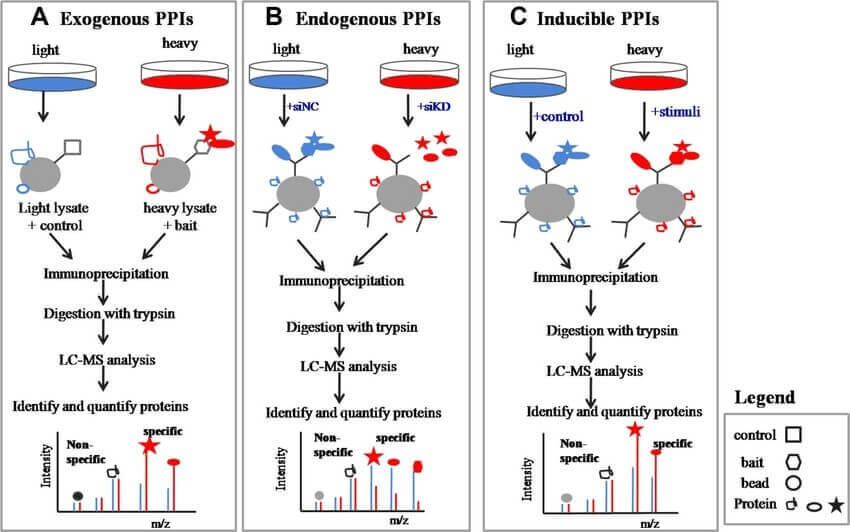
Chen, X. L. et al. Proteomics. 2015.
Figure 1. SILAC-Based Co-IP-MS Experimental Workflow
SILAC-Based Co-IP-MS Service at MtoZ Biolabs
MtoZ Biolabs integrates SILAC metabolic labeling, Co-IP, and high-resolution LC-MS/MS to identify and quantitatively compare proteins associated with a target protein across experimental conditions.
1. SILAC Metabolic Labeling
Culture suitable cell models in light- and heavy-isotope-labeled media to incorporate stable isotope labels into cellular proteins.
2. Co-IP and Target Complex Enrichment
Prepare cell lysates and use a suitable IP-grade antibody to enrich target-associated protein complexes. IP-MS-validated antibodies are available for selected targets upon request.
3. LC-MS/MS and Quantitative Analysis
Analyze enriched proteins using Orbitrap-series high-resolution mass spectrometry coupled with Nano-LC. MaxQuant-based analysis supports protein identification and SILAC relative quantification to compare target-associated protein profiles across experimental conditions.
When SILAC-Based Co-IP-MS Is a Good Fit
SILAC-based Co-IP-MS is a strong option when the target protein is known and quantitative evidence is needed to distinguish meaningful enrichment from background or compare protein associations between cellular conditions.
1. Broad Interaction Candidate Discovery
Add quantitative evidence when conventional Co-IP-MS is expected to generate a large candidate list.
2. Background Discrimination
Help separate preferentially enriched proteins from common non-specific binding.
3. Condition Comparison
Compare target-associated proteins between control and treatment, stimulated and unstimulated, or other defined cellular states.
4. Dynamic Complex Analysis
Identify proteins gained, lost, or altered within a target-containing complex following biological perturbation.
5. Mutation-Related Interaction Studies
Compare wild-type and mutant systems to examine changes in protein recruitment or complex composition.
6. Candidate Prioritization
Narrow interaction candidates before reciprocal Co-IP, Pull-Down, or other follow-up studies.
SILAC-based Co-IP-MS is designed for cellular systems compatible with metabolic labeling. If your samples are already collected or cannot undergo SILAC labeling, we can evaluate standard Co-IP-MS or another interaction strategy based on your study goal.
Service Advantages
1. Native Protein Complex Enrichment
Co-IP captures proteins associated with an endogenous target under conditions designed to preserve biologically relevant protein complexes.
2. Quantitative Interaction Prioritization
SILAC ratios add quantitative evidence to interaction discovery, helping distinguish preferentially enriched proteins from common background.
3. Broad Interaction Discovery
High-resolution mass spectrometry expands the analysis beyond predefined candidates and enables broader screening of proteins recovered with the target.
4. High-Resolution Quantitative MS
Orbitrap mass spectrometry coupled with Nano-LC provides accurate peptide identification and isotope-resolved relative quantification for complex Co-IP samples.
5. One-Time Charge
Our pricing is transparent, with no hidden fees or additional costs.
Sample Submission Requirements
SILAC-based Co-IP-MS projects may begin with prepared SILAC-labeled cells or processed labeled samples, depending on the project setup. For labeled protein samples, ≥300 μg total protein per sample is recommended.
Key Notes
- Keep samples frozen and ship on sufficient dry ice.
- Provide the SILAC labeling scheme and experimental grouping.
- Include target protein and available IP antibody information whenever possible.
- Define control groups and biological replicates before sample submission.
If you are unsure about labeling design, sample amount, antibody suitability, storage, or shipping, contact us before submission and we can review the project setup with you.
Applications
1. Protein Interaction Network Research
Discover and prioritize proteins associated with a defined target.
2. Signaling Pathway Research
Examine how stimulation, inhibition, or pathway perturbation changes target-centered protein associations.
3. Dynamic Protein Complex Analysis
Track remodeling of protein complexes across different cellular states.
4. Mutation and Protein Function Studies
Determine whether mutations lead to the gain or loss of specific protein associations.
5. Drug Response Research
Evaluate treatment-dependent changes in target-associated complexes to support studies of drug response and molecular mechanism.
Deliverables
1. Experimental Procedures
Key experimental and analytical procedures used in the project.
2. Mass Spectrometry Parameters
Relevant LC-MS/MS acquisition information.
3. Protein and Peptide Identification
Identified proteins, peptides, sequence coverage, and identification information.
4. SILAC Quantitative Results
Relative isotope-based quantitative information between experimental groups.
5. Comparative Enrichment Results
Quantitative comparison of proteins recovered across defined conditions.
6. Raw MS Data
Original mass spectrometry data files.
7. Bioinformatics Results
Functional and interaction-related analysis when included in the project.
FAQ
Q1: Why combine SILAC with Co-IP-MS?
Co-IP-MS can identify proteins recovered with a target, but background proteins may also be present. SILAC adds quantitative comparison between experimental and control groups, making it easier to prioritize proteins that show preferential enrichment.
Q2: Does SILAC enrichment prove direct protein-protein interaction?
No. SILAC-based Co-IP-MS identifies proteins preferentially recovered with the target-containing complex. These proteins may interact directly with the target or associate through other components of the same complex. Reciprocal Co-IP, Pull-Down, or direct binding assays can provide additional evidence for selected candidates.
Q3: Can I submit samples that have already been SILAC-labeled and treated?
Yes. Prepared SILAC-labeled and treated cells or protein samples can be submitted. For SILAC labeling, cells should be capable of at least five passages. Please provide the labeling scheme, treatment details, sample amount, and experimental grouping.
Contact Us
Tell us your target protein, SILAC labeling scheme, experimental groups, available antibody, and the interaction question you want to answer. Whether you are planning a new SILAC-Co-IP-MS experiment or already have labeled samples prepared, MtoZ Biolabs can review your current setup and help you move forward with a practical quantitative protein interaction strategy.
MtoZ Biolabs, an integrated chromatography and mass spectrometry (MS) services provider.
Related Services
Protein-Protein Interaction Analysis Service
IP-MS Protein Interactomics Analysis Service
Co-Immunoprecipitation Protein Interaction Analysis Service
Demo for the SILAC-Based Co-IP-MS Protein Interaction Analysis Service
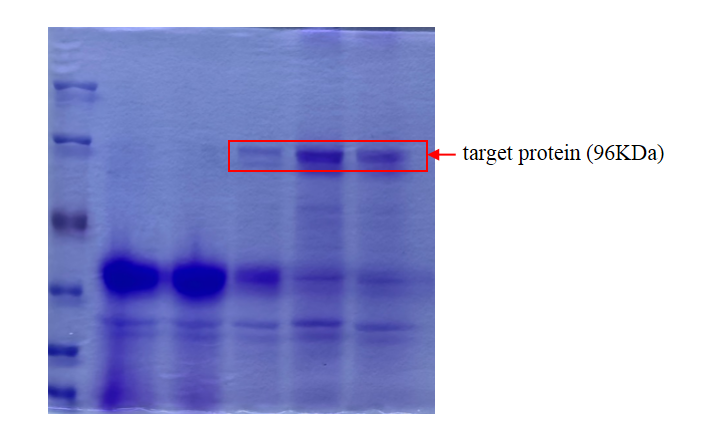
SDS-PAGE Analysis of Enriched Protein Samples
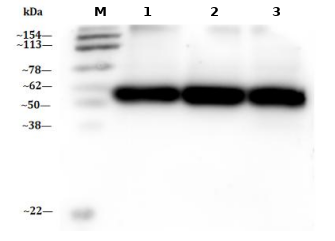
Representative Western Blot Results
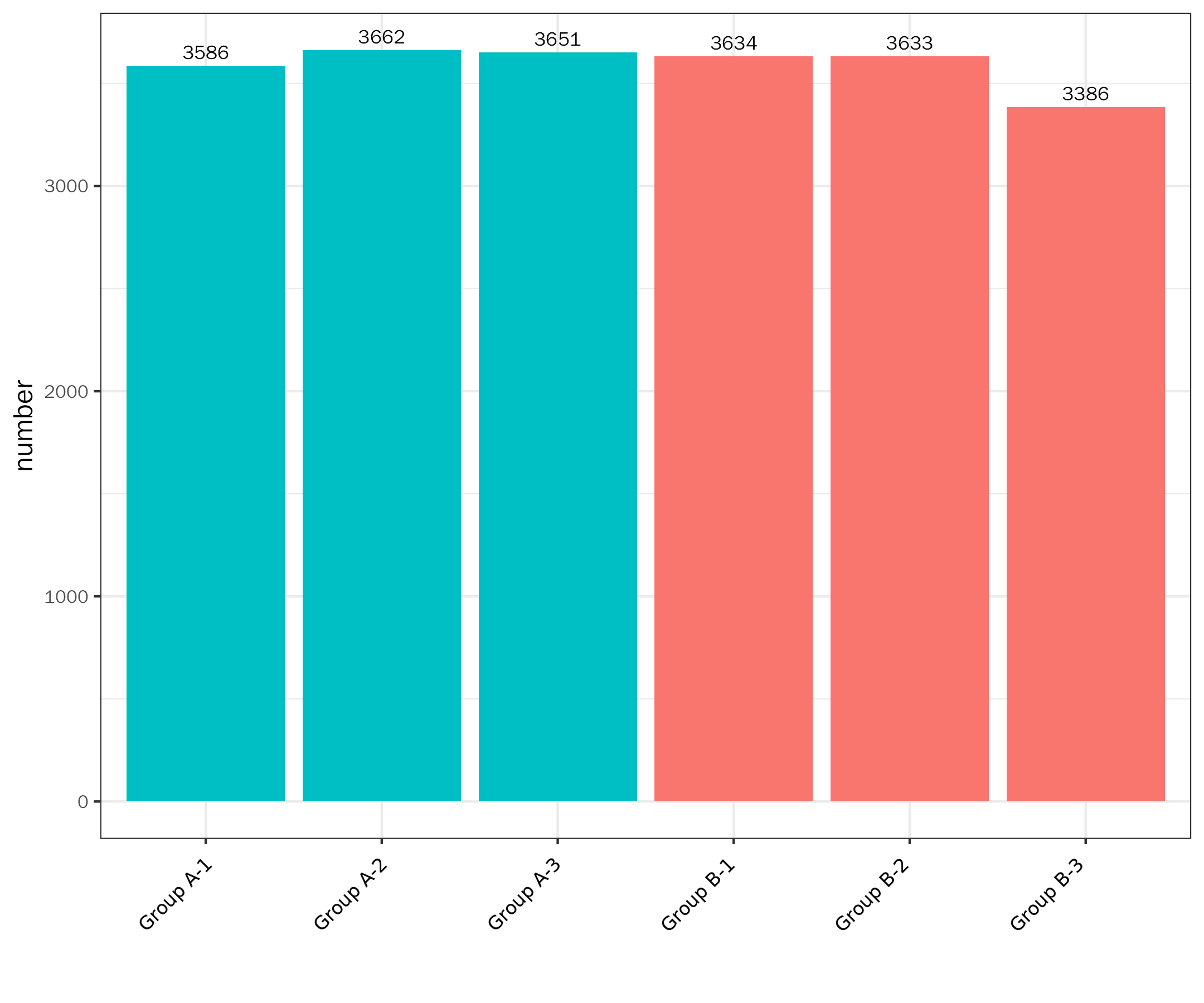
Protein Identification Counts Across Samples
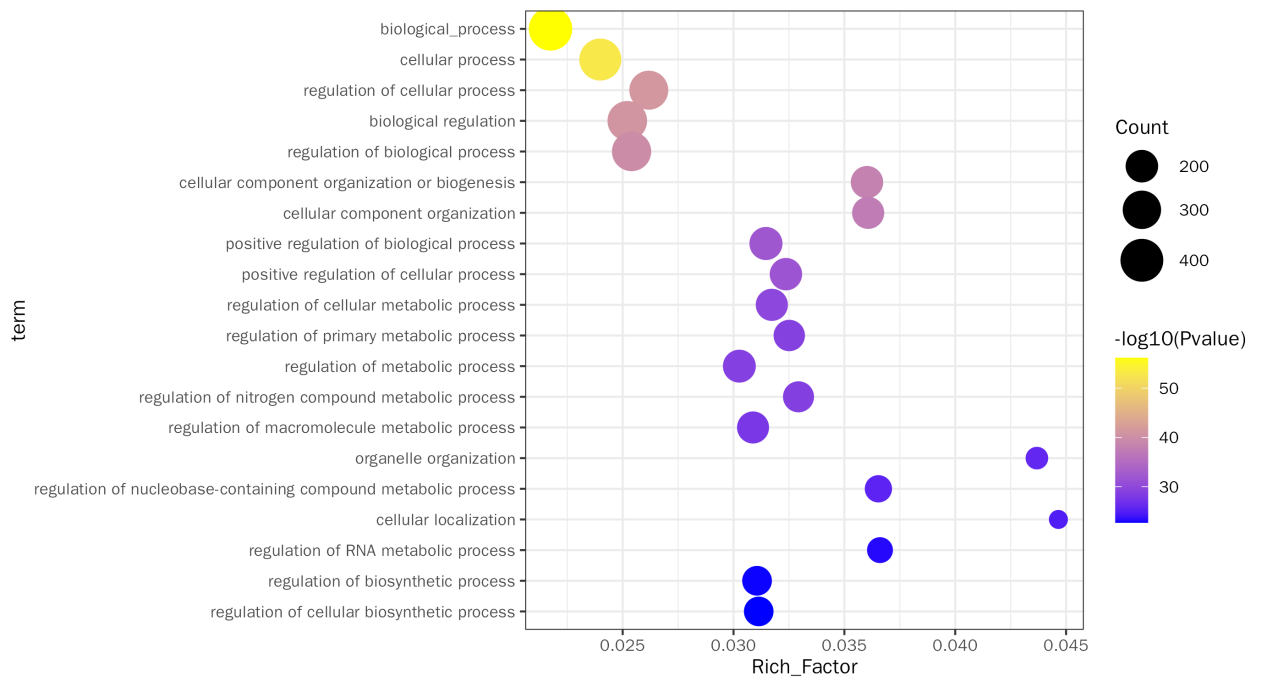
GO Enrichment Bubble Plot
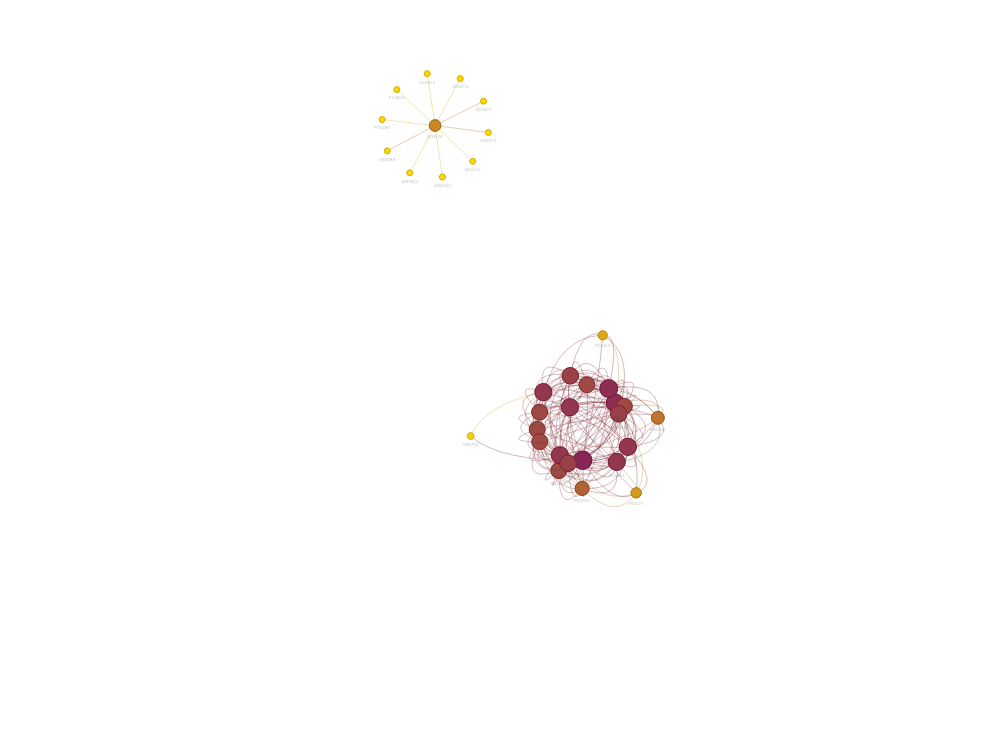
PPI Network Highlighting Hub Proteins