






Challenges in Cell Proteomics Analysis
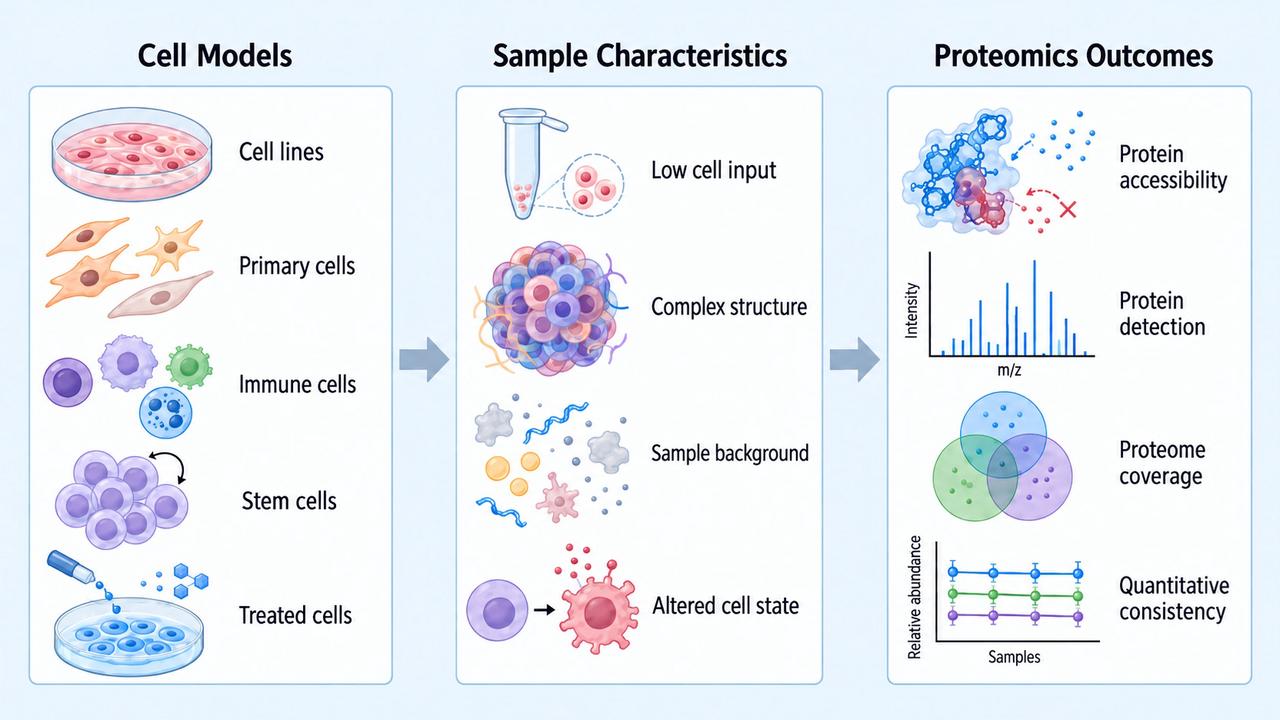
Cell proteomics analysis uses LC-MS/MS-based proteomics approaches to systematically characterize global protein composition and expression changes in cellular systems. The approach can be applied to various cell models, including conventional cell lines, primary cells, immune cells, stem cells, and experimentally treated or genetically modified cell systems.
Different cell samples vary in cell number, protein composition, cellular structure, sample background, and biological state. Limited cell input may reduce available protein information, complex cellular structures may influence detection of specific protein groups, non-target components in samples may increase analytical complexity, and treatment conditions may alter cellular protein profiles.
Understanding the relationship between cell characteristics and proteomics results is essential before conducting Cell Proteomics studies. Biological features of the sample and detection characteristics of the analytical workflow should be considered together when interpreting proteomics data.
Low-Input Cell Proteomics Challenges
1. Limited Cell Numbers and Protein Input
Cell input amount directly influences the amount of protein information available for proteomics analysis. Primary cells, rare cell populations, and sorted cell populations often provide limited cellular material compared with commonly used cell lines. Reduced protein input decreases the number of peptides available for LC-MS/MS detection and may affect protein identification, particularly for low-abundance proteins.
When protein signals are insufficient, some proteins may not reach reliable detection levels, resulting in reduced proteome coverage and lower quantitative consistency between samples. The impact of low input depends on cell type, available sample amount, and target protein abundance distribution.
For cell sample collection, storage, and submission considerations, see Preparing Cell Samples for Proteomics Analysis: Collection, Storage, and Handling.
2. Impact of Low Input on Proteome Representation
Proteomics results represent proteins detected under specific sample input amounts and analytical conditions. Limited cellular material may prevent complete representation of the cellular proteome. Low-abundance proteins are more susceptible to input limitations because weaker signals may not reach stable detection levels.
Low-input proteomics results should therefore be interpreted according to sample characteristics. The detected proteins represent measurable protein information under the selected conditions rather than a complete measurement of all proteins present in the cell.
Challenges in Protein Extraction from Complex Cells
1. Difficult-to-Lyse Cells and Cellular Structural Complexity
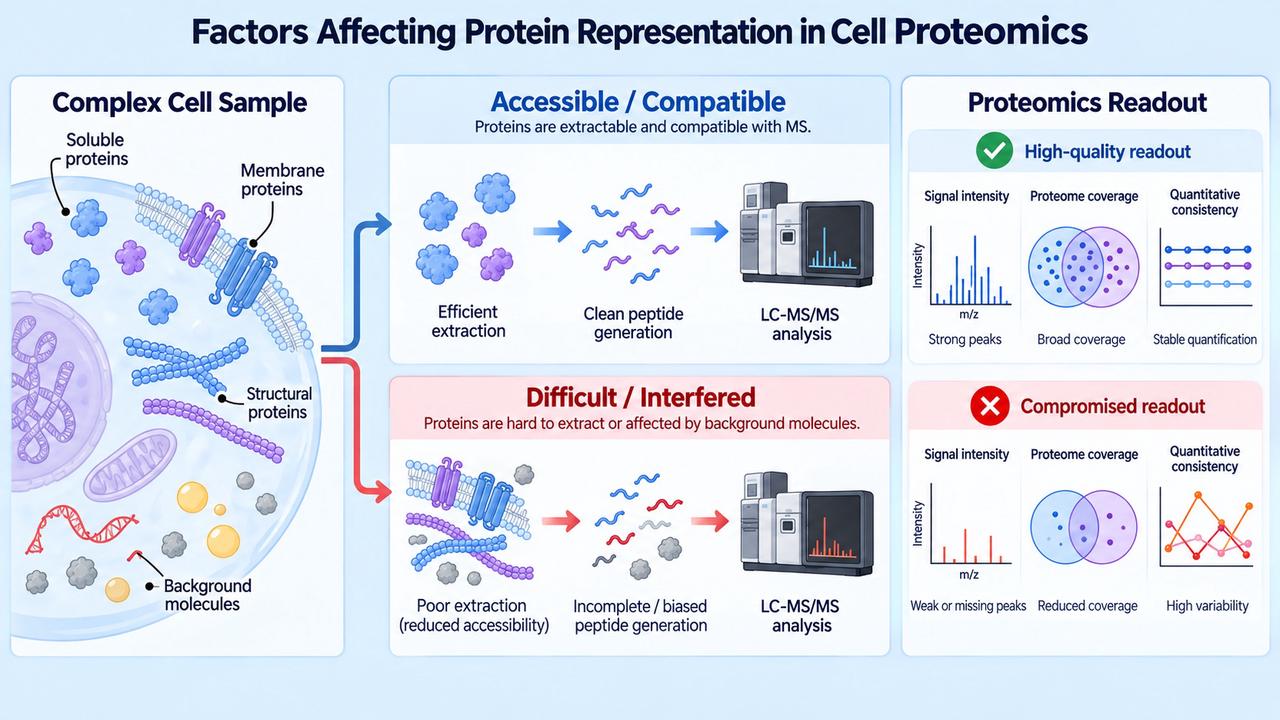
Different cell types have distinct cellular structures and protein compositions. Some cells contain complex architectures, abundant structural proteins, or high proportions of membrane-associated proteins, which may influence protein release and detection.
Membrane-associated proteins and structural proteins often have biochemical properties different from soluble proteins, resulting in different detection performance during proteomics analysis.
2. Protein Accessibility and Proteome Representation
Protein accessibility influences whether proteins can be effectively released, detected, and quantified. Proteomics datasets reflect both the actual protein composition of cells and the detection capability of the analytical workflow.
Some proteins may show lower representation because of structural characteristics, cellular localization, or physicochemical properties. Proteomics results should therefore be understood as measurable protein profiles under specific analytical conditions rather than a complete measurement of all cellular proteins.
For information about laboratory-side protein extraction, peptide preparation, LC-MS/MS acquisition, and data generation, see LC-MS/MS-Based Cell Proteomics Analysis Workflow.
Sample Interference in Cell Proteomics Analysis
1. Nucleic Acid, Lipid, and Medium-Related Interference
Cell samples contain proteins as well as nucleic acids, lipids, residual culture medium components, and other non-target substances. High levels of nucleic acids may increase sample complexity and affect protein analysis. Lipids and medium residues may introduce additional background signals, while detergent residues may affect compatibility with mass spectrometry measurements.
2. Impact of Sample Background on Protein Detection
Sample background influences protein signal patterns and relative protein composition. During comparisons between different cellular states or treatment conditions, background differences may introduce additional variation. Proteomics results should be interpreted together with cell source, cultural conditions, and experimental background.
Cell Sample Quality and Stability Issues
1. Protein Degradation and Changes in Cellular State
Cell proteomics analysis relies on protein composition reflecting the target cellular condition. Protein degradation, repeated freeze-thaw cycles, and cell death may alter protein abundance patterns and influence detected signals.
2. Effect of Sample Stability on Proteomics Interpretation
Changes in sample stability may influence protein identification and quantitative consistency, especially when comparing different cellular conditions. Differences in sample state may contribute to altered protein expression patterns.
For projects requiring confirmation of whether specific cell samples are suitable for proteomics analysis, Cellular Proteomics Service provides analysis planning based on sample characteristics.
Special Cell Models and Treatment Conditions
1. Drug-Treated and Stimulated Cells
Cell Proteomics is commonly used to study protein changes under drug treatment or other stimulation conditions. Treated cells may show changes in protein expression, cellular responses, and overall protein composition. These changes should be interpreted together with treatment background.
2. Genetically Modified and Differentiated Cells
Genetic modification, transfection, and genome editing may influence proteins beyond the directly targeted molecule. Differentiated cells also undergo changes in cellular identity and protein composition, and differentiation-related protein patterns should be interpreted according to cellular state.
3. Importance of Experimental Background Information
Special cell models can be analyzed by Cell Proteomics, but accurate interpretation requires complete experimental background information, including cell type, treatment conditions, genetic modification method, differentiation status, and research objectives.
Frequently Asked Questions
1. Can low-cell-number samples be analyzed by cell proteomics?
Low-cell-number samples can be considered for cell proteomics analysis, but limited cellular material may affect the amount of protein information available for detection. The suitability of the sample depends on cell characteristics, available material, and the intended research objective.
2. Can difficult-to-lyse cells be analyzed by cell proteomics?
Difficult-to-lyse cells can be analyzed by cell proteomics. However, differences in cellular structure and protein composition may influence protein accessibility and affect the representation of specific protein groups in proteomics results.
3. Can treated or genetically modified cells be used for cell proteomics?
Yes. Drug-treated, genetically modified, differentiated, or infected cells can be analyzed by cell proteomics. Changes introduced by treatment or cellular modification should be considered when interpreting differences in protein profiles.
4. What factors affect cell proteomics results?
Cell number, cellular composition, protein accessibility, sample background, sample quality, and cellular state can influence the detected protein profile. These factors affect how well proteomics results represent the original cellular condition.
Conclusion
Cell Proteomics results should be interpreted together with the biological context of the studied cell model. Differences in proteomics datasets may originate from cellular characteristics, experimental conditions, or biological responses.
Understanding the relationship between sample characteristics and proteomics results allows more accurate interpretation of protein changes and more appropriate Cell Proteomics study planning. For a broader understanding of Cell Proteomics principles, workflow, applications, and research considerations, see Cell Proteomics: Principles, Workflow, and Applications.
How to order?




