






Preparing Cell Samples for Proteomics Analysis: Collection, Storage, and Handling
Cell proteomics analysis depends on whether the collected cell samples accurately represent the biological state at the time of harvest. Although LC-MS/MS provides the analytical platform for protein identification and quantification, differences in cell state, collection method, and storage history can influence the protein composition carried into subsequent analysis.
Proper sample preparation before proteomics analysis helps maintain the original characteristics of cell samples and provides a suitable basis for downstream analysis. Standardized collection and handling of cell samples are important steps before submitting samples for cell proteomics studies.
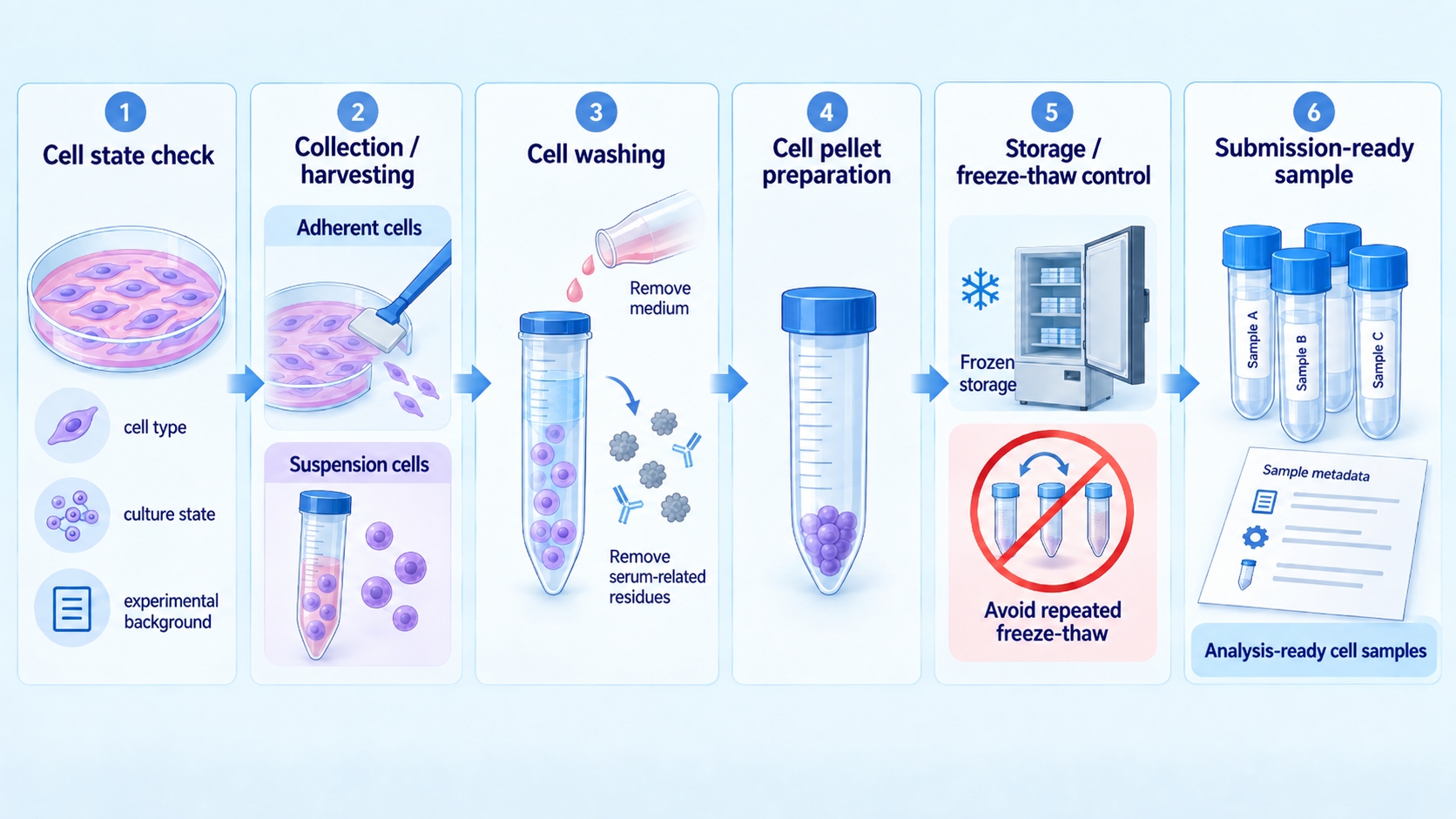
Cell Sample Considerations Before Proteomics Analysis
Cell proteomics analysis relies on the protein composition present in collected cells, making the biological state of the starting material an important factor in sample evaluation. Before submitting cell samples for proteomics analysis, information including cell type, culture state, experimental background, and sample consistency should be clearly documented. For studies involving multiple biological conditions or comparative analysis, experimental design considerations should be evaluated separately before sample preparation. Researchers can refer to How to Design a Cell Proteomics Study? for guidance on study planning and experimental setup.
Cell state reflects the physiological condition of cells at the time of collection and can influence the observed proteome profile. Differences in cell growth status, culture conditions, or treatment background may lead to changes in protein expression patterns. Clear documentation of cell characteristics allows detected protein profiles to be evaluated together with the corresponding cell conditions rather than as isolated analytical results.
| Sample Information | What to Record | Purpose |
| Cell type | Cell lines, primary cells, immune cells, stem cells, etc.; indicate adherent or suspension growth | Confirm sample origin and basic collection approach |
| Culture state | Growth status, culture conditions, and relevant culture background at collection | Describe the cell condition at sampling |
| Treatment background | Drug treatment, transfection, genetic modification, differentiation, or other interventions | Link each sample to the correct experimental condition |
| Sample consistency | Keep key culture, collection, and storage conditions as consistent as possible within the same comparison | Improve comparability across samples |
Cell Collection and Harvesting for Proteomics
After the biological experiment, cultured cells need to be collected and prepared as a defined sample for proteomics analysis. The collection process includes recovering cellular material from the culture system, reducing residual components derived from the culture environment, and preserving information related to cell type and collection status before submission.
1. Collection Approaches for Different Cell Types
Cell harvesting methods differ depending on whether cells grow attached to a surface or remain suspended in the culture medium. Adherent cells and suspension cells require different collection approaches to obtain cellular material from their respective culture environments. During collection, the focus is on recovering cells while maintaining the relationship between the collected material and its original cell type, culture condition, and biological background.
(1) Adherent Cell Collection
Adherent cells need to be recovered from the culture surface. Collection should correspond to the defined experimental endpoint and should avoid introducing unnecessary handling differences before or after harvest. Once the cells are recovered, residual culture components should be reduced promptly before washing and pellet preparation.
When multiple adherent-cell samples are handled within the same study, the collection sequence, sample labeling, and subsequent handling approach should be kept consistent. Sample records should distinguish different cell types, treatment conditions, and collection batches.
(2) Suspension Cell Collection
should be separated from the culture supernatant to reduce carryover of medium components, serum proteins, and other extracellular material. Any special additives used in the culture system should also be recorded with the sample information.
Recovered suspension cells should then proceed to washing and sample organization. When several samples are processed together, sample identifiers should remain matched to the corresponding experimental conditions throughout handling.
2. Reducing Culture-Derived Protein Components Before Submission
Cell culture medium and supplements may contain proteins that do not originate from the cells themselves, including serum-derived proteins and other extracellular components. During cell collection, residual culture-derived proteins may remain associated with collected cellular material and contribute additional signals unrelated to the cellular proteome. Reducing medium-related components before submission helps decrease proteins introduced from serum or other extracellular sources, allowing the submitted sample to more accurately reflect proteins originating from the collected cells.
Preparing Cell Samples Before Submission
After cell harvesting, cell samples require basic pre-submission processing before being submitted for proteomics analysis. This stage focuses on converting collected cells into a defined sample format while maintaining accurate sample identity and biological information. The main considerations include reducing residual components from the culture environment, preparing cell pellets for submission, and recording sample-related information required for subsequent proteomics interpretation.
1. Cell Washing Before Submission
Cell washing is used to reduce non-cellular components introduced from the culture environment during cell collection. Residual medium components, serum-derived proteins, and other extracellular proteins may remain associated with collected cells and contribute signals unrelated to the cellular proteome. Reducing these external protein contributions helps the submitted sample better represent the protein composition of the collected cells while preserving the characteristics of the original cellular material.
2. Cell Pellet Preparation
Cell pellet preparation converts collected cells into a concentrated and organized sample format for submission. A well-prepared cell pellet provides a defined starting material and allows the submitted sample to maintain a clear connection with its corresponding cell type, culture background, and collection information. That is convenient for low-temperature storage, shipping, and subsequent protein extraction.
Frozen cells, cell lysates, and protein samples can also be submitted. If a sample has already undergone partial processing, its name, processing status, and experimental background should remain clearly documented.
3. Sample Labeling and Metadata Recording
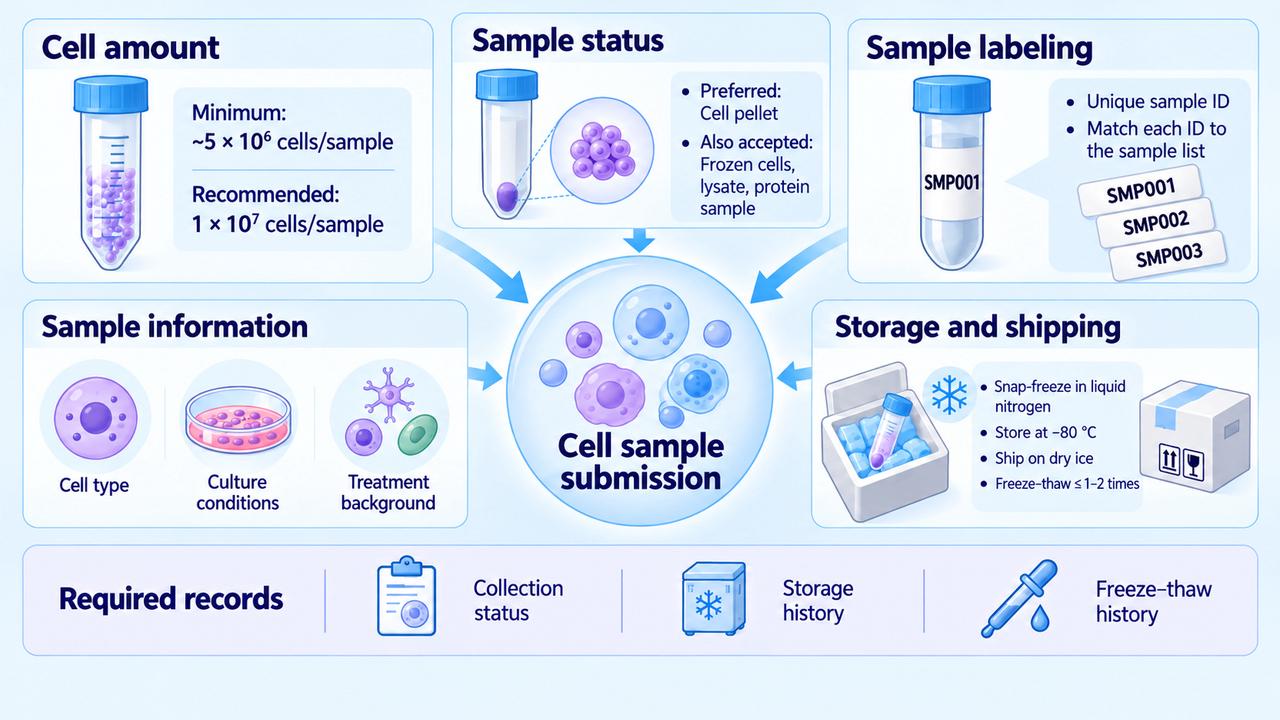
Each sample should have a unique identifier that matches the accompanying submission information. Recommended records include cell type, culture conditions, treatment background, collection status, and storage information.
For drug-treated, genetically modified, transfected, or differentiated cell models, the relevant treatment conditions should also be recorded. If samples were collected at different times or in different batches, the corresponding collection information should be retained.
Cell Sample Storage and Freeze-Thaw Handling
After cell pellets are prepared, the material should remain in a stable condition until it reaches the analytical laboratory. Storage records should correspond to the sample identifiers, and samples within the same study should be managed under comparable storage conditions whenever possible.
1. Low-Temperature Storage
Cell samples are recommended to be snap-frozen in liquid nitrogen and then stored at -80 °C. There is no fixed storage-duration limit, but samples should remain continuously frozen and should not be exposed to unnecessary temperature fluctuations during long-term storage.
2. Freeze-Thaw Control During Sample Handling
Freeze-thaw cycles should preferably be limited to no more than 1-2 times. If a sample has already been thawed and refrozen, the number of freeze-thaw events and the storage history should be recorded, and further unnecessary thawing should be avoided.
Cell Sample Requirements and Submission Information
Before submitting cell samples for proteomics analysis, sample amount, sample identity, biological information, and shipping conditions should be clearly confirmed. Complete submission information allows the collected cell material to be accurately associated with its biological background and provides necessary context for subsequent proteomics analysis.
1. Cell Sample Requirements
| Item | Recommendation / Requirement |
| Common cell samples | Adherent cells, suspension cells, cell lines, primary cells, immune cells, stem cells, and other routine cell samples |
| Recommended submission format | Cell pellet |
| Other acceptable formats | Frozen cells, cell lysates, or protein samples |
| Routine minimum cell amount | Approximately 5 × 10^6 cells/sample |
| Recommended cell amount | 1 × 10^7 cells/sample |
| Recommended storage | Snap-freeze in liquid nitrogen, then store at -80 °C |
| Storage duration | No fixed limit |
| Freeze-thaw cycles | Preferably no more than 1-2 times |
| Shipping | Ship on dry ice throughout and avoid thawing |
| Sample information | Cell type, culture conditions, treatment background, sample ID, and relevant collection and storage information |
When fewer cells are available, the cell type, expected protein amount, and study objective should be considered together before analysis. For specially treated cell models, the submission information should clearly connect each sample ID with the relevant experimental condition. Complete sample records make it easier to confirm sample status and comparability before the project begins.
2. Sample Shipping
Cell samples should be shipped on dry ice throughout transportation and kept frozen during delivery. Before shipping, sample identifiers, sample numbers, and submission records should be checked to ensure that the physical samples match the accompanying information.
Any known infectious or other biosafety concerns should be disclosed before samples are shipped.
Frequently Asked Questions
1. Can cell samples prepared at different times be analyzed in the same proteomics study?
Yes. Culture, collection, and storage conditions should be kept as consistent as possible, and the corresponding preparation batches should be recorded.
2. Can previously collected cell samples be used if some background information is incomplete?
They can be evaluated if the cell type, sample status, and main experimental background can still be confirmed.
3. What additional information should be provided for drug-treated, genetically modified, or differentiated cell models?
Provide the treatment type, treatment condition, treatment duration, and the experimental information corresponding to each sample.
4. What should be done if cell samples show an obvious abnormal state before submission?
Record the abnormal condition and the affected samples, then evaluate whether they remain suitable for comparison with the rest of the study.
5. Do all cell samples in the same project need to be prepared in exactly the same way?
Not every handling detail must be identical, but key culture, collection, washing, storage, and shipping conditions should be kept consistent.
Conclusion
Reliable cell proteomics results depend not only on analytical measurements but also on whether submitted samples accurately preserve the characteristics of the collected cells. Confirming sample state, completing standardized collection and handling, and maintaining appropriate storage conditions allow cell samples to serve as suitable starting material for proteomics analysis.
For a broader overview of cell proteomics principles, workflow, and research applications, refer to Cell Proteomics: Principles, Workflow, and Applications. Researchers with specific cell proteomics requirements can further explore the Cellular Proteomics Service or contact MtoZ Biolabs for sample assessment and project consultation.
How to order?




