






Cell Surface Proteomics Analysis: Enrichment Strategies, Membrane Protein Identification, and Biomarker Discovery
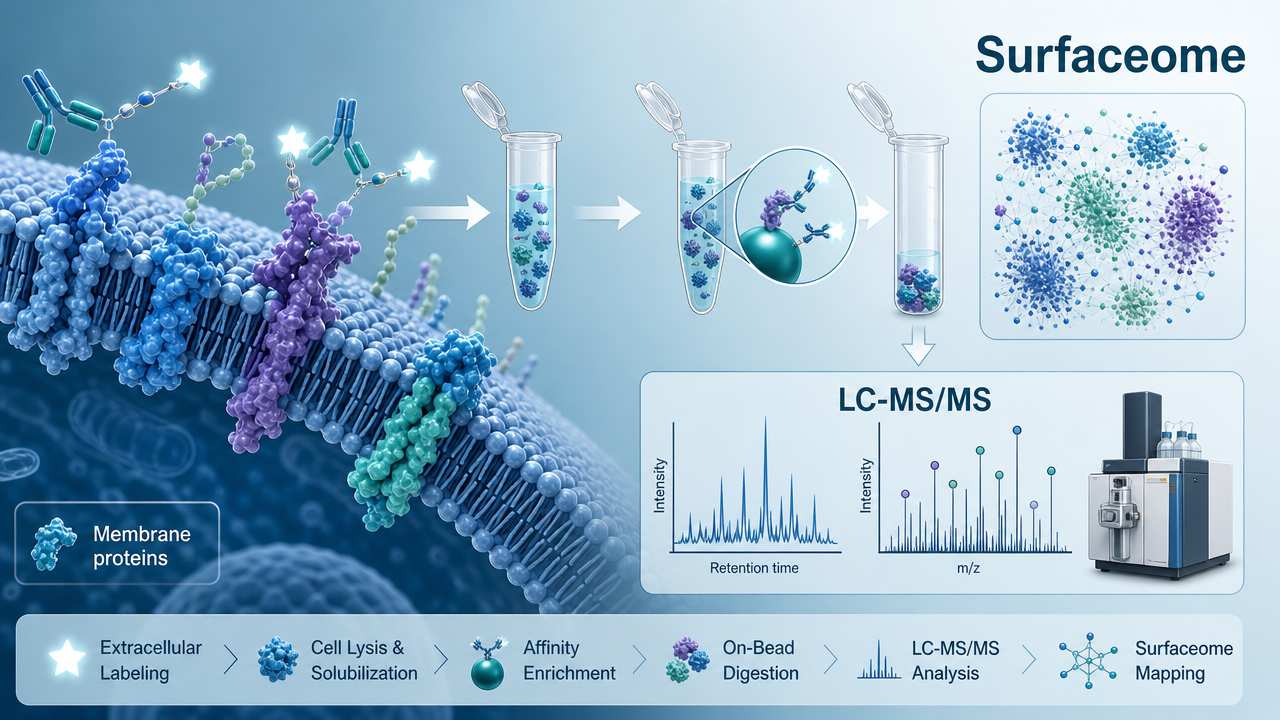
Cell surface proteomics analysis profiles the proteins exposed on the plasma membrane or extracellular face of cells, allowing researchers to study signaling, adhesion, transport, immune recognition, and targetable biomarkers. Because surface proteins are a small and technically difficult subset of the proteome, successful surfaceome analysis depends on selective enrichment, high-resolution mass spectrometry, and strict filtering to separate true extracellular or membrane-associated proteins from intracellular contaminants.
Key Takeaways
-
Cell surface proteins are biologically important but analytically difficult because they are low abundance, hydrophobic, and easily contaminated by intracellular proteins.
-
Enrichment strategies such as biotinylation, metabolic labeling, and cell-surface shaving are central to successful analysis.
-
LC-MS/MS with DDA or DIA can identify and quantify surface proteins, but localization databases and membrane prediction tools are needed to improve confidence.
-
Surface proteomics is widely used for cell-state classification, signaling research, biomarker discovery, and therapeutic target selection.
Why Cell Surface Proteins Matter?
Cell surface proteins sit at the boundary between the cell and its environment. They mediate ligand recognition, receptor signaling, transport, cell-cell interaction, immune communication, and therapeutic accessibility.
Related Services
Cell Surface Proteomics Analysis Service
Cell Surface Proteomics Service
Subcellular Proteomics Service
Enrichment Strategies Define the Experiment
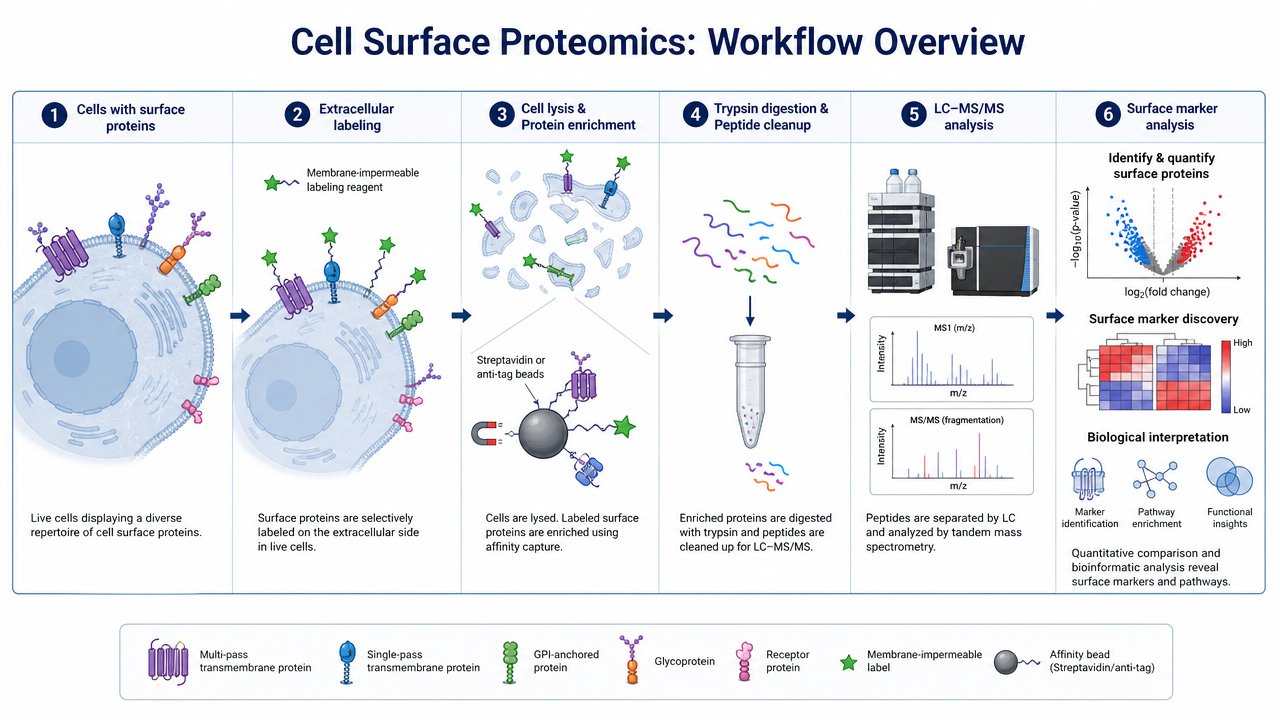
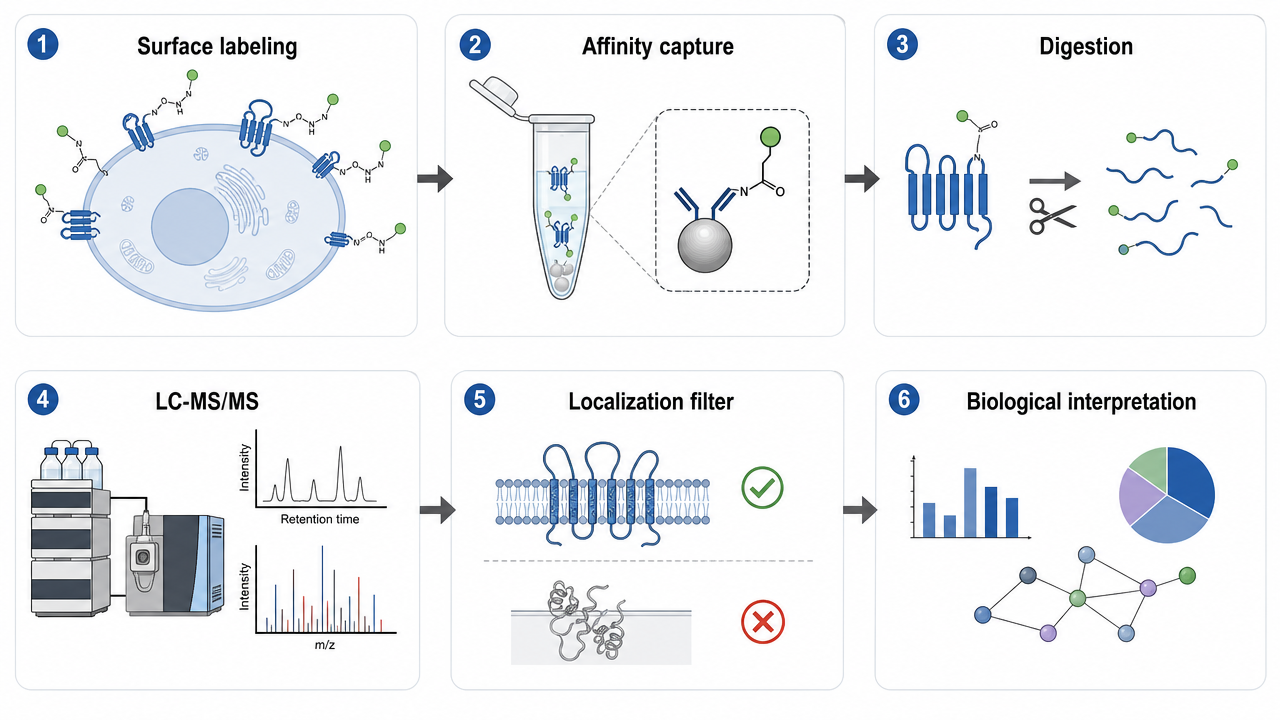
Surface proteins are not abundant enough to recover reliably from whole-cell lysates without selective enrichment. Chemical biotinylation labels extracellular lysines and allows affinity capture of exposed proteins. Metabolic labeling can selectively mark glycoproteins or other membrane-associated molecules in systems compatible with labeling chemistry. Surface shaving gently releases extracellular peptides or fragments while trying to preserve membrane integrity and minimize intracellular carryover.
LC-MS/MS Analysis of the Surfaceome
After enrichment, proteins are digested into peptides and analyzed by LC-MS/MS. DDA is useful for clean peptide identification and discovery-style workflows, while DIA often improves completeness and reproducibility across larger comparative studies.
How to Distinguish Real Surface Proteins from Contaminants?
One of the biggest challenges in surface proteomics is false assignment caused by cytosolic, nuclear, or mitochondrial proteins leaking into the preparation. To improve confidence, researchers often combine LC-MS/MS results with transmembrane domain prediction, signal peptide analysis, glycosylation evidence, surface localization databases, and negative-marker contamination assessment.
Common Applications
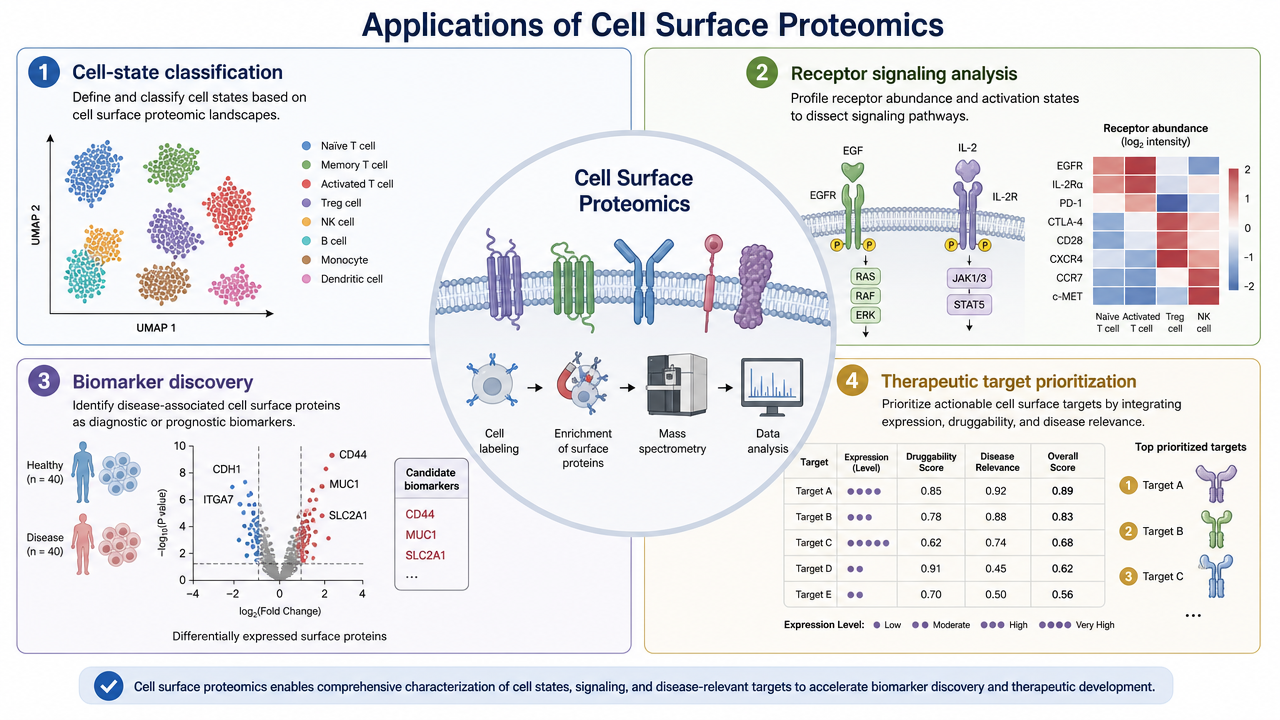
| Application | What Does Surface Proteomics Reveal? | Why It Matters? |
|---|---|---|
| Cell-state characterization | Surface markers defining states or subpopulations | Improves classification and tracking |
| Signaling biology | Receptors and ligand-facing proteins | Maps communication logic |
| Biomarker discovery | Disease-associated exposed proteins | Supports diagnostics and prognosis |
| Therapeutic target discovery | Accessible membrane targets | Enables antibodies, CAR-T, or targeted delivery |
Data Interpretation Strategies
Surface proteomics data are often used for differential expression analysis, clustering, target prioritization, pathway enrichment, and surface-marker panel design. Integrating MS results with transcriptomics, flow cytometry, or imaging can strengthen confidence that a candidate protein is truly exposed and biologically relevant.
Limitations and Workflow Trade-Offs
Surface labeling can miss poorly accessible epitopes, while aggressive preparation can increase contamination. Some proteins cycle rapidly between membrane and intracellular pools, which complicates interpretation. Highly glycosylated or multi-pass membrane proteins may still be underrepresented even in strong workflows.
FAQ
1. What is cell surface proteomics analysis?
It is the large-scale identification and quantification of proteins exposed on the cell surface or strongly associated with the plasma membrane.
2. Why is enrichment necessary in cell surface proteomics?
Because surface proteins are only a small fraction of the whole proteome and are easily obscured by abundant intracellular proteins without selective capture.
3. Which acquisition mode is better for surface proteomics, DDA or DIA?
DDA is useful for discovery and clean identification, while DIA is often better for larger comparative studies that need more complete and reproducible quantification.
Conclusion
Cell surface proteomics analysis is a powerful way to study how cells communicate, adapt, and present therapeutic opportunities at the membrane interface. The strongest surfaceome studies combine selective enrichment, membrane-aware LC-MS/MS workflows, rigorous localization filtering, and biological validation of the most important candidate markers or targets.
How to order?




