






Can Serum, Plasma, and CSF Proteomics Provide Reliable Protein-Level Data?
Serum, plasma, and CSF proteomics can provide reliable protein-level data when the matrix is consistent, sample quality is acceptable, and the comparison design matches the claim. Reliability means that peptide and protein-group evidence is generated under controlled sampling, acquisition, quality-control, and statistical procedures, with sufficient reproducibility for the intended comparison.
Depending on the project design, a research report may include protein or protein-group results, quantitative comparisons, and applicable annotation or pathway analyses. Reliability rises when plasma anticoagulant choice, freeze history, and group matching are controlled before LC-MS/MS. It falls when severely hemolyzed, lipemic, precipitated, repeatedly freeze-thawed, or infectious samples enter the study, because those conditions can alter protein recovery, introduce interfering signals, and reduce quantitative comparability before LC-MS/MS begins.
What Reliable Protein-Level Data Means
In serum, plasma, and CSF proteomics, "reliable" is often used loosely. For a research project, it should mean something more specific: the protein results are generated under a defined sample path, a defined acquisition and analysis route, and a report structure that lets another scientist reconstruct what was compared.
Reliable protein-level data usually include:
- Protein identifications or quantitative abundance values for the submitted matrix
- Differential results when groups were designed for comparison
- Functional annotation and pathway context to organize candidates
- Clear limits on what the dataset can and cannot support
Reliable does not mean exhaustive detection of every low-abundance protein, absolute concentration for every target, or diagnostic certainty. Those are different claims and need different study designs.
This distinction matters because biofluid proteomics sits close to biomarker language. A trustworthy research report keeps discovery findings separate from clinical diagnosis, validated biomarker performance, or other confirmatory conclusions.
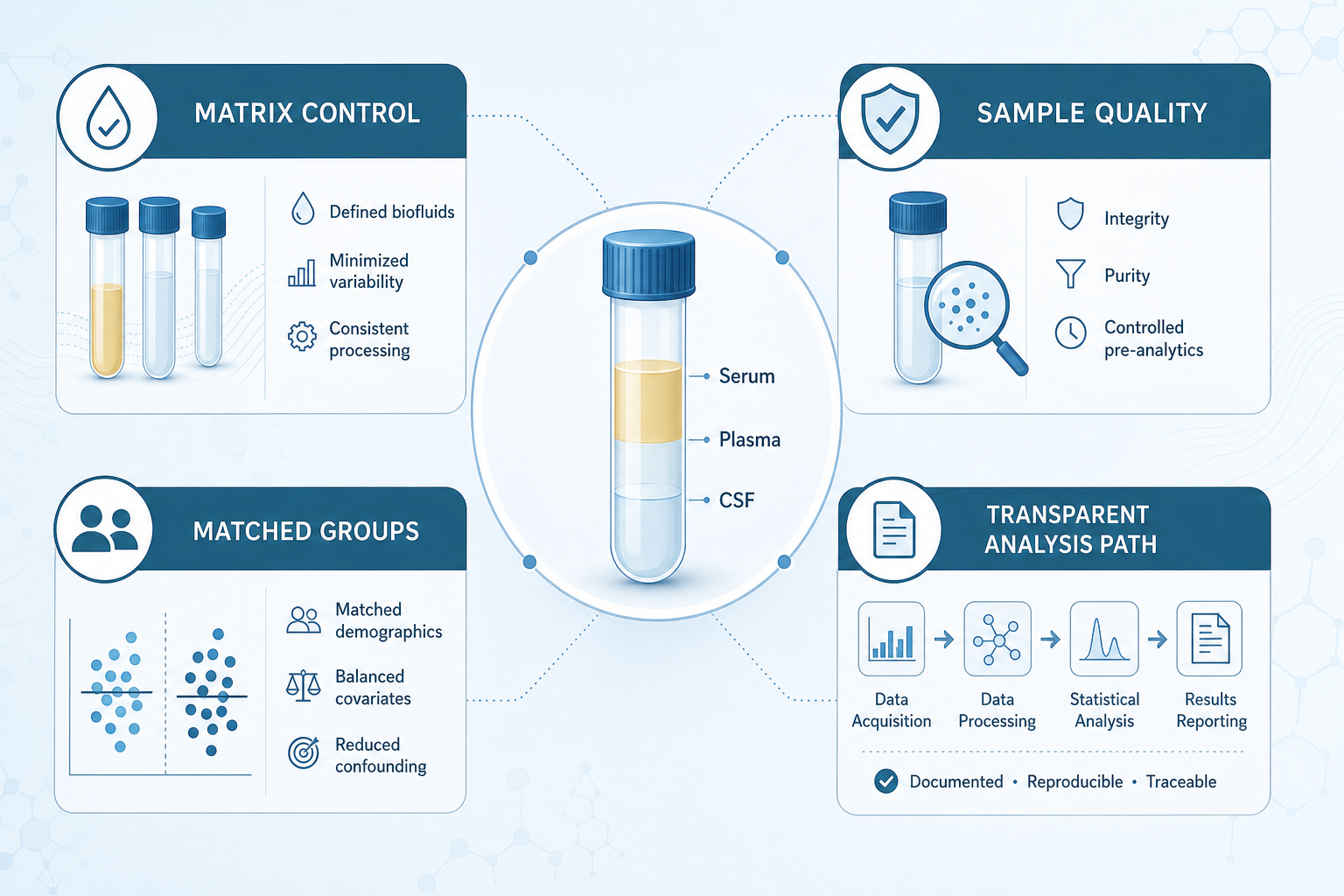
Figure 1. Reliable protein-level data depend on matrix control, sample quality, matched group design, and a transparent analysis path.
What Supports Reliability Before the Instrument Run
Most doubts about serum, plasma, and CSF proteomics are really doubts about pre-analytical control. The mass spectrometer cannot repair a mismatched matrix.
Serum and plasma are not interchangeable. Coagulation and anticoagulant chemistry change the protein background. For plasma, EDTA or citrate is preferred; heparin is not recommended. If one group is serum and another is EDTA plasma, protein differences may reflect matrix chemistry rather than biology.
CSF needs the same discipline in a different way. Blood contamination can introduce abundant blood-derived proteins, while low input, delayed cell removal, adsorption loss, and inconsistent storage can further distort the native CSF profile.
Sample quality is a major reliability factor. Samples with severe hemolysis, marked lipemia, visible contamination, substantial precipitation, or group-imbalanced freeze-thaw histories should be flagged and reviewed using consistent criteria across groups.
Group matching closes the loop. Matrix, anticoagulant, collection timing, processing site, storage history, and relevant biological covariates should be balanced or documented across compared groups. Reliability is a study property, not only an instrument property.
What a Complete Report Can Include
Customers often ask whether the service can "fully detect" biofluid proteins and whether the report is comprehensive. A more accurate question is whether the report covers the protein-level evidence and the annotation layers needed to interpret that evidence.
For quantitative or comparative projects, a standard report path can include differential analysis, functional annotation, GO/KEGG/COG views, protein-protein interaction context, and pathway analysis. Reactome analysis can be delivered as a standard annotation layer for supported species. For serum or plasma projects, Reactome support currently covers Bos taurus, Canis familiaris, Gallus gallus, Homo sapiens, Mus musculus, Rattus norvegicus, Sus scrofa, and Xenopus tropicalis. Outside that set, Reactome may not be available and should be confirmed before the project starts.
Acquisition and analysis routes are also part of transparency. DDA projects are commonly processed with MaxQuant or Proteome Discoverer. DIA projects are commonly supported by Spectronaut or DIA-NN. Instruments such as Orbitrap Exploris 480, timsTOF Pro, and Orbitrap Astral can be reviewed once the sample plan is clear. Naming the route does not make the biology true, but it does make the data path reviewable.
|
Trust question |
What a reliable project can show |
What it should not overclaim |
|---|---|---|
|
Can serum, plasma, and CSF be analyzed? |
Yes, as research matrices under matched design |
Not every protein in every sample is expected to be detectable |
|
Is the report complete enough for interpretation? |
Protein results plus annotation and pathway context |
Pathway hits are not final mechanism |
|
Are the data reproducible enough to compare groups? |
When matrix, quality, and handling are matched |
Unmatched anticoagulant or freeze history weakens comparison |
|
Does Reactome come with every species? |
For listed serum/plasma-supported species |
Confirm species support before promising that layer |
|
Can results guide next experiments? |
Ranked candidates and descriptive pathway themes |
Not clinical diagnosis or absolute quantification by default |
Where Reliability Breaks Down
Reliability can be weakened in several predictable ways.
The matrix is mixed across groups, such as serum versus plasma or heparin plasma versus EDTA plasma.
Sample quality is uneven, especially when hemolysis, lipemia, precipitation, or repeated freeze-thaw events differ by group.
The claim asks for more than protein-level discovery, such as clinical decision support or complete coverage of every low-abundance target.
Annotation is read as proof. GO, KEGG, COG, PPI, and Reactome help organize candidates. They do not confirm biological mechanism by themselves.
CSF interpretation is especially sensitive to blood contamination. When contamination is suspected, document its extent and limit CNS-specific conclusions accordingly.
Another trust issue appears when "comprehensive report" is confused with "complete proteome." A comprehensive research report should make the protein evidence and annotation path easy to review. It does not need to invent coverage claims beyond what the sample and method can support. That restraint is part of reliability, not a gap in service scope.
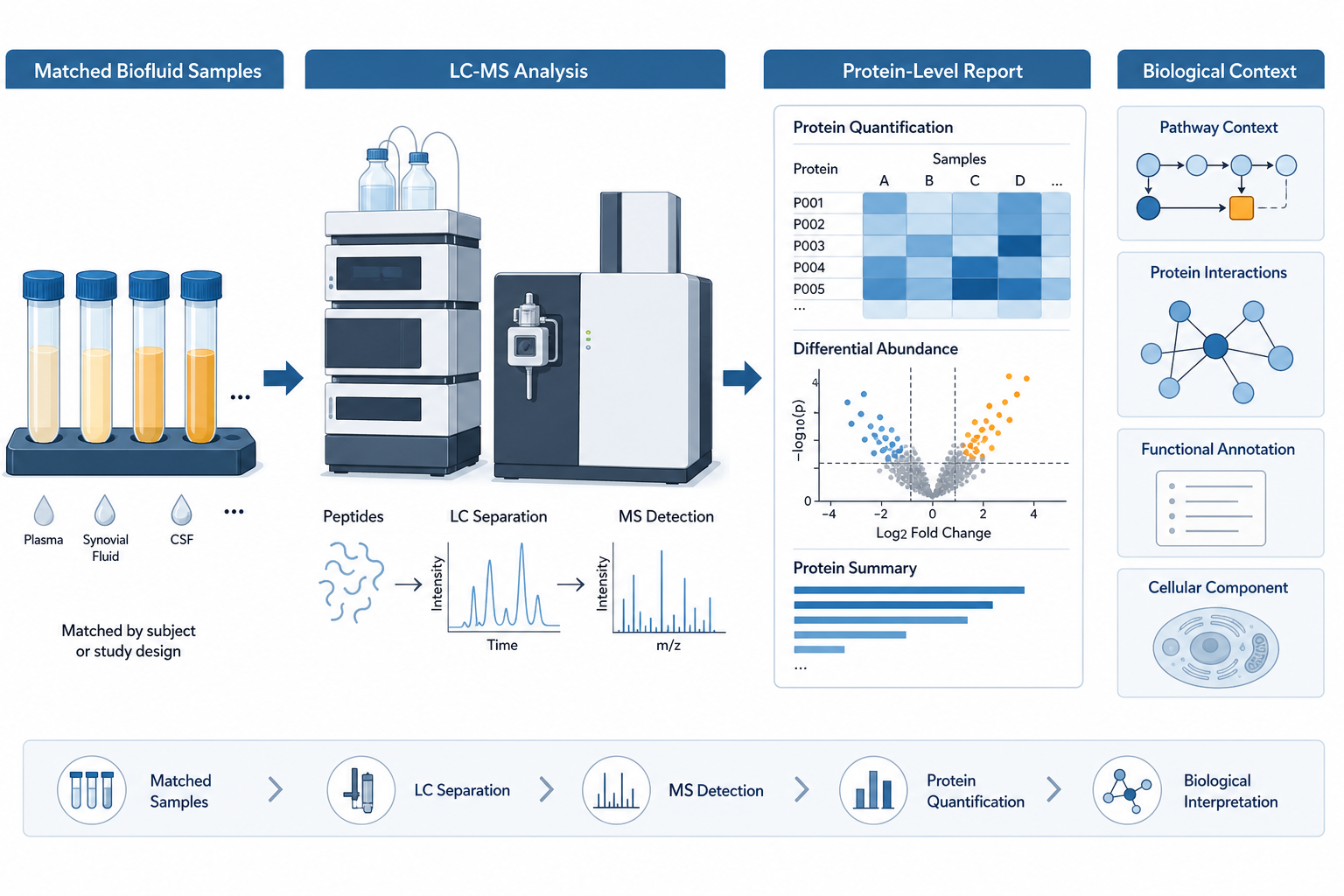
Figure 2. A reviewable report links matched biofluid samples to protein-level results and annotation, with clear interpretation limits.
How to Judge Whether the Data Can Be Trusted
Were biological replicates and relevant covariates appropriate for the comparison?
Were matrix, handling, and acquisition batches controlled?
Did QC samples show acceptable analytical stability?
Were identification confidence, FDR, missing values, and quantitative consistency reported?
Were conclusions kept within the limits of the discovery design?
Positive answers support confidence in the dataset, but final interpretation should still consider sample size, effect magnitude, statistical uncertainty, and project-specific quality-control results.
MtoZ Biolabs can review matrix type, anticoagulant, species, group design, and the expected report layers before samples are committed, so reliability expectations are aligned with what the project can actually deliver.
Related Services
Blood/Plasma/Serum Proteomics Solutions
Cerebrospinal Fluid (CSF) Protein Quantitative Proteomics Solutions
Frequently Asked Questions
1. Can serum, plasma, and CSF proteomics provide reliable protein-level data?
Yes, when matrix consistency, sample quality, and comparison design are controlled. Reliability refers to reviewable protein-level research data, not complete detection of every protein or clinical certainty.
2. What makes biofluid proteomics data less reliable?
Mixed matrices, poor sample quality, unmatched freeze history, and claims that go beyond discovery-level protein evidence.
3. What can a typical research report include?
Protein or protein-group results, quantitative comparisons where planned, key quality-control information, and applicable GO, KEGG, interaction-network, or Reactome analyses.
4. Which anticoagulants support a more consistent plasma comparison?
EDTA- or citrate-anticoagulated plasma is preferred, with one anticoagulant used consistently across the comparison.
5. Is Reactome available for every serum or plasma species?
No. For serum or plasma projects, Reactome is currently available for a defined species set, including human, mouse, rat, and several other listed species. Confirm support before the project starts.
6. What information should be shared before starting?
Share matrix type, anticoagulant for plasma, species, group design, sample quality notes, and the report layers you expect to use for interpretation.
Conclusion
Serum, plasma, and CSF proteomics can provide reliable protein-level data when the project controls matrix, sample quality, and comparison design, and when the report keeps discovery conclusions at the discovery level. A complete research package can include protein results and annotation layers that help prioritize candidates. It should not be read as exhaustive coverage or clinical proof.
To review whether a planned serum, plasma, or CSF project can support the reliability standard your question needs, contact MtoZ Biolabs with matrix type, anticoagulant, species, groups, and expected report content.
How to order?




