



Budgeting a targeted mass spectrometry project is better treated as scoping resource drivers before any sample queue is frozen. Targeted proteomics schedules closed peptide panels by selected reaction monitoring (SRM), multiple reaction monitoring (MRM), or parallel reaction monitoring (PRM) on liquid chromatography-tandem mass spectrometry (LC-MS/MS) (Lange et al. 2008; Peterson et al. 2012). In project language, effort scales with panel size, matrix difficulty, method-build depth, cohort plus quality control (QC) load, relative versus absolute claim, and deliverable depth—not with a single flat “per sample” assumption. The guide below maps comprehensive targeted-proteomics scope, workflow, locked parameters, limits, and project fit. It is not a commercial rate card, not a purchasing checklist, and not a claim that every closed panel needs the same validation package.
Relative fold change and amount with stable isotope-labeled internal standard (SIS) peptides remain separate claim units (Gerber et al. 2003). Unmatched prep or untested transitions still waste cohort acquisitions after the method looks ready on paper (Bantscheff et al. 2012).
In MtoZ Biolabs targeted offerings, projects are scoped after analyte list, matrix, platform preference, claim unit, sample plus QC count, and report use are written in the brief. Service intake appears in Targeted Proteomics Service.
What Targeted Proteomics Scope Must Cover
Four layers belong in the brief and stay separated.
Panel layer freezes proteins or proteotypic peptides, priority tiers, and whether the method is transferred or new. Panel width drives cycle time and review load.
Matrix-and-prep layer names sample type, matched digest rules, and whether a matrix pilot is required before cohort lock.
Acquisition layer names MRM, PRM, or a mixed panel, retention scheduling, and relative versus SIS absolute claims.
Deliverable layer names peak tables only versus calibration, interference notes, QC summaries, and method archives. Report depth is a scope choice, not an afterthought.
Targeted MS resource planning follows list status, build depth, and claim unit. Sample count alone does not define the project.
Transition-level MRM design detail appears in Scoping an MRM Quantitation Project: Transition Design, Sample Count, and Validation Deliverables. Absolute calibrator scoping appears in Scoping an Absolute Protein Quantification Project: Calibrators, Panel Size, and Validation Deliverables. This page stays on comprehensive targeted scope drivers.
How Resource Drivers Change Project Effort
Five drivers explain why two “targeted LC-MS” requests are not equivalent.
Method-build depth. New panels need peptide selection, transition or precursor optimization, scheduling, and matrix pilots. Transferred methods mainly need acquisition and QC review.
Cohort and QC load. Biological n, replicates, blanks, and bracketed QC set instrument and review effort after the method exists.
Panel size and scheduling. More analytes tighten cycle time versus peak width and increase integration review.
Platform choice. Triple-quadrupole MRM often fits stable transitions; PRM helps when fragment review is required in interference-prone matrices. Fit guidance appears in Parallel Reaction Monitoring vs MRM: Which Fits?.
Claim and deliverable standard. Relative normalized panels differ from SIS calibration packages with out-of-range flags and method files.
End-to-End Workflow for Scoping a Targeted MS Project
A practical targeted-proteomics scoping spine usually runs as follows.
- Freeze the decision the data must support and the claim unit (relative versus absolute).
- Close or tier the analyte panel; mark transferred versus new-build peptides.
- Declare matrix, prep parity, and whether a pilot set is required before the full cohort.
- Choose MRM, PRM, or mixed monitoring from interference evidence and panel pressure.
- Size study samples plus blanks, calibrators if absolute, and QC levels.
- Lock deliverables: integration tables, interference notes, calibration package, or method archive.
- Run matrix pilots; stop and redesign if transitions, windows, or recovery fail.
- Acquire interleaved study and QC injections under the locked method.
- Report only against the declared scope; open a new phase if panel or claim unit expands.
Steps 1 through 6 set resource scope. Steps 7 through 9 produce the targeted quantitative record.
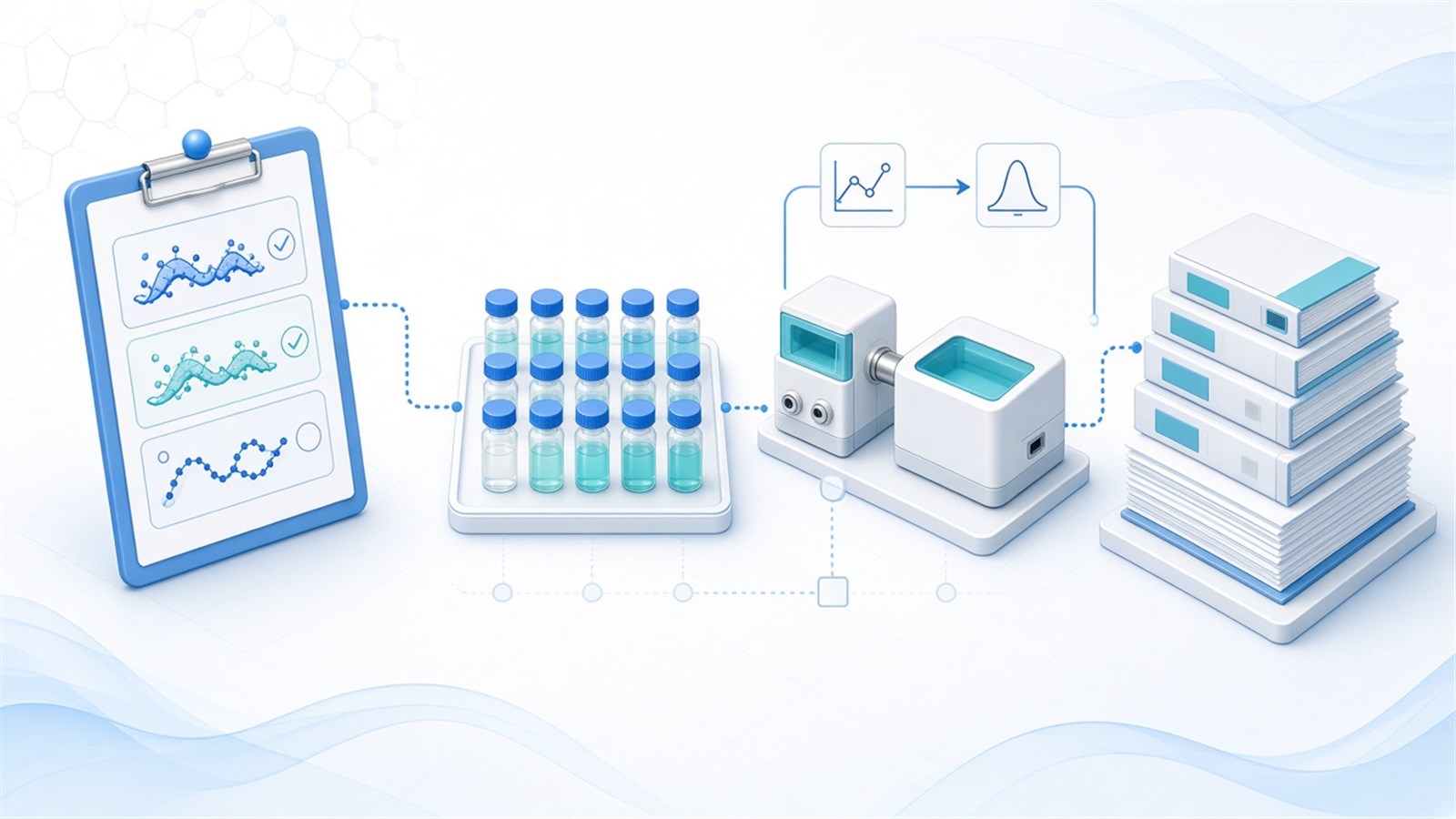
Figure 1. Targeted proteomics effort follows panel, build depth, matrix pilot, cohort plus QC, and deliverable depth locked before acquisition.
Parameters That Must Be Locked Before Cohort Work
Layer |
Parameter that must be declared |
Failure mode if ignored |
|---|---|---|
Panel |
Analyte list and priority tiers |
Late expansion breaks cycle time |
Build status |
New method vs transferred |
Acquisition-only plan on untested targets |
Matrix |
Type and prep recipe version |
Pilot skipped; cohort fails |
Platform |
MRM, PRM, or mixed rationale |
Wrong selectivity for interference |
Claim unit |
Relative vs SIS absolute |
Relative peaks read as concentration |
Cohort |
Study n, replicates, QC pattern |
Underpowered or undiagnosed drift |
Scheduling |
Dwell/windows vs peak width |
Undersampled transitions |
Deliverables |
Report package definition |
Missing evidence for the decision |
Phase gates |
Pilot then cohort |
Full run before method readiness |
Archive |
Method and transition/precursor files |
Irreproducible reprocessing |
Limits follow the same table. Targeted methods do not replace discovery when the list is still open. Higher deliverable depth does not create clinical or release decisions by itself. Expanding the panel after scheduling lock is a new scope, not a free add-on.
How to Choose Scope Tier for Targeted Proteomics
Use build depth, matrix risk, claim unit, and deliverable need together.
Project need |
Scope tier that often fits |
Recheck before committing |
|---|---|---|
Small transferred panel, clean matrix, pilot n |
Lower-scope targeted run |
Full validation package without a need |
New peptides, medium cohort, basic QC |
Moderate build + acquisition |
Skip matrix pilot |
Difficult matrix, SIS absolute, large cohort, full QC pack |
Higher-scope phased design |
Acquisition-only plan |
Interference on subset of targets |
Mixed MRM/PRM panel |
Force one platform for every peptide |
Amount units required |
Absolute/AQUA calibrator scope |
Relative-only method |
Open discovery list |
Discovery first, then targeted |
Targeted build on unnamed analytes |
Panel still growing weekly |
Stage tier-one lock-in |
One schedule for a moving list |
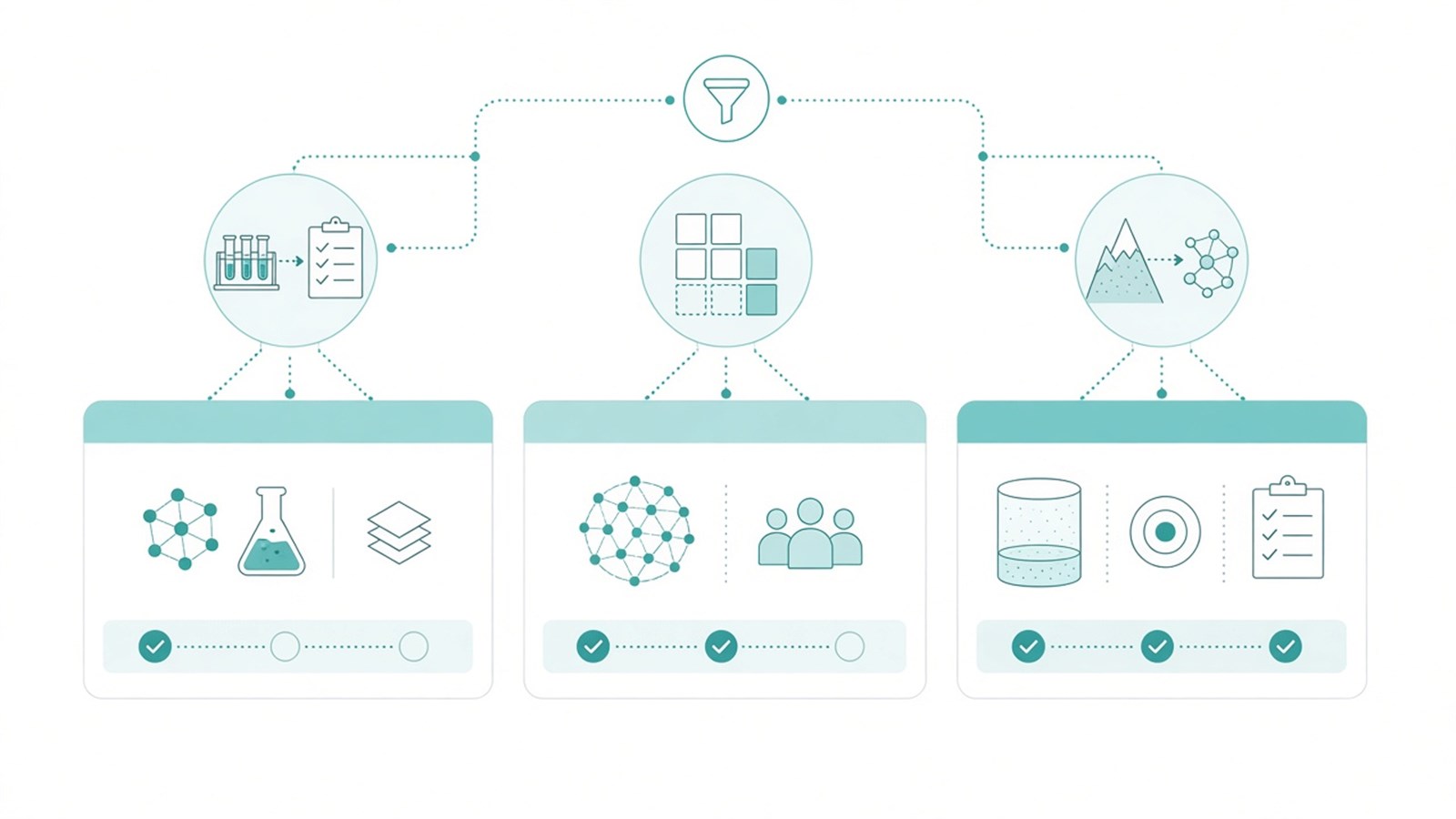
Figure 2. Match scope tier to build depth and claim unit; do not size the project from sample count alone.
MRM service intake also appears in SRM-MRM Quantitative Proteomics Services. Teams with panel lists, matrix notes, and deliverable definitions can review MtoZ Biolabs targeted and PRM entries when those fields are declared in the project record.
Frequently Asked Questions
1. Why can two targeted MS requests need very different project plans?
Because panel novelty, matrix difficulty, claim unit, cohort plus QC load, and deliverable depth differ. Shared wording (“targeted LC-MS”) does not equal shared scope.
2. Is method development always required?
No. Transferred methods in the same matrix may focus on acquisition and QC. New targets, new matrices, or unstable pilots usually need a build phase.
3. How can teams control effort without weakening the science?
Tier the panel, run a matrix pilot before the full cohort, separate build from acquisition phases, and request only the deliverable depth the decision needs.
4. Does a larger sample count always dominate the project?
Only after the method is ready. On new panels, build and matrix pilots often dominate until transitions or windows pass.
5. What information should be locked before starting?
Analyte list, matrix and prep plan, study plus QC counts, build versus transfer status, platform preference if known, relative versus absolute claim, and intended report contents.
MtoZ Biolabs can discuss targeted mass spectrometry scoping when panel, matrix, claim unit, and deliverables are documented.
If further evaluation of MRM versus PRM, absolute calibrators, or phased pilots is needed, project details can be submitted for a feasibility review.
Reference
- V. Lange, P. Picotti, B. Domon, R. Aebersold (2008). Selected reaction monitoring for quantitative proteomics: a tutorial. Mol. Syst. Biol., 4, 222. https://doi.org/10.1038/msb.2008.61
- A.C. Peterson, J.D. Russell, A.A. Klammer, P.F. Doubleday, H. Liu, J.N. Anderson, M.J. MacCoss (2012). Parallel reaction monitoring for high resolution and high mass accuracy quantitative, targeted proteomics. Mol. Cell. Proteomics, 11, 1475-1488. https://doi.org/10.1074/mcp.O112.020271
- S.A. Gerber, J. Rush, O. Stemman, M.W. Kirschner, S.P. Gygi (2003). Absolute quantification of proteins and phosphoproteins from cell lysates by tandem MS. Proc. Natl. Acad. Sci. U.S.A., 100, 6940-6945. https://doi.org/10.1073/pnas.0832254100
- M. Bantscheff, S. Lemeer, H.U. Haab, B. Kuster (2012). Quantitative mass spectrometry in proteomics: a critical review. Anal. Bioanal. Chem., 404, 939-965. https://doi.org/10.1007/s00216-012-5892-4
