






Abundant Protein Depletion in Serum and Plasma Proteomics: When Is It Needed?
Abundant protein depletion is worth considering when the study depends on lower-abundance circulating proteins likely to be masked in a standard discovery run, and when the same validated preprocessing workflow can be applied across all comparison groups. It is not needed by default for broad group comparison, pathway screening, or first-pass profiling where mid- to high-abundance changes may already answer the question.
Decide before thawing primary aliquots. If a clean discovery pilot already recovers the intended protein class, depletion may be unnecessary. If the claim fails without that class and a depth-focused route is acceptable, depletion is only one option, not the only option. For CSF, resolve blood contamination first; do not treat plasma-style depletion as the automatic next step.
If you are unsure whether depletion belongs in the plan, share with MtoZ Biolabs the target class, matrix, plasma anticoagulant, available material, and whether the claim collapses without low-abundance detection. That package is usually enough to judge need before processing starts.
What Depletion Changes in the Analytical Path
Depletion removes or reduces selected high-abundance proteins before digestion and LC-MS/MS. The goal is to give lower-abundance peptides a better chance to be measured. That change is useful only when it serves the claim. It also consumes material, adds technical variability, and may co-remove lower-abundance proteins associated with albumin, immunoglobulins, or other targeted proteins.
In serum/plasma/CSF proteomics, depletion should therefore be treated as a preprocessing decision with consequences, not as a quality badge. A depleted cohort and a non-depleted cohort are not freely interchangeable. If only one arm is depleted, later differential tables can reflect preprocessing rather than biology. This is why the “when is it needed” question is really a study-design question.
Plasma projects still need anticoagulant control. Prefer EDTA or citrate and avoid heparin. Serum and plasma should not be mixed inside one primary contrast.Samples with severe hemolysis, marked lipemia, visible contamination, substantial precipitation, or excessive or group-imbalanced freeze-thaw histories should be reviewed before primary analysis. Infectious samples are not accepted.
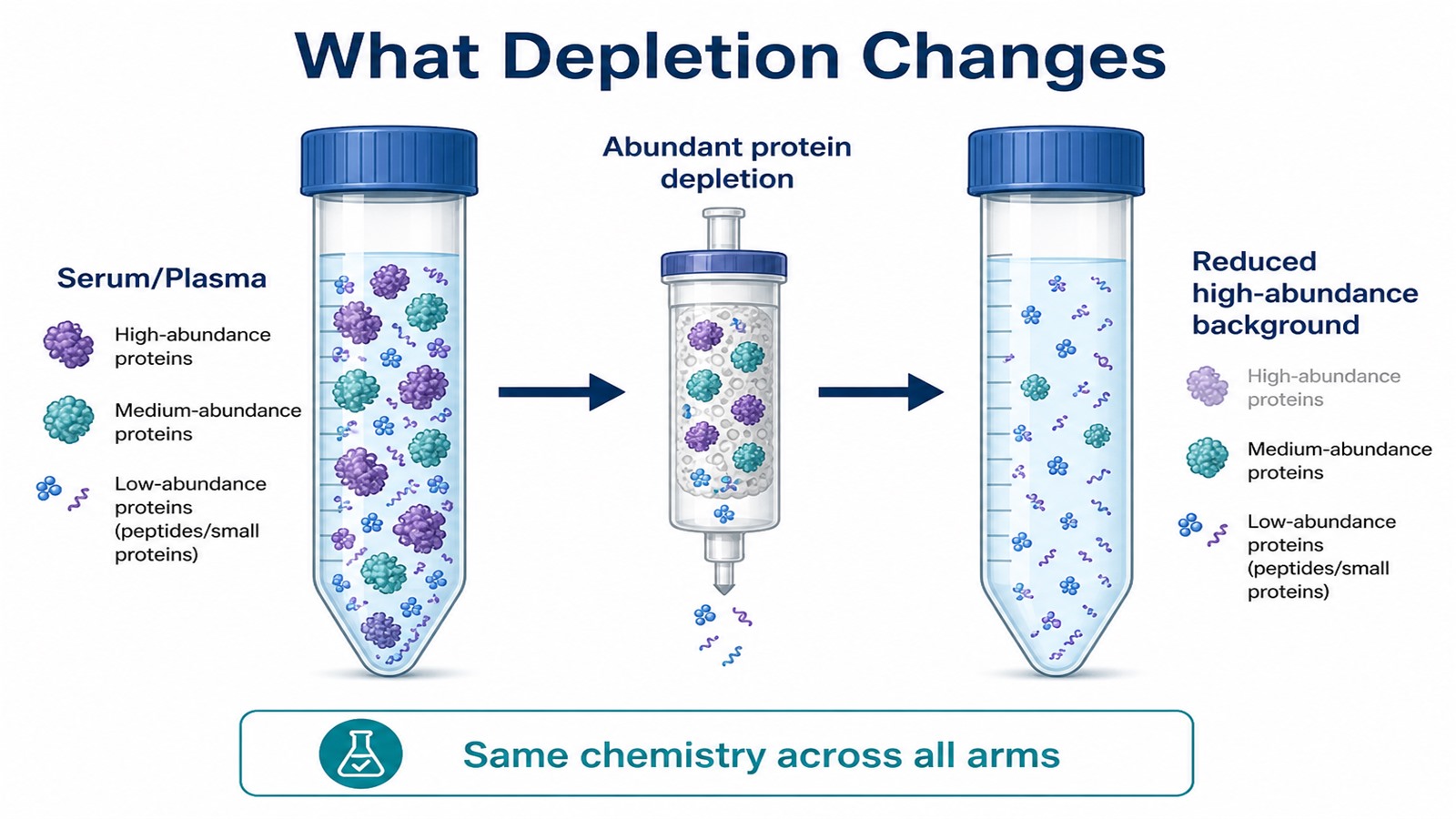
Figure 1. Depletion reshapes the protein mixture before LC-MS/MS, so it must be justified by the claim and matched across arms.
When Depletion Is Needed, Optional, or the Wrong Move
Use the table as a need-assessment guide for serum and plasma. CSF is included only where the logic differs.
|
Decision result |
Use this when |
Practical meaning |
|---|---|---|
|
Strongly consider |
The primary question depends on lower-abundance proteins likely masked in standard analysis, and depletion risks and alternatives have been reviewed. |
Select and validate the preprocessing route before the main cohort is processed. |
|
Optional / later |
A discovery pilot can first test whether the target class appears without depletion |
Keep material for one clean pilot, then decide |
|
Prefer depth-focused alternative |
Low-abundance detection is central, but the team wants a depth-first path rather than depletion |
Review a high-depth blood proteomics route |
|
Not needed |
Broad profiling, pathway screening, or comparisons where abundant proteins remain informative |
Stay with matched standard discovery |
|
Wrong move |
Mixed anticoagulants, mixed serum/plasma groups, or inconsistent depletion methods across comparison groups |
Fix design and matrix control first |
The key test is claim dependency. If the current research question can be answered without deeper coverage of the low-abundance class, depletion may not be essential for the first analytical phase. If those proteins are central to the research question, depletion and other depth-focused options should be compared deliberately. Many teams ask about depletion too late, after a generic discovery run already used the best aliquots. In serum/plasma/CSF proteomics, that timing problem is as important as the chemistry itself.
Timing: Decide Before Primary Samples Are Processed
Decide before collection or archive pull when possible
If depletion is likely, plan aliquot size and backup vials with that path in mind. A common failure mode is discovering after the first thaw that too little material remains for matched depletion across all arms.
Decide after a pilot when the claim is still uncertain
A matched serum or plasma pilot can indicate whether the intended protein class is recoverable under the planned undepleted workflow. If they do, serum/plasma/CSF proteomics can stay simpler. If it is not recovered, review depletion, deeper fractionation, or targeted options rather than assuming depletion is automatically required.
Do not decide after uneven processing
Do not deplete the disease arm only, or deplete leftover vials from one site and leave another site untouched. Once preprocessing histories diverge, the comparison becomes harder to defend.
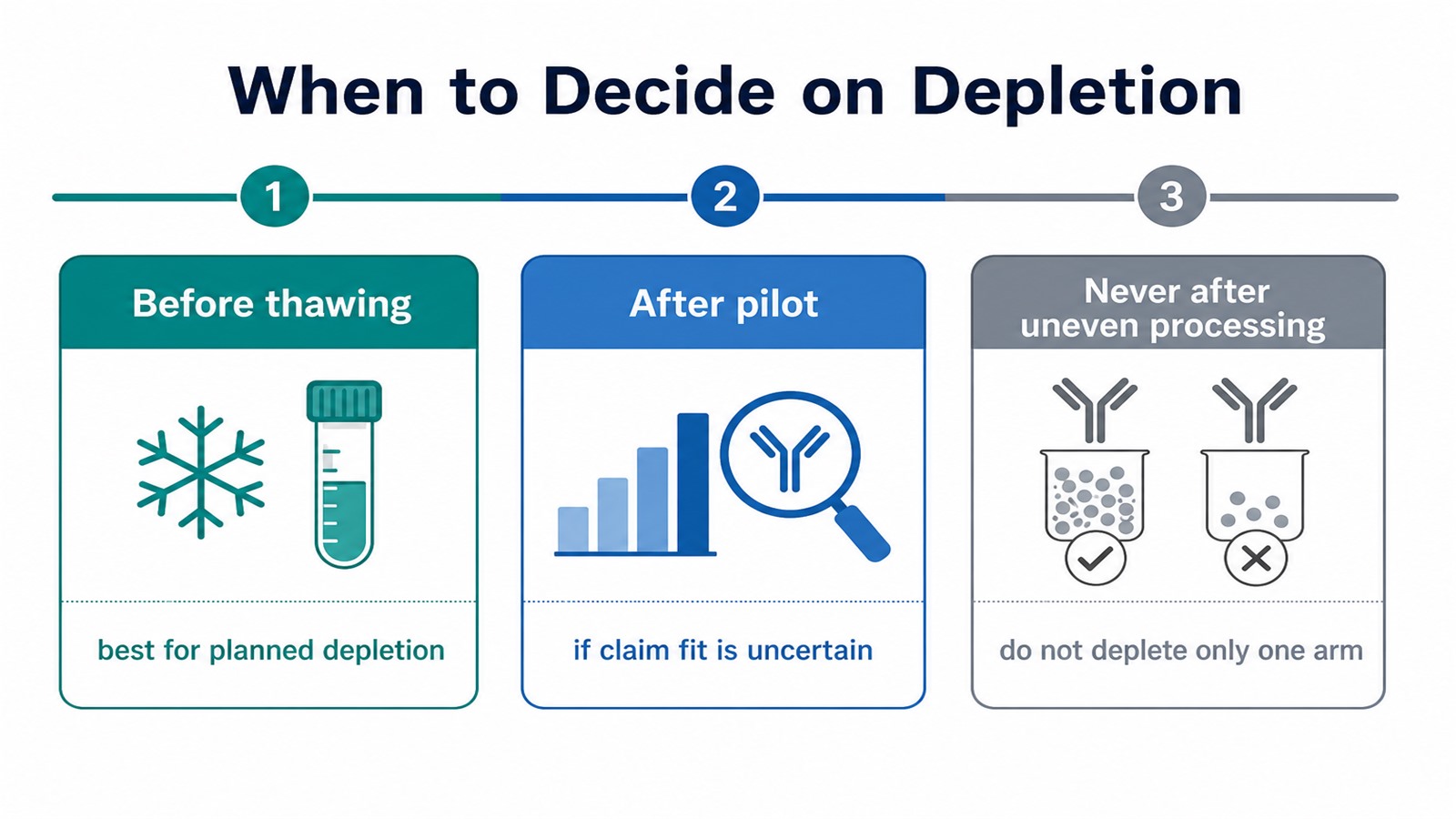
Figure 2. Choose depletion before thawing primary aliquots, after a pilot if needed, but never after uneven arm processing.
Checks That Must Pass Before Calling Depletion “Needed”
Write the target protein class in one sentence.
State whether missing that step would make the study fail.
Confirm the matrix is serum or plasma, not a mixed set.
For plasma, lock EDTA or citrate and exclude heparin-based inconsistency.
Confirm every primary arm can receive the same depletion chemistry.
Confirm enough material remains for the depleted path and, when possible, a non-depleted backup plan.
Only after these checks pass should depletion be considered a feasible option for the current phase of serum or plasma proteomic analysis. Its necessity should then be judged against the target protein class and available alternatives.
If these checks fail, repair the study design or compare alternative depth-focused workflows rather than forcing depletion. Once preprocessing is fixed, DDA or DIA acquisition and downstream annotation can be selected according to the study objective, species, cohort size, and required analytical depth.
Related Services
Blood/Plasma/Serum Proteomics Solutions
Main route for deciding whether a standard discovery cohort is enough before adding depletion.
High-Depth Blood Proteomics Service
Alternative when low-abundance detection is needed but a depth-focused path may fit better than depletion.
Complementary when the depletion decision is plasma-specific and anticoagulant control is already locked.
Frequently Asked Questions
Is abundant protein depletion always required for serum and plasma proteomics?
No. It is needed when the claim depends on low-abundance proteins likely masked by dominant proteins, and when matched depletion is feasible across arms.
Can I deplete only the samples that look difficult?
No. Uneven depletion across groups can create technical differences that look biological in later tables.
Should CSF use the same depletion rule as plasma?
Not as a first rule. Control blood contamination and CSF handling first. Plasma-style depletion is not the default CSF fix.
What if sample volume is limited?
Prioritize one consistent workflow across all comparison groups rather than depleting only the samples with more remaining volume.A matched pilot or one depth-focused plan is usually better than partial depletion across selected groups.
What should be shared before deciding?
Share target class, matrix, plasma anticoagulant, material limits, and whether the claim fails without low-abundance detection. MtoZ Biolabs can then judge whether depletion is needed for the current serum/plasma/CSF proteomics phase, or whether a pilot or depth-focused path is the better first move.
Conclusion
Abundant protein depletion is a conditional tool in serum and plasma proteomics. It is most justified when low-abundance detection is central to the research question, a consistent workflow is feasible across all groups, and its risks and alternatives have been reviewed. It is optional after a pilot when claim fit is still uncertain, and it should be deferred when matrix or preprocessing consistency has not been established. Decide early, keep preprocessing identical across groups, and treat depth-focused analysis as a real alternative rather than an afterthought. That discipline keeps serum/plasma/CSF proteomics interpretable when abundant proteins would otherwise dominate the first pass.
Researchers weighing this decision can review claim dependency, matrix, anticoagulant, and aliquot budget with MtoZ Biolabs before primary vials are thawed. That review keeps serum/plasma/CSF protein analysis from defaulting into depletion when a simpler matched path would already answer the claim.
How to order?




