






Xylooligosaccharide Analysis Service
Xylooligosaccharides (XOS) are a class of functional oligosaccharides composed of 2 to 10 xylose units linked by β-1,4-glycosidic bonds, primarily derived from the hydrolysis products of lignocellulose, hemicellulose, or plant straws. As a novel prebiotic, XOS can selectively promote the growth of beneficial bacteria such as bifidobacteria, improve intestinal microecological balance, and exhibit physiological functions including enhancing immunity, regulating lipid metabolism, and exerting antioxidant effects. Xylooligosaccharide analysis holds significant application value in fields such as plant cell wall structure research, biomass resource utilization, microbial metabolic mechanism elucidation, and the development of functional oligosaccharide products.
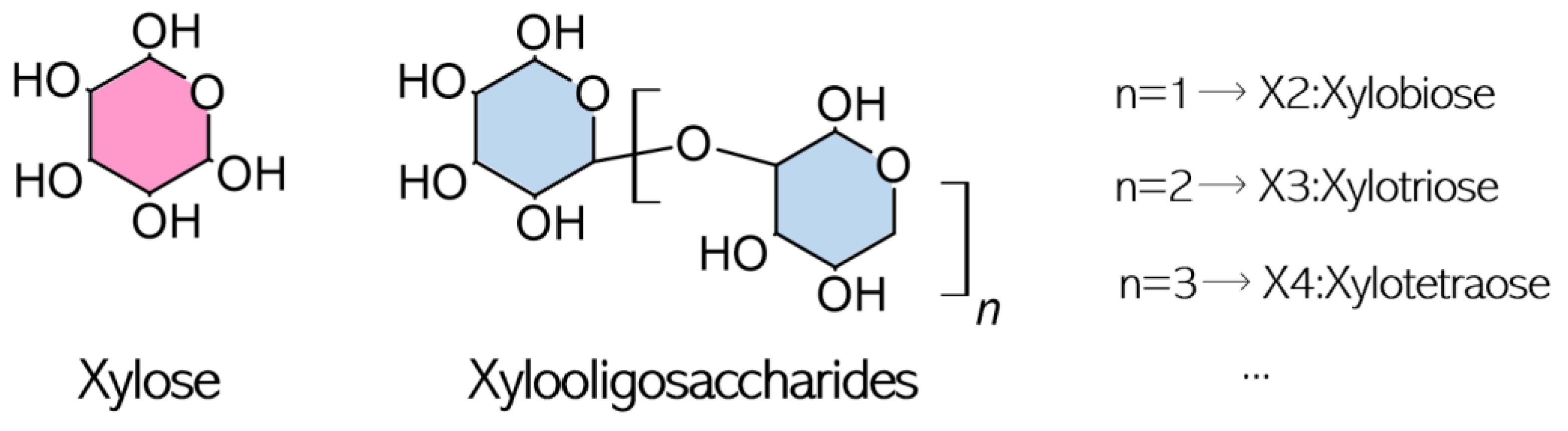
Manicaedi, T. et al. Foods, 2023.
Figure 1. XOS Main Structure.
Services at MtoZ Biolabs
Based on advanced technologies and analytical platforms, MtoZ Biolabs has launched the xylooligosaccharide analysis service which provides precise qualitative and quantitative analysis of xylooligosaccharides in various samples. Through efficient separation and high-sensitivity detection, this service systematically analyzes the composition types, degree of polymerization (DP) distribution, and structural characteristics of xylooligosaccharides. It can also distinguish different substitution forms (such as acetylation or arabinose substitution), evaluate their purity and content, and provide reliable data support for plant polysaccharide research, biomass conversion, and functional oligosaccharide development. MtoZ Biolabs offers services including but not limited to the following:
1. Quantitative Analysis
Using precise chromatographic-mass spectrometric techniques, the relative and absolute contents of various xylooligosaccharides in samples are accurately determined, providing a solid data foundation for subsequent comparison and evaluation.
2. Purity Analysis
High-resolution separation techniques are applied to assess the purity of target xylooligosaccharides and identify potential impurities or coexisting oligosaccharide components.
3. Structural Characterization
By combining high-resolution mass spectrometry and chemical derivatization analysis, the backbone structure, substitution forms, and molecular conformational differences of xylooligosaccharides are elucidated.
4. Degree of Polymerization Distribution
The proportion and distribution characteristics of xylooligosaccharides with different degrees of polymerization (DP) are analyzed, revealing their structural complexity and functional relationships.
5. Stability Evaluation
The changes in content and structure of xylooligosaccharides under different temperatures, pH levels, and storage conditions are examined to evaluate their physicochemical stability.
6. Metabolic Analysis
Through integrated multi-omics analysis, the metabolic pathways and transformation characteristics of xylooligosaccharides in plant, microbial, or animal systems are explored.
Sample Submission Suggestions
1. Sample Types
A wide range of sample types is accepted, including plant extracts, fermentation broths, lignocellulose hydrolysates, microbial culture media, and purified xylooligosaccharide preparations. Liquid, powder, and lyophilized forms are all supported.
Note: Samples should be free from high salt, protein, or organic solvent residues to avoid interference with analytical accuracy.
2. Sample Storage
Samples should be sealed and protected from light. For short-term storage, keep at -20°C; for long-term preservation, store at -80°C. Avoid repeated freeze-thaw cycles to prevent oligosaccharide degradation.
3. Sample Transportation
Liquid samples are recommended to be shipped on dry ice using cold-chain logistics. Lyophilized samples can be sent at ambient temperature for short periods but must be protected from moisture, high temperatures, and light to ensure the stability of xylooligosaccharides.
Service Advantages
1. High-Sensitivity Detection Platform
Utilizing a high-resolution mass spectrometry platform, precise quantification and structural analysis of xylooligosaccharides can be achieved to ensure reliable results.
2. Professional Technical Team
A team of analytical experts with extensive experience in polysaccharide and metabolomics research ensures scientific rigor in experimental design and data interpretation.
3. Customized Analytical Solutions
Flexible and tailored analytical workflows are provided according to sample origin and research objectives to meet diverse needs.
4. Strict Quality Control System
Standard calibration and quality control monitoring are implemented throughout the entire process to guarantee accuracy and reproducibility of results.
Applications
1. Plant Cell Wall Research
The xylooligosaccharide analysis service can be used to study the formation and transformation of xylooligosaccharides during plant cell wall degradation, reconstruction, and lignocellulose utilization.
2. Biomass Conversion Research
By evaluating lignocellulose conversion efficiency under different pretreatment or enzymatic hydrolysis conditions, this service provides data support for bioenergy and biomaterial development.
3. Microbial Metabolism Research
The xylooligosaccharide analysis service can be applied to investigate the metabolic pathways and utilization mechanisms of xylooligosaccharides in microbial systems, revealing their role in carbon source metabolism.
4. Functional Oligosaccharide Development
By analyzing the structure, degree of polymerization, and bioactivity of xylooligosaccharides from various sources, this service provides a foundation for the development of novel functional oligosaccharide products.
FAQ
Q1: Can Xylooligosaccharide Analysis Distinguish Components with Different
A1: Yes. MtoZ Biolabs employs high-resolution HPLC-MS/MS technology to precisely separate and quantitatively analyze xylooligosaccharides with different degrees of polymerization (DP2–DP10) and provides detailed DP distribution profiles and relative abundance data.
Q2: Do Samples from Different Sources Require Different Pretreatment Methods?
A2: Yes. Since impurities vary across different matrices, MtoZ Biolabs customizes the sample pretreatment process according to sample type to ensure analytical sensitivity and data accuracy.
Q3: Can Other Oligosaccharides in the Sample Be Detected Simultaneously?
A3: Yes. The platform supports multi-component co-analysis, enabling simultaneous detection of xylooligosaccharides, mannan oligosaccharides, raffinose, and other oligosaccharides, providing comprehensive data for complex carbohydrate research.
How to order?




