






Why Was the Bait Protein Not Detected in AP-MS?
Introduction
Missing bait detection is one of the most confusing AP-MS outcomes. The LC-MS/MS report may list dozens of proteins, yet the bait protein itself is absent from the identification table. Teams then face an urgent question: did the enrichment fail, or did the bait simply evade MS detection while other proteins were recovered?
A missing bait in AP-MS results does not automatically mean the pull-down failed. It can reflect low bait recovery, tag or search issues, digestion problems, or reporting filters that hide the bait even when enrichment partially worked. This article explains why the bait protein may not be detected in AP-MS, how to separate enrichment failure from detection failure, and what to do before interpreting prey proteins as interactors.
What Missing Bait Detection Means in AP-MS
In AP-MS, bait detection serves two roles: it confirms that enrichment captured the intended protein, and it anchors interpretation of co-enriched prey proteins. When the bait is absent from the MS report, prey identifications become harder to trust as bait-specific interactors because background proteins, tag binders, and sticky contaminants may dominate the list.
Missing bait detection falls into two broad categories. Enrichment failure means too little bait was captured or eluted to support reliable interaction analysis. Detection failure means bait was present in the sample but was not identified by LC-MS/MS because of peptide recovery, search, or reporting limitations. The corrective path depends on which category applies: treating every missing bait as a failed experiment can lead to unnecessary repeats, while treating every prey list as valid despite missing bait can lead to false interaction claims.
Step 1. Confirm Whether the Bait Was Recovered Before MS
Start with enrichment evidence independent of the protein identification table. Check whether the bait is visible by western blot or an equivalent targeted detection method in the eluate or bead fraction when material is still available, and compare bait signal in the bait sample versus empty-tag or primary control arms. Review whether bait band intensity is weak, absent, or present only in the bead pellet rather than the eluate depending on the workflow used.
If the bait is not recovered by targeted detection, the problem is likely upstream of LC-MS/MS—focus on expression, capture chemistry, wash stringency, and elution before repeating MS alone. If the bait is recovered by targeted detection but absent from MS, the problem is more likely digestion, peptide ionization, database searching, or reporting thresholds. This step prevents misdiagnosing an enrichment problem as an MS problem and vice versa.
Step 2. Check Bait Expression and Construct Integrity
Low or absent bait expression is a leading cause of missing bait detection. Confirm that the tagged construct is expressed in the intended cell line or expression system, verify induction conditions if the bait is under inducible control, and check for construct truncation, frame issues, or clonal drift in stable lines. Compare expression level across replicates, since one replicate with no bait signal may reflect culture or induction failure rather than method failure.
If expression is low, prey identifications may come largely from background rather than bait-centered enrichment even when a few peptides appear in the MS data. Functional or localization checks before AP-MS can prevent spending MS resources on poorly expressed baits.
Step 3. Review Tag Design and Capture Compatibility
Tag and capture design strongly affect bait recovery and MS detectability. Confirm that the affinity tag matches the resin or antibody used for purification, and consider whether tag position blocks accessibility to the resin or places the tag in a region with poor peptide coverage after digestion. For antibody capture AP-MS, verify that the epitope is accessible under lysis conditions and not masked by complex formation or post-translational modifications.
For tagged baits, confirm that empty-tag controls were processed in parallel. If the control shows similar prey profiles while bait is missing, tag-system background may dominate the dataset. Tag chemistry can support enrichment while still producing few observable bait peptides if the tagged region yields limited tryptic peptides or poorly ionizing sequences.
Step 4. Evaluate Lysis, Wash, and Elution Conditions
Harsh or incompatible purification conditions can remove the bait while leaving background proteins. Review detergent strength and salt conditions relative to bait solubility and complex stability, consider whether wash stringency was too high for bait retention even if background proteins remain, and check whether elution method released the bait effectively from the resin or antibody support. Compare handling between bait and control arms, since asymmetric processing can make bait recovery look unstable across replicates.
If only weak or transient partners are expected, overly stringent washing can leave little bait material for MS even when partial enrichment occurred. Adjusting lysis or wash conditions may be necessary before repeating the full AP-MS workflow.
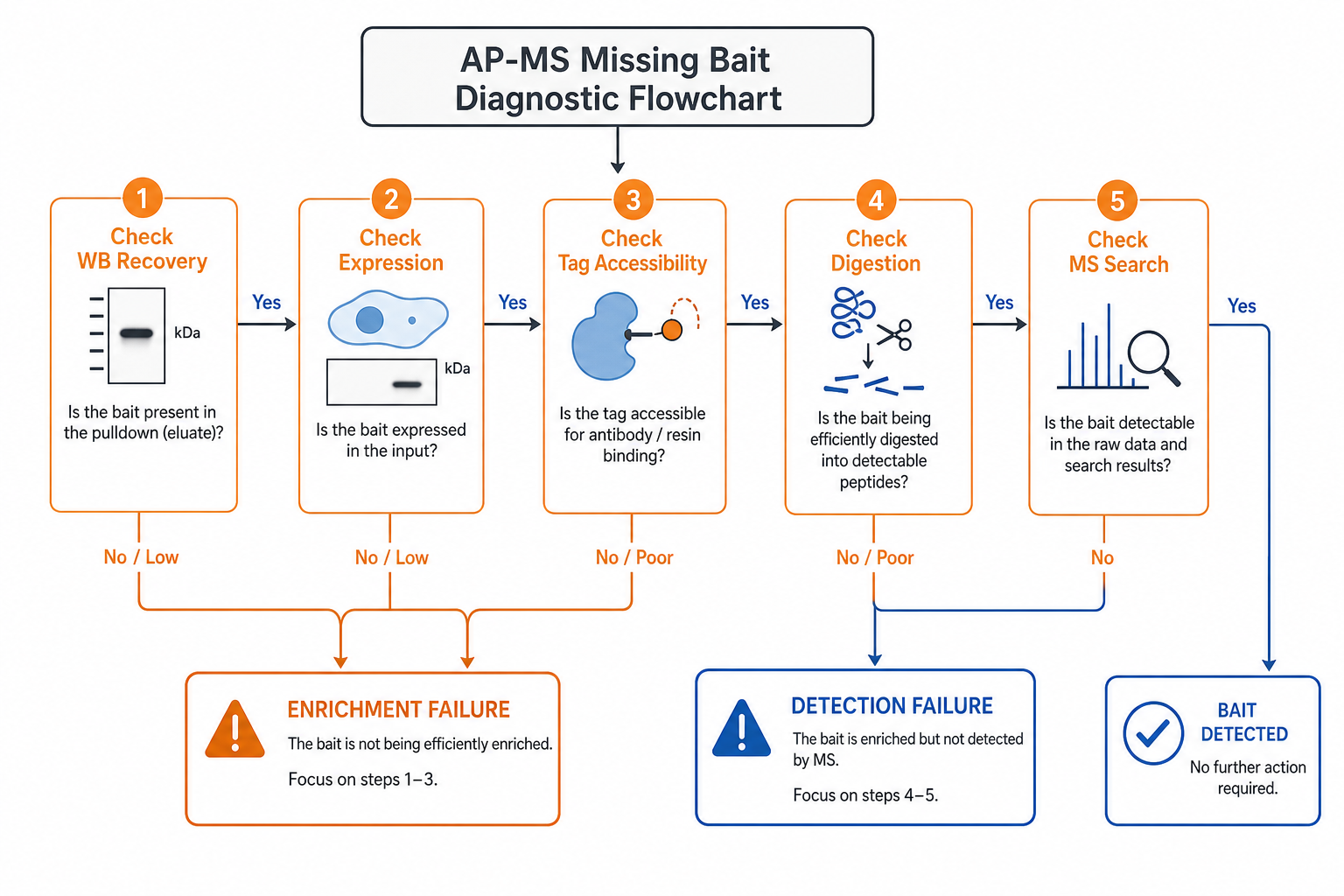
Figure 1. Determine whether the bait was recovered before MS, then investigate expression, tag design, purification conditions, digestion, and search/reporting factors.
Step 5. Investigate Digestion and Peptide Recovery
Bait recovery on a gel does not guarantee bait peptides will be detected by LC-MS/MS. Review whether digestion was complete and matched across bait and control samples, consider whether the bait sequence has few tryptic sites, large excluded regions, or modifications that reduce peptide detection, and check whether sample cleanup removed bait peptides disproportionately through loss during handling or incompatible buffer conditions.
On-bead and in-solution digestion strategies can differ in bait peptide recovery even when total protein recovery looks similar. If targeted detection shows bait protein but no bait peptides appear after digestion, revising digestion or cleanup may solve the problem without changing the enrichment chemistry.
Step 6. Review MS Identification and Reporting Limits
Sometimes bait is present but filtered out of the reported protein list. Search parameters may exclude proteins supported by too few peptides for the project threshold, shared peptide ambiguity can assign peptides to homologs or isoforms rather than the bait entry expected by the researcher, and contaminant filters or exclusion lists may remove proteins mistakenly flagged as laboratory background even when some bait peptides were observed. Low-input samples may yield bait peptides below the reporting cutoff while more abundant contaminants still pass.
Ask whether raw peptide evidence exists for the bait even if the protein was not included in the final filtered table—that distinction changes the next step.
Common Causes of Missing Bait Detection
The table links common causes to the most useful response.
|
Likely cause |
Clue |
First response |
|---|---|---|
|
Low bait expression |
Weak or absent WB signal |
Fix expression or induction before repeat |
|
Failed capture |
No bait in eluate or beads |
Review tag, antibody, and lysis compatibility |
|
Harsh washing |
WB shows bait loss across washes |
Reduce wash stringency and repeat pilot |
|
Tag peptide poor coverage |
Enriched bait visible but no bait peptides |
Adjust digestion or search strategy |
|
Search or reporting filter |
Raw bait peptides present but filtered out |
Review identification thresholds |
|
Empty or failed replicate |
One sample unlike others |
Repeat biological replicate |
Use the table as a diagnostic guide rather than a substitute for sample-level QC when material remains available.
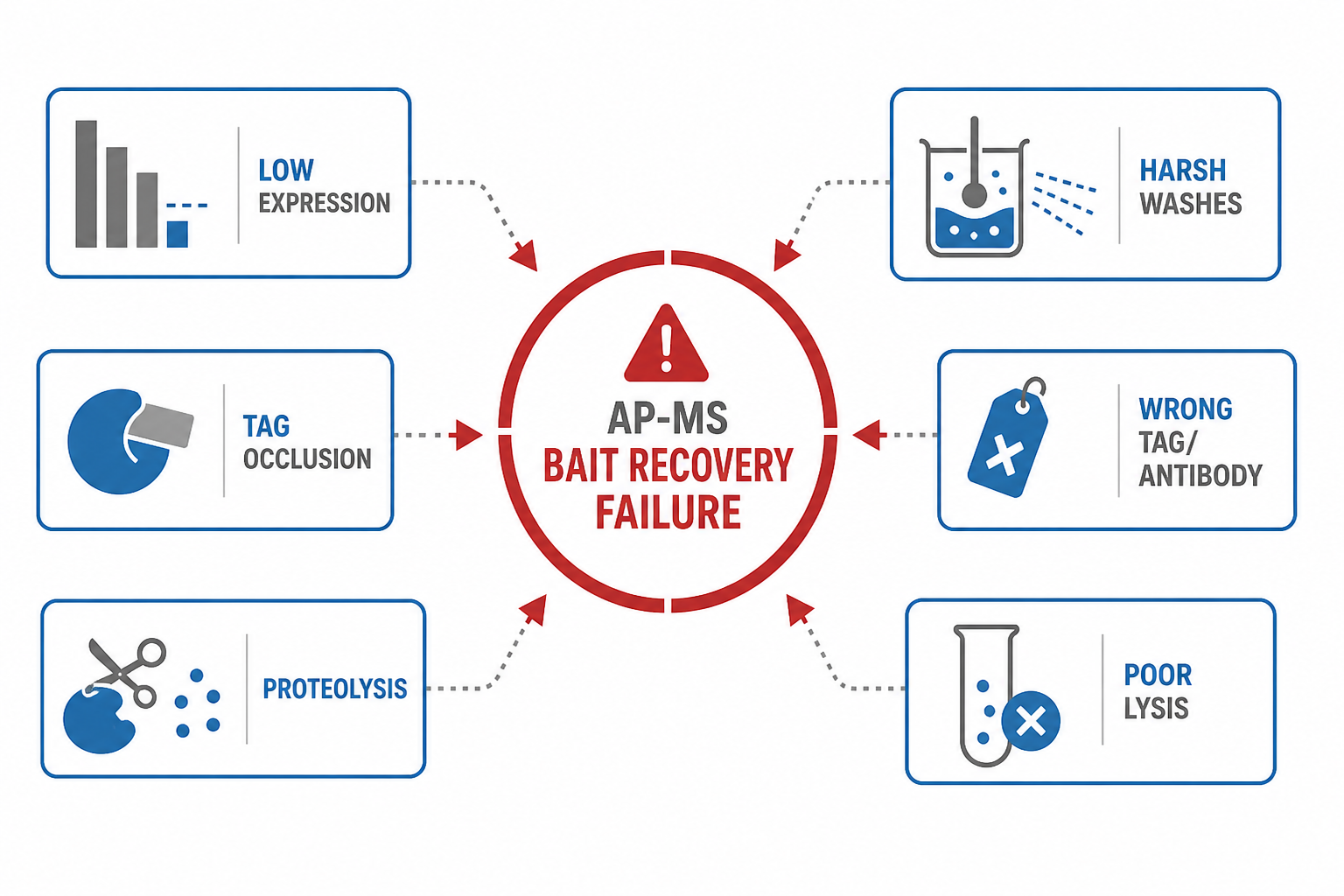
Figure 2. Missing bait detection can arise from enrichment failure, digestion issues, or MS identification and reporting limits.
How Missing Bait Affects Prey Interpretation
Prey proteins should not be treated as high-confidence interactors when bait recovery is unverified. Without bait evidence, prey identifications may represent tag binders, bead contaminants, or abundant lysate proteins that survived washing. Comparative claims between mutant or treatment arms become unreliable if bait recovery differed between arms but was not monitored.
Control subtraction still helps, but its value decreases when the bait arm itself lacks support for successful enrichment. The appropriate response is often to pause validation of prey candidates until bait recovery is confirmed by targeted detection or a repeated enrichment with corrected conditions.
Corrective Strategies by Diagnosis
The response should follow the diagnosis. If enrichment failed, revise expression, tag design, lysis, capture reagent, wash stringency, or elution before repeating LC-MS/MS. If enrichment succeeded but MS missed the bait, revise digestion, cleanup, acquisition depth, or search and reporting thresholds while preserving matched control processing.
If bait recovery is consistently low but reproducible, treat the dataset as low-confidence discovery and avoid strong interaction claims until recovery improves. If only one replicate lacks bait, repeat the biological sample rather than overinterpreting the remaining replicates. If prey candidates are prioritized despite missing bait, require reciprocal validation that also confirms bait enrichment before mechanism claims.
Affinity Purification-Mass Spectrometry Service
Pull Down based Protein Analysis Service with Mass Spectrometry
Related Services
Next Step
Affinity Purification-Mass Spectrometry Service
Request review of bait recovery, control design, and repeat strategy when bait is missing from AP-MS results.
Complementary
Co-Immunoprecipitation Protein Interaction Analysis Service
Use targeted co-enrichment checks to confirm bait recovery before validating prey candidates from a failed or ambiguous AP-MS run.
Alternative
Protein Identification Service
Use when the immediate need is to verify bait presence in enriched material before repeating a full interaction analysis workflow.
What to Send for a Missing-Bait Review
A useful troubleshooting submission should include more than the final protein list. Provide bait construct details including tag, sequence context, and expression system; state whether targeted bait detection was attempted and what it showed; list control arms and whether they were processed in parallel; describe lysis, wash, and elution conditions at a workflow level; share whether raw bait peptides were observed even if the bait protein was filtered from the report; and identify which replicates lack bait signal and whether the issue is reproducible.
MtoZ Biolabs can use this information to distinguish enrichment failure from MS detection limits and recommend the most efficient repeat strategy.
Frequently Asked Questions
1. Can AP-MS results be useful if the bait protein is not detected?
Sometimes exploratory prey lists can be reviewed cautiously, but bait-specific interaction claims should not be made until bait recovery is confirmed.
2. Does missing bait always mean the pull-down failed?
No. Bait may be enriched by targeted detection yet missed in LC-MS/MS because of digestion, peptide coverage, or reporting thresholds.
3. Should I repeat LC-MS/MS or the entire enrichment?
If targeted detection shows no bait recovery, repeat enrichment. If bait is recovered but not identified by MS, investigate digestion and search parameters first.
4. Can empty-tag controls help diagnose missing bait?
Yes. If controls and bait samples both lack bait but contain similar background proteins, the problem may be expression, capture, or tag-system background rather than prey biology.
5. What is the most common cause of missing bait detection?
Low bait expression and incompatible capture or wash conditions are among the most common causes, but MS reporting limits also occur when enrichment partially succeeds.
Conclusion
A missing bait protein in AP-MS results requires diagnosis before prey proteins are treated as interactors. The key question is whether enrichment failed or the bait escaped MS detection despite partial recovery—expression, tag design, purification conditions, digestion, and reporting thresholds all belong in that review.
Strong AP-MS interpretation depends on bait recovery evidence matched to appropriate controls. When bait is absent, the safest path is to confirm recovery by independent detection, correct the most likely failure point, and delay validation of prey candidates until the enrichment step is trustworthy. Researchers troubleshooting missing bait in AP-MS can review the Affinity Purification-Mass Spectrometry Service page or contact MtoZ Biolabs with recovery data, control details, and replicate information for technical guidance.
How to order?




