






Why an Antibody That Works in Western Blot May Fail in IP-MS
If a western blot antibody detects your target cleanly but IP-MS returns weak bait recovery, crowded background, or uninterpretable partner lists, the failure is not always random—and it is not always the mass spectrometer. The first troubleshooting step is to separate antibody performance from lysis, bead, wash, input, and MS issues before ordering a replacement reagent.
A western blot success only shows that the antibody recognizes the target after denaturation on membrane. IP-MS requires native or native-like capture on beads, survival through washes, and enrichment quality that remains interpretable after digestion and LC-MS/MS. When those layers fail, teams need a structured way to decide whether to optimize the current IP, switch to an antibody validated for IP-MS, or change to AP-MS or pull-down-MS. Share the failure pattern, target protein, and current reagent with MtoZ Biolabs while troubleshooting is still active.
Read the Failure Pattern Before Changing Reagents
Start with what actually failed, not with what the catalog label promised.
|
What you observe |
Often points to |
First checks before blaming MS alone |
|---|---|---|
|
Bait absent or very weak in IP-MS output |
Capture failure, low input, or wrong epitope context |
Confirm bait in input lysate; review IP western if available; compare antibody amount and incubation time |
|
Bait present but partner list is mostly sticky proteins |
Background enrichment or wash mismatch |
Review IgG, bead-only, or matrix-matched negative controls; compare wash stringency across replicates |
|
Classical IP western shows bait, MS shows little bait |
Elution, digestion, or MS sensitivity gap |
Confirm bait peptides in IP eluate; review sample prep after IP |
|
Same antibody works in WB but not in IP |
Application mismatch |
Review whether reagent is IP-capable or IP-MS validated |
|
Failure only after condition change |
Epitope accessibility or bait solubility shift |
Compare resting versus stimulated lysates; review lysis buffer and inhibitor use |
|
All samples fail similarly |
Workflow or bead chemistry issue |
Review bead type, host compatibility, and lysis batch consistency |
The table is a triage guide. One weak replicate may reflect handling. Repeated bait loss across replicates with the same western blot–grade antibody often points to reagent fit.
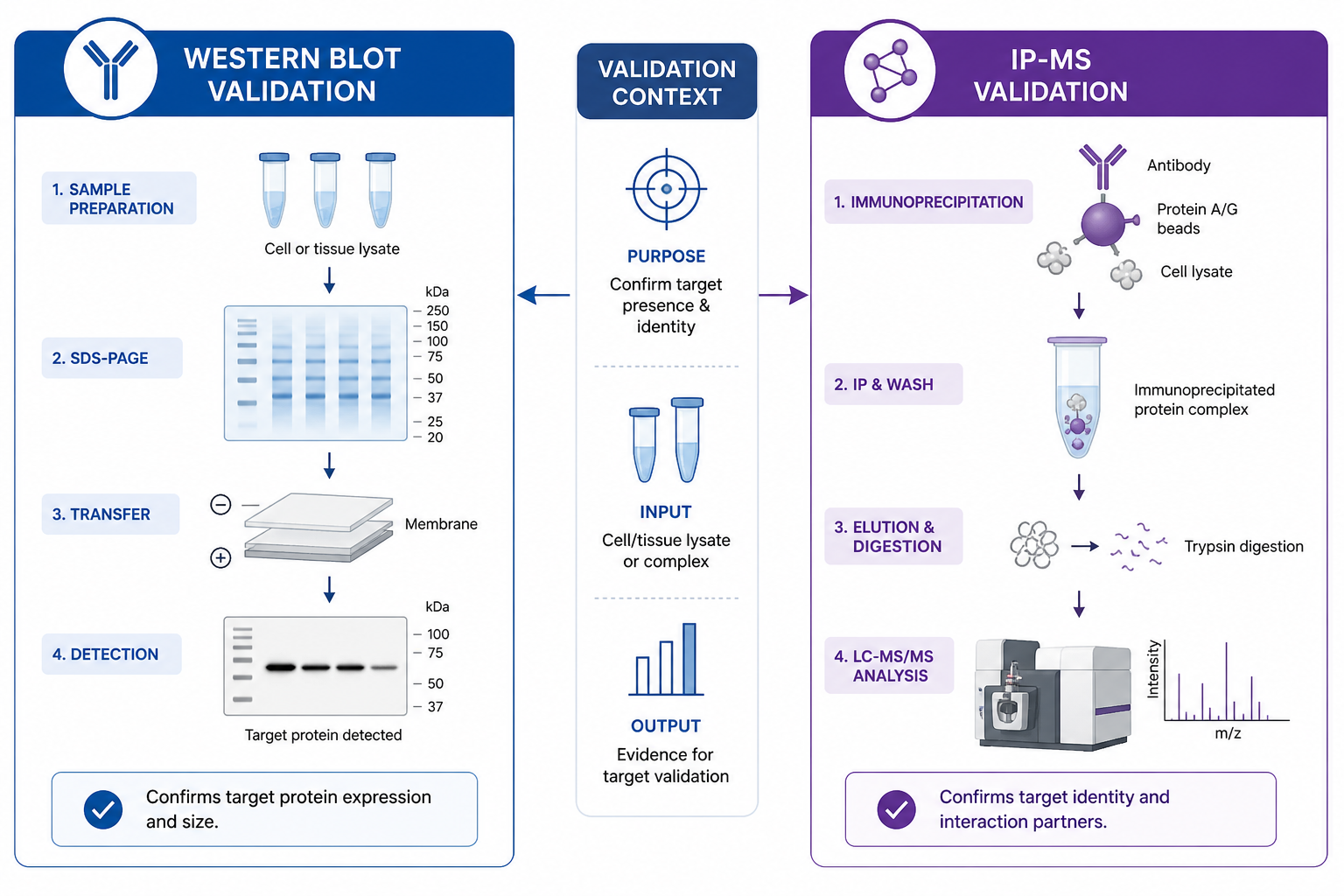
Figure 1. Western blot and IP-MS test antibody performance under different conditions; failure in one does not diagnose the other.
How to Tell Whether the Antibody Is the Bottleneck
Use the checks below to decide whether the current antibody is the likely problem.
Bait is visible by western in input but not in the IP eluate. Capture is the bottleneck. A western blot–validated antibody may bind denatured protein yet fail to immunoprecipitate native bait efficiently.
Negative controls resemble the bait IP in MS background. If IgG IP, bead-only, or another appropriate negative control produces a similar sticky-protein profile, background control design may need review—but weak bait-specific capture can also leave only nonspecific binders in the eluate.
Pilot IP with increased antibody input does not improve bait recovery. Suggestive of epitope, format, or compatibility limits rather than simple under-loading.
A different antibody against the same target performs better in parallel IP. Stronger evidence that the original reagent is not validated for the current IP-MS matrix.
Tagged AP-MS or orthogonal pull-down recovers bait when the antibody IP does not. Suggests the target is present and the interaction question may still be viable through another capture route.
If bait recovery is robust and only partner ranking looks noisy, troubleshooting may belong in control design, replicate structure, or MS analysis rather than immediate antibody replacement.
When to Optimize the Current Antibody vs Switch to an IP-MS Validated Antibody
Not every failed IP-MS run requires a new catalog SKU immediately.
Try optimization first when the antibody is documented for IP use, bait appears faintly in IP, and only one variable such as amount, incubation time, or wash salt has been tested. Adjust lysis stringency, antibody input, bead type, and elution conditions while keeping replicate controls matched.
Consider switching to an IP-MS validated antibody when bait recovery stays poor after reasonable IP optimization, the project requires endogenous Co-IP-MS discovery, and a validated alternative exists for the target and species. Labels such as IP-MS validated antibody, antibody validated by IP-MS, or antibody validated for IP-MS should be read as enrichment evidence for MS workflows, not as marketing overlap with western blot.
Consider changing workflow when no suitable IP-MS validated reagent exists, tagging is acceptable, or the question is direct binding with a recombinant bait. AP-MS and pull-down-MS remove dependence on the failing western blot antibody but change the experimental claim.
|
Situation |
Practical next step |
|---|---|
|
WB strong, IP western weak or absent |
Treat as capture failure; review IP-MS validated alternatives |
|
IP western OK, MS bait weak |
Review elution, digestion, and peptide detectability |
|
Bait OK, background dominates MS |
Tighten controls and washes before switching antibody |
|
Endogenous IP failing, tagging feasible |
Compare AP-MS route |
|
Direct binding question, recombinant bait available |
Compare pull-down-MS route |
Use the row that matches your observed pattern, then confirm with input and control data before reordering reagents.
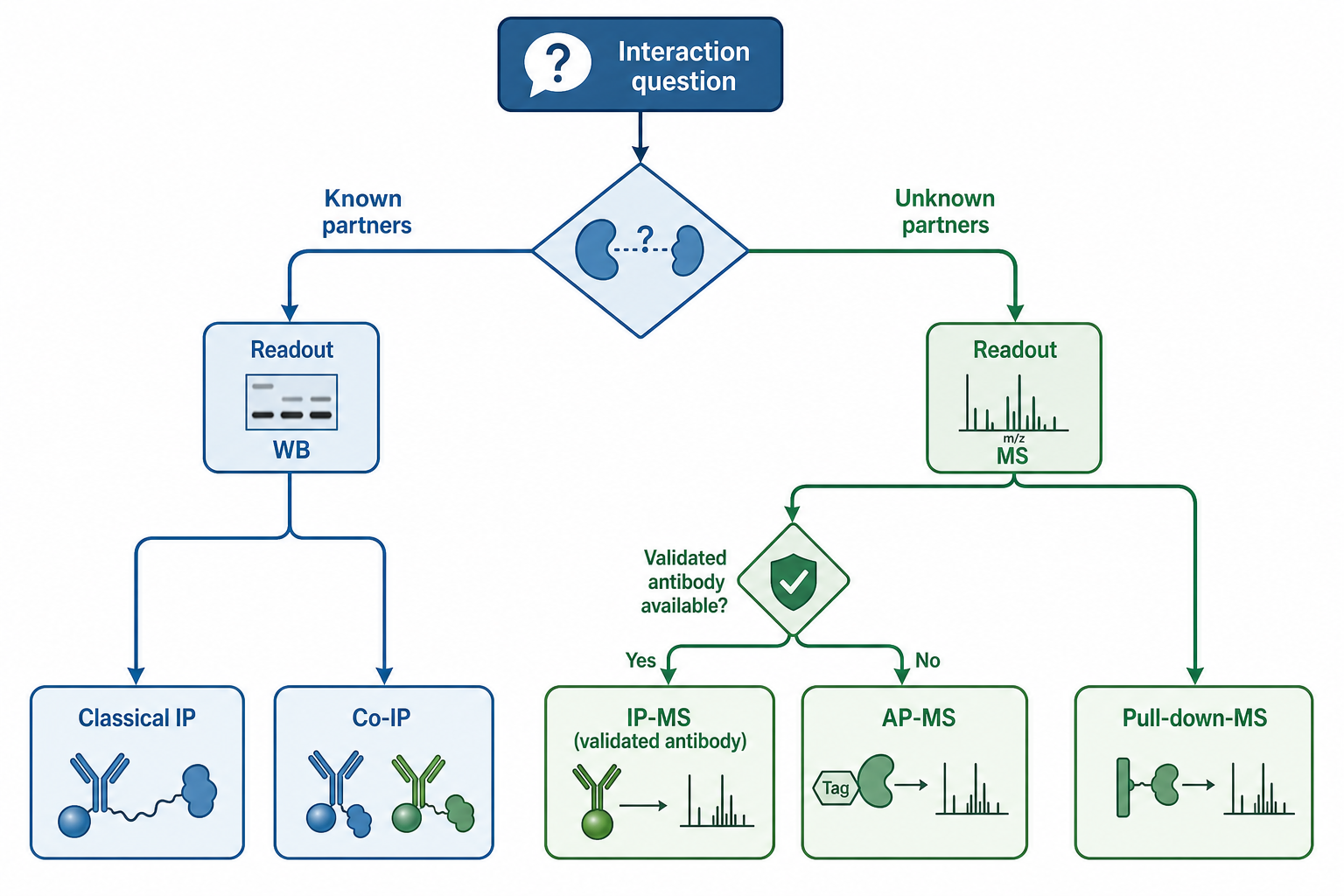
Figure 2. Use observed failure pattern to decide whether to optimize IP conditions, switch to an IP-MS validated antibody, or change capture chemistry.
Common Reasons a Western Blot Antibody Underperforms in IP-MS
Understanding why the mismatch happens helps avoid repeating the same purchase decision.
Epitope context differs. Western blot favors linear epitopes after SDS-PAGE. IP requires binding in lysate, often while the protein is folded or in complex.
Binding strength on beads may be insufficient. Detection on membrane does not prove stable capture through wash steps.
Background becomes searchable in MS. Minor nonspecific bands on a blot can expand into long sticky-protein lists after LC-MS/MS.
Format or host mismatch. Bead chemistry, isotype, and host species pairing can block efficient coupling or increase background even when western data looked acceptable.
Modified or low-abundance bait states. A reagent validated in one matrix may under-recover a phosphorylated, low-abundance, or isoform-shifted bait in your sample.
These are application-validation gaps, not instrument failures. Replacing the antibody with one validated for IP-MS addresses one major failure class—but only when capture, not digestion or control design, is the limiting step.
What to Document Before Requesting a Replacement Antibody
Capture the minimum evidence set before reordering:
- Target name, species, and sample type
- Catalog antibody used and stated application claims
- Whether bait is seen in input and in IP by western or prior MS
- Negative controls run, such as IgG IP or bead-only
- Wash conditions, antibody amount, and bead type
- Whether the goal remains endogenous Co-IP-MS or can move to AP-MS or pull-down-MS
That record helps distinguish a true reagent mismatch from a one-off handling issue and speeds review of IP-MS validated alternatives in Target Protein Antibodies or category listings.
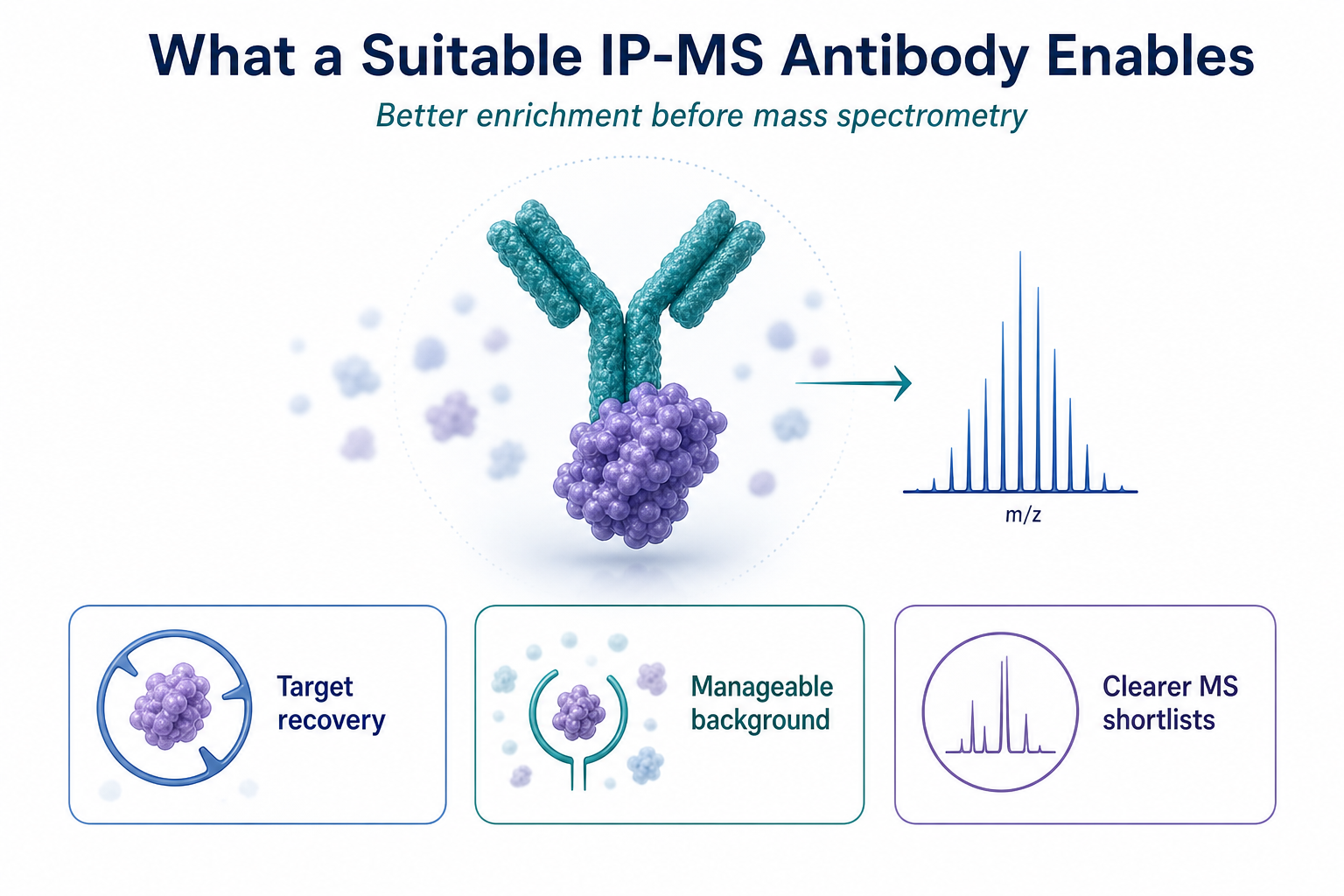
Figure 3. The right reagent choice affects bait recovery, background level, and whether MS output supports partner ranking.
MtoZ Biolabs can review failure patterns, current reagent evidence, and whether Co-IP-MS, AP-MS, or pull-down-MS is the better next step.
Related Products
Co-Immunoprecipitation (Co-IP) Kit
Related Services
IP-MS Protein Interactomics Analysis Service
Co Immunoprecipitation (Co-IP) Service
Affinity Purification-Mass Spectrometry Service
Frequently Asked Questions
1. Does western blot success mean the antibody should work in IP-MS?
No. Western blot tests detection after denaturation. IP-MS requires immunoprecipitation performance with MS-compatible enrichment quality.
2. How do I know if I should switch to an IP-MS validated antibody?
Consider switching when bait recovery stays poor after reasonable IP optimization, endogenous Co-IP-MS is still required, and a validated alternative exists for your target and species.
3. Should I change the antibody before reviewing controls and washes?
Review failure pattern first. Background-dominated lists and missing bait point to different next steps. Controls and wash conditions should be checked before assuming MS is the only problem.
4. Is IgG control failure enough to prove the antibody is bad?
IgG IP is one useful negative control, not the only one. Compare bait recovery, negative controls, and input together before concluding the antibody is the bottleneck.
5. What if no IP-MS validated antibody exists for my target?
Consider AP-MS if tagging is acceptable, pull-down-MS for recombinant bait binding tests, or pilot IP optimization with the closest validated reagent while documenting bait recovery carefully.
6. What information helps troubleshoot fastest?
Target identity, sample type, observed failure pattern, current antibody catalog data, control results, and whether endogenous IP-MS remains required.
Conclusion
A western blot antibody can fail in IP-MS because the two applications test different performance under different conditions. After a failed run, read the failure pattern first, determine whether bait capture or background is the bottleneck, optimize IP conditions when appropriate, and switch to an antibody validated for IP-MS when capture remains inadequate for the discovery goal.
When antibody-centered IP-MS is no longer viable, AP-MS or pull-down-MS may still support the interaction question through a different capture route. Contact MtoZ Biolabs to review troubleshooting evidence and align the next reagent or service step with the observed failure pattern.
How to order?




