






Which Controls Are Needed for an AP-MS Experiment?
Introduction
AP-MS specificity depends on controls more than on any single LC-MS/MS parameter. A bait purification can identify dozens of proteins, yet many may reflect bead binding, tag-associated background, antibody contamination, or abundant sticky lysate proteins rather than bait-specific associations. Without the right control arms processed in parallel, those proteins are easy to misread as interactors.
Choosing AP-MS controls is not a one-size-fits-all step. Tagged baits, antibody capture designs, treatment comparisons, and mutant panels each require different background models. This article explains which controls are needed for an AP-MS experiment, how each control type filters a different artifact class, and how to select a control set matched to bait format and study goal.
Why Controls Define AP-MS Specificity
AP-MS identifies proteins recovered with a bait after affinity enrichment and LC-MS/MS analysis, but identification alone does not mean a protein is a meaningful interactor. Controls provide the background model that separates bait-associated enrichment from proteins that appear because of the purification system, tag chemistry, antibody reagent, or sample handling.
Every control arm should be processed with the same lysis, wash, elution, digestion, and LC-MS/MS strategy as the bait arm it supports unless a protocol difference is part of the defined experimental question. Weak or missing controls are one of the most common reasons AP-MS datasets contain long protein lists that fail validation.
Core Control Types in AP-MS
Several control types appear repeatedly in AP-MS experiment design, and each filters a different class of background:
- Empty-tag or empty-vector controls express the affinity tag and purification handle without the bait protein; they help remove proteins that bind the tag, resin, or expression context rather than the bait sequence
- Bead-only or resin-only controls omit bait-specific capture elements and test support matrix binding; they are useful when sticky bead binders dominate the background
- Isotype or nonspecific antibody controls are required for antibody capture AP-MS and model antibody surface background and nonspecific immunoprecipitation
- Unrelated bait controls use a different tagged protein processed under matched conditions and help identify proteins that bind many tagged baits nonspecifically in the same system
- Vehicle or untreated controls support treatment comparisons and separate compound or stimulus effects from handling differences when bait recovery must be compared across arms
- Parental or untagged cell controls help when expression system background or cell-line artifacts contribute to the eluate
Most projects need one primary negative control plus any contrast-specific controls required by the biological comparison. The exact combination depends on bait format and study design.
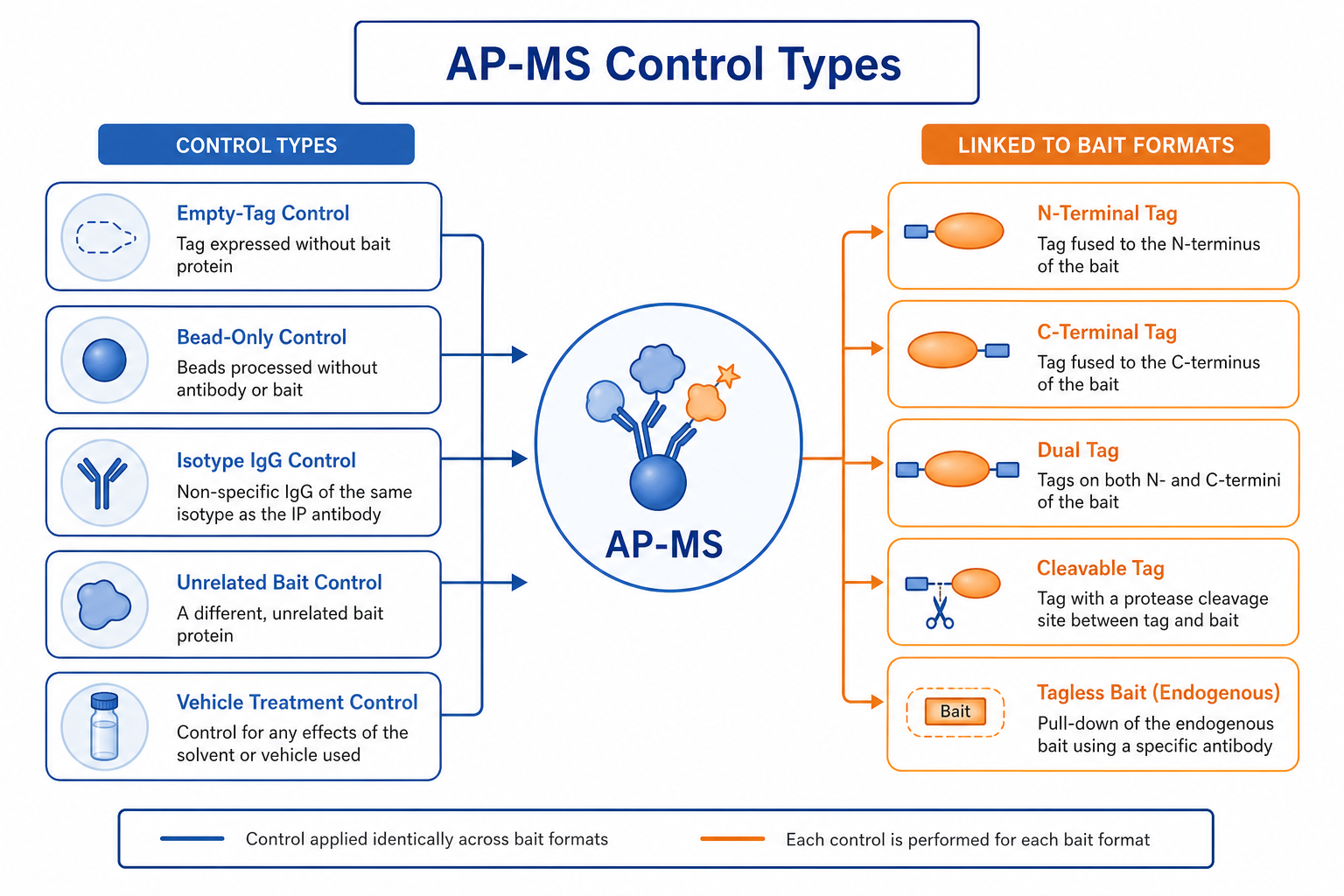
Figure 1. AP-MS experiments usually require one or more control arms matched to bait format and study contrast.
Which Controls Are Needed by Bait Format
Bait format is the first control selection rule. For epitope-tagged baits, an empty-tag line expressing the same tag and purification handle is the standard primary control; bead-only controls may be added when resin binders are a known concern. For stable cell lines with inducible tagged baits, include uninduced or empty-tag controls matched to induction conditions so that expression state does not differ between bait and control arms.
For antibody capture of endogenous or overexpressed bait, isotype matched IgG controls are essential—empty-tag controls do not replace isotype controls in this design. For immobilized recombinant bait pull-down, bait-free resin or buffer-only controls help model matrix binding in the in vitro setting. For comparative mutant or domain baits, each bait variant should have a matched control framework so prey changes are not confounded by different tag exposure or expression level.
If bait format and control type are mismatched, the resulting background model will not support reliable interaction filtering.
Which Controls Are Needed by Study Goal
Study goal determines whether additional controls are required beyond the primary negative control. For bait partner discovery, use bait plus empty-tag or format-appropriate primary control with biological replicates. For wild-type versus mutant bait comparison, include matched empty-tag controls for each bait background or a design that isolates mutant-specific prey changes against shared control distributions.
For drug or stimulus remodeling studies, include vehicle or untreated controls processed with the same timing and purification schedule as treated baits. For multi-bait pathway panels, consider unrelated bait controls to flag proteins that enrich with many baits in the same expression system. For pilot feasibility tests, at least one primary control arm remains necessary even if replicate number is limited—a bait-only pilot without controls can suggest technical feasibility but not specific interactors.
Study goal controls should be planned before sample generation because they define the comparisons available after LC-MS/MS.
Control Selection Table by AP-MS Design
|
AP-MS design |
Primary control usually required |
Additional controls to consider |
|---|---|---|
|
Tagged bait discovery |
Empty-tag or empty-vector |
Bead-only, unrelated bait |
|
Inducible tagged bait |
Uninduced or empty-tag matched to induction |
Parental line |
|
Antibody capture AP-MS |
Isotype or nonspecific IgG |
Bead-only if applicable |
|
Recombinant bait pull-down |
Bait-free resin |
Buffer-only |
|
Mutant bait comparison |
Matched empty-tag per background |
Wild-type bait plus mutant bait with shared handling |
|
Treatment contrast |
Vehicle or untreated |
Empty-tag in each treatment context |
The table is a starting point. Final control selection should match the bait construct and the interaction claim the project must support.
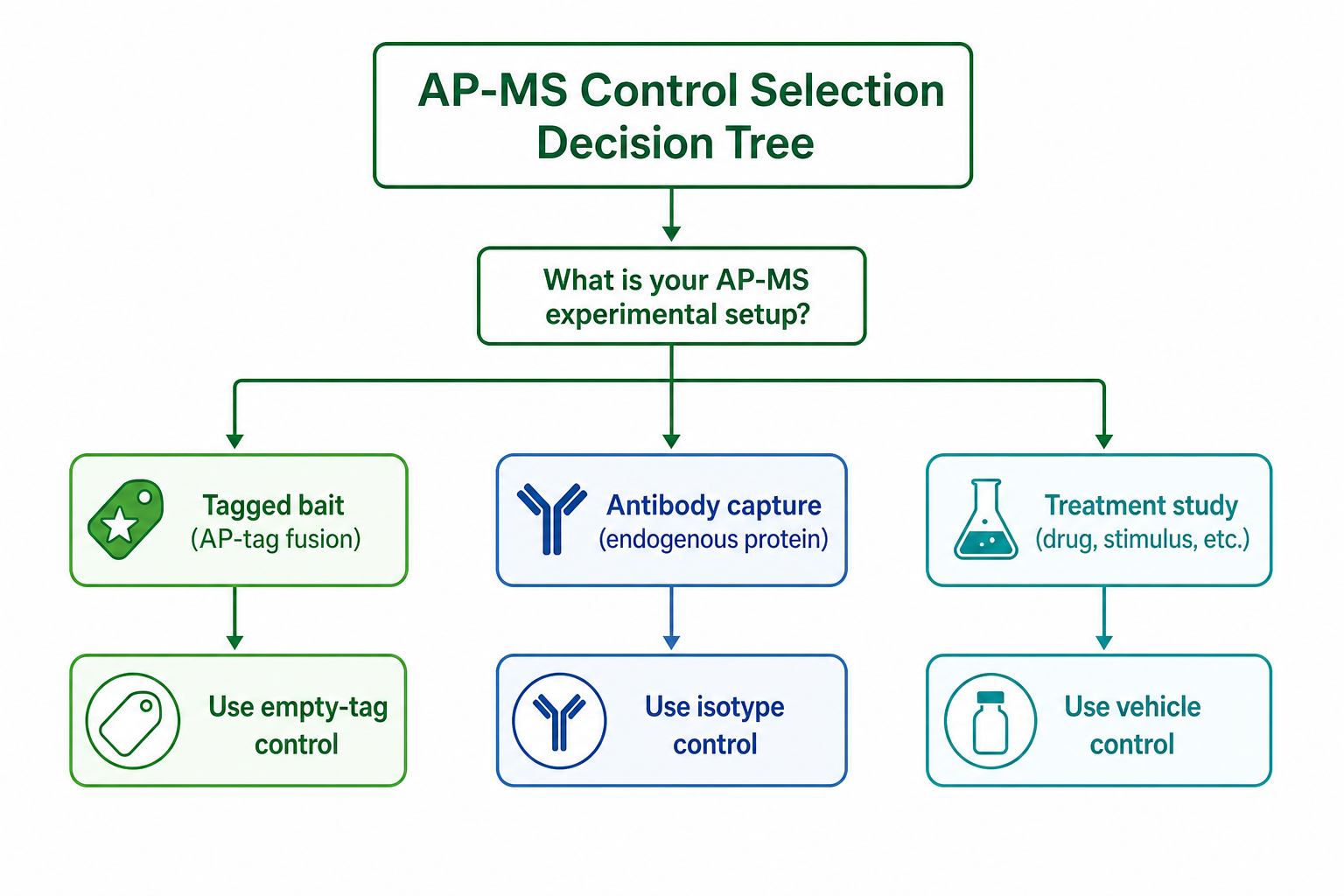
Figure 2. Control selection follows bait format first, then the biological contrast the AP-MS experiment must test.
Matched Processing Rules for Every Control Arm
Control value depends on matched handling. Controls must use the same cell background or expression system whenever possible, and they must share lysis buffer, wash stringency, elution method, and digestion workflow with the bait arm they filter. Controls should be collected with the same replicate logic as bait samples—a bait with three biological replicates and a control with one weakens specificity ranking.
Control and bait samples should be labeled before enrichment rather than after elution when many tubes are processed together. If a control arm is processed on a different day with different bead lots or wash volumes, its value as a background model decreases sharply. Matched processing is not optional; it is part of the control design itself.
Controls That Do Not Replace One Another
Teams sometimes assume one generic negative control is enough, but that is rarely true across design changes. An empty-tag control does not model isotype antibody background in IP-based AP-MS, and a bead-only control does not replace an empty-tag control when tag-associated proteins dominate the background. An unrelated bait control does not replace vehicle controls in treatment studies, and literature contaminant lists help interpret AP-MS data but do not replace project-specific bait and control purifications.
Functional mutants can strengthen interpretation, but they are contrast arms rather than substitutes for primary negative controls. Use the control type that matches the artifact class you need to remove.
Common Control Design Mistakes
Several control errors recur in AP-MS projects:
- Running bait samples without any parallel negative control
- Using parental cells without the tag when the bait arm uses a tagged line in a different background
- Comparing treated bait to untreated bait without a vehicle control processed in parallel
- Changing bead lots or wash protocols between bait and control arms
- Treating literature contaminant databases as if they replace empty-tag or isotype controls
- Including controls only in the first experiment of a panel and omitting them from later batches
These mistakes usually appear later as false interactors or unstable candidate ranking.
Affinity Purification-Mass Spectrometry Service
MS-Based Protein-Protein Interaction Analysis Service
Related Services
Next Step
Affinity Purification-Mass Spectrometry Service
Review full AP-MS project scope after the control set is defined for the current bait format.
Complementary
Co-Immunoprecipitation Protein Interaction Analysis Service
Use to validate AP-MS candidates after control-based filtering identifies a shortlist.
Alternative
IP-MS Protein Interactomics Analysis Service
Use when endogenous bait capture with antibody controls fits the project better than tagged AP-MS.
Minimum Control Checklist Before Sample Generation
Confirm the following before starting AP-MS enrichments:
- A primary negative control appropriate to the bait format is included
- Any treatment, mutant, or panel contrast has its own required control arm defined
- Control and bait arms share processing and replicate structure
- Sample labels identify control type and replicate number before enrichment
- The team knows which proteins or artifacts each control is intended to filter
- Validation targets are defined for candidates that survive control subtraction
MtoZ Biolabs can review bait format and proposed control arms to confirm that the planned AP-MS experiment can support specificity filtering after LC-MS/MS.
Frequently Asked Questions
1. Is an empty-tag control always required for AP-MS?
For tagged-bait AP-MS, an empty-tag or equivalent control is the standard primary negative control. Antibody capture designs require isotype controls instead.
2. Can I use a bead-only control instead of an empty-tag control?
Bead-only controls model resin binding but do not fully replace empty-tag controls when tag-associated proteins contribute to background.
3. Do treatment studies need more than one control type?
Yes. Treatment contrasts usually require vehicle or untreated controls in addition to the primary negative control used for bait specificity.
4. Are contaminant databases enough without experimental controls?
No. Contaminant lists help interpretation but do not replace matched bait and control purifications generated in the same experiment.
5. How many control replicates should an AP-MS experiment include?
Control replicates should match the replicate structure planned for bait arms whenever interaction ranking or comparative claims are required.
Conclusion
AP-MS experiments need controls matched to bait format and study goal, not a generic negative sample added late in the project. Empty-tag, bead-only, isotype, unrelated bait, and vehicle controls each filter different background sources, and comparative studies often require more than one control type to support the intended contrast.
The right control set makes LC-MS/MS output interpretable as bait-specific enrichment rather than purification noise. Researchers planning AP-MS can review the Affinity Purification-Mass Spectrometry Service page or contact MtoZ Biolabs with bait format, comparison arms, and proposed controls for experiment design review.
How to order?




