






What Is Antibody Glycosylation?
Introduction
Monoclonal antibodies and many immunoglobulin-based therapeutics are glycoproteins. Beyond the amino acid sequence encoded by the antibody gene, carbohydrate structures can be attached to specific sites on the heavy and, in some formats, light chains. These glycans are not decorative additions. They contribute to molecular heterogeneity and can influence stability, clearance, and Fc-mediated effector behavior. A researcher reviewing an IgG mass spectrum may see multiple glycoform peaks. A process development team may observe Fc glycan shifts after a cell culture change. A new program may need a clear definition of what antibody glycosylation means before characterization methods are selected.
Antibody glycosylation is the enzymatic attachment of oligosaccharide structures, or glycans, to defined sites on an immunoglobulin polypeptide. Unlike the primary antibody sequence, glycosylation is heterogeneous and strongly influenced by expression system, manufacturing conditions, and antibody format. For standard IgG molecules, the most widely studied glycosylation site is the conserved N-linked position at Asn297 in the Fc CH2 domain. Understanding what antibody glycosylation is provides the foundation for interpreting glycan profiling data, evaluating functional relevance, and planning analytical characterization.
This article defines antibody glycosylation, explains where it occurs on immunoglobulins, describes major glycan features, and outlines why glycosylation matters in antibody research and therapeutic development.
What Antibody Glycosylation Means
Antibody glycosylation refers to the covalent addition of carbohydrate structures to an immunoglobulin after translation. The process is post-translational and occurs inside the secretory pathway of expressing cells. Glycosyltransferases and glycosidases build, trim, and remodel glycans as the antibody moves through the endoplasmic reticulum and Golgi apparatus.
An antibody does not usually carry one fixed glycan structure at every glycosylation site. Instead, the same site may be occupied by different glycan variants across molecules in a sample. This produces a mixture of glycoforms rather than a single uniformly glycosylated species. Antibody glycosylation is therefore both a structural feature and a source of product heterogeneity.
For therapeutic monoclonal antibodies, glycosylation is commonly treated as a critical quality attribute because Fc-associated glycans can modulate effector function, pharmacokinetic behavior, and comparability between batches. In research settings, glycosylation helps explain why two antibody preparations with identical sequence may behave differently in stability, clearance, or Fc receptor interaction assays.
Where Glycosylation Occurs on Antibodies
The location of glycosylation on an antibody depends on its class, sequence, and engineered format.
The conserved Fc N-glycosylation site
For IgG monoclonal antibodies, the best-known glycosylation site is Asn297 on each heavy chain in the CH2 domain of the Fc region. This site lies within the Asn-X-Ser/Thr consensus motif required for N-linked glycosylation. Because IgG molecules contain two heavy chains, an intact IgG can carry two Fc N-glycans under normal occupancy conditions.
The Fc glycans sit near the interface involved in Fc receptor and complement component interaction. Variation in Fc glycan structure is therefore closely linked to effector function review in therapeutic antibody programs.
Additional N-linked sites
Some antibody formats contain extra N-linked glycosylation motifs introduced by sequence design or fusion architecture. Bispecific antibodies, Fc fusion proteins, and certain engineered IgG variants may glycosylate at positions beyond Asn297. When additional sites are present, glycoform heterogeneity increases and site-specific characterization becomes more important.
O-linked glycosylation on antibodies
Standard IgG monoclonal antibodies are dominated by Fc N-linked glycosylation. O-linked glycans, attached to serine or threonine residues, are less common on canonical IgG structures but may appear on antibody fragments, fusion constructs, or non-standard immunoglobulin formats depending on sequence context and expression system.
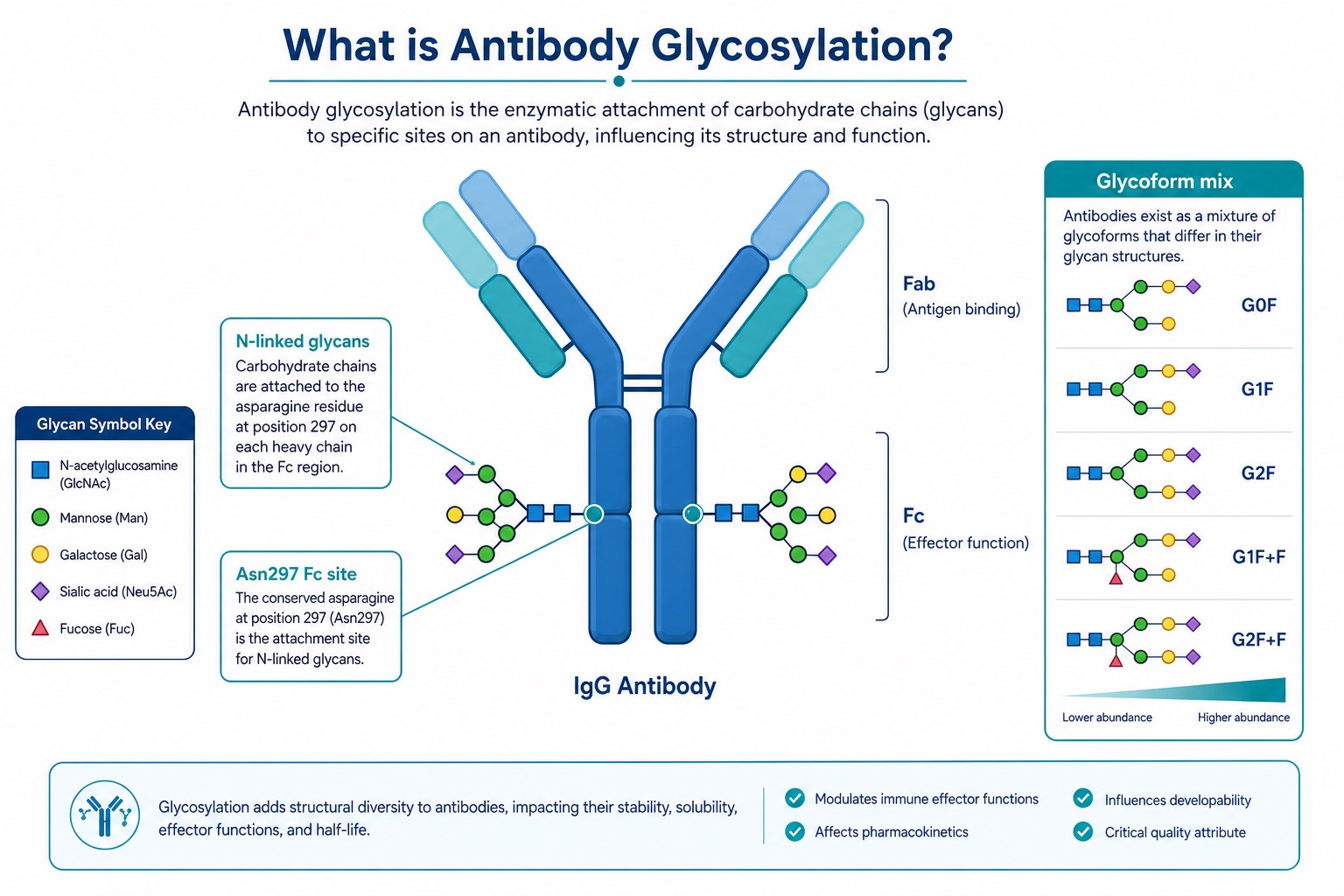
Figure 1. Antibody glycosylation most often refers to N-linked glycans on the Fc region, especially at Asn297, where glycoform heterogeneity is common.
Major Glycan Types and Structural Features on Antibodies
Antibody glycosylation is most often discussed in terms of N-linked glycan classes attached to the Fc site.
N-linked glycan classes
N-linked glycans on antibodies generally fall into high-mannose, hybrid, and complex categories. These classes differ in branching, terminal sugar composition, and processing history within the Golgi pathway. A mature IgG Fc glycan population often contains complex-type structures with variable galactose, fucose, and sialic acid content, along with smaller fractions of high-mannose or hybrid species depending on expression conditions.
Commonly discussed Fc glycan attributes
Several glycan features receive frequent attention because they can influence antibody behavior.
Core fucosylation refers to fucose attached to the innermost GlcNAc of the N-glycan core. On therapeutic IgG molecules, core fucose levels are often reviewed because they can affect Fc gamma receptor IIIa binding and antibody-dependent cellular cytotoxicity.
Galactosylation describes terminal galactose content on Fc glycans. Agalactosyl glycoforms are commonly observed and tracked during development and comparability review.
Sialylation refers to terminal sialic acid residues. Sialylated Fc glycans may be lower in abundance but can be relevant in certain functional contexts.
High-mannose glycans contain extended mannose structures with limited complex-type processing. Increased high-mannose content can influence clearance through mannose receptor pathways in some settings.
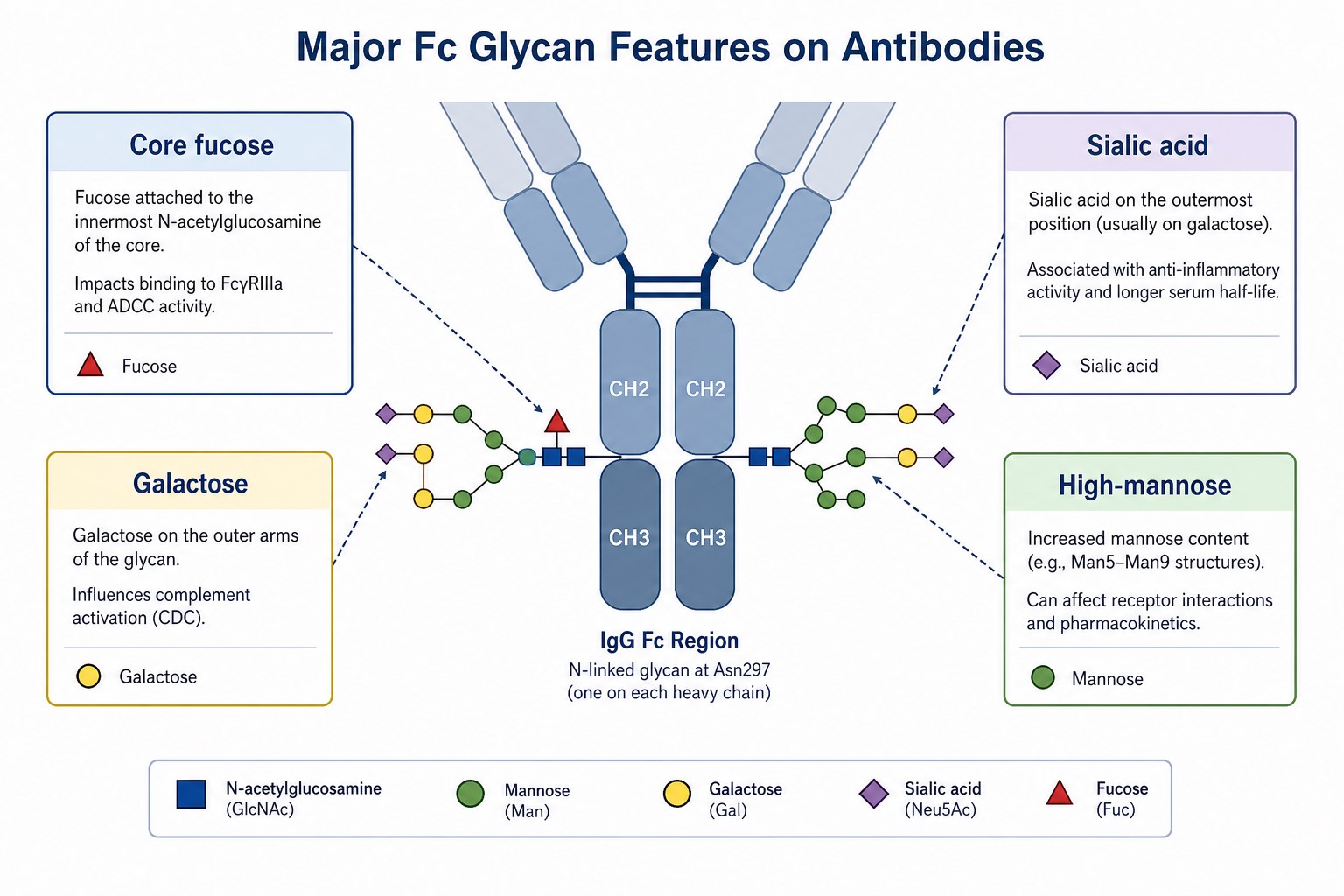
Figure 2. Antibody glycosylation is often described by major Fc glycan attributes such as core fucose, galactose, sialic acid, and high-mannose content.
Glycoform Heterogeneity on Antibodies
Glycoform heterogeneity means that a purified antibody sample contains a distribution of glycan structures rather than one identical glycan on every molecule. This is normal for antibodies produced in mammalian expression systems.
Heterogeneity can arise at three levels. At the site level, a glycosylation position may be partially occupied or unoccupied in a small fraction of molecules. At the structure level, the same site may carry different glycan compositions across the population. At the product level, multiple sites may each contribute their own glycan distributions, especially in engineered formats with more than one glycosylation motif.
Because of this heterogeneity, antibody glycosylation is reported as profiles and distributions. Terms such as major glycoforms, relative abundance, and site occupancy are used rather than describing a single universal glycan structure for the entire product.
Why Antibody Glycosylation Matters
Antibody glycosylation matters because carbohydrate structure can influence how an immunoglobulin behaves in biological systems and in biopharmaceutical quality review.
Fc glycans can modulate interactions with Fc receptors and complement components, affecting effector functions such as antibody-dependent cellular cytotoxicity and complement-dependent cytotoxicity. Glycosylation can also influence stability, aggregation tendency, and recognition by clearance receptors. In therapeutic development, glycan profile consistency supports batch reproducibility, comparability assessment, and control strategy design.
Antibody glycosylation does not determine function alone. Sequence, higher-order structure, formulation, and target biology all contribute to observed behavior. However, glycosylation provides an important layer of structural variation that teams must understand when interpreting functional, stability, and comparability data.
What Influences Antibody Glycosylation
Antibody glycosylation is not fixed by sequence alone. Several factors shape the glycan profile observed on a given antibody lot.
Expression system is a primary determinant. CHO cells, NS0 cells, HEK cells, and other mammalian platforms process glycans differently, producing distinct Fc glycan distributions on the same antibody sequence.
Cell culture conditions including media composition, feed strategy, pH, temperature, and culture duration can shift glycan processing before product quality changes appear in other assays.
Downstream handling such as purification, storage, buffer composition, and freeze-thaw history can affect the material analyzed, although major Fc glycan patterns are most strongly established during biosynthesis.
Antibody format also matters. Standard IgG molecules primarily present Fc N-glycosylation at Asn297, while fusion proteins, bispecifics, and glycoengineered variants may introduce additional glycosylation complexity.
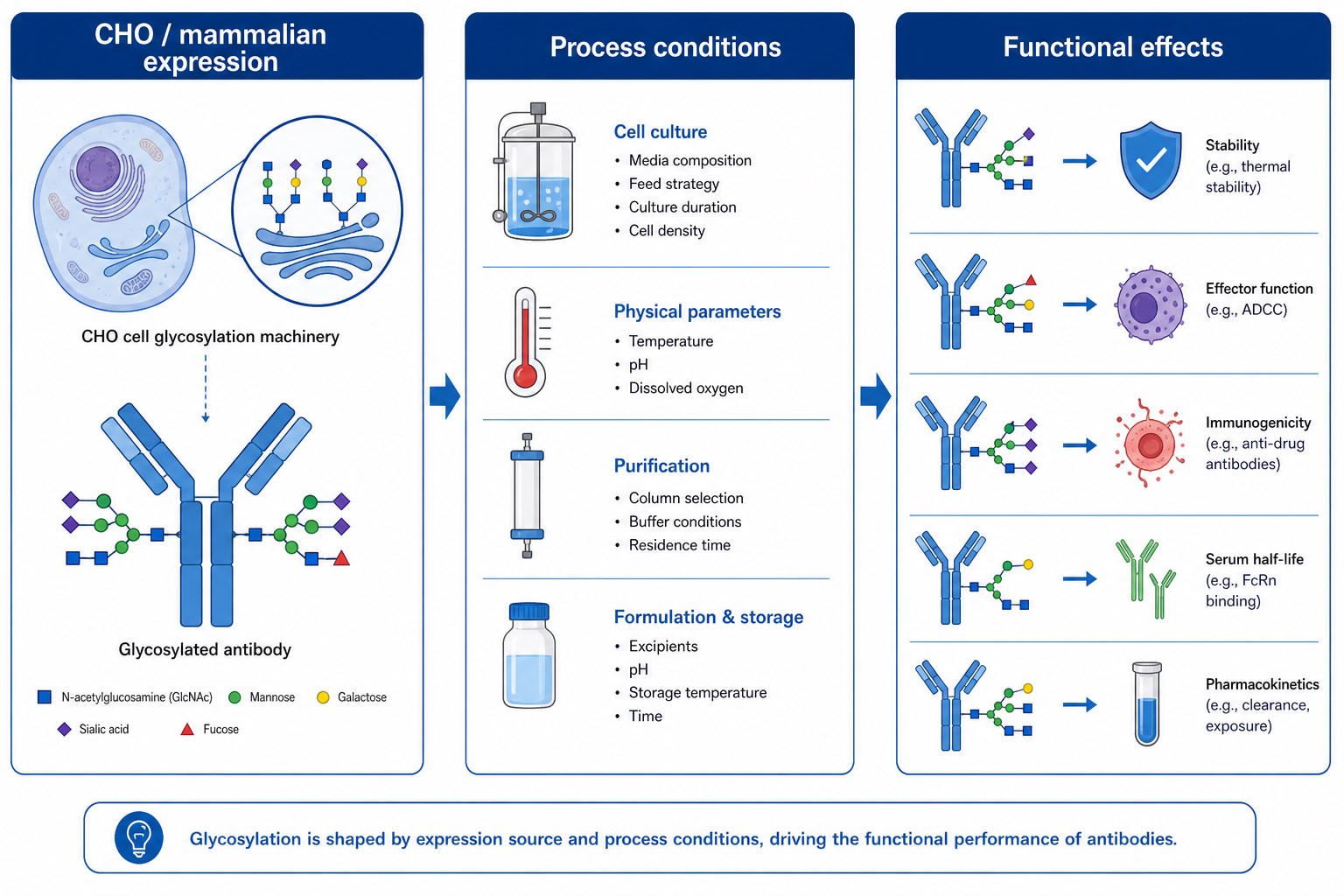
Figure 3. Antibody glycosylation is shaped by expression system and process conditions and can influence functional behavior through Fc glycan structure.
How Antibody Glycosylation Is Studied
Antibody glycosylation is characterized using analytical workflows that profile glycan structure, identify glycosylation sites, and compare glycoform distributions across samples. Common approaches include released N-glycan profiling, glycopeptide LC-MS/MS for site-specific assignment, and intact or subunit mass analysis for global glycoform screening.
The appropriate method depends on the question. Released glycan analysis describes glycan composition after cleavage from the antibody. Glycopeptide mapping links glycans to specific residues such as Asn297. Intact mass analysis provides a rapid view of overall glycoform heterogeneity. Deeper characterization programs often combine more than one approach when both composition and site linkage are required.
Researchers who understand what antibody glycosylation is can more clearly define whether they need compositional profiling, site mapping, occupancy review, or batch comparison support.
Related Services
Protein Glycosylation Analysis Service
Protein Drug Glycosylation Analysis Service
Glycosylation Site Analysis Service
Comprehensive Glycosylation Analysis Service
Teams new to antibody glycosylation can consult MtoZ Biolabs to review sample type, expression context, and the characterization depth best suited to the program stage.
Antibody Glycosylation vs General Protein Glycosylation
Antibody glycosylation shares the same basic biochemistry as glycosylation on other glycoproteins, but immunoglobulins have distinctive features that shape how glycosylation is discussed and measured.
|
Feature |
Antibody Glycosylation |
General Protein Glycosylation |
|---|---|---|
|
Dominant site on IgG |
Fc Asn297 N-glycosylation |
Variable by protein sequence |
|
Typical product context |
mAb, Fc fusion, bispecific |
Enzymes, hormones, fusion proteins |
|
Functional focus |
Fc effector function, clearance |
Protein-specific activity and stability |
|
Common heterogeneity pattern |
Fc glycoform distribution |
Multiple site-specific glycan profiles |
|
Standard review emphasis |
Fc glycan attributes and comparability |
Site mapping and product-specific CQAs |
For monoclonal antibodies, glycosylation discussion usually centers on the Fc region because that is where the most functionally reviewed N-glycans reside on standard IgG formats.
Frequently Asked Questions
1. What is antibody glycosylation?
Antibody glycosylation is the attachment of carbohydrate structures to specific sites on an immunoglobulin, most commonly N-linked glycans on the Fc region of IgG antibodies.
2. Where does glycosylation occur on IgG antibodies?
The conserved Asn297 site in the Fc CH2 domain is the primary N-glycosylation position on standard IgG monoclonal antibodies.
3. Are all antibody molecules in a sample glycosylated the same way?
No. Antibody samples usually contain glycoform mixtures, meaning the same glycosylation site may carry different glycan structures across molecules.
4. Does antibody glycosylation affect function?
Yes. Fc glycan structure can influence effector function, stability, clearance, and comparability, although sequence and other quality attributes also contribute to overall behavior.
5. What determines the glycan profile on an antibody?
Expression system, cell culture conditions, antibody format, and manufacturing process strongly influence the glycan profile observed on an antibody lot.
6. How is antibody glycosylation measured?
Antibody glycosylation is measured using approaches such as released glycan profiling, glycopeptide LC-MS/MS, and intact or subunit mass analysis depending on the characterization goal.
Conclusion
Antibody glycosylation is the post-translational addition of glycan structures to immunoglobulins, producing heterogeneous glycoform populations that can influence structural and functional properties. On standard IgG monoclonal antibodies, the Fc N-glycosylation site at Asn297 is the most important location for glycan review, although additional sites may exist in engineered formats.
Understanding what antibody glycosylation is helps teams interpret glycan profiles, evaluate process and expression effects, and plan appropriate analytical characterization. Glycosylation is not a fixed sequence feature but a dynamic quality attribute shaped by biology and manufacturing context. Researchers seeking to characterize antibody glycosylation can contact MtoZ Biolabs to review sample status and the analytical approach best matched to their antibody program.
How to order?




