



When multiple reaction monitoring (MRM, also called selected reaction monitoring, SRM) peaks are weak or missing, first compare the failure pattern, then select the fix path. Prefer transition reselection when neat standards respond but transition ratios are unstable or only one product ion appears. Prefer matrix and digestion review when standards work but study samples collapse. Prefer liquid chromatography (LC) and scheduling fixes when retention-time drift moves peptides outside scheduled windows or co-elution inflates background (Lange et al. 2008). Do not rerun the unchanged method as the first step. MRM still quantifies only a closed peptide list; absolute amount needs matched stable isotope-labeled standards (SIS), and persistent unit-resolution interference may favor parallel reaction monitoring (PRM) instead (Peterson et al. 2012).
Researchers who already have a closed peptide panel or a failed MRM run can also review the MtoZ Biolabs SRM-MRM Quantitative Proteomics Services and Parallel Reaction Monitoring (PRM) Service for project-specific feasibility and recovery planning.
Compare Failure Patterns Before You Choose a Fix
Observed pattern |
Often points to |
First selection |
|---|---|---|
Visible in neat standard, near baseline in matrix |
Matrix suppression or digestion yield loss |
Matrix-matched spike recovery and prep review |
Unstable product-ion ratios across runs |
Co-eluting interference or bad transitions |
Reselect quantitative and qualifier transitions |
Missed peaks with shifted retention time |
Scheduling window too tight or LC drift |
Widen schedule, add RT references, retune gradient |
Only one of several transitions detected |
Product-ion choice or interference |
Rebuild transition set; do not force integration |
High replicate CV with matched loads |
Digestion inconsistency or injection drift |
Lock prep recipe and QC pools before retuning MS |
Discovery said detectable, MRM fails in matrix |
Discovery ≠ targeted matrix conditions |
Re-optimize locally; do not copy literature transitions blindly |
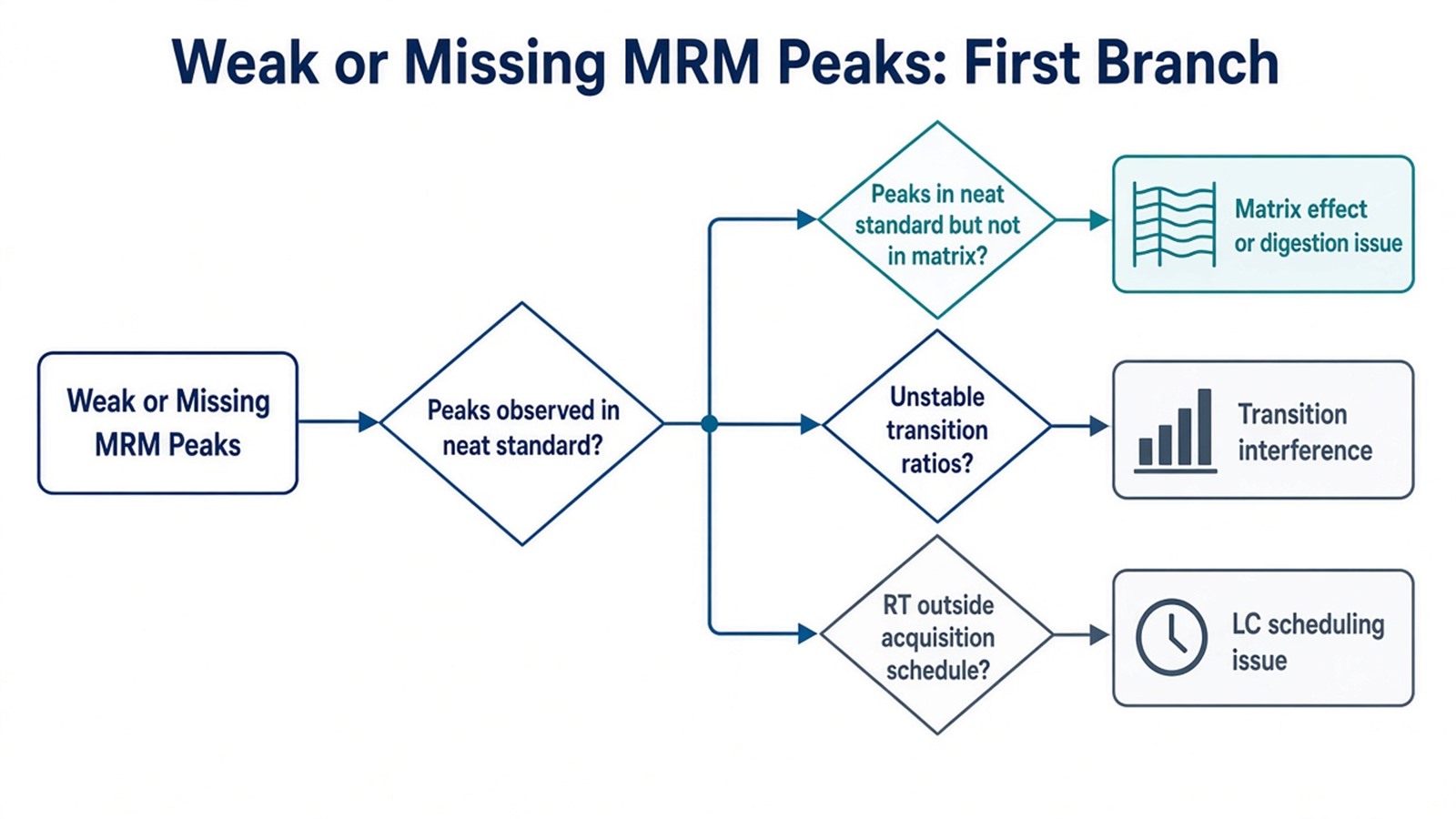
Figure 1. Select the recovery branch from the failure pattern: matrix or digestion, transition interference, or LC scheduling.
Pattern matching beats blind reruns. The same missing peak can have three different correct fixes.
Three Fix Paths to Compare
1. Transition selection path
Confirm proteotypic peptides for the digestion and matrix. Re-optimize collision energy and product ions on standards, then verify qualifier ratios in matrix. Prefer at least one quantitative and one qualifier transition when specificity matters. Shared or modification-prone peptides should be flagged before the cohort is queued.
2. Matrix effects path
Compare neat standard, matrix blank, and matrix spike. Strong suppression may need cleanup, dilution, enrichment, or SIS correction with recorded spike timing. An SIS cannot invent peptide that never survived digestion.
3. LC separation and scheduling path
Inspect co-elution and retention-time stability. Adjust gradient, column loading, or scheduling margins. For multi-day batches, retention-time reference peptides help catch drift that creates false missing peaks.
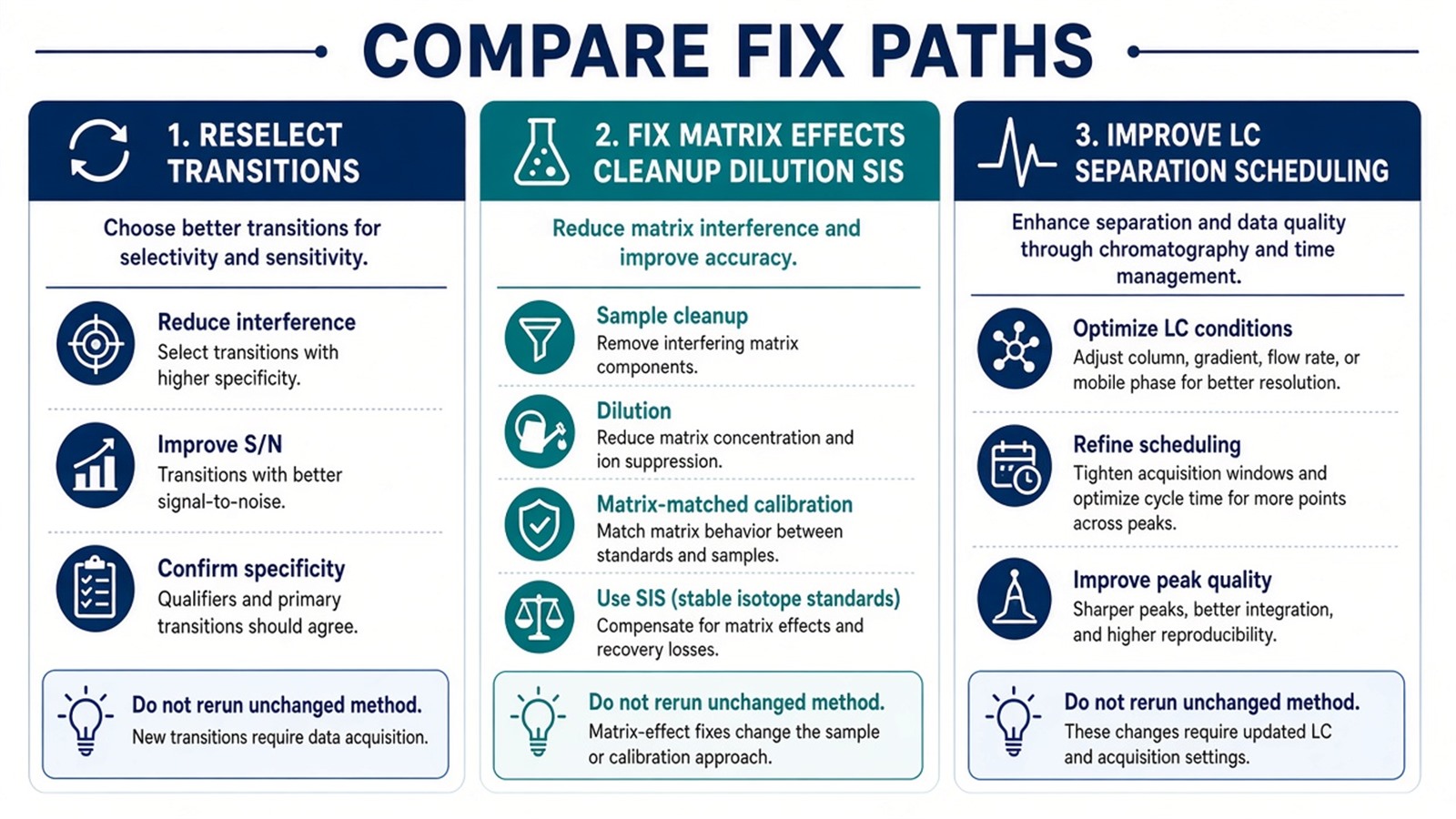
Figure 2. Compare transition, matrix, and LC fix paths before expanding the panel or repeating the full cohort.
For MRM/SRM principle and workflow context, see SRM Mass Spectrometry and Principle of Multiple Reaction Monitoring. For the shared targeted path, see Targeted Proteomics Workflow: How Does Targeted Proteomics Work?.
Judgment Criteria: Keep MRM, Switch Platform, or Redesign
Study need after troubleshooting |
Often keep optimized MRM |
Prefer PRM |
Reassess targeted claim |
|---|---|---|---|
Transitions lockable with stable qualifier ratios |
High-multiplex production panel |
Complex matrix still needs HR fragment review |
Inventory still open for discovery |
Matrix suppression controllable by prep or SIS |
Relative confirmation or SIS absolute |
Interference persists at unit resolution |
Absolute claim without standards |
LC schedule stable across batches |
Repeated cohort runs |
Moderate panel needing post-run ion choice |
Diagnostic cutoff without validation |
Panel size vs dwell time |
Reduce panel or lengthen gradient |
Cycle time already limiting on QQQ |
Expecting discovery depth from MRM |
Prefer optimized MRM when transitions and matrix QC can be locked for repeated multiplex runs. Prefer PRM when accurate-mass fragment review is needed after QQQ interference remains. Prefer DDA or DIA while candidates are still open. Prefer AQUA-style SIS designs when concentration units are required after peaks are reliable.
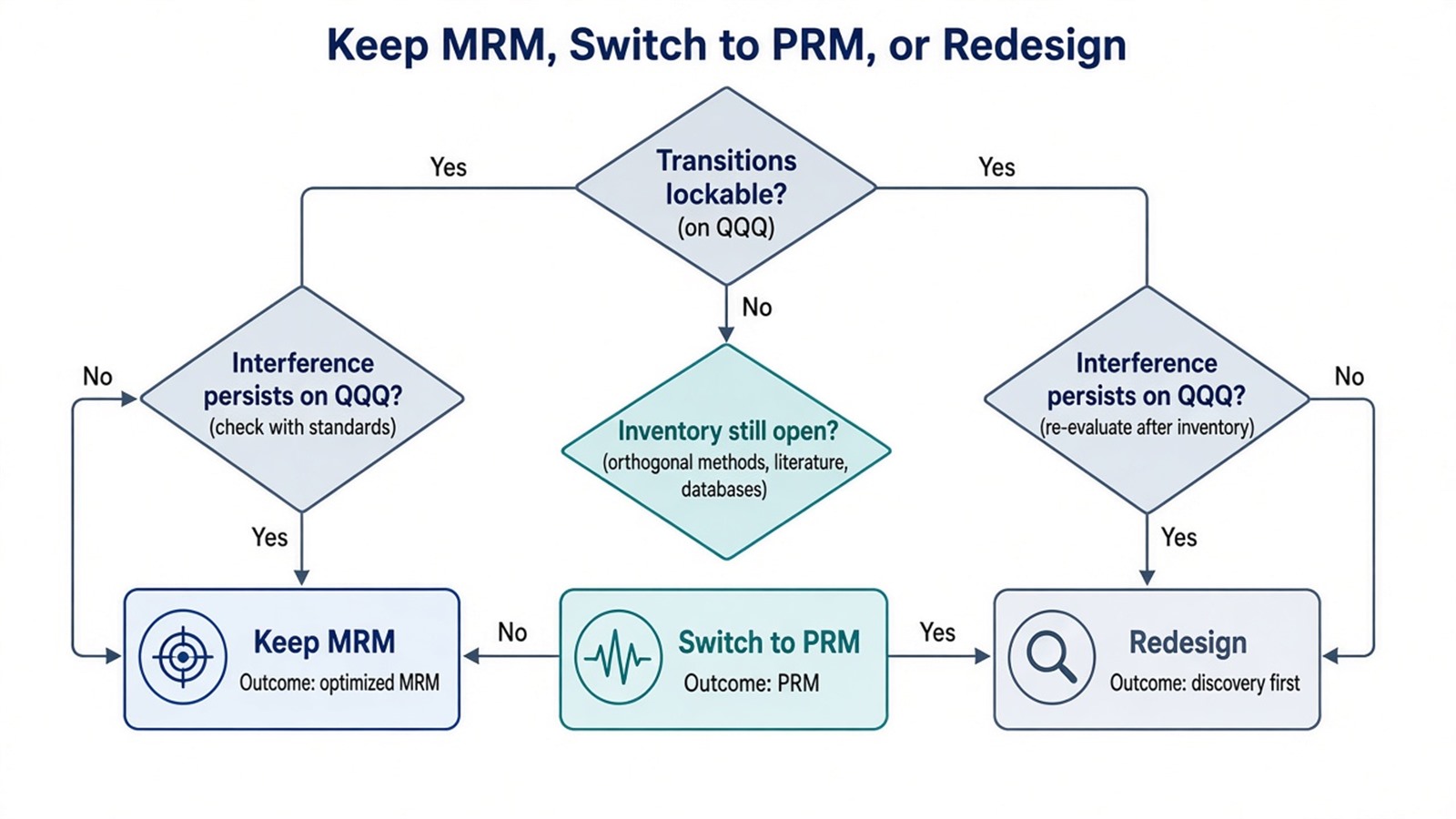
Figure 3. After comparing fix paths, decide whether optimized MRM still fits, or whether PRM or discovery redesign is the better claim.
For PRM versus MRM trade-offs, see PRM and MRM in Targeted Proteomics: Advantages and Limitations and PRM vs. MRM: Comparative Analysis in Quantitative Proteomics. For absolute follow-up, see Advantages and Disadvantages of AQUA Technique.
Limits and Application Boundaries
Troubleshooting improves peak reliability; it does not convert MRM into open proteome discovery. Weak peaks after every reasonable fix may mean the peptide is a poor surrogate in that matrix, not that the instrument is broken. Calling recovered peaks clinically diagnostic overstates ordinary research reporting.
Typical applications for this troubleshooting frame:
- Biomarker confirmation panels that fail when moved from discovery buffers into plasma or tissue digests.
- Locked multiplex MRM assays with rising replicate CV across batches.
- Absolute SIS methods where neat calibrators look fine but matrix spikes collapse.
- Decisions to reduce panel size, enrich targets, or transfer difficult peptides to PRM.
Diagnostic cutoffs and companion-diagnostic claims sit outside ordinary research MRM recovery unless a separately validated assay framework is in place.
A practical recovery milestone is a matrix pilot on a small representative set before rerunning the full cohort. Once transition quality, matrix controls, and LC stability improve, the project can be scoped again as an MRM study. Researchers can review the MtoZ Biolabs SRM-MRM Quantitative Proteomics Services and Targeted Proteomics Service for assay evaluation and recovery planning.
Frequently Asked Questions
1. Should I rerun the same MRM method without changes?
Only after comparing transition quality, matrix effects, and LC scheduling. Repeating an unchanged method on a suppressed matrix rarely helps.
2. How do I choose between transition rework and matrix cleanup?
If neat standards are strong but matrix samples fail, start with matrix and digestion. If ratios are unstable even in standards, start with transitions.
3. What if only one transition is visible?
Treat that as a specificity warning. Rebuild product ions and check qualifier consistency before accepting the peak.
4. When should troubleshooting end in a switch to PRM?
When unit-resolution interference remains after transition and LC fixes, and a moderate panel can use high-resolution fragment review.
5. Does fixing weak peaks create absolute quantification?
No. Absolute units still need matched SIS peptides and calibration after the chromatograms are reliable.
Reference
- V. Lange, P. Picotti, B. Domon, R. Aebersold (2008). Selected reaction monitoring for quantitative proteomics: a tutorial. Mol. Syst. Biol., 4, 222. https://doi.org/10.1038/msb.2008.61
- A.C. Peterson, J.D. Russell, D.J. Bailey, M.S. Westphall, J.J. Coon (2012). Parallel reaction monitoring for high resolution and high mass accuracy quantitative, targeted proteomics. Mol. Cell. Proteomics, 11, 1475-1488. https://doi.org/10.1074/mcp.O112.020131
