






Ubiquitination-Related Protein Interaction Analysis with IP-MS Antibodies
Ubiquitination-related protein interaction studies often begin with a clear node—an E3 ligase, a deubiquitinase, a substrate under stress, or a broader shift in the ubiquitin-modified proteome—yet stall when the capture reagent does not match the question. A western blot–grade antibody may detect the bait but fail to recover enough material for partner identification. A pan-ubiquitin reagent may enrich modified proteins without answering which complex surrounds one pathway node. An E3-targeted IP may miss substrates that are visible only through ubiquitin-remnant enrichment.
Choosing the right IP-MS validated antibody class is therefore an application decision, not a catalog browsing step. Target Protein Antibodies, Pan PTM Antibodies, PTM-Specific Antibody options, and bead-ready formats each support different ubiquitination interaction questions when paired with Co-IP-MS, AP-MS, pull-down-MS, or Protein Interaction Analysis workflows.
If you are planning ubiquitination-related interaction analysis, share the bait definition, sample type, condition contrast, and whether the goal is node-centered or modification-centered discovery with MtoZ Biolabs while antibody and service design are still open.
What Ubiquitination Interaction Projects Usually Ask
Most ubiquitination-related IP-MS plans fall into one of four question types.
Node-centered interactome mapping asks which proteins associate with a defined E3 ligase, DUB, adaptor, or substrate under a specific condition. The bait is a named protein such as MDM2, NEDD4, a TRIM family member, or a cullin scaffold.
Substrate- or client-centered discovery asks which machinery assembles around a ubiquitinated substrate after DNA damage, ER stress, immune signaling, or proteasome inhibition. The bait may be total target protein or a modified subpopulation.
Modification-centered enrichment asks which proteins carry ubiquitin signatures or which interaction neighborhoods change across a ubiquitin-heavy proteome. Pan PTM reagents such as anti–diglycine-lysine enrichment fit this question when the mark, not one E3 node, defines the capture logic.
Direct binding confirmation asks whether a recombinant E3 domain, substrate degron, or ubiquitin chain binding module contacts specific partners under controlled conditions. Pull-down-MS often fits here when endogenous complex architecture is not the primary claim.
Each question maps to a different antibody class and service path. Mixing them without a design reason is a common source of empty or uninterpretable partner lists.
Which IP-MS Antibody Class Fits Which Ubiquitination Goal
Use the table below to shortlist antibody type before selecting individual SKUs or service packages.
|
Research goal |
Bait or capture logic |
Antibody class to review first |
Typical workflow fit |
|---|---|---|---|
|
E3 or DUB interactome |
Named ligase or DUB protein |
Target Protein Antibodies for that node |
Co-IP-MS / IP-MS with node antibody |
|
Substrate-centered complex |
Ubiquitinated substrate under treatment |
Target Protein Antibody or modification-aware capture |
Co-IP-MS across conditions |
|
Ubiquitin-remnant proteome shift |
Diglycine-lysine modified proteins |
Pan PTM / diglycine enrichment reagents |
IP-MS with modification capture |
|
Free ubiquitin or conjugated ubiquitin biology |
Ubiquitin itself |
IP-MS Validated Ubiquitin Antibody |
IP-MS around ubiquitin pools |
|
Tagged E3 or substrate expression |
Affinity tag on bait |
Tag AP workflow rather than node antibody |
AP-MS |
|
Domain-level direct binding |
Recombinant bait or ubiquitin chain probe |
Not always antibody-first |
Pull-down-MS |
The table is a planning guide. It does not replace checking species reactivity, validation evidence, and bead compatibility for the exact SKU under review.
Target Protein Antibodies for E3, DUB, and Substrate Nodes
When the biological claim centers on one protein, Target Protein Antibodies are usually the first product class to review.
Examples in ubiquitination biology include E3 ligases such as MDM2 or NEDD4, cullin scaffolds, RNF family proteins, TRIM proteins, and deubiquitinases such as PGP9.5. An antibody validated for IP-MS against that node should show bait recovery with MS-compatible background under stated IP conditions.
Node-centered Co-IP-MS fits questions such as:
- Which adaptors assemble with an E3 after stimulation?
- Which substrates co-enrich with a quality-control ligase under stress?
- How does a DUB partnership change after proteasome inhibition?
Prefer an IP-MS validated antibody when endogenous capture is required and LC-MS/MS will define the partner list. Match species, isoform, and lysis conditions to the validation context shown for the product. Bead-conjugated formats such as Anti-MDM2 Magnetic Beads or Anti-NEDD4 Magnetic Beads can shorten workflow setup when the SKU matches the planned matrix.
Node-centered capture does not by itself identify every ubiquitinated substrate in the lysate. It maps the neighborhood around the chosen bait.
Pan PTM and Diglycine Reagents for Modification-Centered Questions
Some ubiquitination projects need modification-centered capture rather than one E3 node.
Anti–diglycine-lysine enrichment targets the remnant di-glycine mark left on lysine after tryptic digestion of ubiquitinated proteins. It is widely used when the question is which ubiquitin-modified proteins or interaction neighborhoods shift across treatment arms, not which proteins bind directly to one E3 antibody target.
IP-MS Validated Anti-Diglycine Lysine Antibody Conjugated Agarose Beads fit workflows that start from modification capture and move into LC-MS/MS identification of co-enriched proteins. Pan PTM Antibody listings are the broader product entry point when the team is still comparing modification-class capture strategies.
Modification-centered enrichment broadens the searchable space. It also increases the importance of negative controls, replicate IPs, and careful interpretation because background and abundant modified proteins can dominate MS output.
Use this route when the hypothesis is proteome-wide or pathway-wide ubiquitin remodeling. Use Target Protein Antibodies when the hypothesis is anchored to one ligase, DUB, or substrate node.
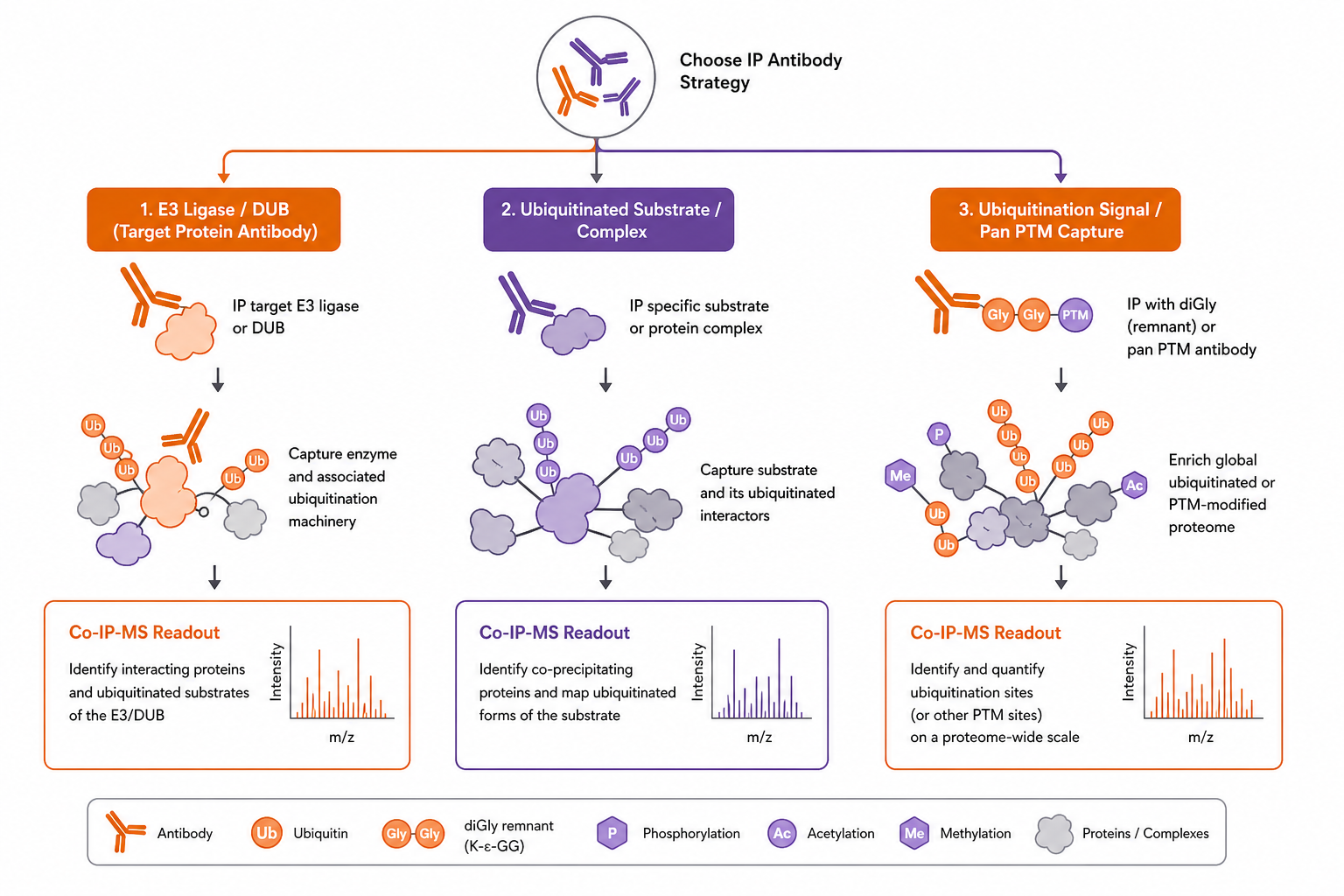
Figure 1. Node-centered ubiquitination studies usually start with Target Protein Antibodies; modification-centered studies often start with Pan PTM or diglycine capture reagents.
Condition Design, Controls, and Service Path Selection
Ubiquitination interaction biology is often condition-dependent. Proteasome inhibition, DNA damage, cytokine stimulation, hypoxia, and ER stress each reshape both bait abundance and partnership.
Before choosing products or services, define:
- The condition contrast, such as treated versus control or time-point series
- Whether the bait is total protein or a treatment-induced modified state
- Negative controls including IgG IP, bead-only controls, or empty-tag lines for AP-MS
- Whether partner identification will run in-house or through Protein Interaction Analysis
Service path selection follows the bait format:
- Co-IP-MS / IP-MS when an endogenous node or modification capture antibody defines the experiment
- AP-MS when a tagged E3 or substrate can be expressed without disturbing the core hypothesis
- Pull-down-MS when recombinant domain or chain binding must be tested directly
- Protein Interaction Analysis when the team needs outsourced enrichment-to-MS interpretation support
An antibody validated by IP-MS improves bait-side confidence but does not remove the need for condition-matched controls or orthogonal validation of priority partners.
Common Planning Mistakes in Ubiquitination IP-MS
Review these issues before purchase or service request:
- Using a pan-ubiquitin or diglycine reagent when the claim is specific to one E3 node
- Using an E3 node antibody when the claim requires proteome-wide ubiquitin remodeling
- Assuming western blot validation equals IP-MS performance for low-abundance modified bait
- Comparing treatment arms harvested at different stress stages
- Choosing harsh washes that remove transient E3-substrate contacts without documenting the tradeoff
- Skipping replicate IPs when modification-centered capture already produces complex background
A practical sequence is to lock the ubiquitination question, select antibody class, confirm IP-MS validation evidence, then align Co-IP-MS, AP-MS, pull-down-MS, or Protein Interaction Analysis scope to the readout.
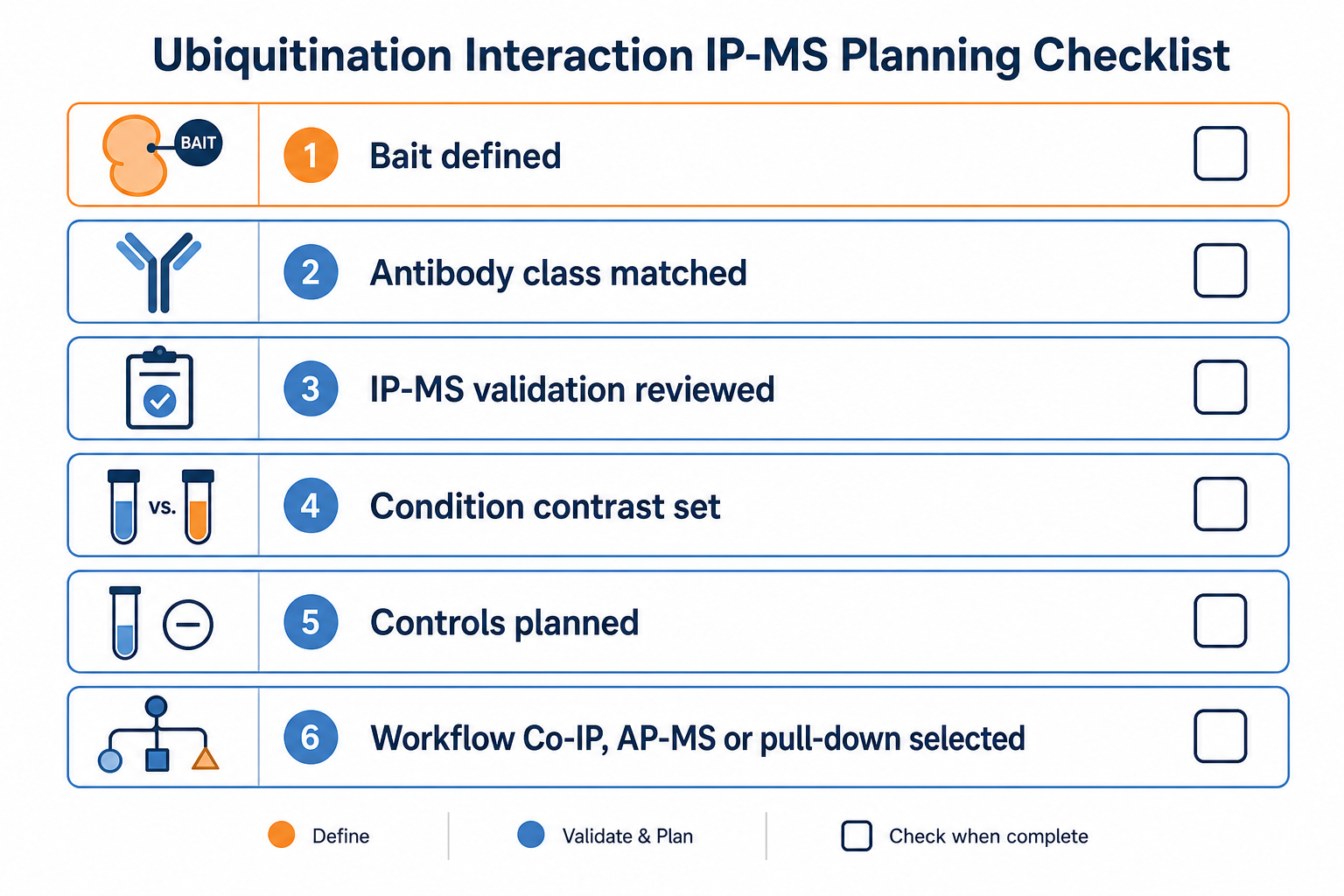
Figure 2. Define bait logic, condition contrast, antibody class, controls, and analysis route before locking SKUs or service packages.
Related Products
IP-MS Validated Ubiquitin Antibody
IP-MS Validated Anti-Diglycine Lysine Antibody Conjugated Agarose Beads
Related Services
Protein-Protein Interaction Analysis Service
MS-Based Protein-Protein Interaction Analysis Service
IP-MS Protein Interactomics Analysis Service
Co-Immunoprecipitation Protein Interaction Analysis Service
Protein Interaction Analysis Service
Frequently Asked Questions
1. Should I choose a Target Protein Antibody or a diglycine reagent for ubiquitination IP-MS?
Choose a Target Protein Antibody when the question centers on one E3, DUB, or substrate node. Choose diglycine or broader Pan PTM capture when the question centers on ubiquitin-modified protein populations across conditions.
2. Can an IP-MS validated E3 antibody identify all substrates?
No. Node-centered IP-MS maps proteins that co-enrich with the bait under the chosen lysis and wash conditions. Substrate discovery still requires interpretation, controls, and often complementary assays.
3. When is AP-MS preferable to an E3-targeted Co-IP-MS antibody?
AP-MS is often preferable when tagging is acceptable, expression can be controlled, and antibody performance for endogenous E3 capture is uncertain.
4. Do bead-conjugated IP-MS validated antibodies replace manual coupling?
Bead-ready SKUs can simplify setup when the conjugated format matches the sample matrix and validation evidence fits the planned IP-MS workflow.
5. What should be shared before selecting ubiquitination IP-MS reagents or services?
Provide the bait definition, species and sample type, condition contrast, desired readout, and whether the project is node-centered, substrate-centered, or modification-centered.
Conclusion
Ubiquitination-related protein interaction analysis with IP-MS antibodies depends on matching antibody class to the scientific question. Target Protein Antibodies fit E3, DUB, and substrate node mapping. Pan PTM and diglycine reagents fit modification-centered ubiquitin proteome questions. Ubiquitin-targeted and bead-ready IP-MS validated products fit more specialized capture plans when validation evidence matches the matrix.
Contact Mtoz Biolabs to review bait logic, IP-MS validated antibody options, and Co-IP-MS, AP-MS, pull-down-MS, or Protein Interaction Analysis fit before final reagent or service selection.
How to order?




