



Introduction
Discovery proteomics can identify hundreds or thousands of proteins in a single experiment, yet many research programs eventually need a narrower question answered with greater reproducibility. A pharmacology group may need to track a defined signaling panel across treatment arms. A biomarker team may need to quantify candidate proteins in a larger cohort after an initial screening study. A biopharmaceutical group may need selective measurement of product-related peptides in a complex matrix.
Targeted proteomics addresses that need by measuring predefined peptides or proteins with selective mass spectrometry assays. The instrument spends acquisition time on a chosen panel rather than surveying the whole proteome. Methods such as multiple reaction monitoring (MRM), parallel reaction monitoring (PRM), and selected reaction monitoring (SRM) fall under this umbrella and support validation-scale quantitation with higher specificity and efficiency than broad discovery profiling alone. Validation-stage planning after discovery is outlined in How to Plan a Targeted Proteomics Validation Study.
Researchers planning a targeted proteomics project can consult MtoZ Biolabs to review target list, sample matrix, and quantitation goals before assay development begins.
What Targeted Proteomics Means in Practice
Targeted proteomics quantifies predefined peptide surrogates that represent selected proteins. Each measured peptide is chosen for detectability, sequence specificity, and behavior in the project matrix. The workflow does not ask which proteins are present across the entire proteome. It asks how abundantly the predefined targets change across samples, conditions, or time points.
The method differs from label-free discovery profiling, which surveys many proteins without pre-specifying acquisition targets. Targeted proteomics also differs from broad multiplexed discovery workflows that prioritize proteome coverage over assay-level performance for a fixed panel. When the protein list is stable and repeat measurement matters more than open-ended identification, targeted proteomics is often the more direct quantitative route.
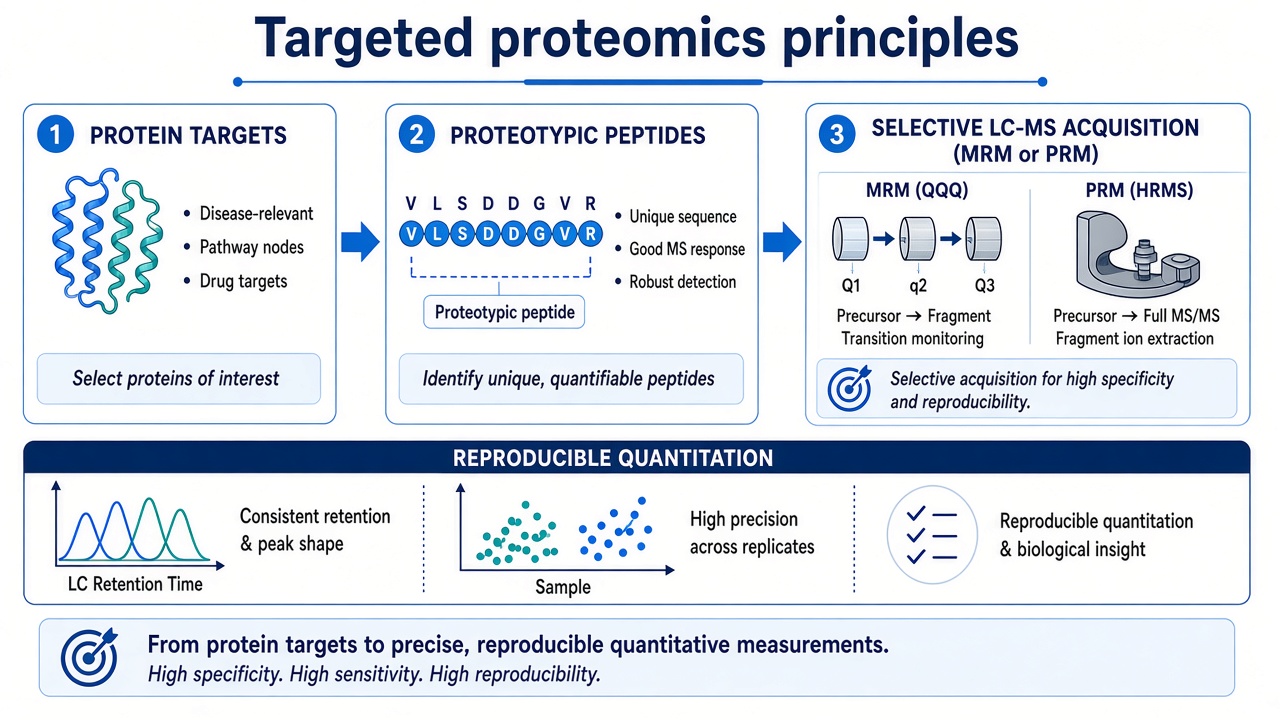
Figure 1. Targeted proteomics focuses selective LC-MS acquisition on predefined proteotypic peptides for reproducible quantitation.
1. From Proteins to Proteotypic Peptides
A targeted proteomics assay begins with protein targets and converts them into proteotypic peptides. Peptide selection depends on sequence uniqueness, expected ionization, chromatographic behavior, and performance in the sample matrix. A poorly chosen surrogate can produce precise but misleading quantitation if the peptide does not represent the intended protein reliably.
2. Selective Acquisition
In targeted proteomics, the mass spectrometer monitors only predefined precursors or transitions during LC-MS analysis. Acquisition time is not spent on unrelated peptides across the full m/z range. That selectivity improves sensitivity for the panel and supports reproducible measurement across large sample sets.
3. MRM and PRM as Common Targeted Routes
- Multiple reaction monitoring (MRM)
on triple-quadrupole instruments monitors selected precursor-to-product transitions for each target peptide. MRM is widely used when transitions are stable, throughput is high, and matrix interference is manageable.
- Parallel reaction monitoring (PRM)
on high-resolution platforms isolates target precursors and quantifies fragment ions with greater ability to resolve co-eluting interference. PRM is often selected when matrix complexity limits MRM performance for part or all of the panel.
Both routes belong to targeted proteomics when peptide targets are predefined before sample analysis. Acquisition-mode detail for MRM and PRM is covered in Mechanism of MRM/PRM in Protein Quantification.
4. Quantitation Logic
Targeted peptide peaks are integrated and summarized across samples. Quantitation may be relative, normalized to internal standards, or absolute when stable isotope-labeled peptides or calibrators are included in the assay design. The reporting goal should be defined during project scoping because absolute and relative quantitation require different preparation and review.
Standard Targeted Proteomics Workflow
A robust targeted proteomics project usually follows a defined sequence of steps.
- Target selection. Define proteins of interest and translate them into candidate proteotypic peptides.
- Assay development. Optimize MRM transitions or PRM isolation windows on peptide standards.
- Matrix testing. Evaluate detectability and interference in the actual sample type.
- Sample preparation. Digest proteins, clean up extracts, and normalize input as required.
- Selective LC-MS acquisition. Run the predefined panel across the sample cohort.
- Quantitation and QC review. Integrate peaks, apply normalization, and document failed or borderline targets.
- Report delivery. Provide quantified analyte tables, method notes, and interpretation guidance.
Sample matrix strongly affects outcome. Plasma, tissue, cell lysate, and biopharmaceutical formulation each present different digestion, cleanup, and interference challenges. Feasibility review before assay development often prevents building a panel that the matrix cannot support.
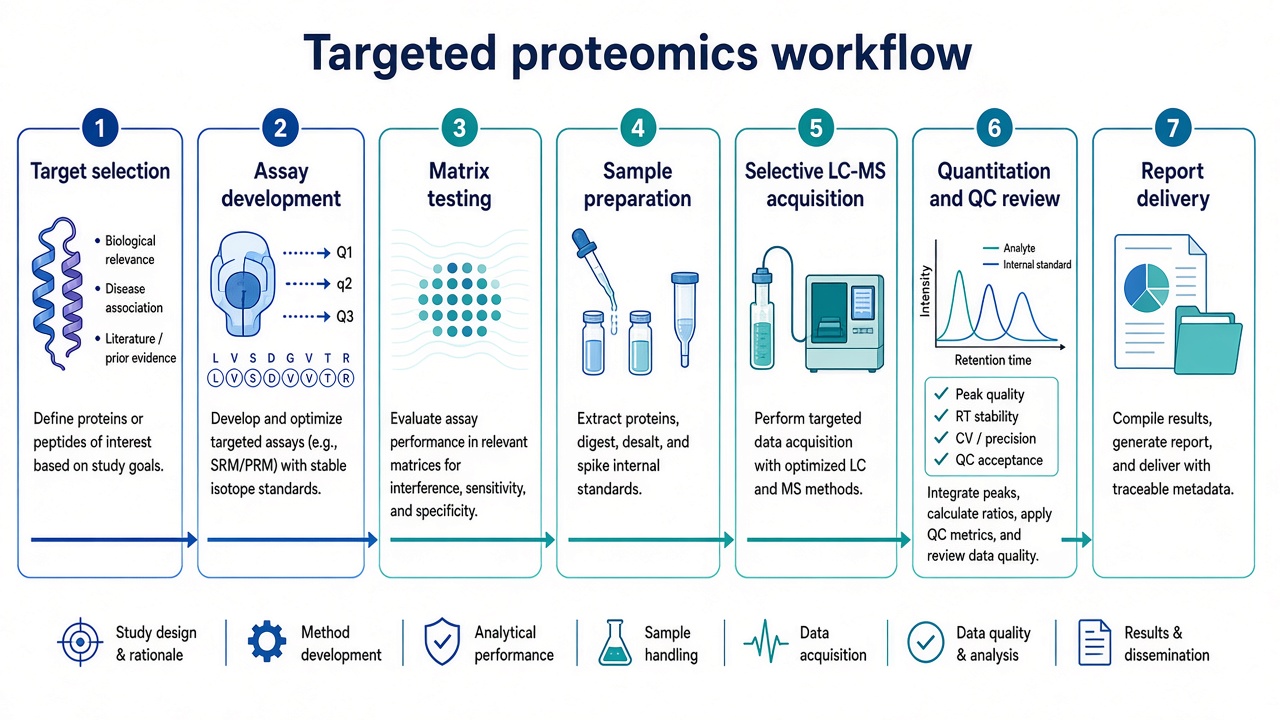
Figure 2. A targeted proteomics workflow moves from peptide panel design through selective acquisition to cohort-level quantitation.
Platform Comparison for Targeted Quantitation
The principles above explain why targeted proteomics is selective. The table below summarizes practical differences among common acquisition routes.
Platform |
Typical Use |
Main Technical Strength |
Main Technical Limitation |
|---|---|---|---|
MRM on triple quadrupole |
High-throughput predefined panels in manageable matrices |
Efficient transition monitoring and established quantitation workflows |
Interference can limit some targets in complex matrices |
PRM on high-resolution MS |
Panels needing greater selectivity against background |
Fragment-level confirmation within isolated precursors |
More complex method setup and data review |
Label-free discovery profiling |
Open-ended protein identification |
Broad proteome coverage |
Less efficient for fixed-panel validation-scale measurement |
AQUA with labeled standards |
Absolute quantitation requirements |
Improved quantitative traceability |
Additional standard cost and design effort |
This comparison helps match platform choice to matrix complexity, panel size, and reporting needs.
1. Core Technical Advantages
Selective instrument use
Acquisition focuses on predefined peptides, improving sensitivity for the chosen panel.
Reproducible quantitation
Optimized assays support consistent measurement across batches and larger cohorts.
Efficient validation-scale analysis
Predefined panels are well suited to expanding measurement after discovery.
Platform flexibility
MRM and PRM can be matched to matrix complexity and confirmation requirements.
Compatibility with labeled standards
Stable isotope-labeled peptides can strengthen precision and support absolute quantitation when required.
2. Current Limitations
Requires prior target definition
Unknown proteins cannot be quantified without peptide selection and assay development.
Upfront assay investment
Panel design, matrix testing, and standard optimization take planning effort before cohort analysis.
Peptide detectability varies by matrix
Low-abundance targets may need enrichment or alternate proteotypic peptides.
Not a replacement for discovery profiling
Targeted proteomics quantifies known targets rather than generating unbiased proteome maps.
Multiplexing has practical limits
Panel size depends on chromatography, cycle time, and platform capacity.
Targeted proteomics is powerful for predefined quantitation, but success depends on thoughtful peptide selection, matrix review, and realistic panel scope.
Typical Research Applications
Targeted proteomics supports several recurring research workflows.
1. Biomarker Validation
Expand quantitation of candidate proteins identified in discovery studies across larger sample sets.
2. Pathway Panel Tracking
Measure predefined signaling proteins across treatment groups, doses, or time courses.
3. Biopharmaceutical Peptide Monitoring
Quantify product-related peptides selectively in formulation or comparability matrices.
4. Assay Reproducibility Studies
Support methods that must perform consistently across batches, operators, or sites.
5. Targeted PTM Site Validation
Confirm modification sites or modified peptides when a predefined panel is required.
Researchers should define whether the project needs relative abundance comparison, normalized panel reporting, or absolute quantitation before selecting MRM, PRM, or AQUA-based support.
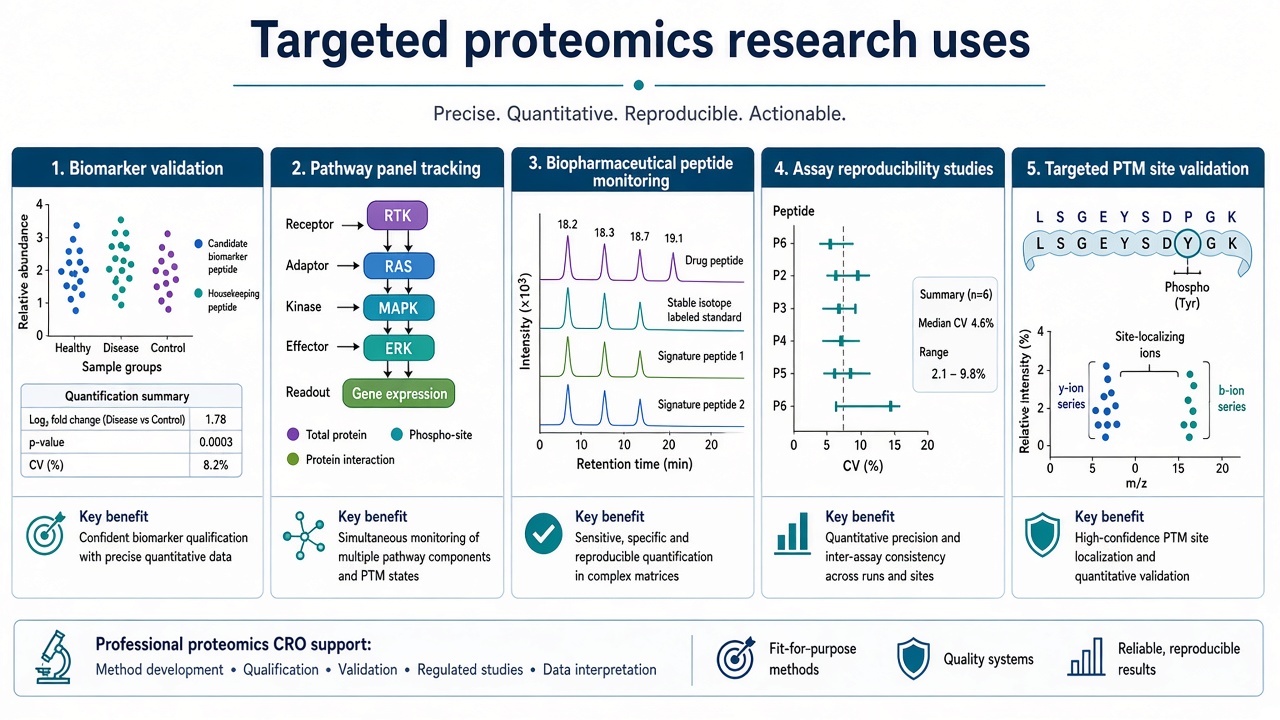
Figure 3. Targeted proteomics supports biomarker validation, pathway quantitation, biopharmaceutical monitoring, and reproducibility-focused assay work.
How to Choose the Right Targeted Workflow
The appropriate workflow depends on study stage, matrix complexity, and reporting needs.
- Use discovery profiling when the protein list is still open and candidates must first be identified.
- Use MRM when the panel is predefined, transitions are stable, and sample throughput is a priority.
- Use PRM when matrix interference limits MRM performance or fragment confirmation adds value.
- Use AQUA or related labeled-standard workflows when results must be reported in absolute units.
- Use a combined discovery-to-targeted plan when candidates from screening must move into validation without losing analytical continuity.
A practical project plan often begins with a short feasibility review of target list, matrix type, and expected sample number before assay development starts.
Future Outlook
Targeted proteomics continues to benefit from improved chromatography, higher-resolution acquisition, better scheduling algorithms, and more efficient panel multiplexing. Laboratories are increasingly combining discovery screening with predefined MRM or PRM panels so that candidate proteins can move into validation-scale measurement with less method redevelopment. At the same time, matrix complexity, low-abundance targets, and panel scope still require project-specific judgment during peptide selection and assay optimization.
For many teams, outsourcing targeted proteomics to a service provider such as MtoZ Biolabs provides access to assay development experience, platform selection, and reporting formats suited to biomarker, pathway, or biopharmaceutical quantitation without building every capability internally.
1. What is the difference between targeted proteomics and discovery proteomics?
Discovery proteomics surveys many proteins without pre-specifying acquisition targets. Targeted proteomics measures a predefined peptide panel with selective LC-MS acquisition.
2. Are MRM and PRM both forms of targeted proteomics?
Yes. Both quantify predefined peptides. MRM uses selected transitions on triple-quadrupole instruments. PRM uses high-resolution precursor isolation and fragment quantitation.
3. Can targeted proteomics work in plasma or tissue lysates?
Yes, when proteotypic peptides are detectable after appropriate preparation and interference is controlled. Matrix pilot testing is often important.
4. Does targeted proteomics provide absolute quantitation?
It can when stable isotope-labeled standards or calibrators are included in the assay design. Many projects begin with relative or normalized quantitation.
5. How many proteins can one targeted panel include?
Panel size depends on chromatography, cycle time, and platform. Feasibility review clarifies realistic multiplexing for a given matrix and instrument setup.
Conclusion
Targeted proteomics provides a selective, reproducible route to predefined protein quantitation when validation-scale measurement matters more than proteome-wide discovery. By converting protein targets into proteotypic peptides, optimizing selective MRM or PRM acquisition, and reviewing matrix performance before cohort analysis, the workflow supports biomarker validation, pathway quantitation, biopharmaceutical monitoring, and other research programs that depend on consistent panel measurement. More reliable outcomes come from matching platform choice to matrix complexity, defining quantitation goals early, and planning assay development before large sample sets are submitted. Researchers planning targeted proteomics for predefined panels can contact MtoZ Biolabs to review target list, sample matrix, and reporting needs before assay development and selective LC-MS analysis begin. Researchers can also review the MtoZ Biolabs Targeted Proteomics Service for project-specific panel design, MRM or PRM feasibility, and quantification planning.
