






Studying PTM-Regulated Pathways with IP-MS Validated Antibodies
Introduction
Many pathway projects begin with a regulation question, not a shopping list. A team may ask whether phosphorylation changes recruitment around a kinase node, whether acetylation rewires a chromatin-linked complex, or whether a stress-induced modification alters partners in a disease pathway. The biological hypothesis is already defined. The enrichment antibody and the Protein Interaction Analysis route are not.
Studying PTM-regulated pathways with an IP-MS validated antibody turns that hypothesis into a workable enrichment plan. Immunoprecipitation isolates the relevant bait population. Mass spectrometry reports co-enriched proteins that may explain pathway behavior. When the capture reagent is an antibody validated by IP-MS, bait recovery is more likely to support pathway interpretation. This article focuses on planning PTM and pathway mechanism studies with Target Protein Antibodies, PTM Antibodies, and Protein Interaction Analysis options before final product or service selection.
Why PTM-Pathway Projects Need Early Antibody Planning
PTM-regulated pathway work fails in predictable ways. A pan-target antibody may recover total protein while missing the modified subpopulation that drives the phenotype. A modification-specific antibody may enrich the right mark but recover too little material for partner detection. A blot-validated antibody may never capture the bait under IP conditions used for complex preservation.
An antibody validated for IP-MS is useful at the planning stage because it signals enrichment performance in an IP-to-MS context. That claim does not prove every pathway mechanism. It does help teams avoid designing a multi-condition signaling study around a reagent that cannot feed LC-MS/MS.
Planning should therefore ask two linked questions. Which bait population defines the pathway state? Which antibody class can recover that population with MS-compatible quality?
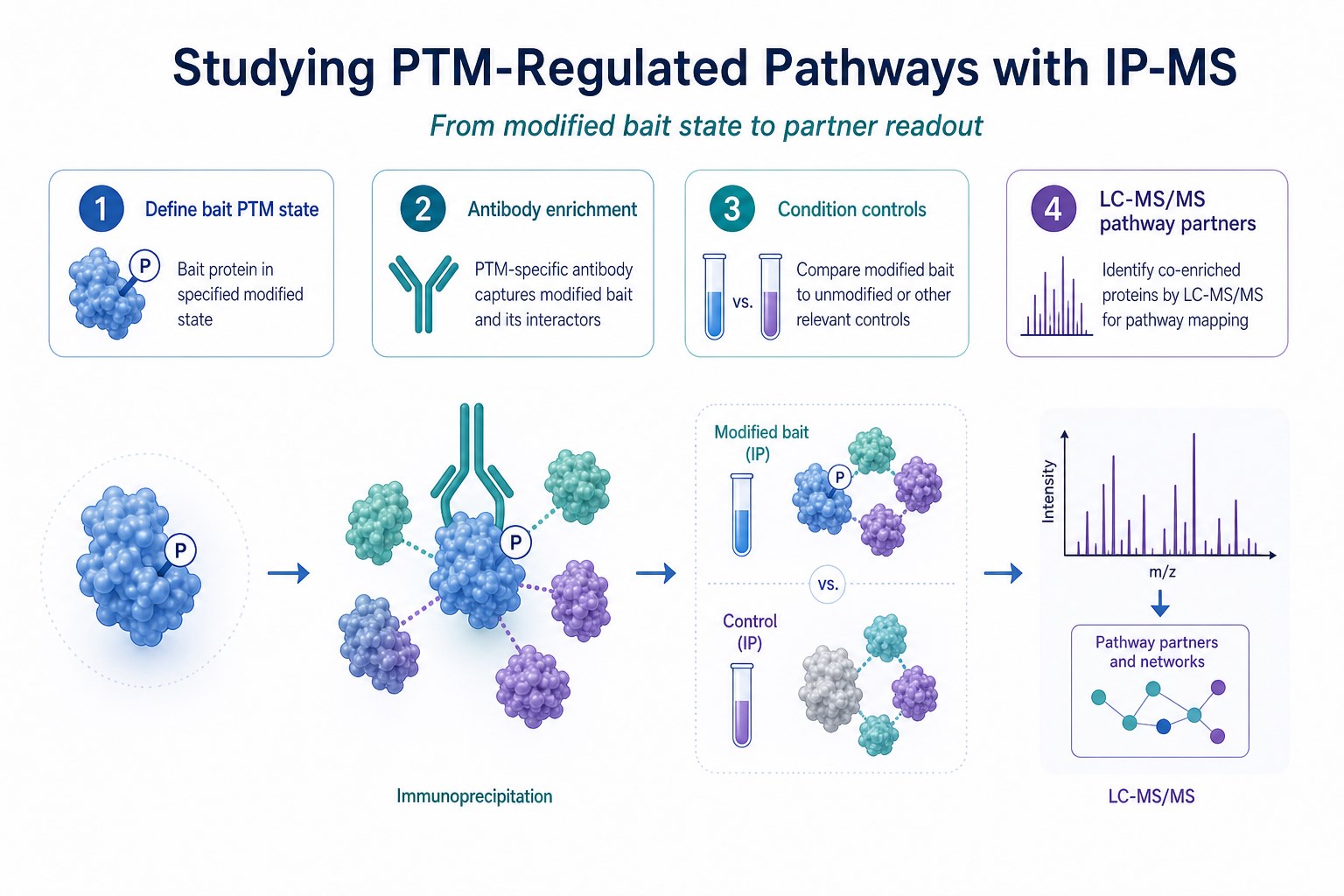
Figure 1. PTM-regulated pathway studies use antibody enrichment of a defined bait state, then IP-MS readout of co-enriched proteins.
Connecting PTM State, Pathway Nodes, and IP-MS Readout
A practical planning model has four decisions.
Decide which molecular state represents the pathway hypothesis
The bait may be total endogenous protein, a site-specific modified form, a pan-modified class, or a pathway node compared across stimulation and resting conditions. This choice decides whether Target Protein Antibodies or PTM Antibodies come first.
Choose capture chemistry matched to that state
Target Protein Antibodies suit node-centered pathway maps where total bait recovery is the priority. PTM-Specific Antibody options suit defined marks or motifs. Pan PTM Antibodies suit broader modification-class hypotheses. Prefer an IP-MS validated antibody when endogenous capture must support partner identification.
Set condition design and controls before ordering
Stimulus, genotype, inhibitor, or time-course comparisons need matched controls. Negative IPs and condition-matched backgrounds are part of pathway evidence, not optional extras after antibody purchase.
Decide how partners will be identified and ranked
If in-house MS capacity is limited, Protein Interaction Analysis workflows can convert IP eluates into ranked partner lists for follow-up. The analysis route should be chosen early enough to shape sample amount, replicate number, and elution strategy.
Application Scenarios for Mechanism Planning
Kinase and phosphorylation-linked signaling nodes
Phosphorylation often changes recruitment around kinases, adapters, and receptors. Planning usually pairs a Target Protein Antibody for the node with condition-matched IP-MS, or uses phosphorylation-oriented PTM Antibodies when the modified population itself is the bait. An antibody validated by IP-MS helps confirm that enrichment remains compatible with pathway partner detection.
Acetylation and chromatin-associated pathway modules
Acetylation-linked projects may ask how modified histones or non-histone proteins remodel complexes that control transcription or stress responses. Pan acetylation reagents and site-directed options serve different hypothesis widths. Both benefit from antibody validated for IP-MS evidence when the endpoint is MS-based partner discovery rather than blot-only detection.
Ubiquitin-linked stress and quality-control pathways
Ubiquitin-centered questions often mix Target Protein Antibodies for a quality-control node with modification-aware enrichment when the modified bait defines the pathway state. Soft versus stringent washes change whether transient partners remain visible, so wash planning belongs in the same document as antibody selection.
Disease pathway remodeling across genotypes or treatments
Disease mechanism studies may compare interactomes of a pathway protein across mutant and wild-type backgrounds, or across treatment arms. The scientific priority is consistent bait recovery across conditions. Selecting an IP-MS validated antibody early reduces condition-to-condition enrichment failure that can look like biological difference.
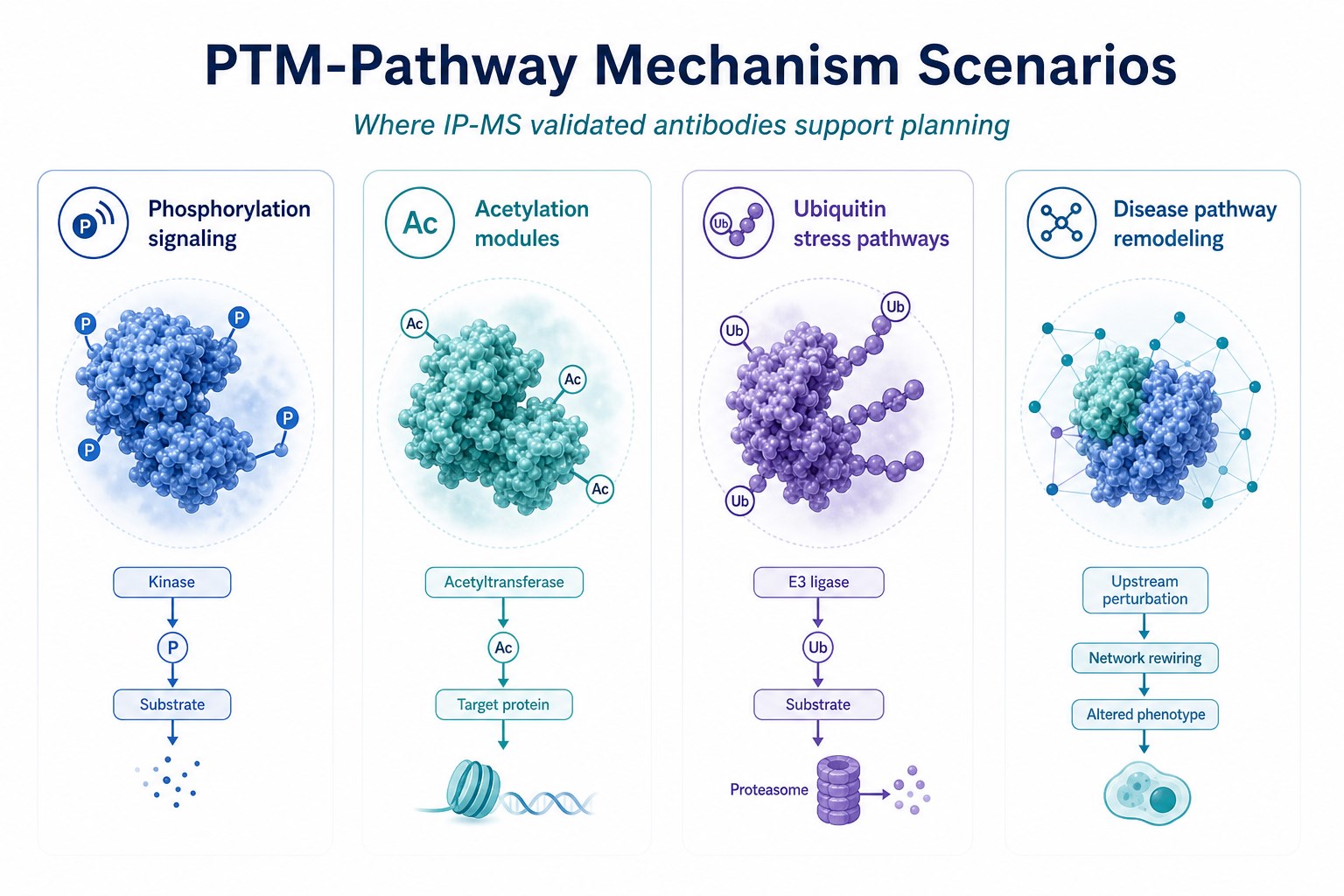
Figure 2. Common PTM-pathway scenarios include phosphorylation-linked signaling, acetylation modules, ubiquitin stress pathways, and disease pathway remodeling.
Planning Map Before Product or Service Lock-In
At the topic-planning stage, separate the biological claim from catalog browsing.
|
Pathway planning question |
Decision to make early |
Resource type to review |
|---|---|---|
|
Is the bait total protein or a modified form? |
Define the molecular state that represents the hypothesis |
Target Protein or PTM Antibodies |
|
Is the goal node mapping or modification-conditioned partners? |
Choose enrichment logic and wash strategy |
IP-MS design plan |
|
Will partners be identified in-house or externally? |
Align sample scale with analysis capacity |
Protein Interaction Analysis pages |
|
What antibody evidence is required? |
Require IP-MS validation and species or isoform fit |
IP-MS validated antibody listings |
A durable sequence is hypothesis state first, antibody class second, Protein Interaction Analysis route third, then SKU shortlisting.
Related Services
Protein-Protein Interaction Analysis Service
MS-Based Protein-Protein Interaction Analysis Service
IP-MS Protein Interactomics Analysis Service
Co-Immunoprecipitation Protein Interaction Analysis Service
Protein Interaction Analysis Service
Researchers planning PTM-regulated pathway studies can consult MtoZ Biolabs to align bait-state definitions, IP-MS validated antibody options, and Protein Interaction Analysis scope before locking reagents or service packages.
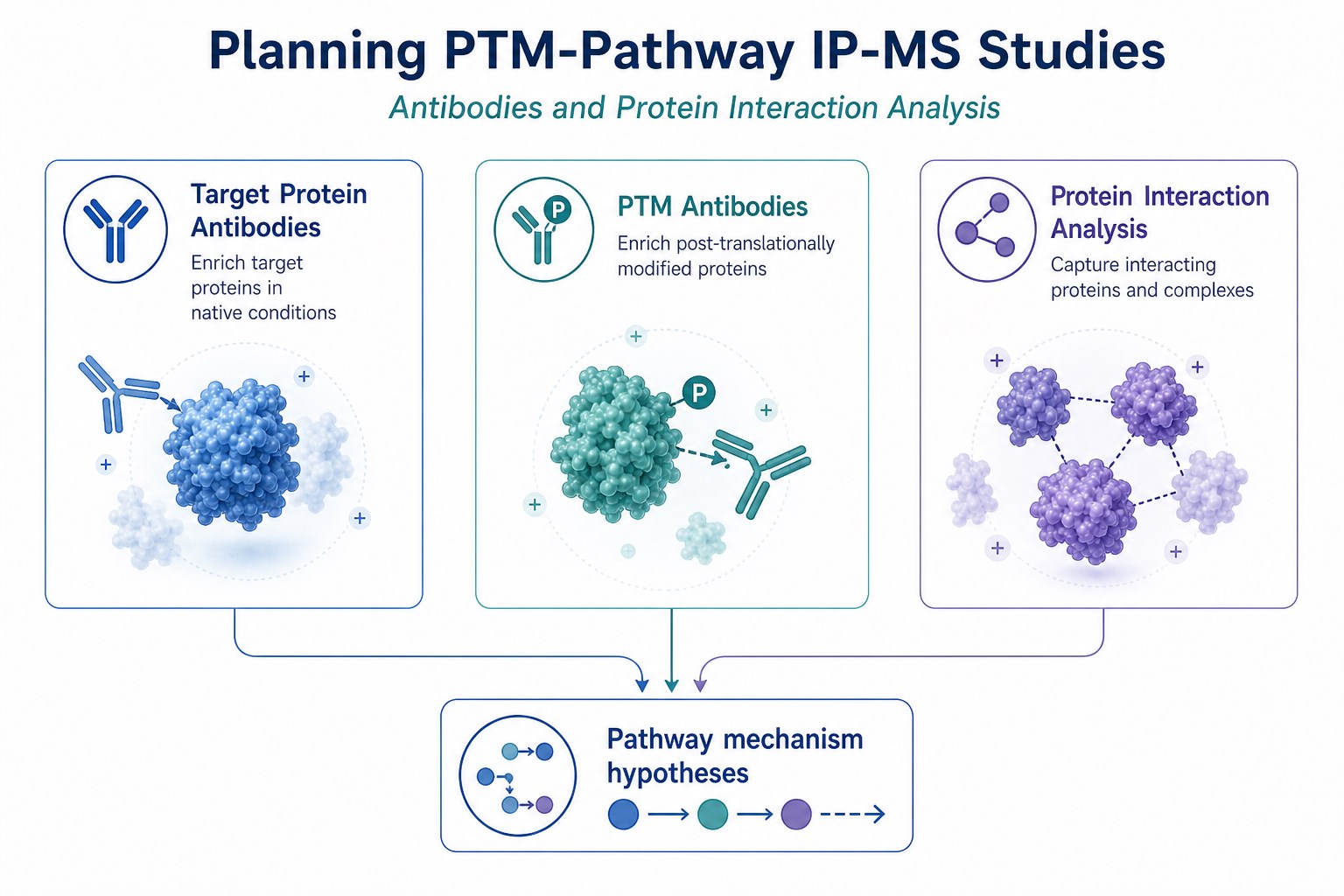
Figure 3. Early pathway planning connects Target Protein Antibodies or PTM Antibodies with Protein Interaction Analysis capacity for IP-MS mechanism studies.
For projects that still need help framing bait state against analysis options, MtoZ Biolabs can review whether the current PTM or pathway question is ready for IP-MS design.
Frequently Asked Questions
1. How do IP-MS validated antibodies support PTM-regulated pathway studies?
They improve the chance that the intended bait state is recovered under conditions compatible with LC-MS/MS partner identification for pathway interpretation.
2. When should Target Protein Antibodies lead the plan?
Use them when the pathway node itself is the bait and total protein recovery is needed for condition-matched interactome comparison.
3. When should PTM Antibodies lead the plan?
Use them when the hypothesis depends on a modified subpopulation that a pan-target antibody may not enrich selectively.
4. Is an antibody validated by IP-MS enough to prove pathway mechanism?
No. IP-MS supports enrichment-based partner hypotheses. Mechanism claims usually need functional follow-up after candidate ranking.
5. How should Protein Interaction Analysis fit into early pathway planning?
Decide early whether partner identification will be handled in-house or through a Protein Interaction Analysis workflow, then match antibody amount, replicates, and controls to that route.
Conclusion
Studying PTM-regulated pathways with IP-MS validated antibodies is a planning framework for mechanism research. The core task is to define the bait state that represents the pathway hypothesis, recover that state by immunoprecipitation, and identify co-enriched proteins by MS. Target Protein Antibodies support node-centered maps. PTM Antibodies support modification-conditioned questions. Protein Interaction Analysis services help when partner identification and ranking need dedicated MS capacity.
Teams that already know the regulation question, but have not locked products or services, can start from Target Protein Antibodies or PTM Antibody listings and parallel Protein Interaction Analysis pages. Choosing an antibody validated for IP-MS early reduces a frequent cause of empty or condition-biased pathway datasets. Groups preparing PTM or pathway IP-MS projects can contact MtoZ Biolabs to review bait-state design, antibody evidence needs, and analysis options for the current study phase.
How to order?




