






Studying Membrane Protein Interactions in Native Cells: Why Overexpression Can Mislead and How In-Cell Crosslinking MS Helps
Introduction
Membrane protein interactions are difficult to study because the interaction signal depends on more than protein sequence. Local abundance, lipid composition, membrane curvature, compartment identity, trafficking status, and stimulation timing can all shape whether two proteins meet. Many researchers use overexpression to increase signal, simplify antibody capture, or make a weak interaction easier to detect. The approach is practical, but the added protein may no longer behave like the endogenous protein. A strong result from an overexpressed system can reflect artificial proximity, altered localization, or saturation of normal trafficking pathways rather than a true native-cell interaction.
This problem becomes more serious for receptors, transporters, ion channels, viral entry factors, or drug-response pathways. These proteins often act in defined membrane regions and at specific copy numbers. If a tagged construct floods the cell surface or accumulates in the endoplasmic reticulum, the experiment may create contacts that were rare or absent in native cells. In-cell crosslinking MS helps address this issue by stabilizing protein proximity before lysis.
Related Services
| Research Need | Recommended Service |
| Identify membrane-associated interaction partners by LC-MS/MS | MS-Based Protein-Protein Interaction Analysis Service |
| Analyze broader protein-protein interaction networks | Protein-Protein Interaction Analysis Service |
| Improve bait-centered enrichment and quantification | SILAC Based Co-IP-MS for Protein Interaction Analysis Service |
| Confirm membrane protein identity in complex samples | Membrane Protein Identification Service |
| Map protein-protein interface regions with structural context | Protein-Protein Interactions Characterization Service | HDX-MS |
For projects where overexpression, detergent extraction, or weak recovery may distort the interaction result, MtoZ Biolabs can help evaluate whether IP-MS, native-cell crosslinking, membrane protein identification, HDX-MS, or a combined workflow best fits the biological question.
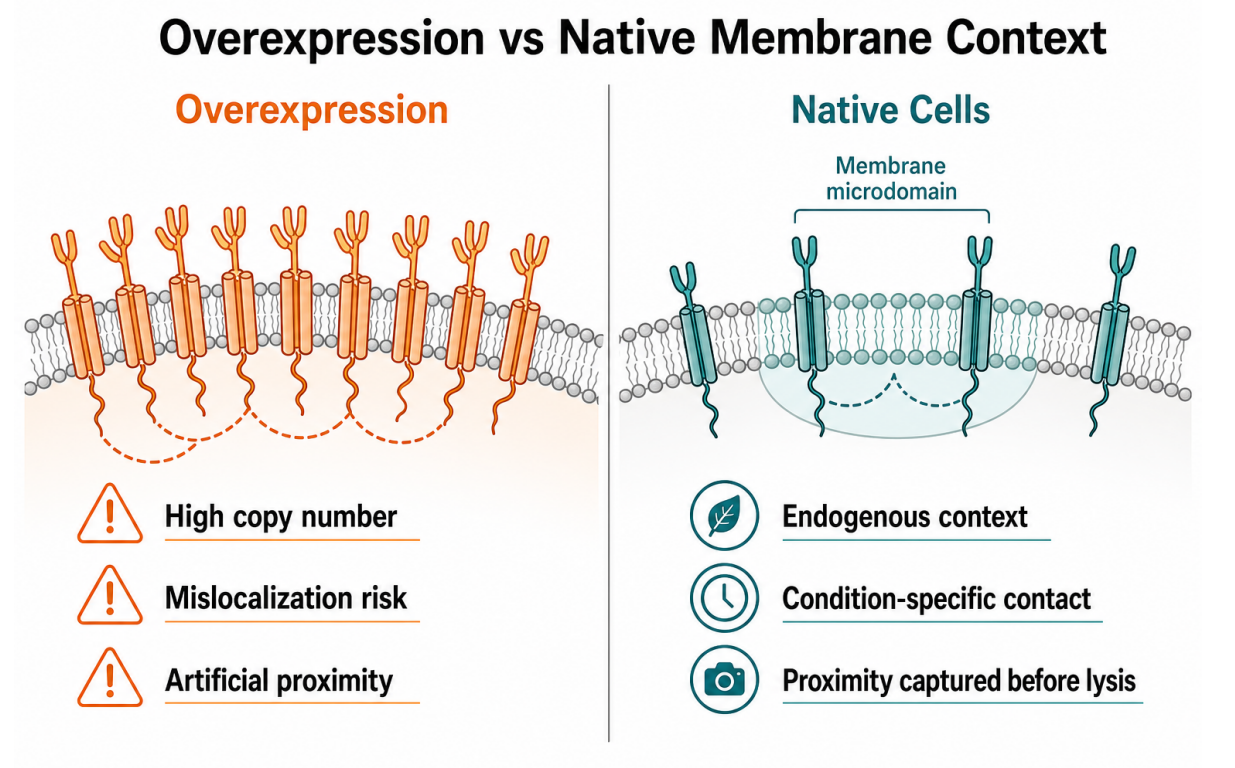
Figure 1. Why overexpression can distort membrane protein interaction studies
Why Overexpression Can Mislead Membrane Protein Interaction Studies
Overexpression is often used for practical reasons. Native membrane proteins may be low abundance, poorly recognized by available antibodies, or difficult to solubilize without losing associated partners. A tagged construct can improve detection and simplify immunoprecipitation. However, higher signal does not always mean better biological fidelity. When a membrane protein is expressed far above endogenous levels, the construct can occupy compartments, membrane domains, or binding surfaces that the native protein would not normally occupy.
Several overexpression artifacts are especially common in membrane protein interaction studies:
-
Artificial proximity: High copy number increases random collisions between proteins in the same membrane compartment.
-
Mislocalization: A construct may accumulate in the ER, Golgi, endosomes, or plasma membrane at non-native ratios.
-
Trafficking saturation: Protein folding, glycosylation, chaperone handling, or vesicle transport may become overloaded.
-
Tag interference: A tag can alter topology, mask binding regions, or change membrane insertion behavior.
-
Stoichiometry distortion: Excess bait can recruit partners that would be limiting under endogenous conditions.
Overexpression can still support screening, construct testing, or early hypothesis generation. The risk appears when the result is treated as a native-cell interaction without checking expression level, localization, controls, and orthogonal evidence.
The Root Cause: Membrane Context Controls Interaction Probability
Soluble protein interactions are sensitive to concentration and buffer conditions. Membrane protein interactions add spatial control. A receptor may interact with a scaffold only inside a lipid raft. A transporter may contact a regulatory protein only after ligand exposure. A signaling protein may contact a membrane target for seconds before the contact disappears.
Overexpression changes the interaction probability by changing local concentration and cellular distribution. If the bait protein is present at tenfold or hundredfold higher levels, weak incidental contacts can become detectable. If the protein is trapped in a trafficking compartment, the experiment may enrich partners from that compartment rather than partners from the intended biological site. If detergent extraction disrupts lipid-dependent organization, a true native-cell contact may disappear before IP-MS analysis.
For this reason, membrane protein interaction data should be interpreted as workflow- dependent evidence. Co-IP, affinity purification, proximity labeling, and native-cell crosslinking each ask a different question. The key is to match the method to the interaction claim.
How Native-Cell Crosslinking Preserves Proximity
In-cell crosslinking MS captures protein proximity before extraction. A cell-permeable crosslinker is added to intact cells under a defined condition. When reactive residues are close enough, the reagent forms a covalent bridge. After quenching, cells are lysed, proteins are digested, and crosslinked peptides are analyzed by high-resolution LC-MS/MS. The detected peptide pairs can then support protein-level proximity maps or residue-level structural constraints.
This timing matters. Instead of asking which complexes survived detergent, dilution, antibody capture, and washing, the workflow asks which proteins or residues were close during the crosslinking window. The approach is useful for weak, transient, membrane-associated, or condition-dependent contacts that may not survive conventional extraction.
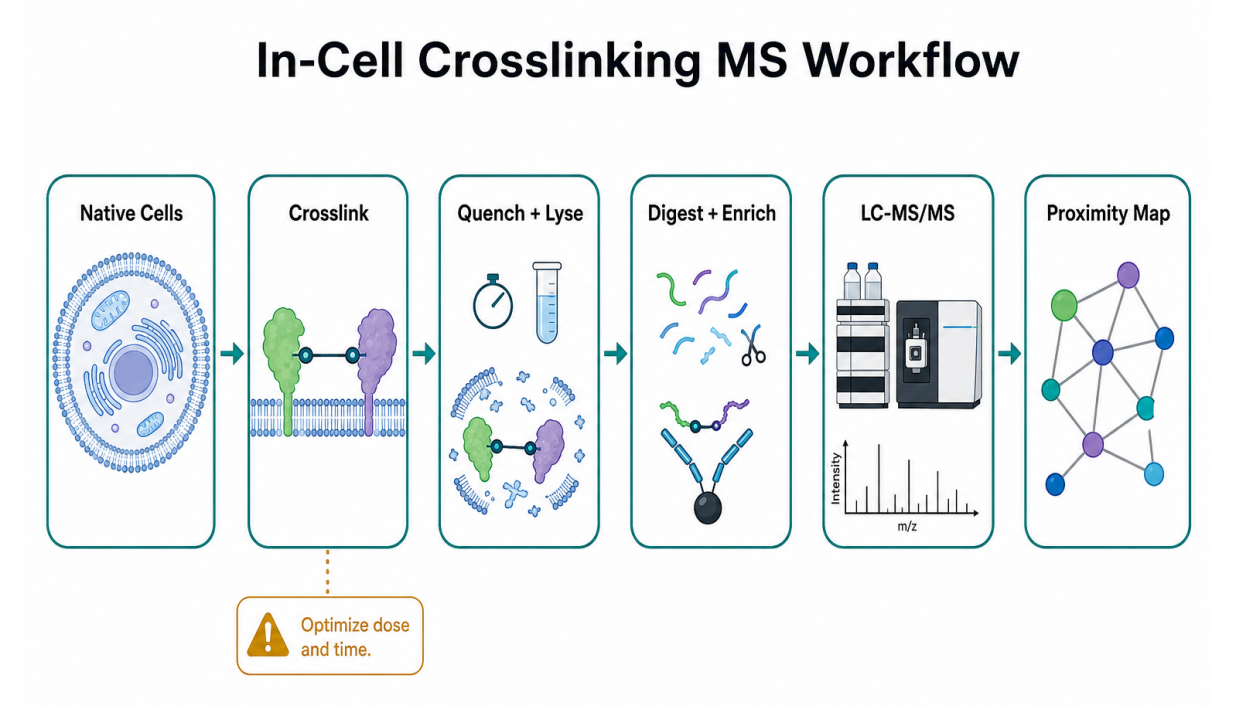
Figure 2. Crosslinking MS workflow from native cells to proximity map
A typical workflow includes six steps: culture cells under the relevant condition, add a suitable cell-permeable crosslinker, optimize dose and time, quench the reaction, digest and analyze by LC-MS/MS, then identify crosslinked peptides and interpret proximity evidence.
The method still needs controls. Crosslinker permeability, spacer length, reactive chemistry, cell viability, digestion efficiency, MS depth, and database search strategy affect the result.
A Practical Guide for Studying Native Membrane Protein Interactions
Researchers can reduce overexpression-related risk by planning around the biological claim. "Protein A and Protein B are close in stimulated native cells" is different from "Protein A binds directly to Protein B through domain X." The first claim may be supported by proximity evidence. The second usually needs orthogonal validation.
Use the following planning sequence:
| Step | Key Question | Practical Check |
| Expression strategy | Is the bait close to endogenous abundance? | Compare endogenous, tagged, and overexpressed levels when possible |
| Localization | Is the protein in the expected compartment? | Use microscopy, fractionation, or marker proteins |
| Cell state | Is the biological condition preserved? | Monitor treatment timing, viability, pathway markers, and stress response |
| Crosslinking design | Does the crosslinker reach the relevant membrane region? | Test dose, time, quenching, and protein recovery |
| MS interpretation | Are crosslinked peptides reproducible and plausible? | Use biological replicates, FDR control, and distance constraints |
| Validation | Does independent evidence support the claim? | Use Co-IP, reciprocal IP, mutagenesis, HDX-MS, or functional assays |
When overexpression is unavoidable, expression level should be treated as an experimental variable. A lower-expression construct may produce weaker signal but better biological relevance. Endogenous tagging may be preferred when the interaction depends strongly on native abundance.
Expected Results and How to Validate Them
A well-designed crosslinking MS experiment can produce several output types. The most direct output is a list of crosslinked peptides. These peptide pairs show which residues were close enough to react under the tested condition. When mapped to proteins, the data can support proximity networks, complex models, or condition-specific changes.
Typical outputs include:
| Output Type | How Researchers Can Use It | Interpretation Limit |
| Crosslinked peptide list | Identify peptide pairs detected by LC-MS/MS | Requires spectrum quality and FDR control |
| Protein proximity map | Prioritize candidate membrane partners | Proximity does not always mean direct binding |
| Inter-protein crosslinks | Support candidate protein-protein contacts | Needs biological replication and validation |
| Condition-specific crosslinks | Compare untreated, stimulated, or drug-treated cells | Changes may reflect abundance or accessibility |
Validation should match the strength of the claim. If the project supports a mechanism, researchers should add independent evidence. Co-IP can test complex association. Mutagenesis can test whether a region is functionally important. HDX-MS can assess interface-related conformational changes.
Key Controls and Common Pitfalls
The most important control is a no-crosslinker sample. This control shows which peptides or proteins appear without crosslinking chemistry. Dose and time controls are also important because excessive crosslinking can damage cells, reduce digestion efficiency, or increase nonspecific links.
Cell-state controls are especially important for membrane proteins. A condition-dependent membrane contact can be lost if cells are stressed, overtreated, or harvested at the wrong time. Researchers should consider viability, localization, pathway activation, and sample-matched untreated controls.
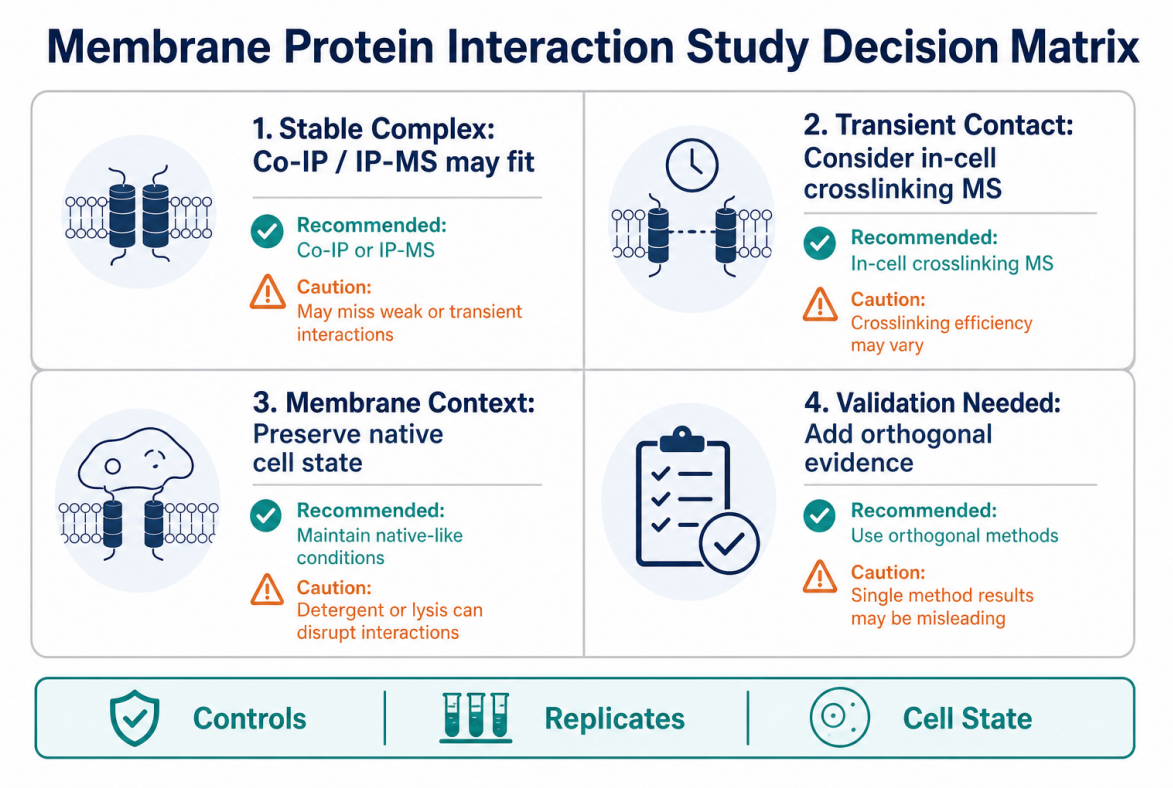
Figure 3. Decision matrix for choosing Co-IP, IP-MS, crosslinking MS, and validation
Common pitfalls include:
-
interpreting every crosslink as direct binding
-
using only overexpressed bait without localization checks
-
skipping no-crosslinker and dose controls
-
ignoring detergent effects on membrane organization
-
treating low detection as proof that no interaction occurred
-
making a mechanistic claim without orthogonal validation
The strongest studies combine method fit, controls, and cautious interpretation. Native-cell crosslinking provides proximity evidence, but the final biological conclusion should also consider expression level, localization, peptide evidence, and validation results.
When Should Researchers Use In-Cell Crosslinking MS?
Researchers should consider this workflow when overexpression results look stronger than expected, when Co-IP data conflict with functional evidence, or when the interaction depends on membrane localization. The method is also useful when the contact is expected to be weak, transient, stimulus-dependent, or sensitive to detergent extraction.
Native-cell crosslinking is particularly relevant for:
-
receptor signaling complexes
-
transporter or channel regulatory partners
-
viral entry and host-factor interactions
-
drug-induced membrane protein proximity
-
lipid microdomain-dependent signaling
The method may be less suitable when sample amount is too low, reactive residues are inaccessible, the crosslinker cannot reach the relevant compartment, or no validation plan exists.
Frequently Asked Questions
1. Why can overexpression create false membrane protein interactions?
Overexpression increases local protein concentration and can alter localization, trafficking, folding, and stoichiometry. These changes can create artificial proximity or enrich partners from the wrong cellular compartment.
2. Does in-cell crosslinking MS prove direct binding?
No. The method provides proximity evidence. A crosslink shows that two reactive residues were close enough for the reagent to bridge them. Direct binding usually needs additional validation.
3. Can this workflow replace Co-IP?
Usually no. Co-IP and IP-MS are useful for complexes that survive extraction and enrichment. Native-cell crosslinking is better suited for proximity evidence, weak contacts, transient interactions, and extraction-sensitive membrane complexes.
4. What controls are needed for membrane protein crosslinking studies?
Useful controls include no-crosslinker samples, dose and time controls, quenched controls, untreated or matched cell-state controls, biological replicates, localization checks, and orthogonal validation.
Conclusion
Membrane protein interactions are strongly shaped by native cellular context. Overexpression can make detection easier, but it can also create artificial proximity, mislocalization, trafficking stress, and distorted stoichiometry. In-cell crosslinking MS helps researchers capture protein proximity before lysis, making the method valuable for weak, transient, condition-dependent, and membrane-associated contacts.
For teams deciding whether an overexpression result reflects native biology, the next step should be a method-fit discussion, not only another round of construct optimization. Contact MtoZ Biolabs to discuss whether native-cell crosslinking, IP-MS, membrane protein identification, HDX- MS, or a combined protein-protein interaction analysis workflow is appropriate for the research question.
How to order?




