






Step-by-Step LC-MS Peptide Mapping
- Does observed coverage support the intended identity or comparability claim?
- Are unsupported regions explained with sufficient QC commentary?
- Are modified peptides assigned with evidence appropriate to the project standard?
- Does the report format meet internal QC or documentation requirements?
Introduction
Biologics teams often need peptide-level evidence before a lot can be released, compared across batches, or documented for regulatory review. Intact mass data may confirm the overall molecular weight, yet the project still lacks residue-level confirmation of sequence identity, modification placement, or batch similarity. LC-MS peptide mapping is the workflow most teams use to close that gap, but the practical steps are easy to underestimate when the first request is sent without a defined digestion plan, reference sequence, or reporting standard.
A successful LC-MS peptide mapping project depends on decisions made before the sample reaches the instrument. Reporting goal, reference sequence quality, digestion strategy, LC-MS/MS acquisition depth, and review criteria all shape whether the first run produces a usable coverage map. Teams that treat peptide mapping as a single injection step often face repeat digestion, weak coverage, or reports that do not support the intended QC or comparability decision. A stepwise workflow reduces those delays by aligning sample preparation, analysis, and interpretation with the actual project need.
When a Stepwise LC-MS Peptide Mapping Plan Is Needed
This workflow is most useful when a biologics program needs structured sequence coverage evidence rather than informal confirmation alone.
Common scenarios include lot release or CMC documentation, where a searchable peptide table and coverage map may be required for internal QC review; comparability after a process or site change, where reference and test materials must be compared at the peptide level; PTM localization during development, where oxidation, deamidation, glycosylation, or conjugation sites must be assigned with fragment support; and investigation of unexpected mass differences, where clipped forms, sequence variants, or modification drift must be traced to specific regions. In each case, the value of LC-MS peptide mapping comes from linking observed peptides to the expected sequence with traceable spectral evidence.
Step-by-Step LC-MS Peptide Mapping Workflow
A practical LC-MS peptide mapping workflow can be organized into six linked steps. Each step affects coverage depth, PTM assignment confidence, and whether the final report supports the intended decision.
Step 1: Define the mapping goal
State whether the priority is identity confirmation, PTM localization, comparability between lots, or release-support documentation. Identity confirmation may require broad tryptic coverage across major chains. PTM review may need enriched acquisition or manual inspection of modified peptides. Comparability projects require paired sample design and consistent digestion conditions between reference and test materials. Defining the goal before digestion prevents a technically successful run from producing the wrong report format.
Step 2: Prepare the reference sequence and search database
Provide the mature amino acid sequence for each chain or domain included in the mapping scope. Include fusion boundaries, expected disulfide architecture, known variants, and any sequence features that affect enzyme selection. Database searching and coverage mapping depend on this reference. Missing signal peptides, outdated construct files, or incorrect chain pairing can reduce assignment confidence even when LC-MS/MS data quality is strong.
Step 3: Review sample suitability and buffer compatibility
Confirm sample purity, concentration, storage history, and buffer composition before digestion begins. Host cell proteins, aggregates, detergents, salts, and excipients can suppress peptide recovery or distort chromatography performance. Low product concentration can weaken MS/MS signals and leave difficult regions unsupported. Feasibility review at this stage is often the fastest way to prevent repeat sample submission.
Step 4: Select digestion and sample preparation conditions
Choose enzyme strategy based on product format and coverage needs. Trypsin is widely used for routine mAb mapping because it produces peptides well suited to LC-MS/MS. Alternative enzymes or multi-enzyme combinations may be needed for fusion proteins, difficult regions, or products with low initial coverage. Reduction and alkylation are often required for disulfide-linked domains. Cleanup and desalting before LC injection improve chromatographic stability and reduce ion suppression.
Step 5: Acquire LC-MS/MS data with appropriate depth
Separate peptides by liquid chromatography and collect high-quality MS/MS spectra for precursor ions across the map. Gradient length, acquisition time, and instrument resolution affect how many peptides receive confident fragment evidence. Projects with PTM localization or variant detection may require broader acquisition coverage than a basic identity check. Replicate injections or extended LC gradients can improve support for low-abundance peptides when sample amount allows.
Step 6: Search, map coverage, review, and report
Match spectra to the reference sequence to generate peptide spectrum matches, coverage maps, and modification assignments. Automated search results should be reviewed for false matches, missed cleavages, ambiguous modified peptides, and unsupported regions. The final report should document search parameters, observed coverage, PTM assignments with confidence notes, comparability commentary when applicable, and QC comments on any gaps that remain unresolved.
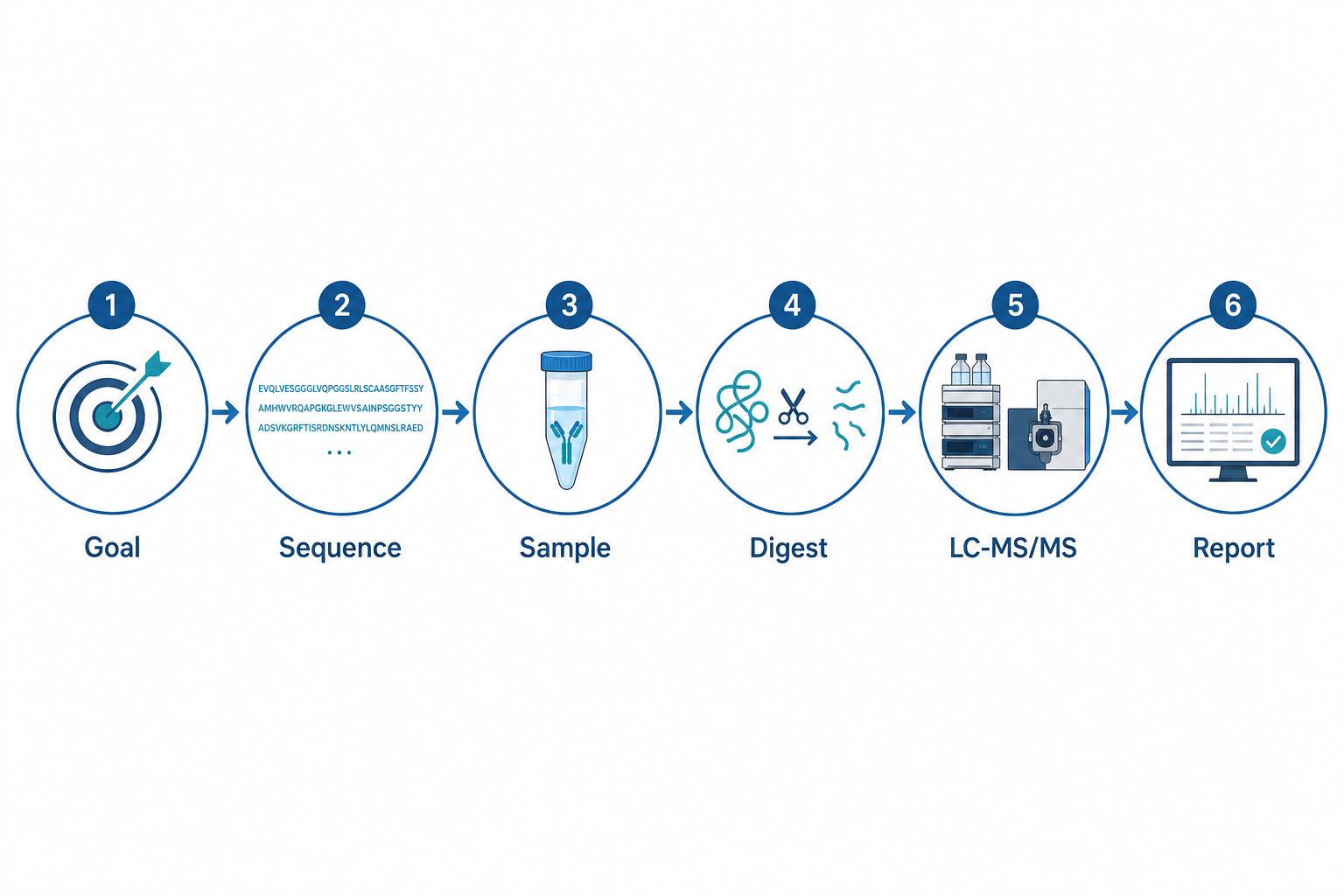
Figure 1. LC-MS peptide mapping moves through six linked steps from project scoping to searchable coverage reporting.
Related Services
Teams building an LC-MS peptide mapping workflow often evaluate adjacent primary structure services at the same time. Relevant options include:
Biopharmaceutical Peptide Mapping Analysis Service
Comprehensive Peptide Mapping Service
Peptide Mapping Analysis Service
Primary Structure Analysis Service
Protein Full Sequence Coverage Analysis Service
Researchers planning LC-MS peptide mapping can consult MtoZ Biolabs to review sample type, digestion strategy, and reporting depth before analysis begins.
Inputs Required at Each Workflow Step
The table below summarizes what should be confirmed before each major step begins. It supports project planning but does not replace sample-specific feasibility review.
|
Workflow Step |
What to Confirm |
Common Failure Point |
|---|---|---|
|
Define mapping goal |
Identity, PTM, comparability, or QC documentation target |
Report format does not match the decision need |
|
Reference sequence setup |
Mature chain sequences and domain boundaries |
Incorrect database leads to weak PSM confidence |
|
Sample suitability review |
Purity, concentration, buffer, and storage condition |
Digestion or LC-MS/MS underperformance |
|
Digestion design |
Enzyme choice, reduction/alkylation, cleanup plan |
Poor coverage or distorted modified peptides |
|
LC-MS/MS acquisition |
Gradient length, MS/MS depth, replicate need |
Low-abundance peptides remain unsupported |
|
Search and reporting |
Review criteria, PTM scope, comparability format |
Automated matches accepted without expert QC |
If one row above is incomplete, the workflow should pause for feasibility review rather than proceeding with assumptions that can force repeat analysis later.
Expected Results and How to Validate Them
A well-executed LC-MS peptide mapping project should produce evidence aligned with the goal defined in Step 1. Expected outputs often include a sequence coverage map for each chain or domain, a peptide identification table with retention time and search scores, PTM summaries when modification review is in scope, annotated spectra for critical peptides when required, and QC notes on unsupported regions or ambiguous assignments.
Validation should be defined before the report is accepted. A release-support project may require predefined coverage thresholds or tracked critical peptides. A comparability project should confirm whether peptide-level differences are consistent with the manufacturing change under review. A development project focused on modifications should distinguish confirmed localizations from ambiguous residue calls. Orthogonal data from intact mass analysis, charge variant profiling, or N-terminal sequencing can strengthen interpretation when modifications or clipped forms are central to the review.
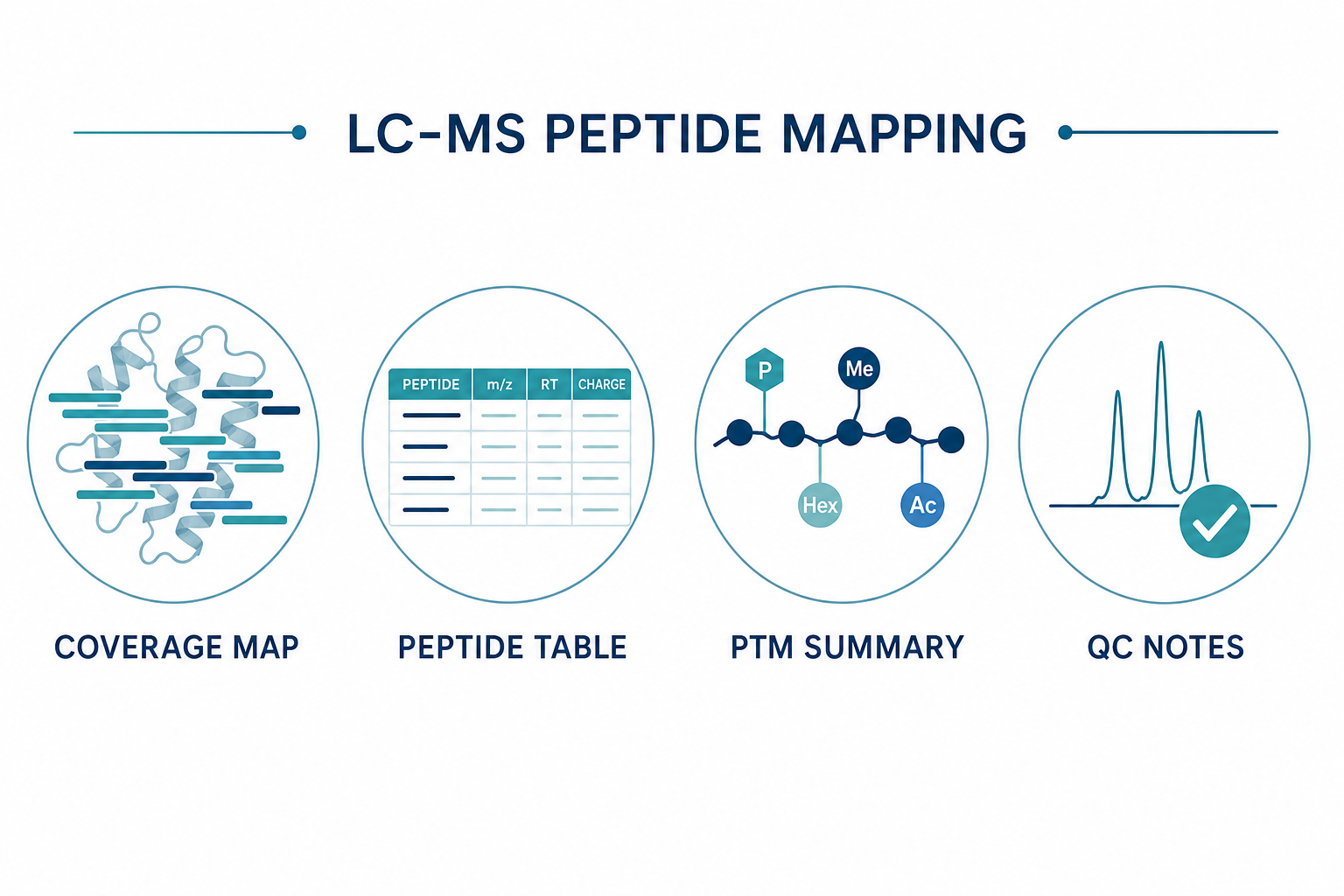
Figure 2. A useful LC-MS peptide mapping report should document coverage maps, peptide tables, modification assignments, and QC commentary matched to the project goal.
Useful validation questions after report delivery include:
Key Considerations That Prevent Rework
Several decisions are easier to make before digestion begins than after the first data review.
Match digestion depth to product complexity.
Standard mAb mapping is often more predictable than fusion proteins, ADCs, or products with repetitive or poorly ionizing regions.
Do not assume full coverage without feasibility review.
Difficult sequences may need multi-enzyme mapping or follow-up acquisition before critical regions are supported.
Treat buffer and formulation details as required inputs.
Omitting excipient or detergent information often leads to digestion optimization delays.
Plan paired samples early for comparability work.
Reference and test materials should be handled consistently before LC-MS/MS comparison begins.
Reserve enough sample for confirmatory analysis.
Low input amount can eliminate the option to rerun an alternative digestion strategy without requesting new material.
Clarify deliverable format before reporting starts.
Some teams need searchable peptide tables, annotated spectra, or report language suited to internal QC or regulatory documentation.
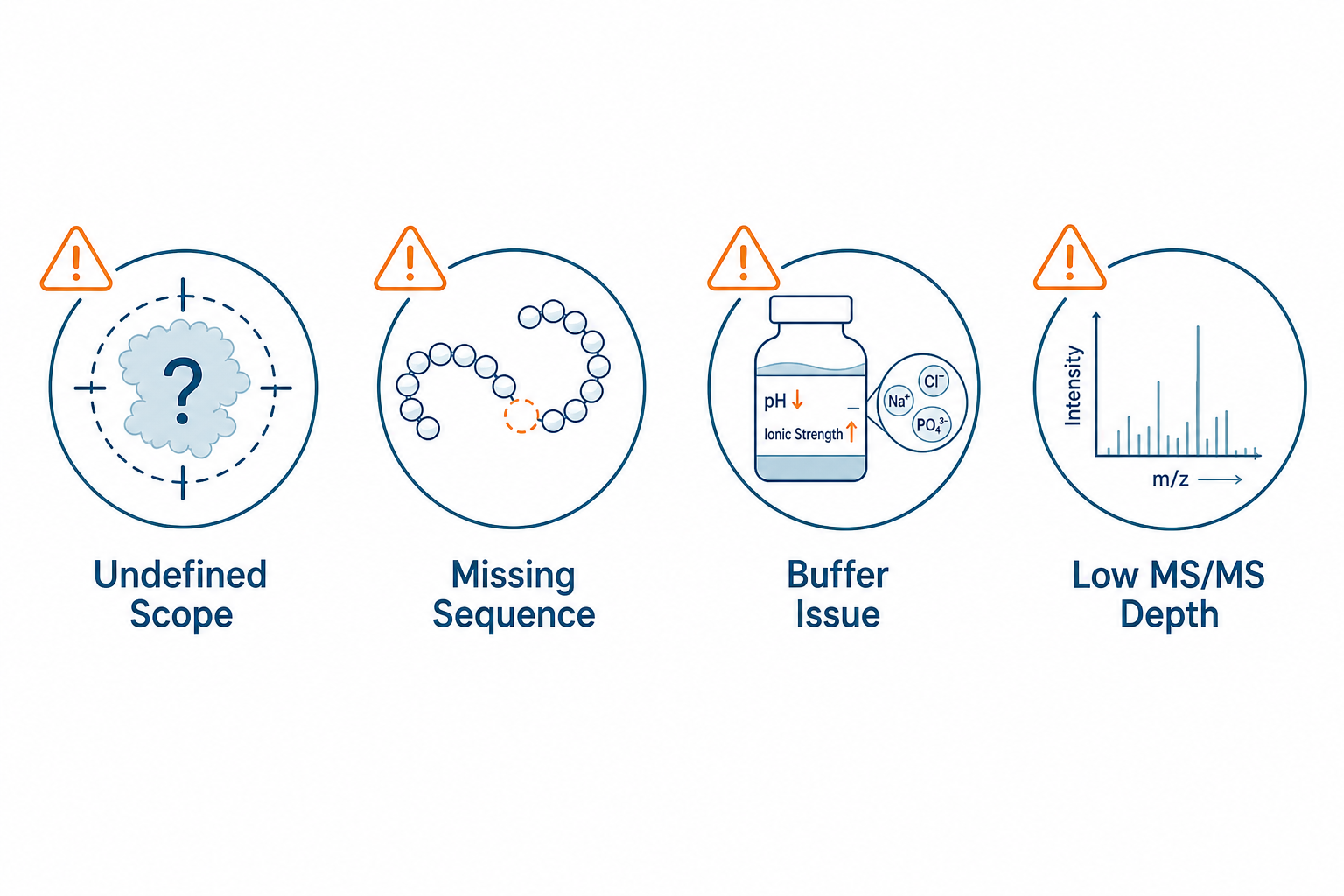
Figure 3. Most LC-MS peptide mapping rework traces back to scope, sequence, sample, or acquisition issues that can be reviewed before digestion begins.
Frequently Asked Questions
1. What is LC-MS peptide mapping?
LC-MS peptide mapping digests a protein into peptides, separates the fragments by liquid chromatography, and identifies them by tandem mass spectrometry to build sequence coverage against a reference protein sequence.
2. How is LC-MS peptide mapping different from HPLC peptide mapping?
HPLC peptide mapping compares chromatographic peptide profiles, often for routine lot monitoring. LC-MS peptide mapping adds MS/MS identification and supports residue-level coverage documentation, PTM localization, and searchable peptide evidence.
3. What reference information is required before LC-MS peptide mapping begins?
Provide the mature amino acid sequence for each chain or domain, the reporting goal, sample purity and concentration estimates, and full buffer or formulation details that may affect digestion or LC-MS/MS performance.
4. Why do some regions remain uncovered after LC-MS peptide mapping?
Coverage gaps can result from poor ionization, missed cleavages, labile modifications, repetitive sequence, low peptide abundance, or matrix interference. Multi-enzyme digestion or additional acquisition may be needed for difficult regions.
5. When should a team outsource LC-MS peptide mapping instead of running it in-house?
Outsourcing is often practical when report-ready coverage documentation is required, internal interpretation bandwidth is limited, or the product format needs broader digestion and formal reporting than the current in-house workflow supports.
Conclusion
LC-MS peptide mapping delivers residue-level primary structure evidence when the workflow is planned as a linked sequence of decisions rather than a single analytical injection. Defining the mapping goal, preparing an accurate reference sequence, confirming sample suitability, selecting the right digestion strategy, acquiring sufficient LC-MS/MS depth, and reviewing coverage with an appropriate validation standard are the steps that determine whether the first project run supports release, comparability, or development review. Most rework traces back to missing scope definition, incomplete sequence files, incompatible sample matrices, or reporting expectations that were not set before digestion began. Researchers planning LC-MS peptide mapping can contact MtoZ Biolabs to review sample status, digestion strategy, and the reporting format required for the next biologics characterization milestone.
How to order?




