






Sorbitol Analysis Service
Sorbitol, also known as D-sorbitol, is a naturally occurring polyol that is widely found in fruits, vegetables, and algae. Due to its excellent moisturizing properties, stability, and low-calorie characteristics, sorbitol is widely used in the food industry, cosmetics, pharmaceutical formulations, and biotechnological fermentation processes. In metabolic studies, sorbitol is not only an intermediate product in glucose metabolism but also an important indicator in the study of polyol metabolic pathways, plant stress resistance mechanisms, and various diseases such as diabetic complications and cataracts.
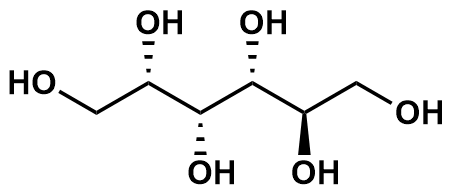
Figure 1. The Structure of Sorbitol
With the increasing demands of life science research and industrial quality standards, higher requirements have been proposed for the quantitative detection, source analysis, and metabolic tracing of sorbitol. High-precision sorbitol analysis helps researchers better understand cellular energy metabolism, evaluate the quality of food formulations, and monitor impurities in pharmaceutical production.
Equipped with advanced liquid chromatography-tandem mass spectrometry (LC-MS/MS) and high-performance liquid chromatography (HPLC) platforms, MtoZ Biolabs provides customers with high-sensitivity and reproducible sorbitol analysis service that covers both qualitative and quantitative detection, offering reliable data support for research institutions and industrial enterprises to facilitate scientific and product development processes.
Services at MtoZ Biolabs
MtoZ Biolabs’ Sorbitol Analysis Service integrate multiple analytical techniques to provide flexible testing solutions based on sample type and project requirements. Our main services include the following:
1. HPLC Quantitative Analysis
High-performance liquid chromatography (HPLC) coupled with evaporative light scattering detection (ELSD) or refractive index detection (RID) is used for precise quantification of sorbitol in samples. This method provides good linearity and reproducibility and is suitable for complex matrices such as foods, beverages, pharmaceuticals, and fermentation broths.
2. LC-MS/MS Accurate Quantitative Analysis
Liquid chromatography-tandem mass spectrometry (LC-MS/MS) enables highly sensitive detection of sorbitol, effectively eliminating background interference and achieving trace-level quantification. This method is particularly suitable for biological samples such as plasma, tissue extracts, and cell lysates, covering a quantification range from nmol to μmol levels.
3. GC-MS Analysis
For volatile or derivatized samples, GC-MS provides both structural elucidation and quantitative information. MtoZ Biolabs enhances detection sensitivity through derivatization, making it ideal for metabolite profiling and discrimination of polyol compounds in complex samples.
4. Targeted Metabolomics Detection
For studies involving polyol metabolism pathways, MtoZ Biolabs offers targeted metabolomics-based sorbitol detection. By simultaneously monitoring sorbitol along with glucose, fructose, and mannitol, this approach allows a comprehensive evaluation of polyol metabolism dynamics and provides data support for energy balance research.
5. Process and Product Testing Services
We support quality control requirements for food and pharmaceutical enterprises by offering sorbitol content determination and impurity analysis to ensure that products meet relevant standards. This service is often applied in pharmaceutical excipient analysis, health product formulation verification, and fermentation process monitoring.
Analysis Workflow
1. Sample Receipt and Pretreatment: Upon sample submission, pretreatment steps such as homogenization, extraction, and necessary deproteinization or derivatization are performed based on sample type.
2. Instrumental Detection: HPLC, LC-MS/MS, or GC-MS platforms are selected according to the analysis objective.
3. Data Acquisition and Processing: Detection signals are processed for peak identification, background subtraction, and quantitative calculation.
4. Quality Control and Validation: Internal standards, calibration curves, and replicate samples are used to ensure data reliability.
5. Report Generation: A complete analytical report and raw data files are provided.
Service Advantages
1. Multi-Platform Analysis
MtoZ Biolabs is equipped with multiple analytical instruments including HPLC, GC-MS, and LC-MS/MS, allowing customized testing strategies according to sample complexity and analytical goals. Cross-validation across platforms ensures reliable and consistent results.
2. Trace-Level Detection
Using high-resolution mass spectrometry combined with isotope-labeled internal standards, sorbitol can be quantified down to nanomolar levels in plasma, cells, plant tissues, and fermentation liquids.
3. Professional Team
MtoZ Biolabs has a team of experts with backgrounds in metabolomics and analytical chemistry who provide scientific data interpretation according to customer research goals, helping clients understand metabolic changes in sorbitol more effectively.
4. Flexible Customized Service
We offer flexible services ranging from single-sample testing to large-scale batch projects, meeting the analytical needs of research institutions, food companies, pharmaceutical enterprises, and fermentation industries.
Applications
✔️ Food and Beverage Industry: Determination of sorbitol content in food formulations to evaluate sweetener or humectant levels.
✔️ Pharmaceuticals and Biologics: Validation of excipients and studies on drug stability.
✔️ Metabolism and Physiology Research: Analysis of energy metabolism, polyol pathway dynamics, and metabolic disease models.
✔️ Plant and Agricultural Research: Monitoring sorbitol accumulation in plants under drought or salt stress to study resistance mechanisms.
✔️ Industrial Fermentation Process Control: Monitoring polyol conversion efficiency and evaluating process optimization performance.
Sample Submission Suggestions
1. Sample Types: Serum, plasma, urine, cell extracts, tissue homogenates, food samples, fermentation broths, and others.
2. Sample Amount: At least 100 μL of liquid sample or 50 mg of solid sample is recommended.
3. Storage and Transport: Store at low temperature (−20°C or below), transport on dry ice, and avoid repeated freeze-thaw cycles.
4. Sample Information: Provide sample type, pretreatment method, and analytical objective to help us design the optimal analytical protocol.
5. Special Notes: If samples contain high salt or high protein content, please inform us in advance to optimize pretreatment steps.
MtoZ Biolabs provides detailed sample submission guidelines and transportation recommendations to ensure stability and integrity during analysis.
Deliverables
1. Raw data files from sample analysis
2. Quantitative results tables
3. Experimental conditions and quality control records
4. Optional data statistics and graphical presentation
5. Comprehensive technical report
For more information about the sorbitol analysis service or to request a customized testing plan, please contact the professional team at MtoZ Biolabs. We are committed to providing integrated technical support for your research and production needs.
How to order?




