






Signal Peptide Sequence Analysis Service
-
Signal peptide sequence confirmation: analyzes the amino acid composition of the signal peptide and verifies whether its structure is consistent with the intended design.
-
Cleavage site identification: determines the actual removal site of the signal peptide and defines the starting position of the mature protein.
-
Potential modification analysis: identifies post-translational modifications such as acetylation or formylation and evaluates their impact on signal peptide function.
MtoZ Biolabs provides signal peptide sequence analysis service using high-resolution mass spectrometry platforms and precise sequence interpretation methods to analyze the composition, cleavage site, and potential modifications of signal peptides. This service supports recombinant protein expression optimization, secretion pathway research, and protein processing analysis. It is suitable for academic laboratories, biopharmaceutical companies, and industrial clients, and helps improve secretion efficiency, verify signal peptide accuracy, and guide rational engineering design.
What is Signal Peptide
A signal peptide is a short sequence of approximately 15 to 30 amino acids located at the N terminus of a protein that directs nascent polypeptide chains into the endoplasmic reticulum, secretory pathways, or other cellular compartments.
Signal peptides generally contain three structural regions, including the positively charged N region, the hydrophobic H region, and the C region associated with the cleavage site.
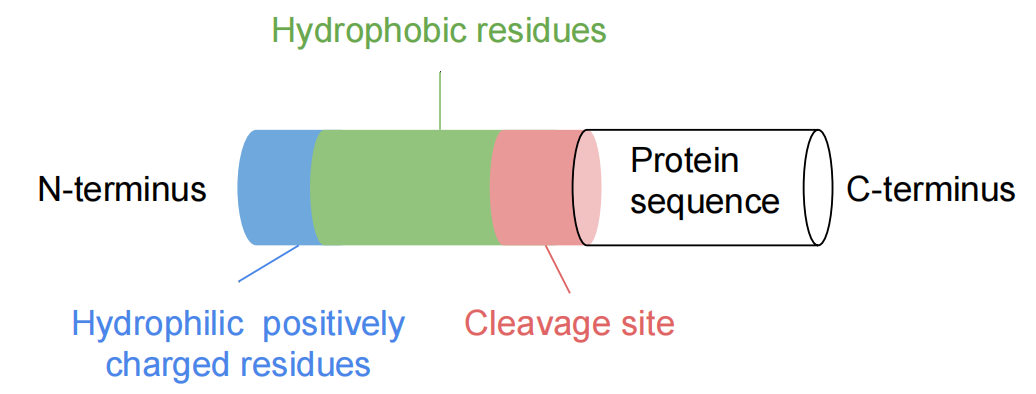
Baker, JA. The University of Manchester. 2020.
Figure 1. The Key Components of a Signal Peptide
The composition, hydrophobicity, and cleavage site of a signal peptide determine whether a protein can be correctly secreted or localized. Therefore, signal peptide sequence analysis is essential for protein expression system development, antibody production, cell engineering, and structural biology studies.
Signal Peptide Sequence Analysis Service at MtoZ Biolabs
MtoZ Biolabs offers Signal Peptide Sequence Analysis Service using LC MS MS and multimodal sequence interpretation algorithms to provide accurate identification and verification of signal peptide sequences. The service includes sequence confirmation, cleavage site identification, and potential modification analysis.
This service supports applications including design verification, recombinant protein production assessment, and discovery of signal peptides in natural samples.
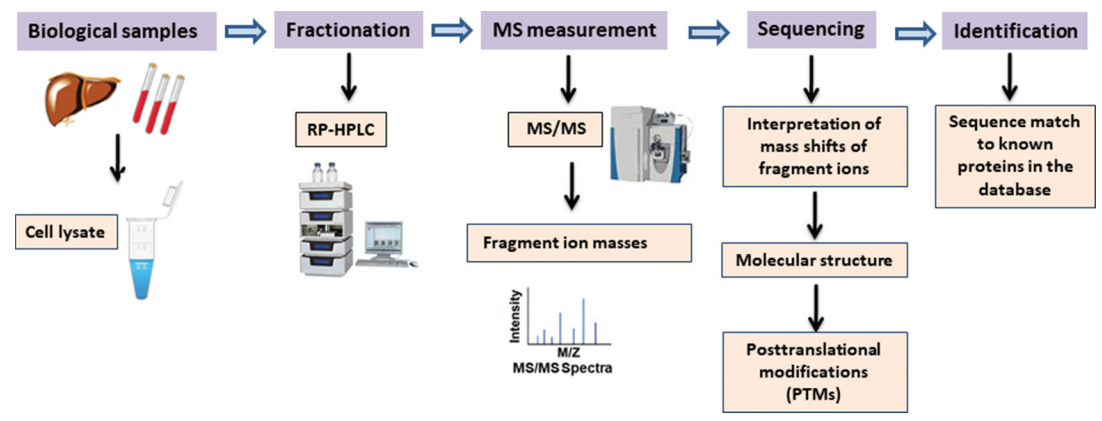
Workflow of Signal Peptide Sequence Analysis Service
Why Choose MtoZ Biolabs
☑️ Advanced instrumentation: equipped with high-resolution mass spectrometry systems such as Orbitrap Fusion and Q Exactive HF to enable precise detection of low-abundance signal peptides.
☑️ Extensive sequence interpretation experience: long-term expertise in peptide sequencing, PTM analysis, and protein processing research, with deep familiarity with signal peptide characteristics.
☑️ Robust analysis algorithms: integrates de novo sequencing, database matching, and manual validation to enhance sequence interpretation accuracy.
☑️ Flexible data output and technical support: provides tailored analytical guidance based on the client’s expression system and engineering requirements.
Applications of Signal Peptide Sequence Analysis Service
🔹 Recombinant protein expression optimization: verifies whether the signal peptide sequence is correct and whether cleavage is complete to improve protein yield.
🔹 Antibody engineering: confirms accurate removal of signal peptides from light or heavy chains to prevent expression failure caused by sequence abnormalities.
🔹 Natural protein processing research: identifies signal peptides and cleavage positions at the N terminus of unknown proteins.
🔹 Secretion pathway studies: evaluates the relationship between signal peptide sequence features and secretion efficiency.
🔹 Cell engineering and synthetic biology: provides data to support redesigning or replacing signal peptides.
🔹 Protein structural research: determines the true N-terminal sequence of the mature protein to improve the accuracy of downstream structural analysis.
Deliverables
1. Signal peptide sequence information
2. Cleavage site identification
3. MS/MS fragmentation spectra and supporting evidence
4. Potential modification analysis, including N-terminal modifications
5. QC report, experimental methods, and parameter descriptions
FAQs
Q1: What types of samples are suitable?
This service is suitable for purified proteins, expression products, peptide mixtures, and natural samples as long as the sample amount and purity meet mass spectrometry requirements.
Q2: What is the service's general workflow?
MtoZ Biolabs provides multiple standard formats to support different analysis needs. Deliverables typically include
• Raw sequence analysis files or computational prediction files
• Processed results in CSV or Excel format, including signal peptide regions, cleavage sites, structural features, and cross-species alignment information
• PDF summary reports describing analytical methods, quality control information, and key findings
• High-resolution graphics or visualization files in TIFF or PNG formats
Additional formats can be provided upon request.
Q4: How should I prepare my samples?
To ensure accuracy and reproducibility, MtoZ Biolabs recommends the following guidelines.
1. Sample Type: protein sequences, peptide sequences, expression vector sequences, CDS or full-length gene sequences are all acceptable.
2. Sample Purity: experimental samples should be free of excessive salts, detergents, or nucleic acid contamination to avoid interference with sequence interpretation.
3. Amount Requirement: no quantity requirement for sequence files; for expression products, provide at least 50 to 100 μg.
4. Storage and Shipping: sequence files may be submitted electronically; wet samples should be stored at -20℃ or -80℃ and shipped on dry ice.
5. Documentation: include sample origin, sequence format, species information, known annotations, and target regions of interest.
For more information, please refer to Sample Submission Guidelines for Proteomics and Sample Submission Guidelines for Metabolomics.
If you are unsure about your sample preparation, our technical team can provide personalized pre-analysis consultation and a sample submission guide to help you optimize preparation and shipping conditions.
Start Your Project with MtoZ Biolabs
If you are working on signal peptide identification, recombinant protein expression optimization, or protein processing pathway research, contact us. Our team will provide professional technical support and high quality data to accelerate your scientific and development projects.
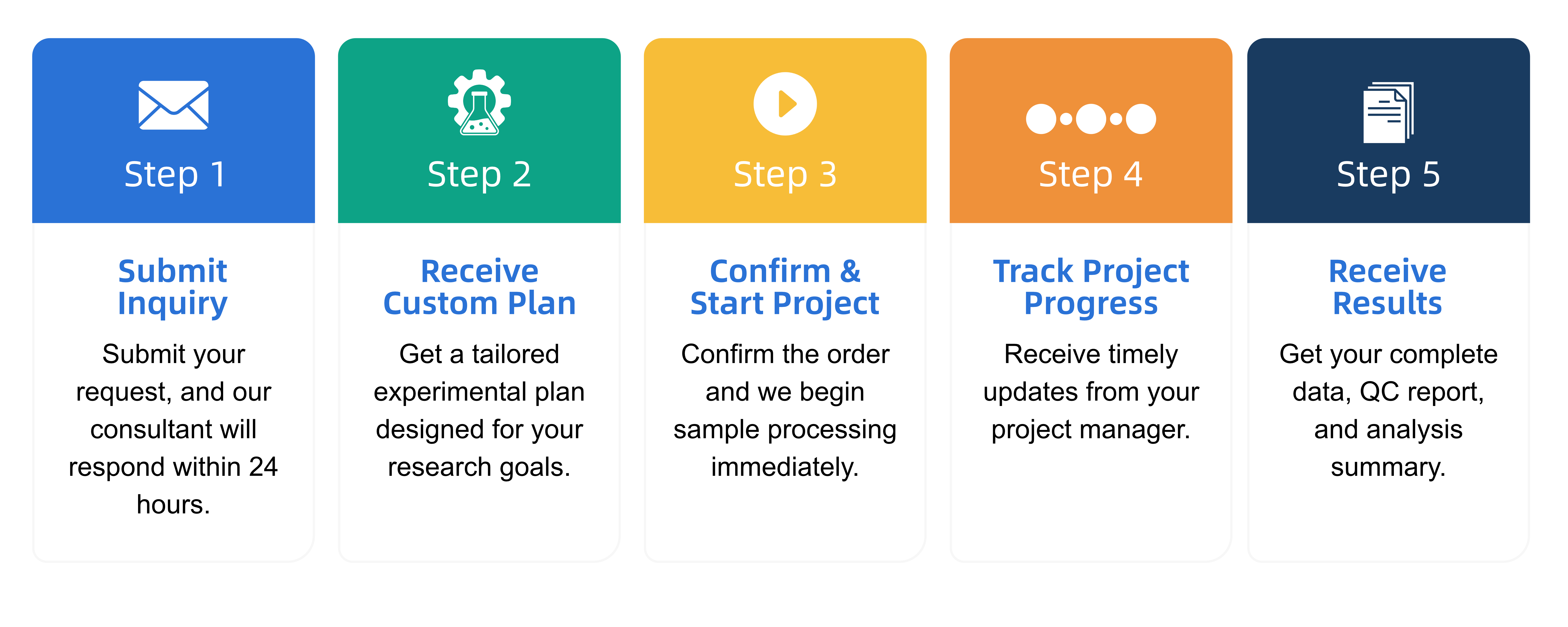
How to order?




