






Serum and Plasma Proteomics for Disease Biomarker Discovery
Serum and plasma proteomics can support disease biomarker discovery when the study compares well-defined groups under matched matrix handling and treats LC-MS/MS output as candidate generation, not final diagnostic proof. The most useful early decision is whether circulating proteins are the right readout for the disease question. If they are, the next decisions are matrix choice, group consistency, and whether the first round should be a broad discovery comparison or a depth-focused path aimed at scarcer proteins.
Biomarker discovery often fails not because of a single analytical step, but because study design, sample quality, and discovery output are not separated clearly from later marker validation. A defensible serum or plasma biomarker project keeps those stages separate.
When Serum or Plasma Fits a Biomarker Question
Serum and plasma are common starting points when the biology is expected to leave a circulating protein signature. They are accessible, repeatable, and well suited to case-control or longitudinal research designs that compare protein abundance across defined study groups.
Serum contains the protein profile remaining after clotting, which can consume or release clotting-related and cellular proteins. Plasma retains more clotting components and represents anticoagulated blood. For biomarker discovery, the matrix is part of the measurement. Mixing serum and plasma within one primary comparison can introduce matrix-related differences that confound interpretation of disease-associated protein changes. Choose one matrix for the main comparison and keep it consistent across all groups.
Plasma biomarker studies also need a consistent anticoagulant. EDTA or citrate is preferred. Heparin is not recommended. Anticoagulant differences can shift the protein background enough to weaken a candidate list.
CSF can be closer to nervous-system biology, but serum and plasma remain the practical entry point when the question concerns systemic circulation, organ-associated protein release, or immune-related protein changes rather than direct CNS proximity.
|
Biomarker planning factor |
Serum |
Plasma |
Planning note |
|---|---|---|---|
|
Sampling convenience |
High |
High |
Both support repeated research sampling |
|
Clotting-factor background |
Reduced or altered by clotting |
More clotting components retained |
Do not mix in one primary comparison |
|
Anticoagulant sensitivity |
Not applicable |
Must remain consistent |
For plasma, keep EDTA or citrate consistent |
|
Typical use in discovery |
Broad circulating signatures |
Broad circulating signatures with clotting proteins retained |
Match matrix to the biological claim |
|
Common failure mode |
Serum/plasma mixing |
Anticoagulant inconsistency |
Fix matrix rules before collection |
What Discovery Proteomics Can and Cannot Deliver
In serum or plasma biomarker discovery, LC-MS/MS is strongest at generating a ranked list of differential proteins across compared groups. That list can include abundance changes, annotation context, and pathway views that help prioritize follow-up.
Standard research outputs can include differential protein analysis, GO/KEGG/COG annotation, protein interaction context, and Reactome pathway analysis for supported serum or plasma species. Supported Reactome species currently include Bos taurus, Canis familiaris, Gallus gallus, Homo sapiens, Mus musculus, Rattus norvegicus, Sus scrofa, and Xenopus tropicalis. Confirm species support before planning that layer into the report.
What discovery proteomics does not deliver by itself is a validated clinical biomarker. A protein that changes between groups in one discovery set is a candidate. Sensitivity, specificity, cutoffs, and performance in independent samples require separate validation work. Pathway enrichment can suggest biology worth testing, but it does not confirm that any single protein is a reliable marker.
That boundary matters for project planning. Discovery proteomics answers which proteins differ under the current design. Validation answers whether a short list behaves consistently enough to support the next decision.
Study Design Choices That Shape the Candidate List
Biomarker discovery quality is shaped before LC-MS/MS starts. Four planning choices can have an outsized impact.
Group definition: compared groups should reflect the disease question cleanly. Broad phenotypes, mixed disease stages, or uneven treatment exposure can dilute real signals and inflate false candidates. For biomarker discovery, it helps to write down inclusion rules before samples are collected so the later differential list can be explained without post hoc relabeling.
Matrix and handling consistency: matched serum or matched plasma, consistent anticoagulant for plasma, and similar freeze history across groups. Severely hemolyzed, lipemic, contaminated, precipitated, or repeatedly freeze-thawed samples are not recommended. Infectious samples are not accepted. A candidate detected mainly in compromised aliquots should be treated as potentially confounded before it is prioritized for validation.
Claim depth: if the biomarker hypothesis depends on low-abundance circulating proteins, an undepleted screen may not provide sufficient depth. High-abundance proteins such as albumin and immunoglobulins can dominate the profile. Depletion may improve coverage, but it can also introduce processing variability or remove associated proteins. Discuss the trade-off before the last aliquots are used.
Acquisition route also follows the claim.DDA can support flexible discovery workflows and protein identification, commonly processed with MaxQuant or Proteome Discoverer. DIA often provides greater data completeness and quantitative consistency across matched cohorts, commonly using Spectronaut or DIA-NN. The route should follow the study design, desired depth, and platform rather than sample number alone. Platform selection among Orbitrap Exploris 480, timsTOF Pro, and Orbitrap Astral can follow once the sample and acquisition plan is defined.
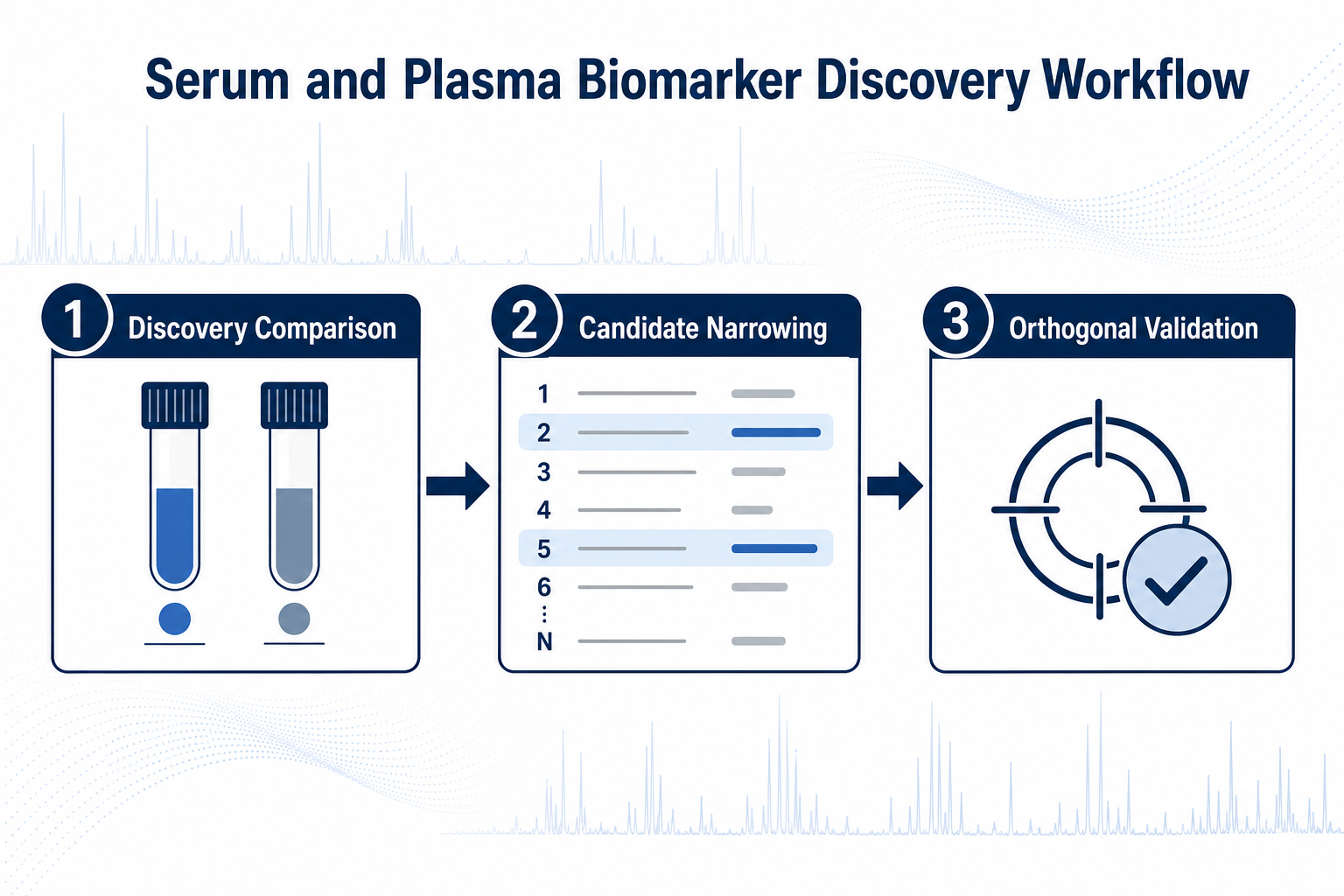
Figure 1. Discovery proteomics generates candidates; validation is a separate later stage.
How to Move from Discovery Output to Defensible Candidates
A practical biomarker path usually has three stages.
Stage 1, discovery comparison: run a claim-matched serum or plasma comparison with matrix rules fixed and sample quality screened. Use the output to rank proteins that differ consistently enough to merit attention.
Stage 2, candidate narrowing: reduce the list to proteins that are biologically plausible, technically supported by the data, and relevant to the disease question. Annotation layers help here, but they should not replace technical review of the differential evidence.
Stage 3, targeted verification and validation: test a short priority list in a separate workflow. Targeted MS can verify selected candidates, while immunoassays or other independent methods may provide orthogonal validation depending on the protein and the intended decision.
Teams often lose time by widening discovery again instead of validating a short list. Repeating the same broad, undepleted design may reproduce dominant signals without resolving lower-abundance candidates. A redesigned workflow or targeted follow-up is often more informative than an unchanged repeat.
Common Reasons Biomarker Discovery Lists Fail to Hold Up
Several patterns recur across serum and plasma biomarker projects.
Matrix drift: serum in one group and plasma in another, or mixed anticoagulants in a plasma comparison.
Over-interpretation: describing discovery differentials as confirmed diagnostic markers without independent validation.
Dynamic-range mismatch: expecting low-abundance biomarker candidates from an undepleted screen never designed for that range.
Sample-quality noise: hemolysis or unequal freeze-thaw histories adding variability that may be mistaken for disease-associated change.
Confounded comparison: groups differ in medication, fasting state, collection timing, or comorbidity in ways that were not planned into the design.
A practical review habit is to ask whether each top candidate could be explained by matrix drift, handling noise, or group imbalance before moving it into validation. That review saves validation spend for proteins that still look plausible after design scrutiny.
Reading the discovery report against these failure modes is often more useful than repeating the same acquisition with unchanged design.
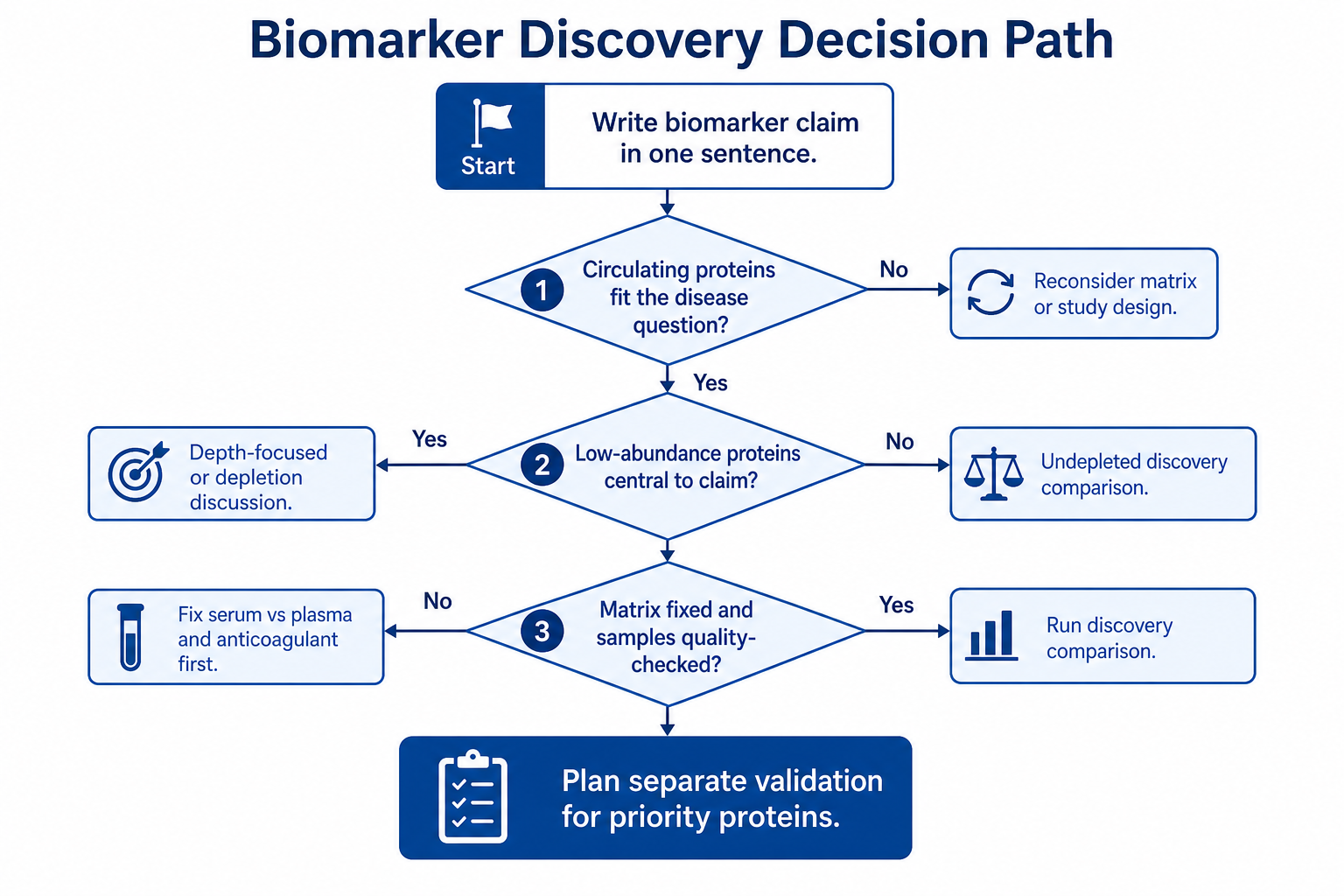
Figure 2. Match matrix, depth path, and follow-up to the biomarker claim before collection.
Biomarker Discovery Checklist
Write the biomarker claim in one sentence.
Choose serum or plasma for the primary comparison and keep it consistent.
For plasma, use EDTA or citrate and keep anticoagulant consistent across groups.
Flag questionable aliquots and apply the same predefined quality criteria across all study groups before shipment.
Define compared groups clearly enough that a differential list can be interpreted.
Decide whether low-abundance coverage is essential in round one.
Plan validation separately for the short list of priority proteins.
Confirm species support for planned annotation layers, including Reactome where needed.
Settle matrix, group, and preprocessing decisions before collection, and resolve sample-quality or submission issues before analysis begins. MtoZ Biolabs can review matrix type, anticoagulant, species, group structure, and whether discovery, depth-focused preprocessing, or later validation fits the biomarker question.
Related Services
Blood/Plasma/Serum Proteomics Solutions
High-Depth Blood Proteomics Service
Large Cohort Blood Proteomics Service
Frequently Asked Questions
1. Can serum or plasma proteomics support disease biomarker discovery?
Yes, when the study compares well-defined groups under matched matrix handling and treats the output as candidate generation rather than final marker validation.
2. Should biomarker discovery use serum or plasma?
Either can work. Choose one matrix for the primary comparison and keep it consistent. For plasma, prefer EDTA or citrate and avoid heparin.
3. Does a differential protein equal a validated biomarker?
No. Discovery identifies candidates. Validation in an independent workflow is needed before marker performance can be discussed responsibly.
4. Why do biomarker lists sometimes miss expected low-abundance proteins?
High-abundance circulating proteins can dominate undepleted profiles. If the claim depends on scarcer proteins, discuss a depth-focused path before the main comparison.
5. What report layers help prioritize biomarker candidates?
Differential analysis, GO/KEGG/COG annotation, protein interaction context, and Reactome analysis for supported species can help rank candidates. They do not replace validation.
6. What should be shared before starting a biomarker discovery project?
Share matrix type, anticoagulant, species, group definition, sample quality notes, the biomarker claim, and whether low-abundance depth or later validation is expected.
Conclusion
Serum and plasma proteomics can support disease biomarker discovery when circulating proteins match the biology, matrix rules stay consistent, and discovery output is treated as the first stage in a longer candidate path. The strongest projects define groups clearly, screen sample quality early, and reserve validation for a short priority list rather than over-reading a discovery report.
To review a serum or plasma biomarker discovery plan before collection, contact MtoZ Biolabs with matrix type, anticoagulant, species, group structure, and the decision the first-round data need to support.
How to order?




