






S-Nitrosylated Peptide Site Identification Service
-
RAW data generated by LC-MS/MS platforms
-
Processed result tables in CSV or Excel format
-
Comprehensive reports in PDF format
-
Image files in TIFF or PNG format
MtoZ Biolabs provides S-nitrosylated peptide site identification service using high-resolution mass spectrometry platforms combined with specific enrichment and chemical derivatization strategies to deliver accurate S-nitrosylation site detection and analysis for academic and industrial clients. This service helps reveal the key roles of thiol-based protein modifications in signal transduction, redox balance, and disease development, providing researchers with reliable data support and systematic research solutions.
What is S-Nitrosylation
S-nitrosylation is a reversible post-translational modification in which a nitric oxide (NO) group is covalently attached to the thiol group of a cysteine residue to form an S–NO bond. This modification affects protein conformation, enzymatic activity, protein–protein interactions, and subcellular localization.
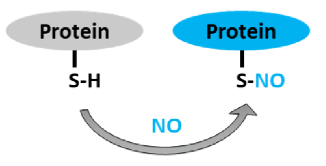
Figure 1. The Process of S-Nitrosylation
S-nitrosylated peptides are direct evidence of S-nitrosylation on proteins, and their identification reveals the specific modification sites and regulatory mechanisms. Accurate identification of S-nitrosylated peptide sites allows researchers to systematically analyze NO signaling pathways, redox regulatory networks, and their roles in disease progression, providing essential data for understanding cellular functions and developing new therapeutic targets.
S-Nitrosylated Peptide Site Identification Service at MtoZ Biolabs
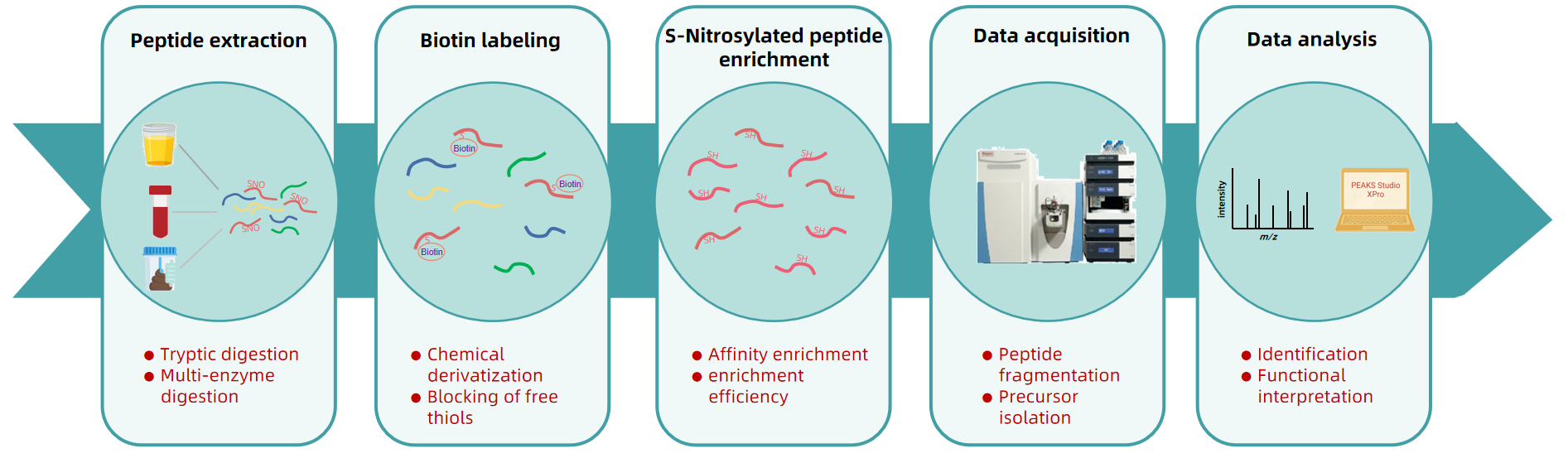
The S-nitrosylated peptide site identification service at MtoZ Biolabs integrates chemical labeling (Biotin Switch) techniques with high-resolution LC-MS/MS analysis to achieve sensitive detection and precise localization of S-nitrosylation sites.
Our service covers the complete workflow including sample preparation, thiol protection, reduction of nitrosylated residues, affinity enrichment, mass spectrometry detection, and data analysis.
Through this service, researchers can distinguish nitrosylated from unmodified proteins and determine modification sites as well as their changes under physiological and pathological conditions.
Workflow of S-Nitrosylated Peptide Site Identification Service
Why Choose MtoZ Biolabs
☑️ Advanced instrumentation: Equipped with Orbitrap Fusion Lumos and Q Exactive HF mass spectrometers to ensure high sensitivity and accuracy.
☑️ Versatile enrichment options: Compatible with Biotin Switch, SNO-RAC, and TMT labeling methods to suit different sample types.
☑️ Experienced team: Specialized in thiol modification analysis with extensive expertise in complex sample processing and data interpretation.
☑️ Standardized reporting system: Clear, structured deliverables for easy result presentation and follow-up analysis.
Applications of S-Nitrosylated Peptide Site Identification Service
1️⃣ Signal transduction studies: Elucidate NO-mediated signaling pathways.
2️⃣ Oxidative stress regulation: Reveal protein modification dynamics under oxidative environments.
3️⃣ Disease mechanism research: Explore the role of S-nitrosylation in neurodegenerative, cardiovascular, and cancer-related diseases.
4️⃣ Drug target discovery: Identify potential therapeutic targets regulated by NO.
5️⃣ Protein modification network analysis: Integrate phosphorylation and nitration data for multi-layered regulatory studies.
FAQs
Q1: What is the service's general workflow?

Q2: What data formats are provided?
MtoZ Biolabs provides standardized deliverables in multiple formats, including
Customized formats can be provided upon request to meet publication or data reanalysis needs.
Q3: How should I prepare my samples?
1. Acceptable sample types include cell lysates, tissues, serum, plasma, and purified proteins.
2. Samples should be protected from light and oxidation to maintain S–NO bond stability.
3. Recommended amounts are at least 500 µg total protein for liquid samples and 20 mg for solid samples.
4. Samples should be stored at −80°C and shipped on dry ice.
5. Include details such as sample source, preparation method, and intended analysis goals.
For more information, please refer to Sample Submission Guidelines for Proteomics and Sample Submission Guidelines for Metabolomics
If you are unsure about your sample preparation, our technical team can provide personalized pre-analysis consultation and a sample submission guide to help you optimize preparation and shipping conditions.
Start Your Project with MtoZ Biolabs
Through the S-nitrosylated peptide site identification service, MtoZ Biolabs enables researchers to systematically explore the biological significance of protein S-nitrosylation, providing high-quality data support and technical assurance for studies on signaling pathways, oxidative stress regulation, and disease mechanisms. Contact us for customized solutions and quotations.
How to order?




