






The Role of Antibody Glycosylation in Its Functionality
- Antibody format: IgG subclass, Fc-engineered variant, or fusion construct
- Expression system: CHO, NS0, HEK, or other platform with distinct glycosylation tendencies
- Sample type: research material, drug substance, or stability sample
- Functional endpoint: ADCC, CDC, Fc receptor binding, clearance-related review, or stability
- Comparator design: reference product, prior batch, or engineered control
- Orthogonal data: antigen binding, intact mass, peptide mapping, and higher-order assays
- major Fc glycoform distribution summary
- site occupancy notes for monitored N-glycosylation positions
- comparison of glycan profiles across batches or variants
- commentary on glycan features relevant to ADCC, CDC, clearance, or stability
- recommended functional follow-up assays
- interpretation limits and assay context notes
Introduction
Monoclonal antibody function is often discussed in terms of antigen binding, but many therapeutic and research antibodies also depend on Fc-associated glycans for stability, receptor interaction, and effector activity. A development team may observe that two antibody batches bind antigen similarly yet differ in cell-killing activity. A biosimilar group may need to determine whether a glycan shift affects Fc receptor engagement. A research program may need to connect glycoform changes with clearance, aggregation, or complement-related behavior before interpreting functional assay data.
Antibody glycosylation can influence functionality because glycans modify the structure and surface properties of the Fc region. On IgG molecules, N-linked glycans at the conserved Asn297 site in the CH2 domain can affect Fc gamma receptor binding, complement component C1q interaction, protein stability, and pharmacokinetic behavior. Glycan composition is not fixed by sequence alone. Expression system, cell culture conditions, and downstream handling can shift glycoform distribution and therefore shift functional performance.
Understanding the role of antibody glycosylation in functionality helps teams decide which glycan attributes to measure, how glycan data should be interpreted alongside binding assays, and when comparability or process changes require functional follow-up.
What Antibody Glycosylation Means for Function
Antibody glycosylation refers to carbohydrate structures attached to specific sites on the immunoglobulin molecule. For standard IgG antibodies, the most functionally studied site is the N-glycosylation position on each heavy chain Fc region. These glycans sit near the interface used for Fc receptor and complement interactions, so even subtle glycan differences can change biological activity.
Glycosylation affects function in three broad ways. First, glycan structure can alter Fc conformation and accessibility of interaction surfaces. Second, glycan features such as fucose, galactose, sialic acid, and mannose content can modulate receptor binding strength and effector pathway activation. Third, glycan heterogeneity introduces product variability that must be monitored when functional consistency is required across batches, cell lines, or manufacturing processes.
Antibody function therefore depends on both variable region antigen recognition and Fc-region glycan context. A binding assay alone cannot fully describe effector potential when glycoform distribution differs between samples.
Core Fc Glycan Features Linked to Antibody Function
Fucosylation
Core fucose on Fc N-glycans can reduce Fc gamma receptor IIIa binding and decrease antibody-dependent cellular cytotoxicity in many IgG1 contexts. Lower core fucosylation is often associated with stronger Fc receptor engagement and increased ADCC in engineered or process-modified antibodies. Fucosylation is therefore one of the most closely reviewed glycan attributes in therapeutic antibody development.
Galactosylation
Terminal galactose content on Fc glycans can influence complement activation and Fc receptor interaction depending on antibody subclass and glycan context. Reduced galactosylation, sometimes described as agalactosyl glycoforms, has been associated with inflammatory conditions in research settings and with altered effector behavior in biologics characterization. Galactosylation is often monitored as part of glycoform distribution review.
Sialylation
Sialic acid on Fc glycans can affect anti-inflammatory signaling pathways and Fc receptor interaction profiles in some contexts. Terminal sialylation has been linked to modified effector function and altered interaction with Fc receptors compared with less sialylated forms. Because sialylation levels are often lower and more variable than major glycan classes, sensitive analytical methods may be required for reliable comparison.
High-mannose glycans
High-mannose structures can increase clearance through mannose receptor pathways and may reduce certain effector functions compared with complex glycoforms. High-mannose content is commonly monitored during process development because culture conditions can shift mannose processing and change pharmacokinetic behavior.
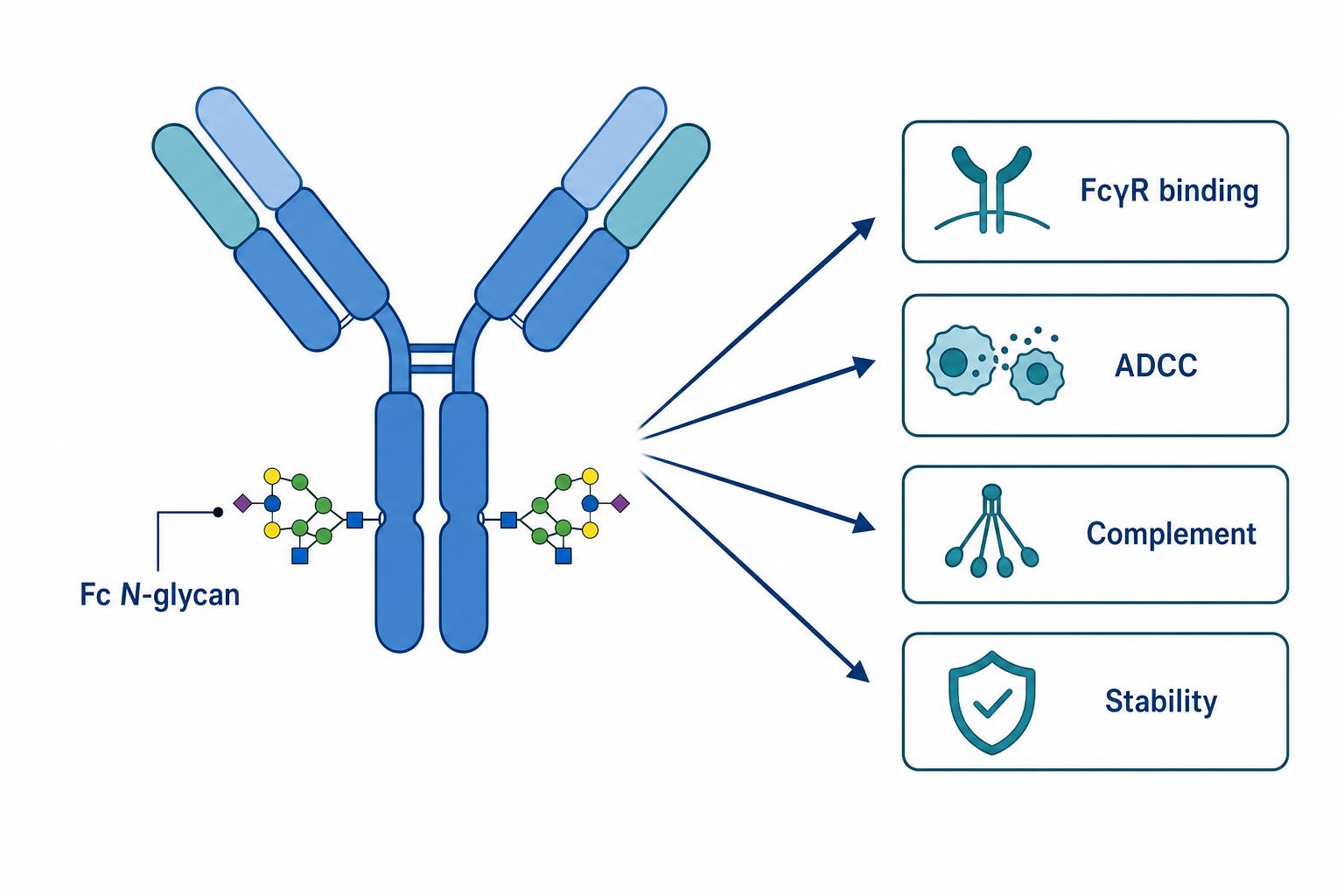
Figure 1. Fc-associated glycans can influence antibody functionality through receptor binding, effector pathway activation, and stability-related properties.
How Glycosylation Influences Major Functional Pathways
Fc receptor interaction
Fc gamma receptors on effector cells recognize the antibody Fc region after antigen binding. Glycan composition can change Fc structure and modulate receptor affinity. This is especially relevant for ADCC and antibody-dependent cellular phagocytosis assays, where Fc receptor engagement is central to the readout.
Complement activation
Complement-dependent cytotoxicity depends on C1q binding to the Fc region. Glycan features, including galactosylation patterns, can affect complement activation efficiency. When CDC is an intended or unintended functional pathway, glycan profiling provides useful context for assay interpretation.
Stability and aggregation
Glycans can influence local Fc flexibility and protein surface properties. Changes in glycoform distribution may contribute to aggregation tendency, thermal stability differences, or storage-related heterogeneity. These properties are not effector functions in the strict sense, but they can indirectly affect functional performance in downstream assays.
Pharmacokinetics and clearance
High-mannose and other glycan features can alter clearance through receptor-mediated pathways. Functional consequences may appear not only in cell-based effector assays but also in exposure and persistence behavior in vivo.
Standard Workflow for Linking Glycosylation to Function
A structured approach helps connect glycan data with functional interpretation rather than treating them as separate reports.
Glycoform profiling identifies major Fc glycan structures and distribution patterns in the antibody sample. Site review confirms occupancy and heterogeneity at monitored N-glycosylation positions. Functional assay selection defines whether ADCC, CDC, Fc receptor binding, or stability readouts are most relevant to the project. Comparative analysis evaluates whether glycan differences align with functional changes across batches, process conditions, or engineered variants. Validation planning determines whether additional cell-based, receptor binding, or stability studies are required to support the functional conclusion.
Teams that profile glycans without defining the functional question often generate data that are difficult to translate into development decisions.
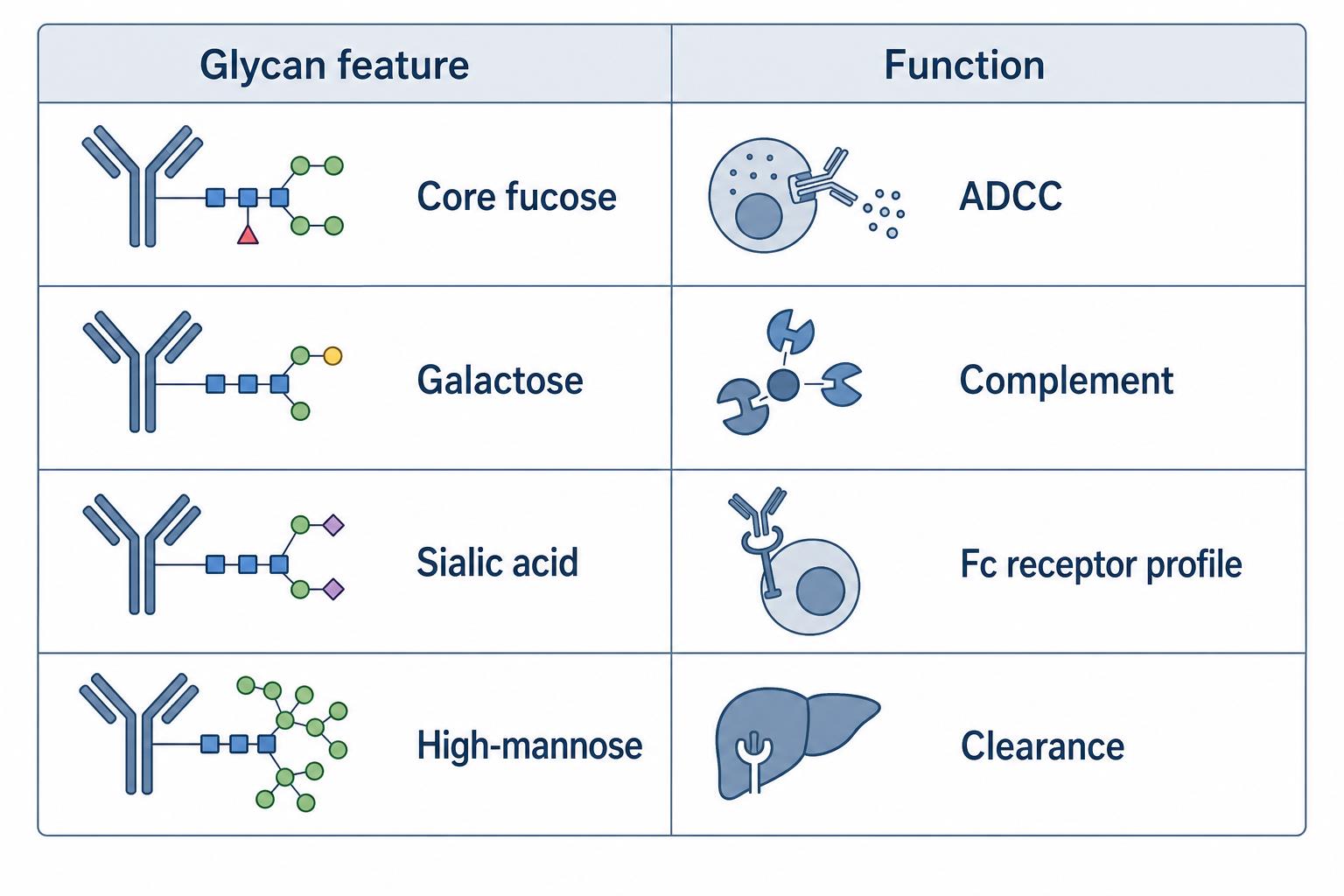
Figure 2. Major Fc glycan features can be associated with different effector, clearance, and stability-related functional outcomes depending on glycoform context.
Related Services
Protein Drug Glycosylation Analysis Service
Protein Glycosylation Analysis Service
Glycosylation Site Analysis Service
Comprehensive Glycosylation Analysis Service
Researchers evaluating how antibody glycosylation affects functionality can consult MtoZ Biolabs to align glycan profiling with the functional assays and comparability questions relevant to the project.
Glycan Attributes and Functional Questions
Different functional questions require attention to different glycan attributes. The table below summarizes common relationships used during antibody characterization planning.
|
Functional Question |
Glycan Attribute Often Reviewed |
Why It Matters |
|---|---|---|
|
ADCC performance |
Core fucosylation, galactosylation |
Fc receptor binding can shift with Fc glycan composition |
|
CDC activity |
Galactosylation, overall Fc glycoform distribution |
Complement activation can be glycan sensitive |
|
Clearance behavior |
High-mannose content |
Mannose receptor pathways can increase clearance |
|
Batch comparability |
Major glycoform distribution |
Process changes may alter function through glycan shifts |
|
Stability review |
Glycoform heterogeneity, sialylation |
Glycan differences may correlate with aggregation or storage behavior |
|
Biosimilar assessment |
Fc glycan similarity |
Functional similarity may depend on glycan profile alignment |
These relationships support planning but do not replace project-specific functional testing. Glycan association alone is not sufficient to confirm biological equivalence.
Core Technical Value and Current Interpretation Limits
Core Technical Value
Connects structure to effector behavior.
Glycosylation analysis helps explain why antibodies with similar binding profiles may differ in cell-based functional assays.
Supports process and comparability review.
Glycan monitoring can reveal functional risk when manufacturing conditions change.
Prioritizes relevant functional assays.
Glycan profiling helps teams choose ADCC, CDC, Fc receptor binding, or stability studies with clearer rationale.
Complements binding-centric characterization.
Antigen binding data and Fc glycan data together provide a more complete functional picture.
Enables engineered antibody evaluation.
Glycoengineered or process-modified antibodies often require explicit glycan-function linkage during development.
Current Interpretation Limits
Glycan-function links are context dependent.
The same glycan change may have different functional impact across antibody subclasses, formats, or assay systems.
Functional assays remain required.
Glycan profiling does not replace cell-based or receptor binding confirmation.
Low-abundance glycoforms may be missed.
Minor glycan species with functional relevance may require sensitive enrichment or extended analysis.
Expression system effects are strong.
Cell line and culture process can dominate glycan profile and confound simple comparisons.
Not all functionality is Fc driven.
Fab-mediated mechanisms, format effects, and antigen biology also shape overall antibody performance.
Applications in Antibody Development and Characterization
Antibody glycosylation-function analysis is used across several development scenarios.
Therapeutic antibody effector optimization.
Teams may modulate fucosylation or other glycan features to tune ADCC or reduce effector activity depending on product strategy.
Biosimilar and comparability studies.
Glycan similarity is often evaluated alongside functional assays when comparing reference and candidate products.
Process change assessment.
Manufacturing changes can alter glycoform distribution before functional drift becomes apparent in release assays.
Candidate antibody selection.
Early clones with desirable binding may be compared for Fc glycan patterns when effector function is part of the target profile.
Stability and developability review.
Glycan heterogeneity may be evaluated when aggregation, storage, or formulation behavior differs across batches.
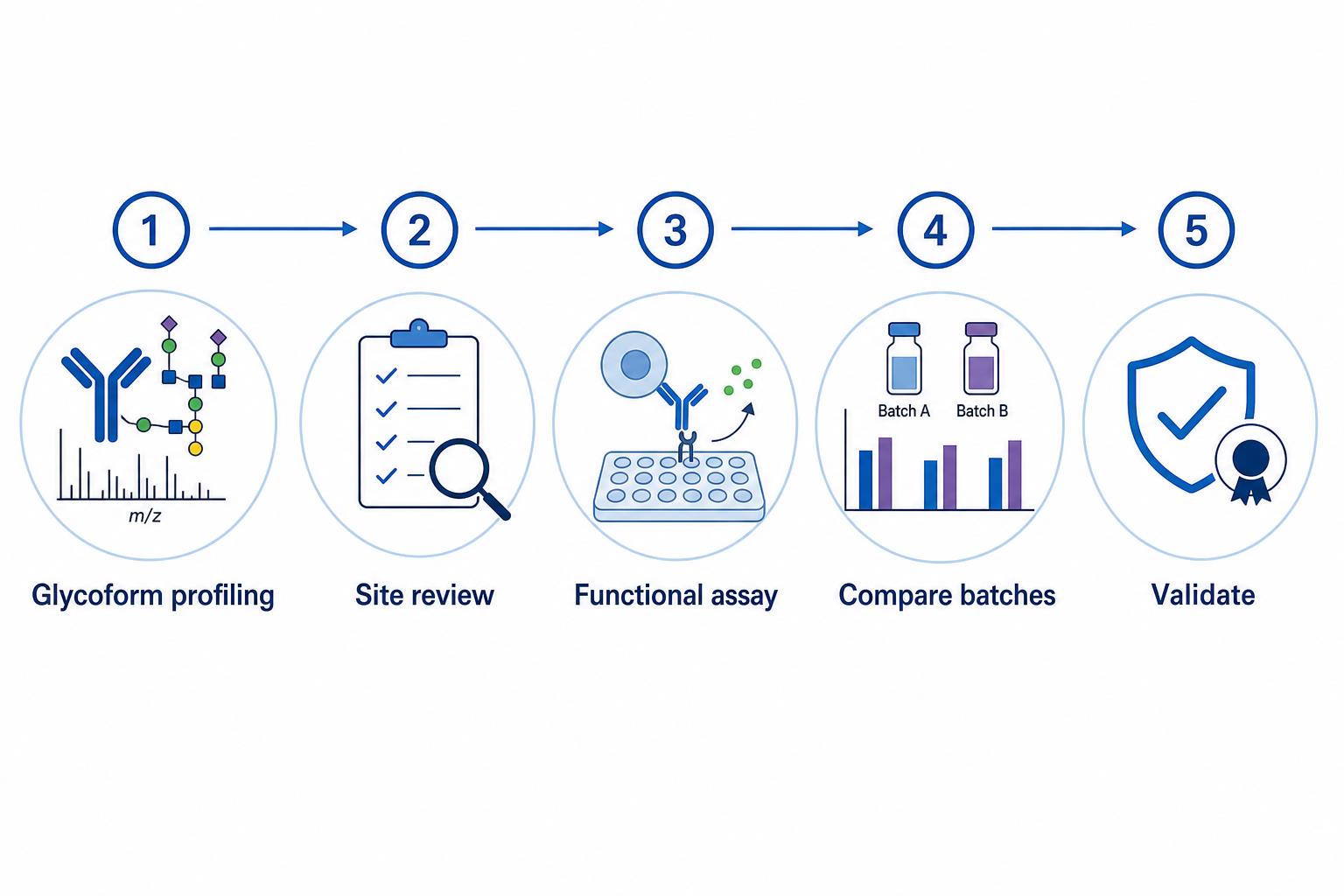
Figure 3. Functional interpretation of antibody glycosylation moves from glycoform profiling to assay selection, comparative review, and validation planning.
Sample and Study Design Considerations
Functional interpretation of antibody glycosylation depends on study design as well as analytical method.
These considerations support planning but do not replace sample-specific feasibility review before glycan and functional analysis begin.
Expected Deliverables and Validation Depth
A useful glycosylation-function report should connect analytical findings to the functional question under study. Depending on scope, deliverables may include:
Validation depth should match the intended use. Early research may require only glycan-function association and targeted follow-up. Late-stage comparability or biopharmaceutical documentation may require tighter alignment between glycan data and qualified functional readouts.
Frequently Asked Questions
1. Why does antibody glycosylation affect function?
Fc-associated glycans can alter Fc structure and receptor interaction surfaces, influencing effector pathways such as ADCC, CDC, and clearance-related behavior.
2. Which glycosylation site is most important for IgG function?
The conserved Asn297 N-glycosylation site in the IgG Fc region is the most widely studied site for effector function because of its proximity to Fc receptor and complement interaction regions.
3. Can two antibodies with the same sequence have different function because of glycosylation?
Yes. Different expression systems, culture conditions, or purification processes can produce different glycoform distributions on the same antibody sequence, which may change functional performance.
4. Does glycan profiling replace functional assays?
No. Glycan profiling helps explain and prioritize functional differences, but ADCC, CDC, Fc receptor binding, or other relevant assays are still required for functional confirmation.
5. Which glycan features are commonly monitored for therapeutic antibodies?
Core fucosylation, galactosylation, sialylation, and high-mannose content are commonly reviewed because they can influence effector function, clearance, and product heterogeneity.
Conclusion
Antibody glycosylation plays a direct role in functionality because Fc-associated glycans can modulate receptor binding, effector pathway activation, stability, and clearance-related behavior. For therapeutic IgG antibodies, glycan composition at the Fc region is often as important to interpret as antigen binding when ADCC, CDC, comparability, or process control are part of the development strategy.
Reliable functional understanding requires glycan profiling to be linked with the relevant assay context rather than reported in isolation. Major glycan features such as fucosylation, galactosylation, sialylation, and high-mannose content provide useful guidance for functional review, but project-specific testing remains essential. Researchers evaluating how antibody glycosylation affects functionality can contact MtoZ Biolabs to review glycan profiling options, functional follow-up assays, and the comparability strategy best suited to the antibody program.
How to order?




