






Ribose Analysis Service
Ribose is a naturally occurring five-carbon sugar chemically classified as a pentose monosaccharide. It is one of the fundamental components of RNA molecules and a key structural element of various biomolecules such as nucleotides, nucleosides, and coenzymes including ATP, NADH, and FAD. Ribose plays an essential role in energy metabolism, nucleic acid synthesis, and cellular signal transduction. Compared with deoxyribose, ribose is more commonly found in RNA and other oxygen-containing nucleotides, and its hydroxyl groups contribute to its high chemical reactivity.
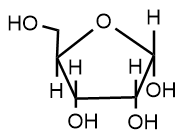
Figure 1. The Structure of Ribose
With the advancement of metabolomics, glycomics, and nutritional science, the need for accurate measurement of ribose content and metabolic levels has been steadily increasing. Changes in ribose levels can reflect various physiological or pathological conditions such as energy metabolism disorders, glucose metabolism imbalance, and oxidative stress responses. Therefore, the quantitative and structural analysis of ribose not only helps to understand cellular metabolic networks but also provides scientific support for disease research, drug development, and food functionality studies.
Equipped with advanced mass spectrometry and chromatography platforms, MtoZ Biolabs offers a highly sensitive and reproducible ribose analysis service that covers the entire process from sample preparation and separation to quantitative analysis, enabling accurate determination of free ribose, ribose moieties in nucleotides, and ribose-related metabolites in biological samples. We provide reliable data support for both scientific research and industrial applications.
Services at MtoZ Biolabs
The ribose analysis service provided by MtoZ Biolabs is designed to help clients comprehensively analyze the distribution and metabolic state of ribose in various biological systems. Our services include:
1. Quantification of Free Ribose
Applicable to blood, urine, cell extracts, and tissue homogenates. Using high-performance liquid chromatography (HPLC) or liquid chromatography–mass spectrometry (LC-MS/MS), we achieve high-sensitivity detection capable of distinguishing ribose from structurally similar pentoses.
2. Quantification of Ribose in Nucleosides and Nucleotides
Quantitative analysis of the ribose portion in molecules such as RNA, ATP, and NADH. Enzymatic digestion and derivatization methods are combined to ensure signal specificity and stability.
3. Ribose Metabolic Pathway Analysis
Based on isotope-labeled metabolic tracing experiments (such as 13C and 15N), this analysis tracks the metabolic flow of ribose in the pentose phosphate pathway (PPP) to reveal dynamic changes in cellular metabolism.
4. Detection of Ribose Derivatives and Oxidized Products
Using LC-MS/MS or GC-MS, we detect ribose oxidation products such as ribulose and arabinose to evaluate their conversion characteristics in stress and metabolic responses.
5. Multi-Omics Integrated Analysis
Ribose-related results can be integrated with glycomics, metabolomics, and nucleotide omics data for a systematic understanding of ribose metabolism.
Analysis Workflow
1. Sample Reception and Pretreatment
Submitted biological samples are preprocessed by centrifugation, filtration, or extraction before entering the analytical workflow.
2. Derivatization and Extraction
Sugar-containing compounds are derivatized to improve separation efficiency and detection sensitivity.
3. Chromatographic Separation
HPLC or UHPLC systems are used for efficient separation of ribose and its derivatives.
4. Mass Spectrometry Detection
High-resolution mass spectrometers such as Orbitrap or Q Exactive HF are used for quantitative and structural analysis.
5. Data Processing and Calibration
Quantitative calibration is performed using standards and internal standards, and peak identification is conducted through professional databases.
6. Report Generation
A comprehensive report including quantitative data, spectral interpretation, and statistical analysis is delivered.
Service Advantages
1. Multi-Platform Collaboration
We integrate multiple analytical platforms, including HPLC/UHPLC, LC-MS/MS, and GC-MS to achieve cross-validation among different detection methods. Multidimensional analysis ensures the reliability and quantitative accuracy of ribose and its derivatives.
2. Customized Analysis
MtoZ Biolabs offers a tailored ribose analysis service based on research objectives, sample types, and target sensitivity. Whether for basic metabolic studies, disease model samples, or food and nutrition analysis, we customize pretreatment procedures, separation conditions, and detection modes to ensure scientific and targeted data generation.
3. Professional Team
MtoZ Biolabs has a team of experts in mass spectrometry, carbohydrate chemistry, and bioinformatics who provide one-on-one experimental design and data interpretation support for every project to ensure successful completion.
Applications
✔️ Metabolomics Research: Reveal dynamic changes of ribose in the pentose phosphate pathway and nucleotide metabolism.
✔️ Diabetes and Energy Metabolism Studies: Evaluate the relationship between ribose levels and metabolic disorders in cells.
✔️ Food and Nutrition Science: Measure free ribose content in foods and its variation during processing.
✔️ Pharmaceutical Development and Quality Control: Monitor ribose-related intermediates in drug synthesis and metabolism.
✔️ Cellular Energy Metabolism and Signal Transduction Studies: Explore the role of ribose in ATP synthesis and nucleotide cycling.
Sample Submission Suggestions
1. Sample Types: Plasma, serum, cells, tissue homogenates, urine, fermentation broth, and purified metabolites.
2. Recommended Amount: At least 500 µL for liquid samples or ≥50 mg wet weight for tissue or cell samples.
3. Storage and Shipping: Store samples at -80°C and ship on dry ice to prevent repeated freeze-thaw cycles.
4. Sample Information: Provide sample origin, treatment conditions, and research objectives to determine the optimal detection method.
5. Consultation and Guidelines: MtoZ Biolabs provides detailed sample preparation and submission guidelines to ensure compliance with analytical standards.
Deliverables
1. Quantitative data and concentration tables of ribose
2. Original spectral files and peak area reports
3. Qualitative results of ribose-related metabolites
4. Statistical and visualization results of sample comparisons
5. Experimental workflow and methodological summary
MtoZ Biolabs provides professional and reliable ribose analysis service. Whether your research focuses on fundamental biology, disease mechanisms, or food and pharmaceutical development, we can design customized analytical solutions that meet your specific needs. Contact us today to begin your high-quality ribose analysis project with MtoZ Biolabs, enabling more accurate data and deeper scientific insights.
How to order?




