






Resources
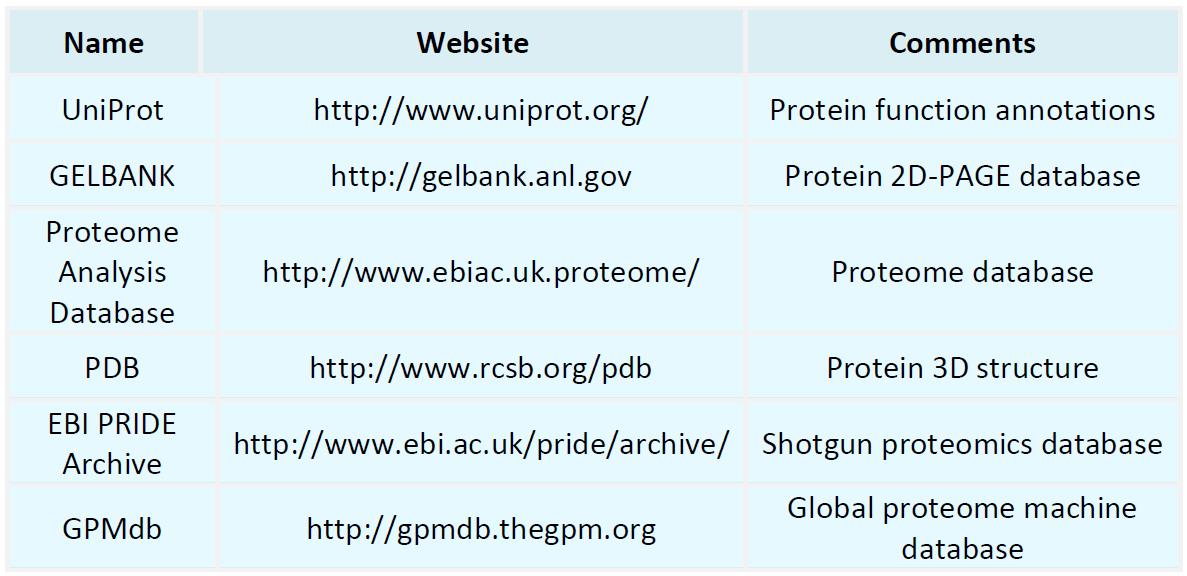
Proteomics Databases
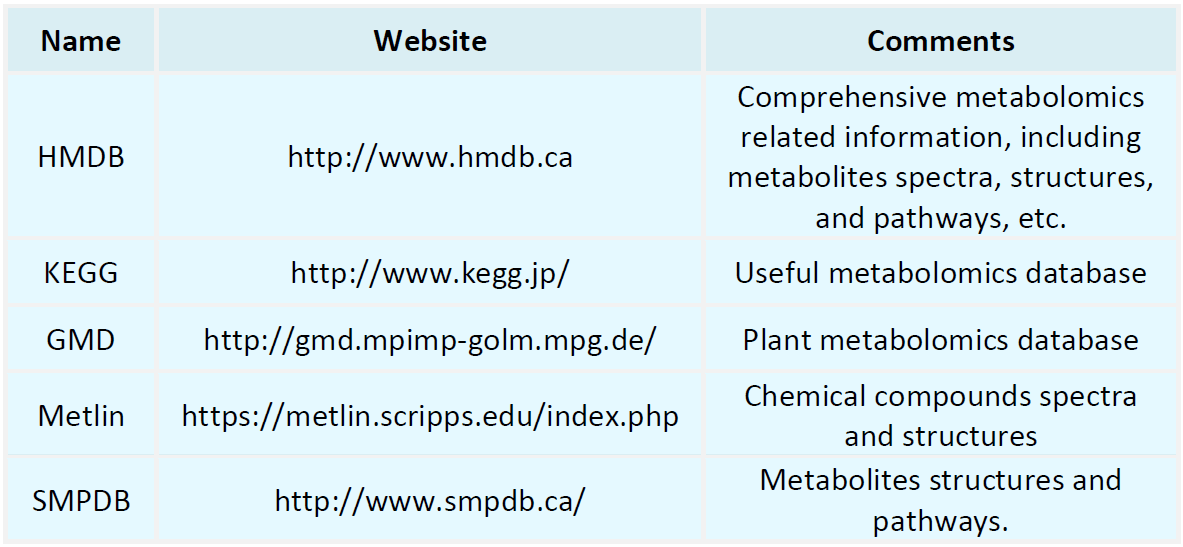
Metabolomics Databases
-
• Small Molecule Target Identification
Small molecule target identification is the process of identifying the biological targets of small molecule compounds using experimental techniques or computational approaches, typically involving biomolecules such as proteins, DNA, or RNA. Small molecule drugs play a central role in modern drug development, primarily by binding to specific targets and modulating biological processes to achieve therapeutic effects. However, during drug screening, the precise molecular targets of small molecules are of......
-
• Phage Display Protein-Protein Interactions
Phage display protein-protein interactions represent a molecular biology approach that employs phage display technology to investigate interactions between proteins, protein-small molecules, and protein-antibodies. This technique utilizes bacteriophages, primarily M13, T7, or λ phages, as vectors to display exogenous proteins or peptide fragments on the surface of phage coat proteins, enabling specific recognition and selection of target proteins. Phage display has been widely applied in the developme......
-
Off-target profiling is a critical methodology for investigating the unintended interactions of drugs, chemical compounds, or biologics with non-target molecules in vivo and in vitro. As a fundamental aspect of drug development and safety evaluation, off-target profiling aims to identify potential nonspecific interactions to mitigate adverse effects, refine drug design, and improve drug safety profiles in clinical applications. While small-molecule drugs, antibody-based therapeutics, and nucleic acid ......
-
Membrane targeting sequences are specialized sequences that guide proteins to specific locations on cellular or organelle membranes during their synthesis. These sequences typically contain hydrophobic amino acid stretches that enable interactions with the lipid bilayer or rely on signal peptides, lipid modifications (such as palmitoylation and myristoylation), and specific protein-protein interactions to facilitate stable membrane anchoring. Membrane targeting sequences play a pivotal role in vario......
-
Peaks de novo sequencing is a computational method for deriving protein or peptide amino acid sequences directly from mass spectrometry data without relying on known protein sequence databases. In proteomics research, conventional protein identification approaches primarily rely on database-dependent searches, where experimental peptide mass spectra are matched against pre-existing protein databases. However, this approach is inherently limited when analyzing non-model organisms, novel proteins, antib......
-
• Free Amino Nitrogen Analysis
Free amino nitrogen analysis is a critical analytical method for quantifying free amino compounds in solution. FAN represents the total concentration of low-molecular-weight nitrogen compounds, including amino acids and short peptides, which serve as key indicators of protein degradation and nitrogen metabolism in biological systems. This analytical technique is extensively utilized in fermentation industries, food science, biomedical research, and environmental monitoring. In the fermentation indus......
-
• High-Resolution Mass Spectrometry Services
High-resolution mass spectrometry services provide powerful analytical capabilities for precise molecular mass determination and structural characterization. Compared to low-resolution mass spectrometry, high-resolution mass spectrometry services offer superior mass accuracy, achieving sub-ppm precision, and provide detailed fragmentation patterns, significantly enhancing analytical reliability. The extensive applications of this technology enable researchers to conduct in-depth investigations of biol......
-
Direct protein sequencing is a technique used to determine the primary structure of proteins by analyzing their amino acid sequences. Unlike genome- or transcriptome-based approaches, it directly characterizes protein sequences without relying on genetic information. Traditional protein sequencing methods have primarily relied on DNA or mRNA sequencing to infer protein sequences. However, due to post-transcriptional modifications, alternative splicing, and non-canonical translation, genomic data do no......
-
The cancer methylome refers to the genome-wide DNA methylation landscape in cancer cells, encompassing methylation status changes that influence gene expression and contribute to tumorigenesis. DNA methylation is an essential epigenetic regulatory mechanism that involves the addition of a methyl (-CH3) group to the 5th carbon of cytosine (C) residues in DNA, forming 5-methylcytosine (5mC). This modification regulates gene transcription without altering the underlying DNA sequence. In normal cells, DNA......
-
Peptide array analysis is a high-throughput and high-precision technology extensively utilized in proteomics and molecular biology research. This technique involves immobilizing a diverse array of peptide sequences onto solid-phase supports (such as glass slides or microarray chips) to construct a peptide array, which is subsequently employed to investigate the binding properties of these peptides to target molecules, including antibodies, proteins, and enzymes. This approach enables the efficient and......
How to order?




